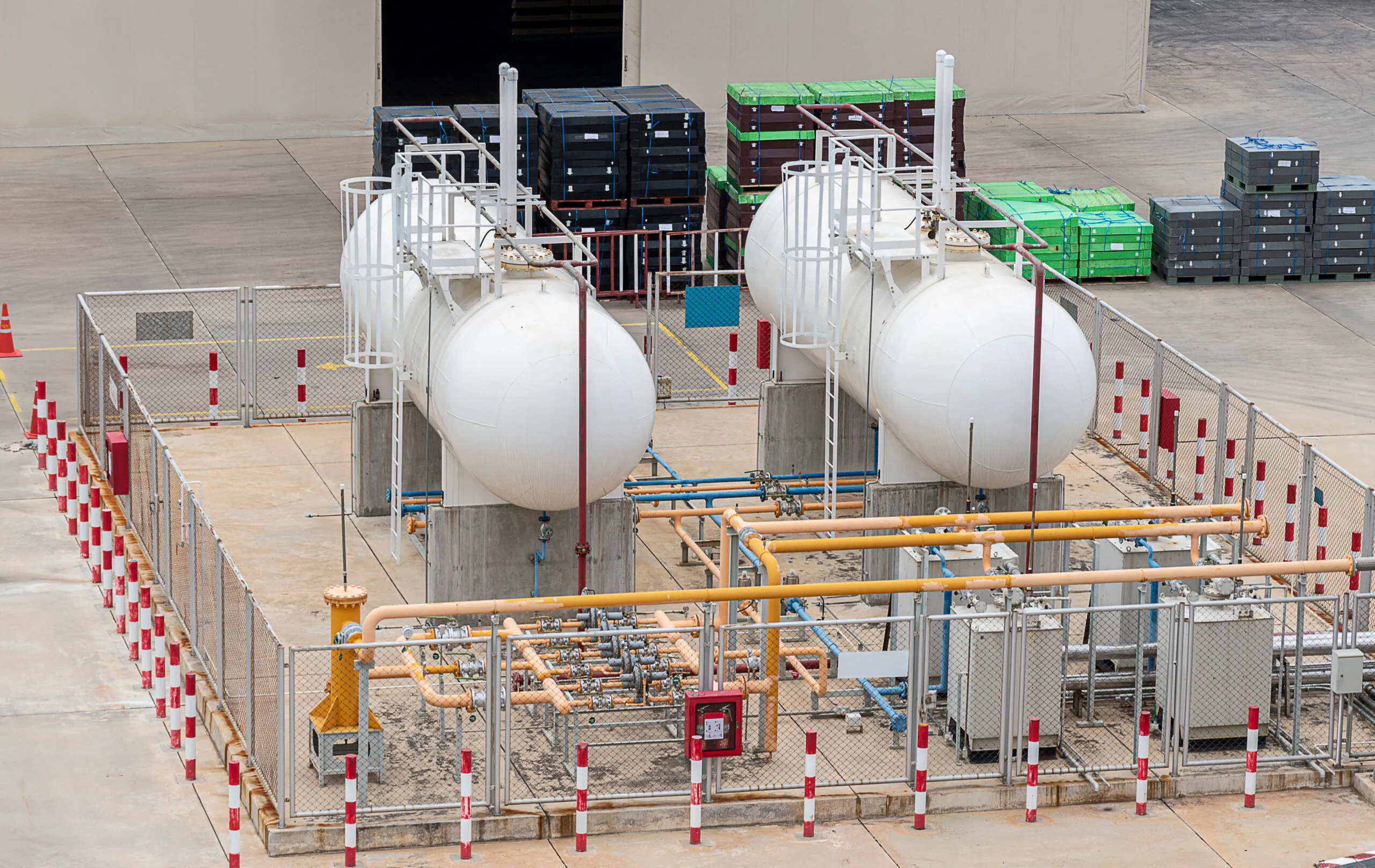
An autogas station case study Kenya project demonstrates how LPG dispensing infrastructure can be integrated into an operating petrol-station environment through structured engineering, regulatory planning, equipment selection, installation, testing and commissioning. The success of an autogas project depends on much more than installing an LPG dispenser; storage, pipework, pressure control, electrical systems, emergency shutdown, fire protection and operator procedures must work together as one engineered system.
Autogas infrastructure is becoming increasingly relevant as vehicle owners and fleet operators look for alternatives to conventional liquid fuels. LPG can be used as an automotive fuel in suitably designed and approved vehicles, provided the dispensing installation, storage system, vehicle interface and operating procedures are appropriately engineered.
Related Products
For a petrol station owner, adding autogas creates a second fuel system within an environment that already contains significant fire and operational risks. The LPG installation must therefore be planned around the existing station layout rather than treated as an isolated equipment installation.
This autogas station case study Kenya examines the engineering process involved in developing an LPG dispensing facility at a petrol-station environment, from initial feasibility and regulatory planning through equipment installation, testing and commissioning.
The emphasis is on the engineering workflow, safety controls and lessons that apply to similar projects in Kenya and the wider East African market.
The Project Challenge
An autogas installation at an existing petrol station must introduce LPG storage and dispensing equipment without compromising the safety, access, traffic flow or operation of the existing fuel station. The engineering challenge is therefore one of integration: the LPG system must operate independently while fitting safely within the wider petroleum facility.
A conventional petrol station may already contain:
- Petrol storage tanks
- Diesel storage tanks
- Fuel dispensers
- Canopies
- Electrical systems
- Vehicle circulation lanes
- Customer parking
- Underground services
- Drainage systems
- Fire equipment
- Service buildings
- Staff facilities
- Fuel delivery access
Adding LPG introduces additional requirements.
The installation needs suitable storage, transfer arrangements, pressure management, dispensing equipment, emergency shutdown systems, safety signage and appropriate fire protection.
The project therefore begins with a question that is more important than simply asking where the dispenser should be placed:
Can the existing site safely accommodate an autogas installation?
That question determines the feasibility of the entire project.
Why an Autogas Station Case Study Kenya Matters
An autogas station case study Kenya provides practical insight into how LPG dispensing projects should be approached in real operating environments. It shows why site assessment, regulatory compliance, hazardous-area considerations, equipment selection and commissioning must be addressed before the dispenser becomes operational.
For petroleum retailers, the decision to add autogas can involve several business considerations.
These include:
- Existing customer traffic
- Local vehicle population
- Fleet demand
- Available land
- LPG supply logistics
- Storage requirements
- Capital investment
- Operating costs
- Regulatory requirements
- Maintenance capability
The project must make technical and commercial sense.
A technically impressive dispenser is of little value if the station does not have sufficient LPG storage, safe vehicle circulation or reliable supply logistics.
Likewise, a large tank may be unnecessary if the expected autogas demand is low.
The engineering design should therefore start with demand and site conditions.
Initial Site Assessment
The first technical stage of an autogas project is a detailed site assessment covering the proposed LPG storage area, dispenser location, vehicle circulation, existing petroleum infrastructure, electrical installations, fire protection and emergency access. The objective is to identify constraints before detailed design begins.
A professional site survey should document the existing station.
The engineering team should establish:
- Property boundaries
- Existing fuel dispensers
- Existing underground tanks
- Tank filling points
- Buildings
- Roads
- Driveways
- Customer circulation
- Electrical equipment
- Drainage
- Fire equipment
- Utility routes
- Proposed LPG equipment locations
Existing drawings should be reviewed where available.
However, the physical site should always be verified.
Old drawings may not accurately represent later modifications.
An autogas station case study Kenya assessment should therefore combine documentation review with physical verification.
Establishing the LPG Demand
Autogas equipment should be sized according to expected vehicle demand, dispensing patterns, LPG supply arrangements and future growth rather than selecting equipment solely from available catalogue sizes. Demand determines storage requirements, transfer capacity, dispenser requirements and replenishment frequency.
A station expecting only a small number of LPG vehicles will have different requirements from a high-volume fleet refuelling site.
The assessment can consider:
- Expected vehicles per day
- Average LPG consumption
- Fleet versus retail customers
- Peak refuelling periods
- Average transaction size
- Future customer growth
- LPG delivery frequency
The objective is to establish a realistic design load.
Demand estimation also affects logistics.
A station with limited storage capacity may require more frequent deliveries.
A larger installation may require fewer deliveries but greater initial capital expenditure.
LPG Storage for Autogas
The LPG storage tank is the primary inventory component of an autogas facility and must be appropriately selected, located, protected and connected to the dispensing system. Storage design must account for capacity, pressure, applicable standards, safety separation and LPG delivery arrangements.
The tank is not simply a large container.
It forms part of a pressure system.
The installation therefore requires consideration of:
- Tank design
- Pressure rating
- Relief protection
- Isolation
- Filling connection
- Liquid withdrawal
- Vapour management
- Level measurement
- Corrosion protection
- Physical protection
- Inspection access
The storage arrangement should also allow safe LPG deliveries.
A tanker must be able to approach the filling area without creating conflicts with customer vehicles or other petroleum operations.
Selecting the Autogas Dispenser
An autogas dispenser provides controlled transfer and measurement of LPG from the storage system to a vehicle. The dispenser should be compatible with the LPG system, correctly rated for the application and integrated with the site’s emergency shutdown and control arrangements.
Megtraco Kenya Ltd provides dedicated autogas dispensing equipment for LPG vehicle-fuelling applications.
The dispenser selection should consider:
- Flow rate
- Metering
- Hose arrangement
- Nozzle compatibility
- Display requirements
- Emergency stop integration
- Environmental conditions
- Maintenance access
- Electrical classification
- Vehicle interface
High-flow equipment may be appropriate for fleet operations where short refuelling times are important.
However, the required capacity should be established from the actual application.
LPG Pumping and Transfer
The LPG transfer system moves product from the storage vessel to the vehicle dispenser at controlled conditions. Pump selection should account for required flow, pressure, system configuration, liquid properties and the operating characteristics of the selected dispenser.
The transfer system may incorporate:
- LPG pump
- Isolation valves
- Strainers
- Relief arrangements
- Check valves
- Flexible connections
- Pipework
- Instrumentation
The pump and dispenser should be treated as a connected system.
A mismatch between pump capacity and dispenser requirements can produce operational problems.
The engineering team should therefore verify the complete hydraulic arrangement.
LPG Pipework Design
Autogas pipework must be designed for the intended LPG service, operating pressure, temperature and installation environment. Pipe diameter should be selected using engineering calculations that consider flow, pressure loss, fittings and system configuration.
Pipework design should address:
- Material compatibility
- Pressure rating
- Jointing
- Supports
- Thermal effects
- Mechanical protection
- Corrosion protection
- Routing
- Isolation
- Inspection
Pipe routes should be as straightforward as practical while maintaining required safety conditions.
Every additional bend, valve and fitting affects the system.
For larger installations, detailed hydraulic calculations help establish whether the proposed pipework can support the required dispensing rate.
Megtraco’s specialized LPG piping systems can be considered where applicable to the approved design and installation environment.
Pressure Regulation
Pressure regulation maintains the required operating conditions between LPG storage, transfer equipment and dispensing equipment. The regulator arrangement must be compatible with the system pressure and flow requirements and should provide stable operation under expected demand.
The design must distinguish between:
- Tank pressure
- Pump discharge conditions
- System operating pressure
- Dispenser operating requirements
- Vehicle filling conditions
Pressure protection is equally important.
The installation should incorporate appropriate safety devices and isolation arrangements according to the approved design.
Pressure should never be adjusted casually during operation.
Integrating the Autogas System With an Existing Petrol Station
The LPG installation should be integrated into the petrol station’s overall safety and traffic-management strategy. The addition of an autogas dispenser should not obstruct existing fuel operations, emergency access, tanker movement or customer circulation.
This requires careful site planning.
Vehicle movement should be assessed from entry to exit.
The design should consider:
- Vehicle approach
- Refuelling position
- Hose reach
- Vehicle queueing
- Emergency evacuation
- LPG tanker access
- Petrol tanker access
- Pedestrian movement
- Fire-fighting access
The dispenser should be positioned so that customers can use it conveniently without creating unnecessary interaction with other fuel systems.
Hazardous-Area Electrical Design
Electrical equipment associated with LPG dispensing areas must be selected and installed according to the applicable hazardous-area classification and engineering requirements. Ignition sources must be controlled because LPG vapour can create a flammable atmosphere under suitable conditions.
The electrical design should address:
- Equipment classification
- Cable routing
- Junction boxes
- Motors
- Switchgear
- Lighting
- Earthing
- Bonding
- Emergency isolation
The classification of hazardous areas should be established by competent professionals based on the specific installation.
Electrical contractors should not assume that ordinary petrol-station electrical arrangements automatically satisfy LPG requirements.
This is a critical lesson from any serious autogas station case study Kenya project.
Emergency Shutdown
Emergency shutdown provides a means of rapidly isolating LPG flow when a hazardous event occurs. The shutdown arrangement should be designed so that critical LPG equipment can be isolated quickly and safely during an emergency.
Depending on the approved system, emergency shutdown may interact with:
- LPG pumps
- Dispenser controls
- Isolation valves
- Control panels
- Gas detection
- Fire alarm systems
The emergency stop should be:
- Clearly identified
- Accessible
- Protected from accidental operation
- Functionally tested
- Included in operator training
The location of emergency controls should also be communicated to station personnel.
Fire Protection
Fire protection at an autogas facility should reflect the LPG storage, transfer and dispensing hazards and should be coordinated with the existing petrol-station fire strategy. Fire extinguishing equipment, emergency procedures and detection systems should be appropriate to the risk.
An autogas facility should not depend solely on the fire extinguishers already present at the station.
A risk assessment should determine the appropriate fire protection.
Potential systems can include:
- Portable extinguishers
- Fixed fire protection
- Fire detection
- Emergency shutdown
- Fire alarm interfaces
- Hydrant or water systems where applicable
Megtraco provides fire suppression equipment for engineered fire-protection applications.
The correct system depends on the specific risk and applicable requirements.
LPG Leak Detection
LPG leak detection can provide an additional layer of protection by identifying gas concentrations before a developing leak becomes a more serious hazard. Detector locations should be selected according to LPG properties, equipment arrangement, ventilation and the engineering risk assessment.
LPG is heavier than air under normal conditions.
Therefore, detector positioning requires engineering consideration.
Potential detection locations can include areas where gas could accumulate.
Detection systems may also be integrated with:
- Audible alarms
- Visual alarms
- Emergency shutdown
- Control panels
- Ventilation systems
Megtraco’s industrial gas leak detection technologies can support professionally engineered gas-safety systems.
Control Panels and System Integration
A control panel can coordinate safety and operational signals from the autogas installation, including emergency shutdown, detection and other connected equipment. Proper integration provides operators with a centralized means of monitoring critical functions.
Depending on the project, the control architecture may receive signals from:
- LPG detectors
- Emergency stops
- Pressure switches
- Fire systems
- Pump controls
- Valve status
- Alarm devices
Megtraco’s LPG control panels can be incorporated where appropriate to the project design.
The control philosophy should be documented before commissioning.
Regulatory and Licensing Considerations
An autogas installation in Kenya must be planned around the applicable petroleum, LPG, occupational safety, fire-safety and product-standard requirements. Licensing should be addressed before installation so that the project is not constructed around an incorrect regulatory assumption.
The relevant regulatory landscape can involve:
- EPRA
- KEBS
- Directorate of Occupational Safety and Health Services
- County authorities
- Fire-safety authorities
- Other applicable statutory bodies
EPRA’s petroleum regulatory role is particularly important for LPG infrastructure.
The specific licences, approvals and technical documentation required depend on the nature and configuration of the facility.
Because requirements can change, the project team should confirm current requirements with the relevant authorities before construction.
Standards and Engineering References
International standards can provide valuable engineering benchmarks where applicable, but they should complement rather than replace Kenyan statutory requirements and approved local engineering practices. NFPA 58 is particularly relevant to LP-Gas installations, while other fire and electrical standards may apply according to the specific system.
Potential engineering references may include:
- NFPA 58 – Liquefied Petroleum Gas Code
- Applicable NFPA fire-protection standards
- Applicable ASME pressure-vessel requirements
- Applicable IEC hazardous-area principles
- Relevant KEBS standards
- Applicable Kenyan petroleum regulations
The correct standard depends on the equipment and application.
Standards should therefore be identified during design rather than added to documentation after installation.
Installation Sequence
A controlled installation sequence reduces construction errors and allows the LPG system to be inspected progressively. Major equipment should be installed only after the site, foundations, pipe routes, electrical arrangements and safety requirements have been verified.
A typical installation workflow includes:
Site verification
↓
Foundation and equipment preparation
↓
LPG storage installation
↓
Pipework installation
↓
Pump and transfer equipment
↓
Dispenser installation
↓
Electrical and control systems
↓
Safety systems
↓
Testing
↓
Commissioning
The actual sequence may vary depending on site conditions.
Equipment Installation
LPG equipment should be installed according to approved engineering drawings and manufacturer requirements, with appropriate supports, access, protection and identification. Installation quality directly affects long-term reliability and maintenance.
Equipment should be checked before installation for:
- Correct model
- Damage
- Certification
- Pressure rating
- Accessories
- Documentation
- Compatibility
Incorrect equipment should not be installed simply because it has already arrived at site.
Pressure and Integrity Testing
The completed LPG piping system should undergo appropriate integrity and pressure testing before commissioning. Test procedures should be established by competent professionals according to the system design, applicable requirements and characteristics of the equipment being tested.
Testing may cover:
- Pipework
- Joints
- Valves
- Connections
- Equipment interfaces
Test records should document:
- Test section
- Test medium
- Test pressure
- Test duration
- Instrument used
- Results
- Date
- Responsible personnel
Testing creates an important baseline for future maintenance.
Dispenser Testing
The dispenser should be functionally tested before being placed into service. Testing should verify flow, controls, metering, emergency shutdown, hose and nozzle operation and interaction with the wider LPG system.
The dispenser should be checked for:
- Correct startup
- Correct shutdown
- Flow
- Display operation
- Metering
- Hose condition
- Nozzle operation
- Emergency stop
- Alarm response
The actual acceptance criteria should come from the equipment documentation and approved commissioning procedure.
Commissioning the Autogas Facility
Commissioning confirms that the complete autogas installation operates safely and according to its design. It should cover mechanical systems, electrical systems, control systems, emergency shutdown, fire protection, metering and operator procedures.
A commissioning checklist can include:
| System | Commissioning Verification |
|---|---|
| LPG tank | Installation and connections verified |
| Filling system | Connection and isolation verified |
| Pump | Correct operation confirmed |
| Pipework | Integrity testing completed |
| Dispenser | Functional test completed |
| Metering | Verification/calibration completed as applicable |
| Emergency stop | Tested |
| Valves | Correct operation confirmed |
| Gas detection | Tested where installed |
| Fire equipment | Available and serviceable |
| Electrical system | Required checks completed |
| Signage | Installed |
| Documentation | Completed |
| Operator training | Completed |
A system should not be considered commissioned simply because LPG has reached the dispenser.
Commissioning is a structured verification process.
Operator Training
Station operators must understand normal dispensing procedures, emergency shutdown, leak response, fire response and reporting procedures before the autogas system enters routine operation. Technical infrastructure is only effective when operators know how to use it correctly.
Training should cover:
- Normal dispensing
- Vehicle positioning
- Hose handling
- Emergency stop
- Leak response
- Fire response
- Reporting defects
- Restricted activities
- Customer instructions
Staff should also understand when the system must be taken out of service.
Operational Safety After Commissioning
Once operational, the autogas system requires routine inspection, maintenance and documentation. Equipment condition, leak risks, valves, hoses, dispensers, safety systems and fire-protection equipment should be monitored according to the approved maintenance programme.
Maintenance records should capture:
- Date
- Equipment
- Inspection findings
- Repairs
- Replacement parts
- Testing
- Corrective actions
- Technician details
The operator should never ignore small defects.
A damaged hose, leaking connection or malfunctioning emergency stop can represent a much greater risk if left unresolved.
Project Verification Matrix
A structured verification matrix provides a practical way to confirm that the major engineering elements of an autogas project have been addressed before handover. It also creates a useful reference for future inspections and maintenance.
| Project Area | Key Verification |
|---|---|
| Site | Layout and access assessed |
| LPG storage | Correct equipment and installation |
| Pipework | Correct material and pressure rating |
| Pump | Capacity and operation verified |
| Dispenser | Function and metering verified |
| Electrical | Applicable hazardous-area requirements addressed |
| Controls | Shutdown and alarm functions verified |
| Detection | Gas detection tested where applicable |
| Fire protection | Appropriate equipment available |
| Signage | Safety information installed |
| Documentation | Drawings and test records completed |
| Training | Operators trained |
| Handover | System formally accepted |
Lessons From an Autogas Station Case Study Kenya Project
The most important lesson from an autogas station case study Kenya project is that dispensing equipment is only one part of the installation. Reliable operation depends on the relationship between storage, transfer, piping, regulation, dispensing, electrical systems, fire protection and emergency controls.
Several engineering lessons stand out.
Site Layout Determines More Than Appearance
A poor layout can create operational conflicts even when the equipment itself is technically correct.
Storage and Demand Must Be Matched
Oversizing increases capital expenditure, while undersizing can create supply problems.
Safety Systems Must Be Integrated
Emergency shutdown, detection and fire protection should work together.
Existing Petrol Infrastructure Must Be Considered
The LPG installation should not compromise existing fuel operations.
Commissioning Must Be Comprehensive
A dispenser that starts and stops is not necessarily a fully commissioned system.
Documentation Has Long-Term Value
Drawings, test results, equipment manuals and maintenance records support future operation.
Why Engineering Coordination Matters
Autogas installations involve mechanical, electrical, fire-safety, petroleum and operational considerations simultaneously. Coordinating these disciplines during design prevents conflicts that can otherwise appear during installation or commissioning.
For example, changing the dispenser location may affect:
- Pipe length
- Pump requirements
- Vehicle circulation
- Electrical routing
- Emergency-stop location
- Fire protection
- Civil works
A design change therefore needs to be evaluated across the complete system.
This is why an autogas station case study Kenya should be viewed as an integrated infrastructure project rather than a dispenser procurement exercise.
Megtraco Kenya Ltd provides professional engineering consultation for LPG infrastructure and related systems.
Procurement and Equipment Documentation
Equipment procurement should be based on approved technical specifications rather than price alone. Every critical component should have sufficient documentation to establish its intended application, rating, manufacturer and installation requirements.
Procurement documentation can include:
- Datasheets
- Certificates
- Manufacturer manuals
- Pressure ratings
- Material specifications
- Electrical classifications
- Spare-parts information
- Warranty documentation
This becomes especially important when multiple suppliers are involved.
The complete system must remain compatible.
Planning for LPG Supply Logistics
A reliable autogas facility requires a dependable LPG supply chain in addition to correctly designed infrastructure. Storage capacity, delivery frequency, tanker access and supplier arrangements should be considered during project planning.
Supply planning should consider:
- Average consumption
- Peak demand
- Tank capacity
- Minimum operating inventory
- Delivery lead time
- Road access
- Site unloading arrangements
A dispenser cannot operate reliably if the station repeatedly runs out of LPG.
For high-demand facilities, inventory planning becomes an operational engineering issue.
Expansion and Future Capacity
An autogas installation should consider realistic future demand during the initial design. Allowing for sensible expansion can be more economical than reconstructing the facility when vehicle demand increases.
Future planning can consider:
- Additional dispensers
- Larger storage
- Additional pump capacity
- Fleet contracts
- Digital monitoring
- Additional vehicle lanes
However, future capacity should not be added indiscriminately.
Unused equipment increases capital and maintenance requirements.
The engineering objective is to create appropriate flexibility.
Final Engineering Perspective
A properly executed autogas project combines regulatory planning, site engineering, LPG storage, hydraulic design, dispensing technology, electrical safety, fire protection, commissioning and operator training. Each component must support the others for the station to operate reliably.
The value of a well-engineered installation is not measured only by the dispenser’s ability to transfer LPG.
It is measured by the entire operating system.
Can LPG be delivered safely?
Can vehicles access the dispenser without creating unnecessary conflicts?
Can the operator stop the system during an emergency?
Can leaks be detected where required?
Can equipment be inspected and maintained?
Can the station demonstrate that testing and commissioning were completed?
Can the system support expected demand?
Can the operator respond correctly to an abnormal event?
These questions define the quality of an autogas installation.
For businesses evaluating an autogas station case study Kenya, the key takeaway is that successful projects begin with engineering and regulatory planning long before the first vehicle is refuelled.
Megtraco Kenya Ltd can support LPG infrastructure projects through equipment supply, engineering consultation, installation support, safety systems and commissioning.
For a new project, explore Megtraco’s complete industrial LPG equipment range or request a professional engineering quotation based on the specific site requirements.
Frequently Asked Questions About an Autogas Station Case Study Kenya
What is an autogas station?
An autogas station is a vehicle-fuelling facility equipped to dispense LPG as an automotive fuel into suitably designed and approved vehicles. It normally includes LPG storage, transfer equipment, piping, dispensing equipment, controls and safety systems.
What does an autogas station case study Kenya demonstrate?
An autogas station case study Kenya demonstrates how LPG dispensing infrastructure can be planned, installed, tested and commissioned within a Kenyan petrol-station environment. It highlights the importance of engineering integration, safety and regulatory compliance.
What equipment is required for an LPG dispensing station?
A typical installation can include an LPG storage tank, transfer pump, pipework, valves, pressure-control equipment, autogas dispenser, metering, emergency shutdown equipment and appropriate fire and gas-safety systems.
Does an autogas dispenser require a dedicated LPG tank?
The dispenser needs an appropriately designed LPG supply system. For a dedicated autogas installation, this will commonly involve dedicated storage and transfer arrangements, although the final configuration depends on the approved system design and applicable requirements.
How important is the LPG dispenser in an autogas project?
The LPG dispenser is the customer-facing component, but it represents only one part of the complete system. Storage, pumps, pipework, controls, electrical systems and safety equipment must all be correctly engineered for reliable dispensing.
Does an autogas installation require fire protection?
Yes. LPG vehicle-fuelling facilities require appropriate fire-safety measures based on the installation’s risk profile and applicable requirements. These can include portable extinguishers, emergency shutdown, detection and other engineered fire-protection measures.
Is gas leak detection required?
The requirement for gas detection depends on the installation design, risk assessment and applicable requirements. Where detection is specified, detector location and system integration should be professionally engineered.
How is an autogas station commissioned?
Commissioning involves verifying the complete installation, including storage, pipework, transfer equipment, dispenser, metering, valves, emergency shutdown, safety systems and operator procedures. Appropriate testing records should be completed before normal operation.
Can an existing petrol station add autogas?
An existing petrol station may be able to add autogas if the site can safely accommodate LPG storage, dispensing and associated infrastructure and the project satisfies applicable regulatory and engineering requirements. A site feasibility assessment should be completed first.
What is the most important consideration when adding LPG to a petrol station?
The most important consideration is safe integration of the LPG system with the existing petroleum facility. Storage, dispenser location, vehicle movement, hazardous areas, emergency access and fire protection all need to be evaluated together.
Engineering Conclusion
An autogas station case study Kenya project illustrates why LPG vehicle-fuelling infrastructure requires a systems-engineering approach.
The project starts with the site.
The site determines what can safely be built.
Demand determines the required storage and transfer capacity.
Hydraulic calculations determine pipework requirements.
Equipment selection determines how LPG will be transferred and measured.
Electrical engineering determines how equipment can operate safely within the classified environment.
Fire engineering determines the appropriate protection and emergency response.
Commissioning confirms whether all these elements work together.
The result should be a facility that is not merely functional but controlled, maintainable and suitable for long-term operation.
For petroleum retailers considering an autogas investment, the correct approach is therefore to begin with a technical feasibility assessment rather than purchasing a dispenser first.
The autogas station case study Kenya model demonstrates the value of coordinating regulatory requirements, engineering design, equipment selection, construction, testing and operator training as one project.
With the right engineering approach, LPG dispensing can be incorporated into suitable fuel-station environments while maintaining a clear focus on safety, reliability and operational continuity.
Megtraco Kenya Ltd brings decades of LPG and fire-safety engineering experience to commercial and industrial projects across Kenya and East Africa. The company can support clients evaluating LPG infrastructure, autogas dispensing, gas detection, control systems and fire-protection requirements.
For organisations planning an autogas station case study Kenya project of their own, the next step should be a site-specific engineering assessment covering demand, layout, storage, equipment, safety and regulatory requirements before construction begins.
Your Trusted LPG & Fire Safety Engineering Partner in East Africa
Whether you’re designing a new LPG installation, upgrading industrial gas systems, or enhancing fire safety compliance, Megtraco Kenya Ltd delivers certified engineering solutions backed by decades of expertise. From LPG equipment supply and pipeline installations to fire suppression and detection systems, our experienced team provides reliable solutions for commercial, industrial, and institutional projects across East Africa.
Contact us today for professional consultation, engineering support, or a customized quotation.
WHY CHOOSE MEGTRACO KENYA LTD
You May Also Like


- ✔ Established Since 1969 – Decades of proven engineering excellence.
- ✔ KEBS Certified Products – Guaranteed quality and compliance with regional standards.
- ✔ EPRA Licensed LPG Engineering Company – Fully certified to design, install, and commission.
- ✔ Industrial & Commercial LPG Specialists – Scaled to handle heavy-duty thermal requirements.
- ✔ Fire Suppression & Fire Detection Experts – End-to-end asset protection.
- ✔ Regional Operational Footprint – Serving Nairobi, Mombasa, Kisumu, Nakuru, Eldoret, Thika, Machakos, East Africa, and beyond.
Contact Megtraco Kenya Ltd
- Email: sales@megtracokenya.com
- Sales: +254 725 870 114
- Technical: +254 733 721 598
- WhatsApp: +254 799 086 323
- Location: Nairobi, Kenya – Serving East Africa
- Website: https://megtracokenya.com
Request a Quote today and partner with East Africa’s trusted LPG and fire safety engineering company since 1969.
