Description
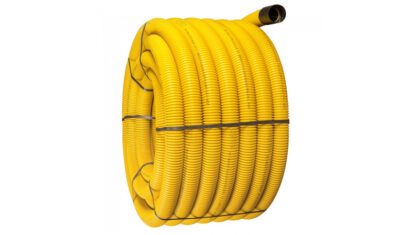
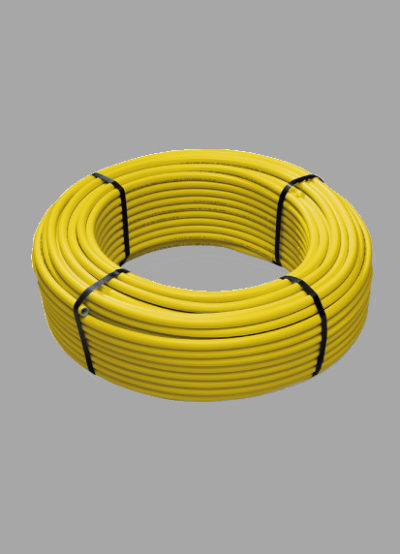
Megtraco Kenya supplies polyethylene (PE) LPG piping — the yellow-striped PE100 pipe specified worldwide for buried gas service lines. PE is the correct and only sensible material for running gas underground between a bulk tank and a building.
Steel corrodes in soil. Copper corrodes in aggressive soils and cannot tolerate ground movement. Polyethylene does neither: it is chemically inert to soil, flexible enough to absorb settlement, and when jointed by electrofusion it produces a joint stronger than the pipe itself.
PE Pipe Specifications
- Material grade: PE100 / PE80, gas grade
- Identification: yellow or black with yellow stripe, marked for gas service
- Sizes: 20 mm, 25 mm, 32 mm, 40 mm, 50 mm, 63 mm, 90 mm, 110 mm
- SDR ratings: SDR 11 and SDR 17.6
- Supply form: coils for smaller diameters, straight lengths for larger
- Service life: 50+ years design life when correctly installed
Fittings and Jointing
- Electrofusion couplers, elbows, tees and reducers — the preferred jointing method; an embedded heating coil fuses the fitting to the pipe
- Compression fittings — mechanical joints for smaller diameters and repairs
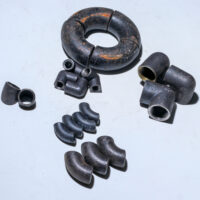
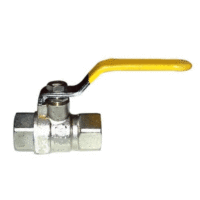
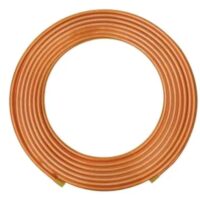
- PE-to-steel transition fittings — factory-made anode-protected transitions used where the line emerges above ground
- End caps, saddles and tapping tees
- Yellow warning tape and tracer wire for route identification during future excavation
Installation Requirements
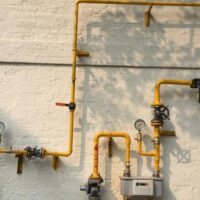
PE gas pipe must be buried at adequate depth with a sand bed and surround, laid with warning tape above it, and must transition to metal pipe before it emerges above ground — PE degrades under UV exposure and must never be left in sunlight. Tracer wire should be laid alongside so the route can be located later without excavation. Megtraco installs to these standards and pressure-tests every buried run before backfilling.
Where PE Gas Pipe Is Used
Bulk tank to building service lines, gas mains between buildings on hotel and institutional campuses, apartment estate reticulation, industrial site distribution, and any run crossing open ground, driveways or landscaping.
Frequently Asked Questions
Can PE pipe be used above ground?
No. Ultraviolet light degrades polyethylene over time. PE must be buried, and must transition to steel or copper via a proper transition fitting before it rises above ground level.
How is PE gas pipe joined?
By electrofusion — an electric current heats a coil embedded in the fitting, melting and fusing pipe and fitting into one continuous piece. Compression fittings are also available for smaller diameters and repair work. Both require correct preparation and trained installers.
How deep must gas PE pipe be buried?
Depth depends on the surface above it — deeper under vehicle routes than under landscaping. Warning tape is laid above the pipe and tracer wire alongside so the line can be located during future works. Our engineers set depth per site conditions during survey.
What size PE pipe do I need?
Sizing follows total connected gas load and run length. A single-building service off a small bulk tank commonly uses 32 mm or 40 mm; campus mains serving multiple buildings need larger. Send us your load schedule and site layout for correct sizing.