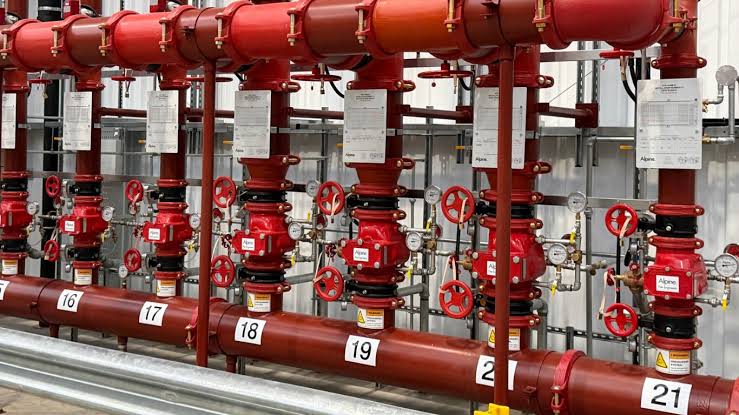
A fire suppression case study Kenya involving a high-risk industrial facility demonstrates why fire protection cannot be selected simply by choosing the most powerful extinguishing agent. Effective industrial protection begins with understanding the specific hazard, how a fire could develop, who may be exposed, which assets must be protected and how quickly the facility must return to operation after an incident.
High-risk facilities present fire challenges that conventional portable extinguishers and general building fire systems may not adequately address. A fire involving critical machinery, flammable materials, electrical equipment, process systems or high-value infrastructure can escalate rapidly and cause extended operational disruption.
Related Products
For this reason, a serious industrial fire protection project requires a structured engineering process.
The process typically begins with risk assessment.
It then moves through hazard identification, fire scenario analysis, suppression-agent selection, system design, equipment installation, detection integration, testing, commissioning and operational handover.
This fire suppression case study Kenya examines that process through the example of an anonymised high-risk facility. The focus is not on claiming specific project figures or client results that have not been independently provided. Instead, the case study demonstrates the engineering methodology required to assess and protect a facility where the consequences of fire can extend beyond property damage.
The principles discussed apply to industrial and commercial facilities across Kenya and East Africa, including manufacturing plants, processing facilities, energy infrastructure, warehouses, data environments, chemical handling areas and other operations with elevated fire risk.
The Engineering Challenge in a High-Risk Facility
A high-risk facility requires a fire protection strategy that considers both the probability of fire and the consequences if suppression is delayed or ineffective. The engineering challenge is to select a system capable of controlling the identified hazard while protecting occupants, equipment and operational continuity.
In a conventional office environment, a fire may primarily threaten occupants, furnishings and building finishes.
A high-risk industrial environment can be considerably more complex.
The facility may contain:
- Electrical switchgear
- Control panels
- Process machinery
- Flammable liquids
- Combustible materials
- High-temperature equipment
- Pressurised systems
- Production lines
- Data and control equipment
- Warehoused products
- Critical infrastructure
A single fire event can therefore create several layers of loss.
These may include:
- Injury risk
- Equipment damage
- Production downtime
- Supply-chain disruption
- Data loss
- Product contamination
- Environmental impact
- Property damage
- Business interruption
The objective of a professionally engineered system is not simply to extinguish flames.
It is to control the identified fire scenario quickly enough to reduce the overall consequences.
What Makes a Facility High Risk?
A facility is considered high risk when its operations, materials, equipment or potential fire consequences create a greater need for specialised fire protection. The level of risk depends on the specific hazard and should be established through a structured assessment rather than assumptions based on the building’s industry alone.
Several factors can increase fire risk.
Flammable or Combustible Materials
Facilities handling fuels, chemicals, gases or other combustible materials may require specialised suppression strategies.
High-Value Equipment
Damage to electrical, process or production equipment can result in significant replacement costs and extended downtime.
Rapid Fire Development
Certain materials and operating conditions can allow a fire to grow quickly.
Critical Operations
Some facilities cannot tolerate extended shutdowns.
Occupancy
The presence of workers or visitors can affect the suitability of particular suppression agents.
Environmental Sensitivity
Some suppression systems may create secondary environmental or cleanup considerations.
Water Sensitivity
Electrical equipment, electronic systems and sensitive machinery may be damaged by conventional water-based suppression.
A fire suppression case study Kenya should therefore begin with the actual hazard rather than the name of the building.
Fire Risk Assessment: The Starting Point
A fire risk assessment identifies potential fuel sources, ignition sources, fire development scenarios, occupants and critical assets before a suppression system is selected. It provides the engineering evidence needed to determine whether conventional, water-based, gaseous, clean-agent, foam, dry chemical or other systems are appropriate.
The assessment should examine the facility systematically.
Key questions include:
- What can burn?
- What could ignite it?
- How quickly could the fire spread?
- Who could be exposed?
- What equipment must be protected?
- Could water cause unacceptable secondary damage?
- Is the room enclosed?
- Is the facility continuously occupied?
- How much downtime is acceptable?
- What existing fire protection is available?
The answers influence the system design.
A facility containing electrical control equipment, for example, may require a different approach from a warehouse storing ordinary combustible goods.
Likewise, a flammable-liquid hazard may require a different suppression strategy from a server room.
This is the first major lesson from a fire suppression case study Kenya: the agent should follow the hazard assessment, not the other way around.
Identifying the Fire Hazard
Fire hazard identification should establish the likely fuel, ignition source and fire behaviour for each protected area. Different rooms within the same facility may require different protection because they contain different hazards and have different operational consequences.
A facility may include:
- Electrical rooms
- Generator rooms
- Control rooms
- Production areas
- Chemical storage
- Warehouses
- Kitchens
- Laboratories
- Data rooms
It is not always appropriate to protect all areas with one suppression technology.
A zoned fire strategy may be required.
For example, one area may be suitable for a water-based system while another requires an alternative agent because of equipment sensitivity.
The fire protection design should therefore consider the facility area by area.
Risk Assessment and System Selection Matrix
A structured matrix helps the engineering team compare hazards against system requirements. The purpose is to document why a particular fire suppression approach was selected and to demonstrate that the decision was based on technical criteria rather than equipment preference.
| Risk Factor | Engineering Assessment | Potential Design Impact |
|---|---|---|
| Fire hazard | Fuel, ignition source and expected fire development | Determines suppression approach |
| Occupancy | Occupied, intermittently occupied or unoccupied | Influences agent selection and safety systems |
| Asset value | Critical equipment and infrastructure | Determines acceptable downtime |
| Water sensitivity | Equipment damage risk from water | May favour alternative suppression methods |
| Room integrity | Ability of enclosure to contain agent | Critical for total flooding systems |
| Fire load | Quantity and characteristics of combustible materials | Determines agent concentration and system capacity |
| Business continuity | Acceptable operational downtime | Influences suppression and recovery strategy |
| Ventilation | Air movement and extraction systems | May affect agent retention |
| Detection speed | Required response time | Influences detector selection |
| Emergency response | Availability of trained personnel | Affects system automation requirements |
The selected solution should be supported by documented reasoning.
Selecting the Appropriate Suppression Agent
Suppression-agent selection should be based on the fire hazard, room conditions, occupancy, equipment sensitivity and applicable engineering standards. No single agent is the best solution for every high-risk facility.
Potential approaches can include:
- Water-based systems
- Water mist
- Foam
- Dry chemical
- Carbon dioxide
- Clean agents
- Other engineered suppression systems
Each has strengths and limitations.
Water-Based Suppression
Water can be highly effective for many ordinary combustible fire hazards.
However, it may not be suitable where electrical equipment or water-sensitive assets create significant secondary damage concerns.
Water Mist
Water mist systems can provide a different fire-control mechanism using finely distributed droplets.
The application must be evaluated against the specific hazard and approved system listing.
Foam
Foam systems can be relevant to certain flammable-liquid hazards.
System selection depends on the fuel characteristics and the type of protection required.
Dry Chemical
Dry chemical systems can provide rapid fire knockdown for specific hazards but may leave residues that require significant cleanup.
Carbon Dioxide
CO2 can be highly effective for specific applications but presents significant life-safety considerations because it can create an oxygen-deficient atmosphere.
Its use requires careful engineering and safety controls.
Clean Agents
Clean-agent systems can be suitable for certain enclosed spaces containing sensitive equipment.
The room must satisfy the system’s enclosure and concentration requirements.
The engineering objective is to select the most appropriate system for the actual risk.
Megtraco’s industrial fire safety systems can form part of a broader engineered protection strategy.
Why One Fire Suppression System May Not Protect the Entire Facility
Large industrial facilities often contain multiple hazard categories, making a single suppression technology unsuitable for every area. A layered fire protection strategy can assign different detection and suppression systems to different risks.
A facility could have:
| Protected Area | Example Engineering Consideration |
|---|---|
| Electrical room | Water sensitivity and equipment continuity |
| Process area | Fuel type and fire intensity |
| Warehouse | Fire load and storage configuration |
| Control room | Electronics and operational continuity |
| Generator area | Fuel and machinery hazards |
| Chemical storage | Chemical compatibility |
| Kitchen | Cooking oil and grease hazards |
This demonstrates why a fire suppression case study Kenya should focus on engineering decisions rather than presenting a single product as the universal answer.
Detection: Suppression Systems Need Early Warning
Automatic suppression is most effective when the system can detect the developing fire quickly enough to initiate the intended response. Detection technology should therefore be selected according to the expected fire characteristics and the protected environment.
The detection strategy may consider:
- Smoke
- Heat
- Flame
- Gas
- Rate of temperature rise
- Airflow conditions
A slowly developing smouldering fire may require a different detection approach from a rapidly developing open flame.
Detection should also be coordinated with the suppression system.
For example, the system may require:
- Pre-alarm
- Confirmed alarm
- Time delay
- Equipment shutdown
- Ventilation shutdown
- Agent release
These functions should be defined in the cause-and-effect documentation.
The Role of Fire Suppression Control Panels
The suppression control panel coordinates detection, alarms, release functions and emergency controls. Its programming and cause-and-effect logic should be verified during commissioning because the control sequence determines how the system responds to a developing fire.
Depending on the system, the control sequence may include:
Detection
↓
Alarm
↓
Confirmation
↓
Warning
↓
Equipment shutdown
↓
Agent release
↓
Post-discharge status
The exact sequence depends on the protected hazard and system design.
A control failure can affect the effectiveness of the entire installation.
Engineering the Protected Enclosure
For total-flooding suppression systems, the protected enclosure must be capable of retaining the agent for the required period. Openings, ventilation systems, doors and structural penetrations can affect suppression performance.
The assessment may examine:
- Walls
- Doors
- Windows
- Cable penetrations
- Pipe penetrations
- Ventilation openings
- Raised floors
- Ceiling voids
A clean-agent system, for example, may not perform as intended if the agent escapes rapidly through unsealed openings.
Where required, room integrity testing can help establish whether the enclosure can retain the extinguishing concentration.
This engineering requirement is often underestimated.
Installing cylinders and nozzles alone does not guarantee suppression effectiveness.
System Design and Hydraulic Calculations
The fire suppression system should be designed using the applicable hydraulic, flow and concentration requirements for the selected technology. Pipe sizing, nozzle selection, agent quantity and discharge characteristics must be calculated rather than estimated.
Depending on the system, calculations may address:
- Agent quantity
- Pipe diameter
- Pipe length
- Pressure
- Nozzle type
- Nozzle location
- Flow rate
- Discharge time
- Design concentration
The engineering documentation should demonstrate that the selected system can deliver the required extinguishing performance.
This is another important principle of a fire suppression case study Kenya project: equipment capacity should be verified through design calculations.
Installation in an Operating Industrial Environment
Installing fire suppression equipment inside an operating facility requires coordination with production, maintenance, electrical and safety teams. Work should be phased to minimise disruption while ensuring that existing fire protection remains functional during the installation process.
An operating facility may not be able to shut down completely.
The installation programme may therefore need to address:
- Restricted work hours
- Temporary isolation
- Production schedules
- Hot-work permits
- Access controls
- Equipment protection
- Dust management
- Temporary fire protection
Existing protection should not be unnecessarily disabled during installation.
Where a system must be isolated, appropriate temporary risk controls should be established.
Pipework Installation and Mechanical Protection
Suppression-system pipework should be installed according to approved drawings, with appropriate supports, jointing and protection against mechanical damage. The installation should allow access for inspection and maintenance.
The installation team should verify:
- Pipe material
- Pipe diameter
- Support spacing
- Joint integrity
- Nozzle orientation
- Clearance
- Equipment access
Changes should not be made casually on site.
Moving a nozzle or altering a pipe route may affect hydraulic calculations.
Engineering approval should therefore be obtained for significant modifications.
Integrating Fire Suppression With Facility Operations
A high-risk facility may require the fire suppression system to initiate additional safety actions beyond agent discharge. Equipment shutdown, ventilation control and process isolation can help prevent the fire from escalating or interfering with the suppression process.
The cause-and-effect sequence may include:
- Alarm activation
- Process shutdown
- Fuel isolation
- Ventilation shutdown
- Door release or closure
- Generator shutdown
- Emergency notification
The exact actions depend on the facility.
Incorrect automation can create new risks.
For example, shutting down equipment too early or too late can affect the suppression strategy.
These sequences should therefore be reviewed during design.
Testing Before Commissioning
Testing confirms that the installed fire suppression system matches the approved design and that detection, alarms, controls and mechanical components operate correctly. Testing should be documented before the system is accepted for service.
The process may include:
- Visual inspection
- Pipework inspection
- Detection testing
- Alarm testing
- Control-panel testing
- Valve testing
- Manual release testing where applicable
- Abort function testing where applicable
- Shutdown sequence testing
- Interface testing
Testing should be controlled to prevent accidental discharge.
The test procedure should be established before work begins.
Installation and Commissioning Checklist
A formal checklist helps ensure that critical engineering and safety activities are not missed before handover. The checklist should be adapted to the selected suppression system and the requirements of the specific facility.
| Project Stage | Key Verification |
|---|---|
| Risk assessment | Fire hazards documented |
| System design | Approved engineering design completed |
| Agent selection | Compatible with hazard and occupancy |
| Detection | Correct detection strategy installed |
| Suppression equipment | Installed to approved specification |
| Pipework | Supports and connections verified |
| Control panel | Cause-and-effect logic tested |
| Alarms | Audible and visual warnings tested |
| Emergency controls | Manual release/abort functions verified where applicable |
| Room integrity | Tested where applicable |
| Commissioning | Functional tests completed |
| Documentation | Drawings, manuals and records handed over |
| Training | Responsible personnel trained |
The checklist should be supported by actual project records.
Commissioning the Fire Suppression System
Commissioning is the final technical verification that the complete suppression system operates as intended. It should confirm mechanical installation, detection, control logic, alarms, interfaces and emergency procedures before the facility relies on the system for protection.
Commissioning should answer several questions.
Does the detection system identify the intended alarm condition?
Does the control panel follow the approved sequence?
Are warning alarms activated before discharge where required?
Do connected equipment shutdowns operate correctly?
Are valves and release mechanisms functioning?
Are interfaces with other systems operating?
Are operators familiar with emergency procedures?
A successful commissioning process provides documented evidence that these functions have been checked.
Operator Training and Handover
The effectiveness of a fire suppression system also depends on the people responsible for the facility. Operators should understand alarms, emergency actions, system limitations and the importance of maintenance.
Training can include:
- Understanding alarms
- Emergency evacuation
- Manual controls
- Abort controls where applicable
- System isolation procedures
- Reporting faults
- Maintenance access
- Emergency contacts
The facility should also receive documentation.
This can include:
- As-built drawings
- Equipment manuals
- Test records
- Commissioning records
- Maintenance requirements
A suppression system without documentation can become difficult to maintain.
Regulatory Compliance and Safety Requirements
Fire suppression projects in Kenya should consider the applicable national regulations, occupational safety requirements, building requirements and product standards. International standards may provide engineering guidance where applicable, but local statutory requirements must also be addressed.
Relevant bodies and frameworks can include:
- Directorate of Occupational Safety and Health Services
- Kenya Bureau of Standards
- County fire-safety authorities
- Applicable national legislation
- Relevant NFPA standards where appropriate
The exact compliance requirements depend on:
- Facility type
- Suppression system
- Occupancy
- Fire hazard
- Location
Project teams should verify current requirements before installation and commissioning.
The Importance of NFPA Standards
NFPA standards provide internationally recognised technical guidance for many fire-protection applications, including fire detection, suppression and water-based protection. The relevant standard should be selected according to the specific system rather than applying a general standard to every fire hazard.
Examples can include:
- NFPA 13 for sprinkler systems
- NFPA 2001 for clean-agent systems
- Other relevant NFPA standards depending on the hazard
These standards provide technical frameworks for engineering decisions.
However, the project should also satisfy applicable Kenyan requirements.
Common Mistakes in High-Risk Fire Protection Projects
Many fire suppression failures can be traced to poor hazard assessment, incorrect agent selection, inadequate system integration or insufficient commissioning. Avoiding these mistakes requires engineering coordination from the beginning of the project.
Selecting the Agent Before Assessing the Risk
This can result in a system that is poorly matched to the actual hazard.
Ignoring Room Integrity
Total-flooding systems depend on enclosure performance.
Treating Detection as Secondary
Delayed detection can reduce suppression effectiveness.
Ignoring Occupancy
Some agents require significant life-safety considerations.
Changing Pipework Without Engineering Review
Pipe changes can affect hydraulic performance.
Failing to Test System Interfaces
A suppression system may depend on ventilation or process shutdown.
Neglecting Documentation
Future maintenance depends on accurate records.
Business Continuity and Fire Protection
For high-risk facilities, fire protection is also a business-continuity strategy. The consequences of fire can include extended downtime even when direct property damage is limited.
A facility may lose:
- Production capacity
- Inventory
- Data
- Customer confidence
- Equipment availability
The appropriate suppression strategy can therefore be evaluated partly through the cost of potential downtime.
A critical control room, for example, may require a different level of protection from a general storage area.
This is why fire suppression case study Kenya content should evaluate both fire control and operational recovery.
Maintenance After Project Completion
Fire suppression equipment requires periodic inspection and maintenance after commissioning. A system that was correctly installed can still become unreliable if components deteriorate, are damaged, isolated or modified without proper controls.
A maintenance programme can include:
- Visual inspections
- Control-panel checks
- Detector testing
- Cylinder inspection
- Pipework inspection
- Valve verification
- Alarm testing
- Record review
Maintenance intervals should follow the applicable system requirements, manufacturer instructions and regulatory obligations.
Lessons From This Fire Suppression Case Study Kenya
The central lesson from a fire suppression case study Kenya is that effective fire protection is an engineered process rather than a product purchase. The risk assessment determines the system strategy, and the system must then be correctly designed, installed, integrated, tested and maintained.
The key lessons include:
The Hazard Must Drive Agent Selection
The suppression agent should be selected for the actual fire risk.
Detection and Suppression Must Work Together
Early warning and correct release logic can be as important as the agent itself.
Occupancy Must Be Considered
Life safety affects system selection and control procedures.
Critical Assets Require Special Consideration
The cost of downtime can influence the protection strategy.
Commissioning Is Not Optional
The system must be functionally tested before reliance.
Maintenance Protects the Investment
A neglected suppression system cannot provide dependable protection.
Why Professional Fire Protection Engineering Matters
High-risk facilities require fire protection decisions that account for hazard science, engineering calculations, human safety and operational continuity. Professional engineering reduces the risk of selecting incompatible equipment or creating a system that cannot perform as intended.
The engineering process should connect:
- Risk assessment
- Agent selection
- Detection
- Suppression
- Controls
- Fire protection
- Facility operations
- Commissioning
- Maintenance
Megtraco Kenya Ltd can provide professional engineering consultation for clients assessing fire-safety and suppression requirements.
The correct solution should always be based on the specific facility.
Frequently Asked Questions About a Fire Suppression Case Study Kenya
What is a fire suppression case study Kenya?
A fire suppression case study Kenya examines how a fire protection project is assessed, designed, installed and commissioned within a Kenyan facility. It focuses on the engineering decisions involved in identifying hazards and selecting an appropriate suppression strategy.
How is a fire suppression system selected for a high-risk facility?
The system should be selected after a structured assessment of the fuel, ignition sources, fire behaviour, occupancy, asset sensitivity, room conditions and business-continuity requirements. No single suppression technology is appropriate for every facility.
Can water damage industrial equipment?
Water can cause significant secondary damage to certain electrical and sensitive equipment. Where this is a major concern, the fire risk assessment may evaluate alternative suppression approaches.
What is the importance of room integrity testing?
Room integrity testing can be important for total-flooding systems because the enclosure must retain the extinguishing agent for the required period. Unsealed openings can reduce the system’s effectiveness.
Does a suppression system require automatic detection?
The requirement depends on the system design and protected hazard. Automatic detection is commonly integrated into engineered suppression systems to provide early warning and initiate the required control sequence.
How often should an industrial fire suppression system be maintained?
Maintenance frequency depends on the suppression technology, manufacturer requirements, applicable standards and regulatory obligations. A documented maintenance programme should be established during handover.
What happens during suppression-system commissioning?
Commissioning verifies that the mechanical installation, detection, alarms, control panel, release sequence and system interfaces operate according to the approved design. Records should document the completed tests.
Can one suppression system protect an entire industrial facility?
Not always. Different areas can contain different hazards and may require different detection or suppression strategies. A facility-wide fire strategy may therefore use multiple protection approaches.
Why is fire risk assessment important?
The risk assessment provides the technical basis for selecting the fire protection system. It identifies what could burn, how ignition could occur, how the fire might develop and what consequences need to be controlled.
What is the key lesson from a fire suppression case study Kenya?
The key lesson is that fire suppression effectiveness depends on the complete engineering process, including risk assessment, system selection, design, installation, testing, commissioning and maintenance.
Engineering Conclusion
A fire suppression case study Kenya involving a high-risk industrial facility demonstrates that effective protection begins long before suppression cylinders, pipes or nozzles arrive on site.
The first decision is to understand the hazard.
The engineering team must identify the fuel, potential ignition sources, fire development and expected consequences.
The next decision is to select a protection strategy appropriate to that risk.
This may involve water-based protection, water mist, foam, dry chemical, carbon dioxide, clean agents or another engineered approach.
The system must then be designed.
Agent quantities, hydraulic requirements, pipework, nozzles, detection, alarms and control sequences must work together.
Installation must follow the approved design.
Testing must verify the system.
Commissioning must confirm that detection, alarms, shutdown functions and suppression controls operate correctly.
Finally, operators must understand how the system works and how it will be maintained.
This complete process is what transforms fire suppression equipment into a functioning fire protection system.
For industrial and high-risk facilities across Kenya and East Africa, the consequences of an incorrectly selected or poorly commissioned system can extend far beyond equipment damage.
Production can stop.
Critical infrastructure can be lost.
Occupants can be exposed.
Recovery can take significantly longer than expected.
A properly engineered system helps reduce these risks.
Megtraco Kenya Ltd supports commercial and industrial clients with fire protection engineering, suppression equipment and technical consultation. For organisations evaluating a high-risk facility, the first step should be a site-specific assessment that identifies the actual hazard before selecting the suppression technology.
For professional project support, request a professional engineering consultation based on your facility’s specific fire risks and operational requirements.
Your Trusted LPG & Fire Safety Engineering Partner in East Africa
Whether you’re designing a new LPG installation, upgrading industrial gas systems, or enhancing fire safety compliance, Megtraco Kenya Ltd delivers certified engineering solutions backed by decades of expertise. From LPG equipment supply and pipeline installations to fire suppression and detection systems, our experienced team provides reliable solutions for commercial, industrial, and institutional projects across East Africa.
Contact us today for professional consultation, engineering support, or a customized quotation.
WHY CHOOSE MEGTRACO KENYA LTD
- ✔ Established Since 1969 – Decades of proven engineering excellence.
- ✔ KEBS Certified Products – Guaranteed quality and compliance with regional standards.
- ✔ EPRA Licensed LPG Engineering Company – Fully certified to design, install, and commission.
- ✔ Industrial & Commercial LPG Specialists – Scaled to handle heavy-duty thermal requirements.
- ✔ Fire Suppression & Fire Detection Experts – End-to-end asset protection.
- ✔ Regional Operational Footprint – Serving Nairobi, Mombasa, Kisumu, Nakuru, Eldoret, Thika, Machakos, East Africa, and beyond.
Contact Megtraco Kenya Ltd
- Email: sales@megtracokenya.com
- Sales: +254 725 870 114
- Technical: +254 733 721 598
- WhatsApp: +254 799 086 323
- Location: Nairobi, Kenya – Serving East Africa
- Website: https://megtracokenya.com
Request a Quote today and partner with East Africa’s trusted LPG and fire safety engineering company since 1969.
