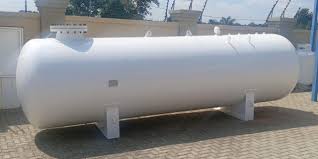
School LPG Kenya systems provide a practical way for boarding schools and educational institutions to supply large commercial kitchens with a controllable thermal fuel. However, moving an institutional kitchen to LPG requires more than installing cylinders or a storage tank; storage, pipework, pressure regulation, metering, ventilation, fire safety and operational governance must be engineered together.
Boarding schools can have some of the most predictable but demanding institutional cooking loads.
Related Products
A school may serve breakfast, lunch and dinner to hundreds or thousands of students every day. Additional meals may be prepared for teachers, support staff and visitors.
During term time, the kitchen can therefore operate for long hours with relatively consistent demand.
This makes school LPG Kenya an important consideration for institutions looking to improve kitchen efficiency, control fuel consumption and establish a more structured energy-management system.
The right installation should provide:
- Reliable fuel availability
- Safe storage
- Stable appliance pressure
- Adequate peak capacity
- Controlled consumption
- Easy maintenance
- Emergency isolation
- Clear staff responsibilities
The objective is not simply to replace another cooking fuel with LPG.
The objective is to create a safe, measurable and maintainable institutional energy system.
What Is School LPG Kenya?
School LPG Kenya refers to the use of liquefied petroleum gas as a primary or supplementary cooking fuel in schools, colleges and boarding institutions. Depending on consumption, the system can use cylinders, cylinder banks or bulk LPG storage connected to a regulated distribution network serving commercial kitchen appliances.
The appropriate configuration depends on:
- Student population
- Number of meals served
- Kitchen operating hours
- Number of appliances
- Appliance input ratings
- Peak cooking periods
- Fuel delivery frequency
- Available storage space
- Future school expansion
A small day school with a modest kitchen has very different requirements from a boarding institution serving 1,000 students.
Consequently, LPG infrastructure should be designed from actual demand rather than simply copying another school’s installation.
Why Schools Are Moving Towards Institutional Cooking Gas
Institutional cooking gas provides schools with a controllable fuel supply that can be metered, monitored and incorporated into structured procurement and kitchen-management systems. For boarding schools, LPG can support high-volume cooking while allowing management to track consumption against meals, enrolment and operating periods.
Traditional institutional kitchens may experience difficulties with:
- Inconsistent fuel consumption
- Manual fuel handling
- Difficult stock reconciliation
- Excessive cooking time
- Poor energy monitoring
- High maintenance requirements
- Unplanned fuel shortages
LPG can address some of these operational challenges when the system is properly engineered.
The greatest advantage is not necessarily the fuel itself.
It is the ability to create a centralised energy system with measurable consumption.
LPG for Boarding School Kitchens
LPG for boarding school kitchens should be designed around the institution’s maximum cooking demand rather than average daily consumption. Large commercial burners, boiling equipment, ovens and other appliances may operate simultaneously during meal preparation, creating short periods of very high gas demand.
A boarding school kitchen may include:
- Large commercial cookers
- Multiple burner ranges
- Chapati cooking equipment
- Large boiling burners
- Ovens
- Fryers
- Steam equipment
- Tea and beverage preparation equipment
The engineer should identify the gas input rating of every appliance.
The combined load provides the starting point for system sizing.
Calculating School LPG Demand
School LPG demand should be calculated using appliance ratings, operating hours, meal schedules and expected simultaneous operation. Historical LPG consumption can validate the calculation, but average monthly usage alone should not be used to determine pipe, regulator or storage capacity.
A practical load assessment should identify:
| Kitchen Load | Information Required | Engineering Relevance |
|---|---|---|
| Cookers | Number and gas input | Peak burner demand |
| Ovens | Input rating and operating hours | Thermal load |
| Fryers | Input rating | Cooking-period demand |
| Boilers | Capacity and duty cycle | High continuous demand |
| Steam equipment | Steam output | Thermal demand |
| Meal schedule | Breakfast/lunch/dinner | Demand pattern |
| Student population | Number served | Consumption planning |
| Operating hours | Daily kitchen operation | Fuel forecasting |
The resulting calculation should distinguish between:
Connected load
and
Expected simultaneous operating load.
This prevents both excessive oversizing and inadequate capacity.
Peak Demand in Boarding Schools
Peak LPG demand normally occurs during concentrated meal-preparation periods when multiple appliances operate simultaneously. The gas installation should therefore accommodate the highest credible demand without excessive pressure drop or regulator overload.
For example, a kitchen may have several burners that operate individually during different preparation stages but all become active during peak production.
This can produce a significant temporary demand.
A system designed only around average consumption may appear adequate during ordinary operation but fail when:
- All burners are active
- Multiple ovens are operating
- Boiling equipment starts
- A fryer operates simultaneously
- Hot-water demand increases
Peak-load analysis prevents this problem.
Bulk LPG for Schools
Bulk LPG can be appropriate for large boarding schools with consistent fuel demand because it reduces dependence on frequent cylinder handling and provides centralised storage. Bulk systems can also support planned deliveries and structured inventory management when the storage capacity is matched to consumption.
A typical bulk installation may contain:
- LPG storage tank
- Filling connection
- Isolation valves
- Pressure regulation
- Gas manifold
- Distribution pipework
- Emergency shutdown
- Gas detection
- Fire protection
Large schools may benefit from centralised infrastructure because kitchen staff do not need to repeatedly move individual cylinders through the cooking area.
However, bulk storage introduces additional engineering and regulatory considerations.
Cylinder Banks for Schools
Cylinder banks can provide a practical LPG supply for schools where consumption does not justify bulk storage or where site constraints make a tank unsuitable. A properly configured manifold and automatic changeover arrangement can provide continuity while allowing depleted cylinders to be replaced safely.
A cylinder-bank installation may include:
- Primary cylinder bank
- Reserve cylinder bank
- Automatic changeover
- Manifold
- Regulators
- Isolation valves
- Distribution pipe
The choice between cylinders and bulk storage should be based on:
- Consumption
- Site conditions
- Delivery logistics
- Capital budget
- Required autonomy
- Available space
- Expansion plans
School LPG Storage
School LPG storage should be positioned and protected according to applicable safety requirements, site conditions and the risk profile of the institution. Storage should be accessible for delivery and maintenance while being appropriately separated from buildings, ignition sources and areas of high student activity.
The storage area should not be treated as an ordinary utility space.
An engineering assessment should consider:
- Kitchen location
- Classroom blocks
- Dormitories
- Assembly areas
- Electrical installations
- Generator areas
- Vehicle movement
- Emergency access
- Fire-service access
The storage arrangement should also minimise the possibility of unauthorised access or accidental damage.
LPG Safety in Schools
School LPG safety depends on engineering controls, equipment condition, staff training and disciplined operating procedures. Because schools contain children and large numbers of occupants, LPG installations should be designed to minimise unauthorised access, prevent accidental damage and provide rapid emergency isolation.
A school LPG safety programme should cover:
- Gas storage
- Kitchen equipment
- Pipework
- Regulators
- Valves
- Gas detection
- Emergency shutdown
- Fire protection
- Staff training
- Maintenance
Safety should not depend entirely on kitchen workers remembering procedures.
Where possible, engineering controls should reduce the consequences of human error.
LPG Gas Detection in School Kitchens
Gas detection can provide early warning when LPG accumulates in a potentially hazardous area. Detector positioning should be determined through engineering assessment of LPG properties, ventilation, room geometry and possible leak sources rather than installing detectors according to a generic spacing rule.
Gas detection may be appropriate around:
- Commercial kitchens
- Gas manifolds
- Enclosed regulator areas
- Plant rooms
- Other identified risk areas
Megtraco provides industrial LPG leak detection technologies that can form part of a broader gas-safety system.
Depending on the design, detection can be integrated with:
- Audible alarms
- Visual indicators
- Emergency shutdown
- Control panels
- Other building safety systems
Emergency LPG Shutdown for Schools
Emergency LPG shutdown provides a means of rapidly stopping gas flow when a leak, fire or other dangerous condition occurs. Schools should have clearly identified isolation points and procedures that allow trained personnel to respond without exposing themselves unnecessarily to the hazard.
Emergency isolation should be considered at:
- LPG storage
- Main supply entry
- Kitchen distribution points
- Appliance groups
- Other locations determined during design
Emergency controls should be clearly marked.
Staff should know:
- Where they are
- When they should be activated
- Who is responsible
- What to do after shutdown
School Kitchen LPG Pipework
School kitchen gas pipework must be hydraulically sized to deliver the required flow at the correct appliance pressure while remaining mechanically protected and accessible for inspection. Long distribution runs and multiple kitchen branches should be assessed for pressure drop before pipe sizes are finalised.
Pipework design should consider:
- Gas flow
- Operating pressure
- Pipe length
- Fittings
- Elevation
- Pressure drop
- Materials
- Supports
- Corrosion exposure
- Mechanical protection
An undersized line can result in:
- Low burner pressure
- Unstable flames
- Reduced heating performance
- Appliance shutdown
The correct pipe size must therefore come from engineering calculations.
Megtraco’s advanced LPG piping systems can be evaluated where the application and applicable standards permit their use.
LPG Pressure Regulation for School Kitchens
Pressure regulators convert the LPG supply into the controlled pressure required by downstream equipment. Regulator selection should account for inlet pressure, outlet pressure, gas flow, temperature and the maximum simultaneous kitchen load.
A regulator that is too small may experience:
- Excessive pressure drop
- Unstable downstream pressure
- Reduced appliance performance
A correctly engineered system may use staged pressure regulation where required.
The final pressure delivered to each appliance should comply with the equipment manufacturer’s specification.
LPG Metering for Schools
LPG metering allows schools to measure gas consumption instead of relying entirely on cylinder counts or tank-level estimates. Proper metering can help management compare fuel use against meals served, enrolment, kitchen operating hours and procurement records.
Metering can provide useful information such as:
- Daily consumption
- Weekly consumption
- Monthly consumption
- Peak demand
- Consumption per meal
- Abnormal usage
For example:
LPG consumed ÷ meals prepared = LPG consumption per meal
This creates a practical performance indicator.
If the school notices that LPG consumption per meal is increasing, management can investigate:
- Appliance condition
- Burner adjustment
- Cooking practices
- Menu changes
- Increased enrolment
- Gas leakage
- Operating hours
Managing Cost Per Meal
Cost-per-meal analysis converts LPG consumption into a useful kitchen-management metric. Schools can compare total LPG expenditure against the number of meals produced to identify changes in efficiency and determine whether consumption is consistent with expected kitchen output.
A simplified calculation is:
LPG cost per meal = LPG expenditure ÷ number of meals served
For example, if monthly LPG expenditure is KSh 500,000 and the kitchen produces 100,000 meals:
KSh 500,000 ÷ 100,000 = KSh 5 per meal
The figure should be interpreted alongside:
- Menu composition
- Meal size
- Student population
- Kitchen operating hours
- Equipment efficiency
- Seasonal changes
It is a management indicator rather than an engineering standard.
School LPG Consumption Monitoring
Consumption monitoring helps schools identify abnormal LPG usage before it becomes a major financial or safety issue. Comparing metered consumption with expected kitchen activity can reveal leaks, inefficient appliances, unusual operating patterns or inaccurate procurement records.
A simple monitoring system can track:
| Metric | Measurement | Management Use |
|---|---|---|
| Daily LPG use | kg/day | Identify changes |
| Monthly LPG use | kg/month | Budgeting |
| Meals served | Meals/month | Cost-per-meal |
| LPG per meal | kg/meal | Efficiency |
| Peak flow | kg/h | Capacity planning |
| Tank level | % or volume | Reordering |
| Delivery quantity | kg | Stock reconciliation |
This transforms fuel management from estimation into measurement.
Reducing LPG Costs in Boarding Schools
Reducing LPG costs requires controlling both fuel price and physical consumption. Schools should first establish accurate consumption data, then investigate appliance efficiency, cooking practices, peak demand, maintenance and procurement before attempting to reduce fuel usage through operational changes.
Important measures include:
Maintain burners correctly
Poor combustion can increase fuel consumption and reduce cooking performance.
Avoid unnecessary burner operation
Appliances should not remain at full output when heat demand is lower.
Maintain ovens and fryers
Poorly maintained equipment can operate inefficiently.
Monitor leaks
Even small leaks represent both a safety and financial problem.
Record consumption
Metering makes abnormal usage visible.
Review meal schedules
Coordinating cooking activity can improve equipment utilisation.
Plan procurement
Avoid emergency purchases caused by inadequate stock forecasting.
Institutional LPG Maintenance
Preventive maintenance should cover the entire LPG system rather than focusing only on kitchen appliances. Storage equipment, regulators, valves, pipework, meters, detectors, emergency shutdown systems and fire-protection equipment all contribute to safe and reliable operation.
| Equipment | Maintenance Focus | Desired Outcome |
|---|---|---|
| Storage tank | Condition and fittings | Safe storage |
| Cylinders | Condition and valves | Safe supply |
| Regulators | Pressure performance | Stable pressure |
| Pipework | Leaks and supports | System integrity |
| Meter | Accuracy | Reliable monitoring |
| Detectors | Functional response | Early warning |
| Shutoff valves | Operation | Emergency isolation |
| Appliances | Burners and controls | Efficient combustion |
| Fire equipment | Service condition | Emergency response |
Maintenance records should be retained for inspection and operational accountability.
School LPG Commissioning
A new school LPG installation should undergo documented inspection, pressure testing, tightness testing, equipment verification, safety-device testing and commissioning before normal kitchen operation. The final handover should provide the institution with technical records and operating information.
Commissioning should address:
- Installation conformity
- Pipework inspection
- Pressure testing
- Tightness testing
- Regulator operation
- Appliance operation
- Gas detection
- Emergency shutdown
- Fire-safety equipment
- Signage
- Staff training
- Documentation
The school should receive appropriate records after completion.
LPG Safety Governance in Schools
LPG safety governance assigns clear responsibility for inspection, operation, emergency response and maintenance. A technically sound installation can still become unsafe if staff bypass procedures, allow unauthorised modifications or fail to report defects.
School management should establish responsibility for:
Daily operational checks
Kitchen personnel can report visible defects, unusual smells or equipment problems.
Technical maintenance
Qualified personnel should perform technical inspection and repair.
Emergency response
Designated staff should understand isolation and evacuation procedures.
Procurement
Fuel purchases should be reconciled against consumption records.
Documentation
Test certificates, inspection reports and maintenance records should be retained.
Staff Training for Institutional Cooking Gas
Kitchen staff should receive practical training covering normal LPG operation, leak recognition, emergency isolation, appliance shutdown and reporting procedures. Training should be refreshed when equipment changes or when inspection identifies recurring operational problems.
Training should cover:
- LPG hazards
- Safe appliance operation
- Leak recognition
- Emergency shutdown
- Fire response
- Cylinder handling where applicable
- Reporting defects
- Prohibited activities
- Maintenance escalation
Students should not be responsible for operating LPG equipment unless specifically authorised and appropriately supervised under the institution’s procedures.
Fire Protection for School LPG Systems
Fire protection should be integrated into the LPG installation based on the facility’s hazards, equipment and applicable fire-safety requirements. Commercial kitchens may require portable extinguishers and other fire-protection measures, while larger installations may require more comprehensive engineered systems.
The fire-safety strategy may include:
- Fire detection
- Portable extinguishers
- Emergency shutdown
- Fixed suppression
- Hydrant infrastructure
- Fire alarms
- Emergency access
Megtraco’s fire suppression equipment can be considered for appropriately engineered commercial and institutional fire-safety applications.
Compliance Requirements for School LPG Kenya
School LPG Kenya installations should comply with applicable Kenyan petroleum, occupational-safety, fire-safety and product standards requirements. EPRA, KEBS and relevant occupational and fire-safety authorities should be considered during planning, installation, inspection and operation.
Compliance considerations may include:
- LPG installation licensing
- Approved equipment
- Safe storage
- Pressure equipment requirements
- Gas installation standards
- Fire-safety requirements
- Occupational safety
- Inspection and testing
- Documentation
Relevant international standards, including NFPA 58 for LP-Gas installations, can provide additional engineering guidance where applicable.
The exact requirements depend on the installation and should be confirmed against current regulations and the relevant authorities having jurisdiction.
LPG Storage and Student Safety
Schools require particular attention to access control because LPG storage and gas equipment should not become accessible to unauthorised persons. Storage areas should be appropriately protected, identified and managed so that students cannot accidentally interfere with valves, cylinders or other safety-critical equipment.
Physical controls may include:
- Controlled access
- Protective barriers
- Safety signage
- Secure storage arrangements
- Restricted maintenance areas
- Clear emergency routes
The LPG system should be separated from normal student traffic wherever the risk assessment requires it.
Planning LPG Deliveries to Boarding Schools
Fuel deliveries should be planned around school consumption, storage capacity, term dates and supplier lead times. A structured delivery programme reduces the likelihood of emergency fuel shortages, especially during periods when the institution is operating at full boarding capacity.
Procurement teams should monitor:
- Current inventory
- Average consumption
- Peak consumption
- Reorder level
- Supplier lead time
- School calendar
- Expected enrolment
- Upcoming events
Consumption may change significantly during:
- Examination periods
- School holidays
- New-term opening
- Boarding events
- Conferences
- Special functions
LPG During School Holidays
School LPG demand usually changes when student numbers and kitchen operations change. Schools should therefore avoid treating annual consumption as a constant figure and should adjust procurement and maintenance planning according to term dates and expected occupancy.
School holidays can provide an opportunity for:
- Appliance maintenance
- Pipework inspection
- Detector testing
- Regulator maintenance
- Fire-system servicing
- Kitchen modifications
- Staff refresher training
Planned maintenance during low-demand periods can minimise operational disruption.
Expanding School LPG Infrastructure
LPG infrastructure should allow for reasonable future growth where a school expects additional students, kitchen equipment or new boarding facilities. Designing expansion capacity into the original system can reduce future construction costs and prevent undersized pipework or storage.
Expansion planning should consider:
- New dormitories
- Increased enrolment
- Larger kitchens
- Additional ovens
- New dining halls
- Laundry facilities
- Hot-water systems
A future-load allowance should be determined by the engineer rather than applying an arbitrary percentage.
Common LPG Mistakes in Schools
Most institutional LPG problems can be traced to inadequate planning, poor maintenance, insufficient staff training or a mismatch between the installed system and actual kitchen demand. Schools should avoid treating LPG equipment as ordinary kitchen hardware because storage, pressure and gas-safety requirements require specialist engineering.
Common mistakes include:
Installing equipment without a load assessment
The system may become undersized as kitchen demand increases.
Relying entirely on cylinder counting
Cylinder counts do not provide the same operational information as proper consumption measurement.
Ignoring peak demand
Average consumption can hide short periods of very high gas flow.
Poor storage location
Storage should be assessed during engineering design.
No emergency shutdown procedure
Staff must know how to respond to a gas emergency.
Neglecting maintenance
Small defects can become major safety or reliability problems.
Allowing unauthorised modifications
Gas installations should only be modified through appropriate technical procedures.
Cylinder Banks Versus Bulk LPG for Schools
Cylinder banks and bulk LPG can both serve institutional kitchens, but the appropriate choice depends on consumption, available space, delivery arrangements, autonomy requirements and the school’s long-term plans. Larger and continuously operating boarding institutions may benefit from bulk storage, while smaller facilities may find cylinder banks more practical.
| Factor | Cylinder Bank | Bulk LPG |
|---|---|---|
| Initial infrastructure | Generally simpler | More extensive |
| Storage capacity | Modular | Larger central storage |
| Handling | More cylinder handling | Less routine cylinder handling |
| High-demand applications | Suitable when correctly sized | Strong option |
| Delivery model | Cylinder deliveries | Bulk tanker delivery |
| Expansion | Modular | Suitable for larger capacity |
| Site requirements | Lower in some cases | Requires dedicated tank area |
| Inventory management | Cylinder counting | Tank-level monitoring |
The decision should be based on engineering and operational requirements rather than storage preference alone.
Building a Reliable School LPG System
A reliable institutional LPG system combines adequate capacity, safe storage, correctly sized distribution, accurate pressure regulation, monitoring, maintenance and emergency controls. Reliability should be considered from the initial design stage rather than added after the kitchen is already operating.
A robust system should answer these questions:
Can the system meet peak kitchen demand?
Is sufficient LPG reserve available?
Can consumption be measured?
Can gas flow be isolated quickly?
Can a leak be detected?
Are staff trained?
Are maintenance records available?
Can the school continue essential cooking during a foreseeable supply disruption?
These questions form the foundation of responsible institutional LPG management.
Frequently Asked Questions
What is school LPG Kenya used for?
School LPG Kenya systems are primarily used for institutional cooking, including large commercial kitchens in boarding schools. LPG can also support boilers, hot-water systems, laundry and other thermal applications where appropriately engineered.
Is LPG suitable for boarding school kitchens?
Yes. LPG can be suitable for boarding school kitchens because it provides concentrated thermal energy for high-volume cooking. The installation must be correctly sized and supported by appropriate storage, regulation, ventilation, fire protection and operating procedures.
What is the difference between school LPG and domestic LPG?
School LPG systems normally involve substantially larger loads, longer operating periods, commercial appliances and more complex distribution infrastructure. Boarding institutions may require bulk storage or cylinder banks, central regulation, metering and engineered safety systems.
How do schools calculate LPG consumption per meal?
Schools can calculate LPG consumption per meal by dividing the quantity of LPG consumed during a defined period by the number of meals produced during the same period. The result is a useful operational efficiency indicator.
Should a boarding school use bulk LPG or cylinders?
The appropriate choice depends on consumption, storage space, delivery logistics, required reserve and long-term expansion. High-consumption boarding schools may benefit from bulk storage, while smaller institutions may find cylinder banks more practical.
Does a school LPG system need a gas meter?
Metering is not simply a fuel-cost tool; it can improve operational control by showing actual consumption. Schools can compare LPG usage against meals served, enrolment and operating hours to identify abnormal consumption.
How can schools reduce LPG costs?
Schools can reduce LPG costs by monitoring consumption, maintaining burners and regulators, controlling unnecessary appliance operation, detecting leaks, improving cooking practices and planning fuel procurement around actual demand.
How often should school LPG equipment be maintained?
Maintenance should follow applicable regulatory requirements, equipment manufacturer recommendations and a risk-based institutional maintenance programme. Safety-critical equipment should be inspected and tested at appropriate intervals rather than only after failure.
What safety measures are important for school LPG?
Important measures include safe storage, correct pipework, pressure regulation, emergency isolation, gas detection where required, fire protection, controlled access, staff training and documented inspection and maintenance.
What standards apply to LPG installations in Kenyan schools?
Applicable Kenyan petroleum, occupational-safety, fire-safety and product standards requirements should be assessed for each project. EPRA and KEBS requirements are relevant, while standards such as NFPA 58 may provide additional international engineering guidance where applicable.
Can LPG support a large boarding school?
Yes. Large boarding schools can use engineered bulk LPG or cylinder-bank systems sized around their peak kitchen demand. Where demand is substantial, the system may require carefully selected storage, regulation, distribution and potentially vaporisation equipment.
Engineering Conclusion
School LPG Kenya systems should be treated as engineered institutional infrastructure rather than simply a fuel-storage solution. Boarding schools require reliable cooking energy, controlled consumption, safe storage, adequate reserve and clear operational responsibility, particularly where hundreds or thousands of students depend on the kitchen every day.
A successful school LPG project starts with the kitchen.
The engineer needs to understand:
- How many meals are prepared
- How many appliances operate
- When peak cooking occurs
- How much LPG each appliance requires
- How much storage is necessary
- How fuel will be delivered
- How consumption will be measured
- What happens during an emergency
From there, the system can be designed around:
Capacity
Safety
Reliability
Monitoring
Maintenance
Future expansion
For schools considering a new installation or conversion, Megtraco Kenya Ltd provides LPG engineering and equipment solutions for commercial and institutional applications.
The company’s LPG engineering services can support system planning, equipment selection and project implementation.
Schools can also review industrial LPG equipment appropriate to their project requirements.
The correct objective is not simply to consume less LPG.
It is to ensure that every kilogram of LPG purchased is used safely, efficiently and measurably while maintaining reliable kitchen operations.
For a school or boarding institution planning a new LPG installation, kitchen conversion or system expansion, a professional engineering assessment should be completed before equipment is purchased or pipework is installed.
Your Trusted LPG & Fire Safety Engineering Partner in East Africa
Whether you’re designing a new LPG installation, upgrading industrial gas systems, or enhancing fire safety compliance, Megtraco Kenya Ltd delivers certified engineering solutions backed by decades of expertise. From LPG equipment supply and pipeline installations to fire suppression and detection systems, our experienced team provides reliable solutions for commercial, industrial, and institutional projects across East Africa.
Contact us today for professional consultation, engineering support, or a customized quotation.
WHY CHOOSE MEGTRACO KENYA LTD
You May Also Like

- ✔ Established Since 1969 – Decades of proven engineering excellence.
- ✔ KEBS Certified Products – Guaranteed quality and compliance with regional standards.
- ✔ EPRA Licensed LPG Engineering Company – Fully certified to design, install, and commission.
- ✔ Industrial & Commercial LPG Specialists – Scaled to handle heavy-duty thermal requirements.
- ✔ Fire Suppression & Fire Detection Experts – End-to-end asset protection.
- ✔ Regional Operational Footprint – Serving Nairobi, Mombasa, Kisumu, Nakuru, Eldoret, Thika, Machakos, East Africa, and beyond.
Contact Megtraco Kenya Ltd
- Email: sales@megtracokenya.com
- Sales: +254 725 870 114
- Technical: +254 733 721 598
- WhatsApp: +254 799 086 323
- Location: Nairobi, Kenya – Serving East Africa
- Website: https://megtracokenya.com
Request a Quote today and partner with East Africa’s trusted LPG and fire safety engineering company since 1969.
