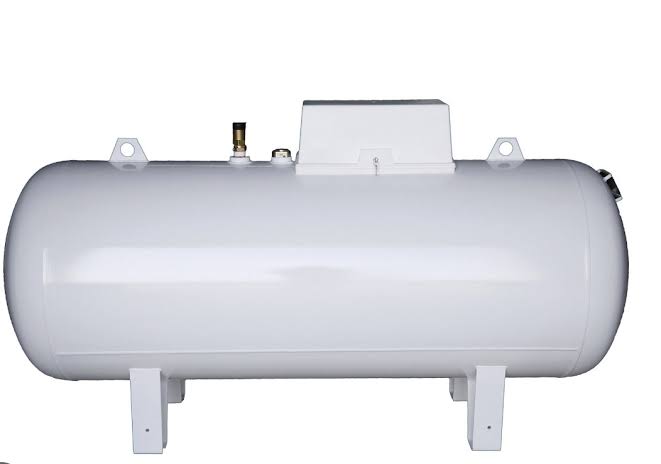
Hospital LPG Kenya systems must be designed around continuity of service, peak thermal demand and strict safety requirements. Hospital kitchens, laundries, hot-water systems and sterilisation-related equipment can create substantial LPG demand, making accurate load assessment, storage sizing, pressure regulation, redundancy and emergency isolation essential.
Hospitals are among the most demanding commercial energy users.
Related Products
Unlike an ordinary commercial building, a hospital cannot simply stop operations when an energy supply becomes unavailable.
Meals still have to be prepared.
Hot water must remain available.
Laundry has to continue.
Certain thermal processes must operate according to schedule.
Patient-care services may depend indirectly on these supporting systems.
This makes hospital LPG Kenya an engineering and operational-continuity issue.
A properly designed LPG installation should therefore account for both normal demand and abnormal situations.
The design question is not only:
How much LPG does the hospital consume?
It is also:
How much LPG does the hospital need to maintain essential services when demand increases or supply is interrupted?
What Is Hospital LPG Kenya?
Hospital LPG Kenya refers to the use of liquefied petroleum gas in healthcare facilities for applications such as commercial cooking, laundry equipment, hot-water production, heating and selected sterilisation-related thermal loads. The installation requires appropriate storage, distribution, regulation, monitoring, emergency isolation and fire-safety controls.
Depending on the facility, LPG can serve:
- Main hospital kitchens
- Staff kitchens
- Laundry dryers
- Boilers
- Hot-water systems
- Commercial ovens
- Food preparation equipment
- Thermal processing equipment
- Selected sterilisation-support systems
Large hospitals may require bulk LPG storage.
Smaller healthcare facilities may use cylinder banks.
The appropriate configuration depends on:
- Hospital bed capacity
- Kitchen output
- Occupancy
- Laundry volume
- Sterilisation requirements
- Hot-water demand
- Appliance load
- Operating hours
- Fuel delivery frequency
- Required reserve
Why LPG Reliability Matters in Hospitals
Hospital LPG systems support services that can affect patient care, staff welfare and facility operations. A reliable installation therefore needs sufficient storage and distribution capacity, controlled pressure, emergency isolation and an appropriate backup strategy so that a single equipment or supply failure does not unnecessarily interrupt critical services.
Consider a hospital kitchen.
It may prepare meals for:
- Patients
- Medical staff
- Support staff
- Visitors
- Special-diet patients
A large facility can produce thousands of meals each day.
Laundry can create another significant thermal load.
The hospital may also operate:
- Hot-water systems
- Boilers
- Dryers
- Commercial cooking equipment
The combined demand can be substantially higher than that of a typical restaurant.
Hospital Kitchen Gas Requirements
Hospital kitchen gas systems should be sized from the connected appliance load and realistic simultaneous operating demand. Commercial cookers, ovens, fryers, boiling equipment and other gas appliances should be assessed individually before calculating the total LPG requirement and selecting regulators and pipework.
A hospital kitchen may contain:
- Commercial ranges
- Multiple burners
- Ovens
- Fryers
- Griddles
- Steam equipment
- Baking ovens
- Large stock-pot burners
- Food-production equipment
Each appliance should have its gas input identified from manufacturer documentation or the equipment nameplate.
The engineer can then establish:
Connected load
and
Diversified or simultaneous load.
Not every appliance operates at maximum output simultaneously.
However, hospital meal preparation can create periods of exceptionally high demand.
This makes peak-load assessment important.
Sizing Hospital LPG Demand
Hospital LPG demand should be calculated using actual appliance ratings, operating schedules, occupancy patterns and peak simultaneous use. Average monthly consumption is useful for fuel procurement but is not sufficient for sizing regulators, pipework, vaporisation systems or other gas-delivery equipment.
A load assessment should consider:
| Load Area | Typical LPG Equipment | Demand Consideration |
|---|---|---|
| Main kitchen | Cookers, ovens, fryers | High during meal preparation |
| Bakery | Ovens, burners | High during production |
| Laundry | Dryers, boilers | Extended operation |
| Hot water | Heaters, boilers | Variable/continuous |
| Sterilisation support | Thermal equipment | Process-dependent |
| Staff kitchen | Cookers | Moderate |
| Catering | Portable/commercial equipment | Variable |
The engineer should also identify which loads are:
essential
and which are:
non-essential.
This distinction becomes valuable when designing redundancy.
Bulk LPG for Hospitals
Bulk LPG can be appropriate for hospitals with substantial and predictable gas demand because it provides centralised storage and reduces the handling associated with multiple cylinders. A properly designed bulk system can also support planned deliveries and greater operational autonomy.
A bulk LPG installation can incorporate:
- Storage tank
- Filling connection
- Isolation valves
- Pressure-relief equipment
- Regulators
- Gas train
- Distribution pipework
- Gas detection
- Emergency shutdown
- Fire protection
Megtraco’s industrial LPG equipment can be incorporated into appropriately engineered commercial and institutional gas systems.
The storage capacity should be selected according to actual consumption and delivery conditions.
LPG Storage Sizing for Hospitals
LPG storage capacity should reflect average consumption, peak demand, delivery frequency and the minimum reserve required to protect essential hospital services. Hospitals with limited delivery access or high consequences of fuel interruption may require greater operational autonomy than ordinary commercial facilities.
A simplified planning formula is:
Required usable reserve = Peak daily LPG consumption × required autonomy
For example, if a hospital requires 400 kg of LPG per day during its highest-demand period and the engineering assessment requires five days of autonomy:
400 × 5 = 2,000 kg
This does not automatically mean that a 2,000 kg nominal tank is appropriate.
The engineer must consider:
- Maximum permitted filling level
- Usable LPG inventory
- Tank characteristics
- Delivery schedule
- Safety requirements
- Future demand
The distinction between nominal storage capacity and usable operating inventory is important.
Hospital LPG Redundancy
Redundancy reduces the risk that a single failure will interrupt hospital LPG services. Depending on the facility, redundancy can include reserve storage, multiple cylinder banks, automatic changeover, independent supply paths, backup regulators or other engineered arrangements designed around the consequences of failure.
A hospital should ask:
What happens if the primary LPG supply becomes unavailable?
Potential failure scenarios include:
- Empty storage tank
- Delayed delivery
- Regulator failure
- Valve failure
- Damaged pipework
- Gas leak
- Fire emergency
- Maintenance isolation
The answer should form part of the LPG system design.
Automatic LPG Changeover
Automatic LPG changeover equipment can maintain gas availability by switching between supply banks when the active source reaches a defined pressure condition. This is particularly useful for hospitals using cylinder banks where uninterrupted kitchen or laundry operation is important.
A typical arrangement can include:
- Primary cylinder bank
- Reserve cylinder bank
- Automatic changeover regulator
- Manifold
- Isolation valves
- Pressure indicators
- Distribution pipework
When the active bank becomes depleted, the system switches to the reserve.
Maintenance personnel can then replace or replenish the depleted supply without immediately interrupting downstream operations.
Hospital LPG Pressure Regulation
Pressure regulation ensures that gas delivered to hospital appliances remains within the operating range specified by the equipment manufacturer. Multi-stage regulation may be used where the installation requires controlled pressure reduction between the storage system and final appliance pressure.
Pressure management becomes increasingly important in large hospitals because:
- Pipe runs can be long
- Multiple buildings may be supplied
- Demand can fluctuate
- Different appliances may require different pressures
The design should consider:
- Inlet pressure
- Outlet pressure
- Flow rate
- Pressure drop
- Regulator capacity
- Safety shutoff
- Relief protection
A regulator should not be selected purely by pipe diameter.
Its capacity must correspond to the actual gas flow and operating conditions.
Hospital LPG Pipework Design
Hospital LPG pipework must provide sufficient flow at the required pressure while maintaining safe routing, mechanical protection and accessibility for inspection. Large healthcare facilities may require carefully planned distribution networks where the main LPG supply feeds several kitchens, service areas or buildings.
The engineer should evaluate:
- Pipe diameter
- Pipe length
- Gas flow
- Operating pressure
- Fittings
- Pressure drop
- Building configuration
- Expansion requirements
Long pipe runs can increase pressure losses.
An undersized distribution line can result in:
- Low appliance pressure
- Burner instability
- Reduced output
- Appliance shutdown
Correct hydraulic sizing is therefore essential.
Hospital Laundry LPG Systems
Hospital laundry operations can create significant LPG demand because commercial dryers, boilers and other thermal equipment may operate for extended periods. Laundry loads should be included in the overall hospital LPG calculation rather than treating kitchen demand as the facility’s only major gas requirement.
Hospital laundry may process:
- Patient clothing
- Bed linen
- Towels
- Theatre linen
- Staff uniforms
- Cleaning materials
Demand can increase significantly during high occupancy or periods of intensive service.
A laundry assessment should identify:
- Number of dryers
- Dryer input
- Operating hours
- Boiler demand
- Peak simultaneous operation
- Future capacity
LPG for Hospital Dryers
LPG-fired commercial dryers can provide rapid thermal energy for hospital laundry operations, but their combined input can create substantial peak demand. The gas distribution system should therefore be sized according to the number of dryers operating simultaneously and the manufacturer’s specified gas input.
For example, five dryers each operating at a high thermal input may produce a significantly larger instantaneous demand than one dryer.
The system should not be sized from the average laundry workload alone.
Hospital Boiler LPG Supply
Where hospitals use LPG-fired boilers, the boiler load can become one of the largest consumers on the site. Boiler gas trains, regulators, pipework and storage should therefore be designed according to the boiler manufacturer’s requirements and the expected operating profile.
A boiler installation may require:
- Gas train
- Pressure regulation
- Safety shutoff
- Flame supervision
- Filtration
- Isolation
- Monitoring
The boiler room should also be assessed for:
- Ventilation
- Combustion air
- Gas detection
- Emergency shutdown
- Fire protection
LPG for Hospital Sterilisation
Sterilisation gas supply requires careful separation between the LPG system and the actual sterilisation process. LPG may be used to provide thermal energy for supporting systems such as boilers or hot-water generation, while the specific sterilisation equipment and process must follow its manufacturer’s requirements and applicable healthcare standards.
Hospitals use sterilisation processes for:
- Surgical instruments
- Medical equipment
- Theatre supplies
- Laboratory equipment
The energy requirement depends on the sterilisation technology.
Steam-based systems may create significant thermal demand because steam generation requires substantial energy.
Therefore, sterilisation gas supply should be assessed as part of the wider thermal-energy system.
Steam Generation and LPG
LPG can be used as a fuel for steam-generation systems where appropriately designed boilers are installed. Because steam production can represent a substantial continuous thermal load, the LPG supply should be engineered around boiler capacity, operating pressure, firing rate and expected duty cycle.
A hospital steam system may support:
- Sterilisation
- Laundry
- Kitchen operations
- Hot-water production
- Other thermal processes
The LPG system therefore becomes an important component of hospital infrastructure.
LPG Vaporisation Capacity
A hospital may have sufficient LPG storage but still experience supply limitations if the storage system cannot vaporise LPG at the required peak rate. Where demand exceeds reliable natural vaporisation capacity, an engineered LPG vaporizer may be required to provide controlled gas production.
This can become important for:
- Large boilers
- High-capacity kitchens
- Multiple dryers
- High-demand hot-water systems
Megtraco provides LPG vaporization equipment for applications requiring controlled LPG vaporisation.
The vaporizer should be selected based on:
- Required gas flow
- LPG composition
- Operating conditions
- Inlet pressure
- Outlet pressure
- Safety controls
- Installation environment
Hospital Gas Leak Detection
Gas detection provides an additional safety layer by monitoring areas where LPG could accumulate following a leak. Detector positioning should account for LPG’s physical properties, room geometry, ventilation and potential leak sources rather than relying on a generic detector layout.
Potential monitoring locations can include:
- Kitchen areas
- Gas manifolds
- Boiler rooms
- Enclosed plant rooms
- Regulator areas
- Other locations identified through risk assessment
Megtraco’s industrial LPG leak detection systems can form part of an integrated gas-safety strategy.
Detection systems may be connected to:
- Audible alarms
- Visual alarms
- Emergency shutdown
- Control panels
- Building management systems
The exact configuration should be engineered for the facility.
Emergency LPG Shutdown in Hospitals
Emergency LPG shutdown allows gas flow to be isolated rapidly when a dangerous condition is identified. Hospitals should have clearly identified isolation arrangements and emergency procedures that allow trained personnel to respond without unnecessarily entering hazardous areas.
Emergency shutdown may be required because of:
- Gas leakage
- Fire
- Equipment failure
- Damaged pipework
- Maintenance
- Emergency response
The system should identify:
Where gas enters the facility.
Where local isolation points are located.
Where emergency shutdown controls are installed.
Staff should be trained to recognise when isolation is appropriate.
Fire Safety for Hospital LPG Installations
Hospital LPG installations require coordinated fire protection because LPG storage and distribution can introduce a significant fire hazard if a leak develops and encounters an ignition source. Fire protection should therefore be integrated into the original engineering design rather than added after construction.
Fire-safety planning may involve:
- LPG emergency shutdown
- Fire extinguishers
- Hydrant systems
- Fire detection
- Fixed suppression
- Emergency access
- Safe storage location
- Separation from ignition sources
International references such as NFPA 58 can provide relevant guidance for LP-Gas installations, while applicable Kenyan regulatory requirements remain essential.
Megtraco supplies commercial fire suppression equipment for engineered fire-safety applications.
LPG Storage Location at Hospitals
The LPG storage area should be positioned and protected according to applicable safety requirements, site conditions and risk assessment. The location should provide safe separation from buildings and ignition sources while remaining accessible for delivery, inspection, maintenance and emergency response.
The design should consider:
- Hospital buildings
- Patient areas
- Emergency entrances
- Generator installations
- Electrical equipment
- Vehicle routes
- Fire-service access
- Delivery vehicle positioning
The tank should not simply be placed wherever there is unused space.
Hospital LPG Delivery Planning
Hospitals should maintain a structured LPG delivery programme based on actual consumption and required reserve. Because fuel interruption can affect essential support services, procurement teams should establish reorder points that provide sufficient time for delivery even when normal logistics are disrupted.
A delivery system should define:
- Normal reorder level
- Emergency reorder level
- Expected delivery lead time
- Supplier contacts
- Consumption monitoring
- Weekend and holiday arrangements
- Emergency escalation procedures
This is particularly important for hospitals operating continuously.
LPG Supply During Emergencies
A hospital LPG strategy should include scenarios where normal fuel deliveries are interrupted. Emergency planning should identify minimum essential loads, available reserve, alternative supply arrangements and procedures for managing consumption until normal delivery is restored.
Potential disruptions include:
- Road closures
- Vehicle breakdown
- Supplier disruption
- Extreme weather
- Equipment failure
- Infrastructure damage
The hospital should know which LPG loads are essential.
For example:
Essential
- Critical kitchen operations
- Required hot-water systems
- Essential thermal processes
Non-essential
- Optional catering facilities
- Certain auxiliary loads
- Non-critical thermal services
This allows emergency management teams to prioritise available fuel appropriately.
Hospital LPG Maintenance
Preventive maintenance reduces the probability of leaks, regulator failures, degraded pipework and unsafe equipment conditions. Hospital LPG maintenance should cover storage, regulators, valves, pipework, gas detection, emergency shutdown equipment, appliances and associated fire-safety systems.
| System | Inspection Focus | Maintenance Objective |
|---|---|---|
| LPG tank | Condition, fittings, corrosion | Storage integrity |
| Regulators | Pressure and response | Stable supply |
| Pipework | Leaks, corrosion, supports | Distribution integrity |
| Valves | Operation and condition | Reliable isolation |
| Gas detectors | Functional response | Early warning |
| Emergency shutdown | Activation and reset | Emergency isolation |
| Gas trains | Safety devices | Burner protection |
| Appliances | Burners and controls | Efficient combustion |
| Fire equipment | Condition and service | Fire response |
| Vaporizer | Performance and controls | Reliable gas production |
Maintenance intervals should follow applicable standards, manufacturer requirements and the facility’s risk-based maintenance programme.
Hospital LPG Inspection Checklist
A structured inspection programme helps identify defects before they become service interruptions or safety incidents. The inspection should cover both the LPG equipment itself and the conditions around it, including access, ventilation, signage, protection from damage and emergency equipment.
| Inspection Item | Check | Status |
|---|---|---|
| Storage tank | Visible condition and fittings | Inspect |
| Tank valves | Operation and condition | Inspect |
| Pipework | Leaks and corrosion | Inspect |
| Regulators | Pressure and condition | Test |
| Gas detectors | Alarm response | Test |
| Emergency shutoff | Functional operation | Test |
| Gas appliances | Burner operation | Inspect |
| Gas trains | Safety controls | Test |
| Fire equipment | Service status | Verify |
| Ventilation | Adequacy | Verify |
| Safety signage | Visibility | Verify |
| Delivery access | Clear and safe | Verify |
Any defect should be documented and addressed through the facility’s maintenance process.
Commissioning a Hospital LPG Installation
LPG commissioning verifies that the installation has been constructed, tested and configured correctly before normal operation. For hospitals, commissioning should include pressure and tightness testing, equipment verification, emergency shutdown testing, leak detection, appliance commissioning and documentation handover.
A professional commissioning programme should include:
- Design review
- Installation inspection
- Pipework inspection
- Pressure testing
- Tightness testing
- Leak checks
- Regulator verification
- Gas train verification
- Detector testing
- Emergency shutdown testing
- Appliance commissioning
- Fire-system verification
- Staff training
- Documentation handover
The installation should not be considered complete until the relevant test results and documentation have been reviewed.
Hospital LPG Compliance in Kenya
Hospital LPG installations in Kenya should be designed and operated in accordance with applicable petroleum, construction, occupational-safety, fire-safety and standards requirements. EPRA, KEBS and relevant occupational and fire-safety authorities should be considered during design, installation, inspection and commissioning.
Key compliance considerations can include:
- LPG installation licensing
- Approved equipment
- Pressure equipment requirements
- Safe storage
- Installation standards
- Fire-safety requirements
- Occupational safety
- Inspection and testing
- Documentation
Where applicable, internationally recognised technical standards such as NFPA 58 can supplement the engineering framework.
The specific requirements for a project should be confirmed against the current regulations and the requirements of the relevant authorities having jurisdiction.
Hospital LPG and Occupational Safety
Hospital LPG systems must be managed as workplace hazards because maintenance personnel, kitchen workers, contractors and other employees may interact with gas equipment. Appropriate risk assessments, training, safe work procedures and emergency arrangements help reduce exposure to gas, fire and pressure-related hazards.
Workplace controls should address:
- Gas leaks
- Fire
- Pressure
- Hot surfaces
- Maintenance activities
- Cylinder handling
- LPG delivery
- Emergency isolation
Contractors working on LPG systems should follow approved permit and isolation procedures where required.
Designing LPG Systems for Hospital Expansion
Hospital LPG infrastructure should consider future expansion because new wards, kitchens, laundry equipment and thermal systems can increase demand significantly. Designing expansion capacity into storage, pipework and regulation can reduce the cost and disruption of later modifications.
Future demand may come from:
- New hospital wings
- Additional beds
- Expanded kitchens
- Larger laundry facilities
- New theatres
- Additional sterilisation equipment
- New boiler capacity
A design that only meets today’s load may become inadequate within a few years.
Common Hospital LPG Design Mistakes
Many LPG problems originate from incomplete load assessment, inadequate reserve, poor pipe sizing or insufficient attention to redundancy. Healthcare facilities should avoid treating LPG infrastructure as a basic utility installation because the consequences of interruption can extend beyond normal commercial inconvenience.
Common mistakes include:
Designing from average consumption
Average consumption does not represent peak gas flow.
Ignoring laundry
Laundry can represent a major thermal load.
Ignoring sterilisation-support systems
Steam generation and hot-water demand can substantially increase LPG consumption.
Undersizing regulators
A regulator must handle the required gas flow.
Undersizing pipework
Pressure drop can compromise appliance operation.
No reserve strategy
A delayed delivery can become an operational emergency.
Poor detector placement
Detection should be based on risk and LPG behaviour.
No emergency isolation plan
Staff must know how to respond to a gas emergency.
Ignoring future expansion
Additional equipment can exceed the original system capacity.
Improving Hospital LPG Reliability
Hospital LPG reliability improves when engineering, procurement, maintenance and emergency planning are integrated. The facility should continuously monitor consumption, maintain appropriate reserve, test safety equipment and ensure that the gas system can support its highest credible operational demand.
A strong reliability programme includes:
Accurate load assessment
Identify all LPG-consuming equipment.
Peak-demand analysis
Determine simultaneous demand.
Storage planning
Maintain sufficient operational autonomy.
Redundancy
Protect critical services from single-point failures.
Gas detection
Provide early warning where appropriate.
Emergency isolation
Allow rapid shutdown during hazardous conditions.
Preventive maintenance
Identify defects before failure.
Staff training
Ensure personnel understand normal and emergency procedures.
Hospital LPG Versus Other Thermal Fuels
LPG offers hospitals a compact and flexible thermal-energy option, but the appropriate fuel strategy depends on the facility’s infrastructure, equipment, operating requirements and energy economics. LPG should therefore be assessed alongside electricity, diesel, natural gas where available and renewable thermal technologies rather than selected solely on fuel price.
| Factor | LPG | Electricity | Diesel |
|---|---|---|---|
| Direct thermal cooking | Strong | Equipment-dependent | Generally unsuitable |
| Storage | Compact | Grid/battery dependent | Requires liquid-fuel storage |
| Thermal response | Rapid | Rapid with suitable equipment | Suitable for thermal systems |
| Off-grid suitability | Strong | Requires generation/storage | Strong |
| Delivery dependence | Yes | Usually lower if grid-connected | Yes |
| Commercial kitchens | Highly suitable | Suitable with electrical equipment | Less suitable |
| Backup potential | Strong | Depends on generation | Strong |
The correct solution may involve multiple energy sources.
A hospital could use:
- LPG for cooking
- Electricity for general electrical loads
- Solar systems for selected hot-water loads
- Generators for electrical backup
- LPG-fired boilers for selected thermal applications
Energy systems should be integrated rather than designed in isolation.
Frequently Asked Questions
What is hospital LPG Kenya used for?
Hospital LPG Kenya systems are commonly used for commercial kitchens, laundry equipment, boilers, hot-water systems and selected thermal processes. The exact applications depend on the hospital’s equipment and engineering design.
How is hospital LPG storage sized?
Hospital LPG storage is sized from consumption, peak demand, delivery frequency, required reserve, site constraints and applicable safety requirements. Critical facilities may require greater autonomy because fuel interruption can affect essential services.
Why does hospital kitchen gas require careful sizing?
Hospital kitchen gas demand can be high because many commercial appliances may operate simultaneously during meal preparation. Pipework, regulators and storage should therefore be designed around calculated peak demand rather than average fuel consumption.
Can LPG be used for hospital sterilisation?
LPG can provide thermal energy for systems supporting sterilisation, such as LPG-fired steam boilers or hot-water systems. The specific sterilisation equipment and process must comply with its manufacturer’s requirements and applicable healthcare standards.
What is sterilisation gas supply?
Sterilisation gas supply can refer to the fuel or thermal-energy supply supporting sterilisation equipment. Where LPG is used, it should be engineered around the required boiler, steam or thermal load rather than treating sterilisation equipment as an ordinary kitchen appliance.
Do hospitals need backup LPG supply?
Hospitals should assess the consequences of LPG interruption and provide an appropriate reserve or redundancy strategy for essential services. The specific configuration may involve additional storage, cylinder-bank changeover or other engineered backup arrangements.
How often should hospital LPG systems be inspected?
Inspection and maintenance frequency should follow applicable regulations, equipment manufacturer requirements, standards and the hospital’s risk-based maintenance programme. Safety-critical components should not be left until a failure occurs.
Does hospital LPG require gas detection?
Gas detection may be appropriate in areas where an LPG leak could accumulate and create a significant hazard. Detector type and location should be established through engineering assessment, LPG properties, ventilation and the facility layout.
Can hospital LPG systems operate during power outages?
Direct-gas appliances can operate during a power outage if they do not depend on electricity for their controls. Electrically powered vaporizers, detectors, automatic valves and control systems require appropriate backup power where continued operation is necessary.
What standards apply to hospital LPG systems in Kenya?
Applicable Kenyan petroleum, safety, standards and fire requirements should be assessed for each installation, including relevant EPRA and KEBS requirements. International standards such as NFPA 58 may provide additional engineering guidance where applicable.
Engineering Conclusion
Hospital LPG Kenya systems require a higher level of planning because they support essential services rather than ordinary commercial activities. Kitchens, laundries, boilers, hot-water systems and sterilisation-support equipment can create substantial and variable demand, requiring accurate sizing, reliable storage, controlled distribution, safety systems and operational redundancy.
The most important design principle is simple:
Do not size the LPG system around one appliance or one average consumption figure.
Assess the complete facility.
That means understanding:
- Kitchen demand
- Laundry demand
- Boiler demand
- Hot-water demand
- Sterilisation-related thermal demand
- Peak simultaneous load
- Storage autonomy
- Delivery logistics
- Pressure requirements
- Pipework capacity
- Vaporisation capacity
- Emergency requirements
A hospital LPG system should also be designed for failure scenarios.
What happens if the main regulator fails?
What happens if a delivery is delayed?
What happens if a gas leak requires isolation?
What happens if the electrical supply fails?
What happens if the hospital expands?
These questions should be answered during engineering design, not after an emergency occurs.
Megtraco Kenya Ltd can support healthcare facilities with professional engineering consultation covering LPG equipment, gas distribution, vaporisation and associated safety infrastructure.
For facilities requiring advanced LPG piping systems, material selection and routing should be based on application, pressure, environment and applicable standards.
Where institutional projects require detailed equipment selection, the complete product catalogue provides access to relevant LPG and fire-safety equipment.
For a hospital planning a new LPG installation, expansion or upgrade, the objective should be a system that delivers safe pressure, adequate capacity, sufficient reserve and dependable operation throughout the facility’s expected service life.
Hospital LPG should never be treated simply as a fuel-storage project.
It is critical infrastructure.
Your Trusted LPG & Fire Safety Engineering Partner in East Africa
Whether you’re designing a new LPG installation, upgrading industrial gas systems, or enhancing fire safety compliance, Megtraco Kenya Ltd delivers certified engineering solutions backed by decades of expertise. From LPG equipment supply and pipeline installations to fire suppression and detection systems, our experienced team provides reliable solutions for commercial, industrial, and institutional projects across East Africa.
Contact us today for professional consultation, engineering support, or a customized quotation.
WHY CHOOSE MEGTRACO KENYA LTD
You May Also Like

- ✔ Established Since 1969 – Decades of proven engineering excellence.
- ✔ KEBS Certified Products – Guaranteed quality and compliance with regional standards.
- ✔ EPRA Licensed LPG Engineering Company – Fully certified to design, install, and commission.
- ✔ Industrial & Commercial LPG Specialists – Scaled to handle heavy-duty thermal requirements.
- ✔ Fire Suppression & Fire Detection Experts – End-to-end asset protection.
- ✔ Regional Operational Footprint – Serving Nairobi, Mombasa, Kisumu, Nakuru, Eldoret, Thika, Machakos, East Africa, and beyond.
Contact Megtraco Kenya Ltd
- Email: sales@megtracokenya.com
- Sales: +254 725 870 114
- Technical: +254 733 721 598
- WhatsApp: +254 799 086 323
- Location: Nairobi, Kenya – Serving East Africa
- Website: https://megtracokenya.com
Request a Quote today and partner with East Africa’s trusted LPG and fire safety engineering company since 1969.
