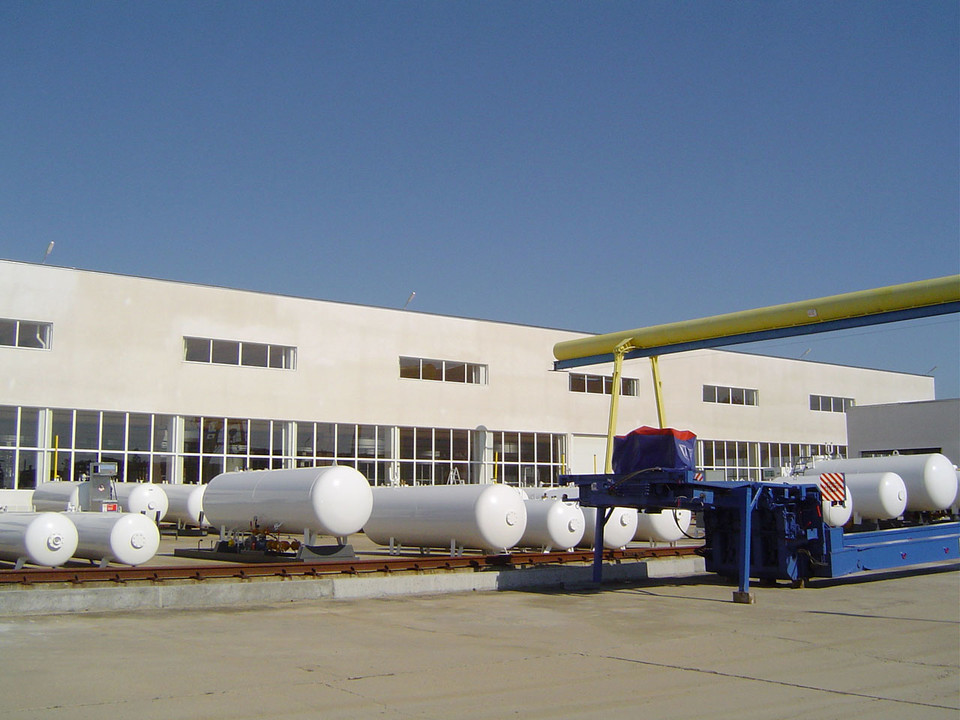
Food processing LPG Kenya is particularly relevant where factories require dependable process heat for brewing, distilling, cooking, drying, sterilisation, hot-water production and steam generation. Properly engineered LPG systems can provide controlled thermal energy, but storage, vaporisation, regulation, gas trains, pipework and fire safety must be matched to the plant’s actual process load.
Food and beverage manufacturing is fundamentally a thermal industry.
Related Products
Although modern factories rely heavily on electrical automation, many of the most important production processes still require heat.
Breweries require heat during wort production and other stages of processing.
Distilleries require thermal energy for process heating and associated steam systems.
Food processors may require heat for:
- Cooking
- Blanching
- Pasteurisation
- Sterilisation
- Drying
- Baking
- Evaporation
- Hot-water production
- Cleaning
This makes food processing LPG Kenya an important consideration for manufacturers seeking a reliable industrial thermal-energy source.
The critical engineering question is not simply whether LPG can produce heat.
It can.
The question is whether the complete LPG infrastructure can deliver the required thermal output continuously, safely and economically.
What Is Food Processing LPG Kenya?
Food processing LPG Kenya refers to LPG systems engineered to supply thermal energy to food and beverage manufacturing processes. These systems can serve boilers, direct-fired equipment, ovens, dryers, burners, hot-water systems and other industrial applications where controlled combustion is required.
Unlike domestic LPG installations, industrial systems can involve:
- High gas flow rates
- Large storage tanks
- Industrial regulators
- Gas trains
- Automated burner controls
- Vaporizers
- Process boilers
- Long pipe runs
- Multiple production lines
The engineering approach must therefore begin with the process.
Why LPG Is Used for Process Heat
LPG provides concentrated thermal energy and can be used in both direct-fired and boiler-based applications. Its ability to supply controlled heat makes it suitable for manufacturing processes where temperature, production continuity and burner response are important.
Food manufacturers may select LPG because it can support:
- Rapid heat-up
- Controlled combustion
- Automated burner operation
- Steam generation
- Direct heating
- Hot-water production
- Flexible production scheduling
However, the economics depend on the specific plant.
A process engineer should consider:
- LPG price
- Equipment efficiency
- Thermal demand
- Operating hours
- Delivery logistics
- Storage requirements
- Maintenance costs
- Alternative energy sources
Brewery Process Heat
Brewery process heat is required at several stages of production, particularly where water or wort must be heated according to controlled temperature and time requirements. LPG can supply this heat directly through burners or indirectly through steam or hot-water systems.
A brewery may require thermal energy for:
- Brewing liquor
- Mash heating
- Wort boiling
- Hot-water production
- Cleaning-in-place systems
- Bottle or container processing
- Steam generation
The exact thermal profile varies according to the brewery’s process design.
A small craft brewery may have a very different load profile from a large industrial brewery.
LPG for Brewery Boilers
LPG-fired boilers can supply steam for brewery processes where steam is the preferred heat-transfer medium. Boiler sizing should be based on steam demand, pressure requirements, operating hours, peak loads and the required response during production changes.
A boiler system may include:
- LPG burner
- Gas train
- Pressure regulator
- Safety shutoff valves
- Flame supervision
- Combustion controls
- Boiler controls
- Feedwater system
- Steam distribution
The LPG supply must be capable of supporting the boiler’s maximum firing rate.
This means the gas system cannot be sized solely from the boiler’s average operating consumption.
Distillery Fuel Requirements
Distillery fuel requirements depend heavily on the process configuration, especially steam demand, wash heating, distillation and hot-water requirements. LPG can serve as a boiler fuel or direct thermal source where the equipment is designed for gaseous fuel.
Distilleries can require significant thermal energy because distillation involves controlled heating and vapour condensation.
Thermal loads may include:
- Mash preparation
- Fermentation support
- Distillation
- Steam generation
- Hot-water production
- Cleaning
- Evaporation
The distillery fuel system should therefore be assessed alongside the complete process.
LPG for Food Processing Plants
LPG for food processing plants can support direct and indirect thermal processes including baking, cooking, drying, pasteurisation, blanching and steam generation. The appropriate configuration depends on whether the process requires direct flame contact, hot air, thermal fluid, hot water or steam.
Different food processes require different heat-transfer arrangements.
For example:
Direct-fired process
The flame or combustion gases provide heat directly.
Hot-air process
Combustion heats air that is circulated through the process.
Steam process
LPG fires a boiler that generates steam.
Hot-water process
LPG heats water that circulates through process equipment.
The fuel system should therefore be designed around the process equipment.
Direct-Fired LPG Applications
Direct-fired LPG systems can provide rapid thermal response where the process permits direct combustion or heated air. These systems can be effective for ovens, burners, dryers and selected industrial heating applications when combustion products and food-product contact are properly controlled.
Potential applications include:
- Industrial ovens
- Baking
- Roasting
- Drying
- Heating
- Some process burners
Food-contact applications require particularly careful consideration of combustion quality, ventilation and applicable hygiene requirements.
The process designer must establish whether direct combustion is technically and hygienically appropriate.
LPG Steam Generation
LPG-fired steam generation is one of the most versatile ways to deliver process heat to food and beverage factories. Steam can distribute thermal energy across multiple production areas while allowing centralised boiler control and process temperature management.
Steam may serve:
- Breweries
- Distilleries
- Dairy plants
- Meat processors
- Bakeries
- Beverage plants
- Canneries
- Sauce manufacturers
A central boiler can therefore become a major thermal-energy hub.
The LPG system must accommodate the boiler’s maximum firing rate and operating profile.
Calculating Process Heat Demand
Process heat demand should be calculated from the actual thermal requirements of each production stage rather than from the factory’s historical LPG consumption alone. Engineers should establish connected loads, operating schedules, simultaneous demand and expected production growth before selecting storage, regulators and gas-delivery equipment.
A load assessment should include:
| Process | Thermal Equipment | Main Load Variable |
|---|---|---|
| Brewing | Boiler or direct burner | Steam/heat demand |
| Distillation | Boiler/heater | Distillation duty |
| Baking | Industrial oven | Burner input |
| Drying | Dryer | Moisture removal |
| Pasteurisation | Steam/hot water | Product throughput |
| Cooking | Burners/steam | Batch size |
| Cleaning | Hot-water/steam | CIP demand |
| Hot water | Heater/boiler | Flow and temperature |
The assessment should identify:
Connected thermal load
Peak thermal load
Average operating load
Future expansion load
This creates a realistic basis for LPG system sizing.
Peak LPG Demand in Food Factories
Peak LPG demand occurs when several high-load processes operate simultaneously or when equipment fires at maximum capacity during production start-up. The LPG distribution system must accommodate this peak demand without unacceptable pressure drop or regulator limitation.
Consider a plant operating:
- One large boiler
- Two ovens
- A dryer
- Several cooking burners
The combined instantaneous gas requirement can be significantly higher than the average daily consumption.
This is why:
kg/day
and
kg/hour
answer different engineering questions.
Storage planning depends heavily on daily consumption.
Gas-system capacity depends heavily on peak flow.
LPG Vaporisation Capacity
High-demand industrial LPG systems can encounter vaporisation limitations when the storage arrangement cannot reliably produce vapour at the required rate. Where natural tank vaporisation is insufficient, an engineered LPG vaporizer can provide controlled gas production for demanding process loads.
This can be particularly important for:
- Large boilers
- High-capacity ovens
- Industrial dryers
- Multiple simultaneous burners
Megtraco provides high-performance LPG vaporizers for appropriately engineered industrial applications.
Vaporizer selection should consider:
- Required flow rate
- LPG composition
- Operating pressure
- Ambient conditions
- Temperature
- Control requirements
- Safety systems
The vaporizer must be sized for the actual peak requirement.
LPG Storage for Food Processing Plants
Industrial LPG storage should be sized around consumption, delivery frequency, operational reserve and site requirements. A food factory with continuous production may require sufficient inventory to avoid production interruptions caused by delayed deliveries or unexpected increases in demand.
Storage planning should consider:
- Daily LPG consumption
- Peak production periods
- Delivery frequency
- Supplier lead time
- Minimum reserve
- Site restrictions
- Future expansion
A simple planning approach is:
Required operating reserve = peak daily consumption × required autonomy
This provides an initial planning figure.
Final tank selection must also consider applicable filling limits, engineering requirements and site safety constraints.
LPG Gas Trains for Industrial Processes
An LPG gas train controls and protects the gas supply to industrial burners. It can include isolation, filtration, pressure regulation, safety shutoff and monitoring components that allow the burner system to operate within defined conditions.
Industrial gas trains may include:
- Manual isolation valves
- Filters
- Regulators
- Safety shutoff valves
- Pressure switches
- Solenoid valves
- Monitoring components
The exact configuration depends on the burner and applicable standards.
Megtraco supplies LP gas train equipment for industrial gas applications.
Gas trains should be designed around the burner manufacturer’s requirements.
Industrial LPG Pressure Regulation
Pressure regulation maintains the gas pressure required by industrial burners and process equipment. Large food factories may require multiple stages of pressure reduction because storage pressure, distribution pressure and burner operating pressure can differ significantly.
The design should consider:
- Maximum inlet pressure
- Minimum inlet pressure
- Required outlet pressure
- Maximum gas flow
- Pressure drop
- Regulator capacity
- Safety shutoff requirements
Incorrect pressure can cause:
- Poor combustion
- Burner instability
- Low heat output
- Equipment trips
- Unsafe operation
LPG Pipework for Food Processing
Industrial LPG pipework should be hydraulically sized to carry the maximum required gas flow while maintaining the pressure needed at each burner. Pipe diameter, length, fittings, pressure and material selection should be established during engineering design.
A pipework design should consider:
- Flow rate
- Pipe length
- Pressure
- Pressure drop
- Fittings
- Branches
- Expansion
- Supports
- Corrosion exposure
- Mechanical protection
Food factories often contain multiple production areas.
A central LPG supply may therefore feed:
- Boiler house
- Bakery
- Production kitchen
- Dryer
- Packaging area
- Other thermal equipment
Each branch should be appropriately sized and isolated.
LPG Metering for Food Processing
Industrial LPG metering allows manufacturers to connect fuel consumption with production output. Monitoring LPG consumption against tonnes produced, batches completed or operating hours can reveal changes in thermal efficiency and help identify abnormal fuel use.
Useful performance indicators include:
kg LPG per tonne of product
kg LPG per batch
kg LPG per operating hour
LPG cost per production unit
For example:
If a brewery consumes more LPG per hectolitre of product than its historical benchmark, engineers can investigate:
- Boiler efficiency
- Steam losses
- Insulation
- Burner condition
- Production changes
- Heat recovery
- Leakage
- Process settings
Improving Thermal Efficiency
Improving LPG efficiency requires attention to the complete thermal system rather than focusing only on the burner. Boiler efficiency, insulation, steam losses, condensate recovery, combustion control, heat recovery and process scheduling can all affect how much useful heat is obtained from each unit of LPG.
Important measures include:
Boiler maintenance
Poor combustion can increase fuel consumption.
Steam-line insulation
Heat loss from poorly insulated pipework reduces useful thermal output.
Condensate recovery
Recovering condensate can reduce the energy required to produce new steam.
Burner tuning
Correct combustion improves heat transfer and operating stability.
Process scheduling
Avoiding unnecessary simultaneous operation can reduce peak demand.
Heat recovery
Waste heat may be recoverable for water preheating or other applications.
LPG and Food Safety
LPG combustion systems in food-processing environments must be designed so that fuel and combustion products do not compromise product safety. Ventilation, burner condition, combustion controls and process separation should be considered alongside the thermal requirements of the plant.
The engineering assessment should consider:
- Combustion air
- Exhaust gases
- Ventilation
- Burner condition
- Flame supervision
- Equipment location
- Product exposure
Where direct-fired equipment is used, the process designer must determine whether the combustion arrangement is appropriate for the product.
LPG Leak Detection in Processing Plants
Industrial LPG leak detection provides early warning where a gas leak could create a fire or explosion hazard. Detector locations should be selected according to the properties of LPG, equipment arrangement, ventilation and the consequences of gas accumulation.
Potential detection areas include:
- Boiler rooms
- Gas trains
- LPG manifolds
- Enclosed equipment rooms
- Storage-related areas
- Other locations established through risk assessment
Detection systems may interface with emergency shutdown controls.
Megtraco’s LPG leak detection technologies can be integrated into appropriately engineered installations.
Emergency Shutdown in Food Processing Plants
Emergency shutdown systems allow LPG flow to be isolated when a dangerous condition occurs. In an industrial food plant, shutdown arrangements should be coordinated with burner controls and emergency procedures so that fuel can be isolated without creating additional hazards.
Potential triggers include:
- Gas detection
- Fire detection
- Manual emergency activation
- Equipment malfunction
- Pressure abnormality
The emergency system should be tested during commissioning and periodically thereafter according to the applicable maintenance programme.
Fire Protection for LPG Process Areas
Industrial LPG installations require fire protection appropriate to the storage, distribution and process hazards. Fire protection should be integrated with gas detection, emergency shutdown, access control and emergency response procedures.
A facility may require:
- Fire detection
- Portable extinguishers
- Fixed suppression
- Hydrant systems
- Emergency shutdown
- Alarm systems
Megtraco supplies commercial fire suppression equipment for engineered fire-protection applications.
The final fire strategy should be determined through a project-specific risk assessment.
LPG Installation in Breweries
A brewery LPG installation should connect fuel infrastructure to the brewery’s actual thermal process, whether the plant uses steam, direct-fired equipment or hot-water systems. Storage, regulation, gas trains and pipework must be sized around peak brewery demand and the required production continuity.
A brewery design may include:
Bulk storage
Provides central fuel inventory.
Vaporisation
Supports high instantaneous gas demand where necessary.
Pressure regulation
Provides controlled burner supply.
Gas train
Protects and controls burner operation.
Boiler
Converts LPG energy into steam.
Steam distribution
Delivers thermal energy to production areas.
LPG Installation in Distilleries
A distillery LPG installation must account for the high thermal demand associated with heating and distillation. Boiler capacity, burner duty, operating hours and process scheduling should be evaluated before the fuel system is selected.
Distilleries can experience:
- Long operating periods
- High boiler demand
- Repeated heating cycles
- Significant hot-water requirements
The fuel system should therefore be designed for the complete production profile.
LPG for Bakeries and Food Manufacturers
LPG can support commercial bakeries and food factories through direct-fired ovens, burners and indirect heating systems. The correct installation depends on oven capacity, burner specifications, operating schedule and whether heat is delivered directly or through another medium.
Applications can include:
- Bread production
- Biscuit production
- Cakes
- Roasting
- Cooking
- Drying
- Snack production
High-throughput facilities should assess peak simultaneous demand across all production lines.
Industrial LPG Maintenance
Preventive maintenance is essential for industrial LPG systems because equipment failure can interrupt production as well as create a safety hazard. Maintenance should cover storage, regulators, gas trains, pipework, detectors, emergency shutdown systems, burners and associated fire equipment.
| System | Inspection Focus | Operational Objective |
|---|---|---|
| LPG tank | Condition and fittings | Secure storage |
| Regulators | Pressure performance | Stable gas supply |
| Gas trains | Safety controls | Burner protection |
| Pipework | Leaks and integrity | Reliable distribution |
| Burners | Combustion | Efficient heat |
| Vaporizer | Flow and controls | Gas availability |
| Meter | Measurement | Consumption control |
| Detectors | Alarm response | Early warning |
| Shutdown system | Activation | Emergency isolation |
| Fire systems | Service condition | Fire protection |
Maintenance records should document inspections, faults, corrective action and testing.
LPG Commissioning for Food Processing Plants
Commissioning confirms that an industrial LPG installation has been constructed, tested and configured according to the approved design and equipment requirements. The process should verify pipework integrity, pressure, gas trains, safety devices, burners, detection and emergency shutdown before production operation begins.
A commissioning programme should include:
- Design review
- Installation inspection
- Pressure testing
- Tightness testing
- Leak checks
- Regulator verification
- Gas train testing
- Burner commissioning
- Detector testing
- Emergency shutdown testing
- Fire-system verification
- Operator training
- Documentation handover
Production should not depend on an untested gas system.
LPG Compliance for Food Processing Plants in Kenya
Food processing LPG installations in Kenya should be assessed against applicable petroleum, occupational-safety, fire-safety and standards requirements. EPRA and KEBS requirements are relevant to LPG installations and equipment, while occupational and fire-safety obligations should also be incorporated into project planning.
Compliance considerations may include:
- LPG installation licensing
- Approved LPG equipment
- Pressure equipment
- Storage requirements
- Gas installation standards
- Fire protection
- Occupational safety
- Inspection and testing
- Technical documentation
NFPA 58 can provide additional international guidance for LP-Gas installations where applicable.
The precise compliance requirements should be verified for the specific installation and current regulatory framework.
Designing for Production Expansion
Food and beverage plants should consider future production growth when designing LPG infrastructure. Additional boilers, ovens, dryers or production lines can increase gas demand significantly, so storage, pipework, regulators and vaporisation capacity should be assessed for foreseeable expansion.
Future expansion may involve:
- Larger boilers
- Additional production lines
- New ovens
- Increased drying capacity
- Additional kitchens
- Expanded packaging operations
An appropriately planned LPG system can make later expansion easier and less disruptive.
Common LPG Mistakes in Food Processing
Industrial LPG problems often arise when fuel infrastructure is designed independently of the production process. The LPG system should be treated as part of the thermal plant, with capacity, pressure, safety and maintenance linked directly to production requirements.
Common mistakes include:
Sizing from average consumption
Average usage does not represent maximum gas flow.
Ignoring boiler firing rate
Boiler gas demand can be substantial.
Undersizing the gas train
The gas train must accommodate the burner requirements.
Ignoring vaporisation
Storage capacity does not automatically guarantee adequate gas flow.
Poor pressure regulation
Incorrect pressure can compromise burner performance.
No consumption monitoring
Without measurement, efficiency problems can remain hidden.
Poor maintenance
Burner and regulator problems can increase fuel use and downtime.
No future capacity
Plant expansion can expose limitations in the original design.
LPG Versus Other Process Fuels
LPG should be evaluated against other available thermal-energy options based on process requirements, fuel availability, equipment efficiency, emissions considerations, infrastructure and operating economics. No single fuel is automatically optimal for every food-processing plant.
| Factor | LPG | Diesel | Electricity |
|---|---|---|---|
| Direct combustion | Strong | Strong | No |
| Boiler applications | Strong | Strong | Equipment-dependent |
| Burner control | Strong | Strong | N/A |
| Storage | Pressurised | Liquid | Electrical infrastructure |
| Peak thermal output | High | High | Depends on equipment |
| Delivery dependence | Yes | Yes | Grid/generation dependent |
| Direct-fired ovens | Suitable | Equipment-dependent | Electric oven required |
| Automation | Strong | Strong | Strong |
The correct selection should be based on the plant’s engineering and economic requirements.
Frequently Asked Questions
What is food processing LPG Kenya?
Food processing LPG Kenya refers to LPG systems used to supply thermal energy to food and beverage manufacturing processes. Applications include boilers, ovens, dryers, cooking systems, hot-water systems and other industrial heating equipment.
Why is LPG suitable for brewery process heat?
LPG can provide controlled thermal energy for brewery boilers, hot-water systems and direct-fired equipment. The appropriate application depends on the brewery’s process requirements, peak heat demand and equipment configuration.
What is distillery fuel?
Distillery fuel is the energy source used to provide thermal energy for processes such as heating, steam generation and distillation. LPG can serve as distillery fuel where compatible boilers, burners and thermal equipment are properly engineered.
Can LPG run a food-processing boiler?
Yes. LPG can fire appropriately designed industrial boilers. The LPG supply must be sized according to the boiler’s maximum firing rate, operating pressure, gas requirements and production profile.
Does a brewery need an LPG vaporizer?
Not necessarily. The requirement depends on the LPG demand, storage configuration and reliable natural vaporisation capacity. High-demand systems may require an engineered vaporizer to maintain the required gas flow.
How do food factories monitor LPG efficiency?
Factories can monitor LPG consumption against production output using indicators such as kilograms of LPG per tonne of product, per batch or per operating hour. These measurements can reveal changes in thermal efficiency.
What is the most important LPG design factor for a food factory?
Peak thermal demand is one of the most important factors because the LPG system must deliver sufficient gas during maximum simultaneous operation. Storage, regulation, pipework and vaporisation should all be evaluated against this demand.
How often should industrial LPG systems be maintained?
Maintenance should follow applicable regulations, equipment manufacturer requirements and the plant’s risk-based maintenance programme. Safety-critical components should be inspected and tested regularly rather than maintained only after failure.
What standards apply to industrial LPG systems in Kenya?
Industrial LPG systems should be assessed against applicable Kenyan petroleum, safety, fire and standards requirements, including relevant EPRA and KEBS provisions. NFPA 58 may provide additional international engineering guidance where applicable.
Can LPG reduce food-processing production costs?
LPG can contribute to cost-effective thermal production when the system is correctly sized and efficiently operated. Actual savings depend on fuel price, equipment efficiency, production profile, maintenance and comparison with alternative energy sources.
Engineering Conclusion
Food processing LPG Kenya systems should be engineered around the thermal process rather than treated as a standalone fuel installation. Breweries, distilleries and food factories have different heat profiles, but all require dependable energy delivery, accurate load assessment, controlled combustion and appropriate safety infrastructure.
The strongest industrial LPG designs begin by understanding the production process.
For a brewery, this may mean analysing:
- Steam demand
- Wort heating
- Hot-water requirements
- Cleaning processes
- Production cycles
For a distillery:
- Boiler demand
- Distillation duty
- Heating cycles
- Steam requirements
- Hot-water demand
For a food-processing plant:
- Ovens
- Dryers
- Cooking equipment
- Pasteurisation
- Sterilisation
- Hot-water systems
From this process assessment, engineers can establish:
Peak gas demand
Storage requirements
Pressure requirements
Pipework capacity
Vaporisation requirements
Gas-train specifications
Safety systems
Future expansion capacity
Megtraco Kenya Ltd supports commercial and industrial clients with customized engineering solutions for LPG infrastructure and related fire-safety systems.
Manufacturers can also browse industrial LPG equipment for equipment relevant to process-heat installations.
Where high LPG demand requires controlled vaporisation, LPG vaporizers can be incorporated into appropriately designed systems.
For industrial food and beverage manufacturers, the goal should be more than simply finding a fuel.
The goal is to establish a safe, controllable and reliable thermal-energy system that supports production continuity while allowing fuel consumption to be measured and managed.
Your Trusted LPG & Fire Safety Engineering Partner in East Africa
Whether you’re designing a new LPG installation, upgrading industrial gas systems, or enhancing fire safety compliance, Megtraco Kenya Ltd delivers certified engineering solutions backed by decades of expertise. From LPG equipment supply and pipeline installations to fire suppression and detection systems, our experienced team provides reliable solutions for commercial, industrial, and institutional projects across East Africa.
Contact us today for professional consultation, engineering support, or a customized quotation.
WHY CHOOSE MEGTRACO KENYA LTD
You May Also Like

- ✔ Established Since 1969 – Decades of proven engineering excellence.
- ✔ KEBS Certified Products – Guaranteed quality and compliance with regional standards.
- ✔ EPRA Licensed LPG Engineering Company – Fully certified to design, install, and commission.
- ✔ Industrial & Commercial LPG Specialists – Scaled to handle heavy-duty thermal requirements.
- ✔ Fire Suppression & Fire Detection Experts – End-to-end asset protection.
- ✔ Regional Operational Footprint – Serving Nairobi, Mombasa, Kisumu, Nakuru, Eldoret, Thika, Machakos, East Africa, and beyond.
Contact Megtraco Kenya Ltd
- Email: sales@megtracokenya.com
- Sales: +254 725 870 114
- Technical: +254 733 721 598
- WhatsApp: +254 799 086 323
- Location: Nairobi, Kenya – Serving East Africa
- Website: https://megtracokenya.com
Request a Quote today and partner with East Africa’s trusted LPG and fire safety engineering company since 1969.
