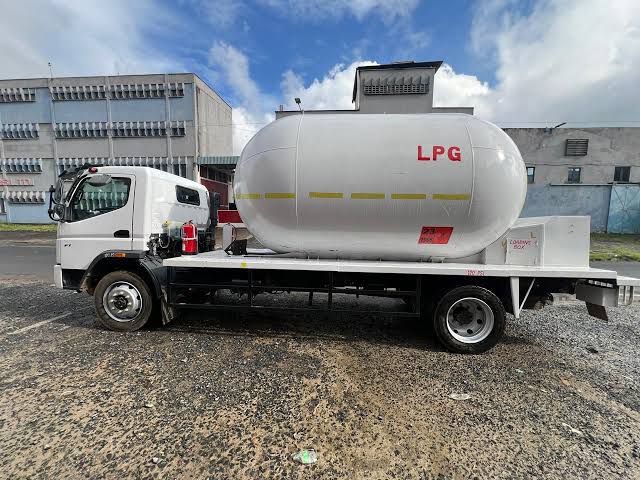
Industrial LPG Kenya applications can provide controlled thermal energy for selected cement, steel and heavy-manufacturing processes where precise combustion, reliable fuel delivery and scalable gas infrastructure are required. The correct system depends on the process temperature, heat duty, burner configuration, production cycle and required LPG supply capacity.
Industrial manufacturing requires energy systems that can operate consistently under demanding conditions. Cement plants, steel processors, foundries, metal fabricators and other heavy industries can have substantial thermal loads, often operating for extended production periods.
Related Products
This makes industrial LPG Kenya engineering fundamentally different from a small commercial LPG installation.
A heavy industrial gas system may involve:
- Bulk LPG storage
- LPG pumps
- Vaporizers
- Pressure regulation
- Gas trains
- Industrial burners
- Process-control systems
- Gas metering
- LPG pipework
- Emergency shutdown systems
- Gas detection
- Fire protection
The objective is not simply to deliver fuel to an appliance. It is to deliver the correct quantity of fuel at the correct pressure and at the required point of use, while maintaining safety and production continuity.
For companies evaluating manufacturing process heat, LPG can be considered alongside natural gas, diesel, heavy fuel oil, electricity and other energy sources according to the specific thermal process.
Megtraco Kenya Ltd provides industrial LPG equipment and engineering solutions for commercial and industrial applications.
What Is Industrial LPG Kenya?
Industrial LPG Kenya refers to the use of liquefied petroleum gas as an engineered fuel source for commercial and industrial thermal applications within Kenya. It can supply boilers, furnaces, ovens, dryers, burners and other equipment requiring controlled gaseous fuel.
Unlike small cylinder installations, industrial LPG Kenya systems are usually designed around calculated consumption and continuous or high-demand operation.
The system may begin at a bulk storage tank and continue through several engineered stages:
LPG storage → vaporization → pressure regulation → distribution → metering → gas train → burner → process
Each stage affects the performance of the final process.
A poorly sized regulator can restrict flow.
An undersized vaporizer can cause inadequate vapour supply.
An incorrectly sized pipe can create excessive pressure drop.
An inadequate storage arrangement can create supply interruptions.
Consequently, industrial LPG Kenya projects require system-level engineering rather than isolated equipment selection.
Why Does LPG Matter in Heavy Manufacturing?
LPG can provide a controllable source of process heat for industrial applications where clean combustion, rapid heat response and reliable fuel delivery are important. Its suitability depends on the process temperature, burner technology, fuel consumption and overall economics of the manufacturing facility.
Heavy manufacturing operations can require heat for:
- Drying
- Curing
- Preheating
- Metal treatment
- Foundry operations
- Furnace applications
- Product finishing
- Ceramic and refractory processing
- Packaging
- Boiler operation
- Industrial ovens
Not every process is suitable for LPG.
Very-high-temperature operations may require specialized burner systems or another energy source.
The engineering question is therefore not simply “Can LPG produce heat?”
It is:
“Can LPG economically and safely deliver the required thermal duty, temperature profile and production continuity?”
That is the central question behind a properly designed industrial LPG Kenya project.
Industrial LPG Kenya for Cement Manufacturing
LPG can support selected cement-related thermal applications, although the primary fuel strategy of a large cement plant depends on kiln design, process temperature, fuel availability and plant economics. LPG may be useful for ignition, startup, auxiliary heating and selected process equipment where engineered burners are appropriate.
Cement manufacturing is highly energy intensive.
Major thermal equipment can include:
- Rotary kilns
- Preheaters
- Calciners
- Burners
- Dryers
- Auxiliary furnaces
The principal kiln fuel must be selected according to the complete process and economic model.
However, industrial LPG Kenya can have a role in supporting equipment and processes where a controllable gaseous fuel is advantageous.
Cement Plant Startup and Auxiliary Heating
LPG can be used in selected cement-plant startup or auxiliary heating applications because it provides a controllable flame and can be supplied through properly regulated gas infrastructure. The exact application must be matched to burner design and the manufacturer’s operating requirements.
Startup systems may require:
- Reliable ignition
- Stable flame
- Controlled fuel pressure
- Automatic shutoff
- Flame detection
- Emergency isolation
A dedicated industrial LPG Kenya system can therefore support specific sections of a larger cement operation without necessarily becoming the plant’s principal kiln fuel.
Cement Drying Applications
Drying operations can be suitable for LPG where controlled combustion and hot-air generation are required. Burner capacity should be calculated according to material throughput, moisture content, required outlet temperature and heat losses.
Possible applications include drying:
- Raw materials
- Minerals
- Aggregates
- Industrial products
- Packaging materials
The engineering calculation should consider both sensible and latent heat requirements.
LPG for Steel Manufacturing
LPG can support selected steel and metal-processing applications requiring controlled combustion, including preheating, thermal treatment, furnaces, ovens and other specialized heating systems. The appropriate LPG system depends heavily on furnace temperature, burner arrangement and production throughput.
Steel processing can involve extreme thermal conditions.
Applications may include:
- Billet preheating
- Metal heating
- Heat treatment
- Annealing
- Brazing
- Cutting
- Coating
- Forging
- Foundry operations
A specialized burner system may be required where high temperatures or specific flame characteristics are necessary.
Steel Preheating
Steel preheating requires controlled thermal input to achieve the required material temperature without creating unacceptable temperature gradients or excessive fuel consumption. LPG burners can be engineered for direct or indirect heating depending on the process and product requirements.
The design should evaluate:
- Steel mass
- Initial temperature
- Target temperature
- Heating rate
- Production throughput
- Furnace insulation
- Heat losses
- Burner capacity
The required thermal duty can then be calculated.
Heat Treatment
Heat-treatment processes require precise control of temperature and heating cycles. LPG can provide the combustion energy, while temperature sensors, burner modulation and process-control systems regulate the thermal environment.
Applications may include:
- Annealing
- Normalizing
- Stress relieving
- Tempering
- Preheating
The atmosphere inside the furnace may also matter.
Where product quality depends on atmospheric control, combustion-system design must be coordinated with furnace engineering.
Manufacturing Process Heat
Manufacturing process heat is thermal energy delivered directly or indirectly to a production process. LPG can provide this heat through burners, boilers, furnaces, ovens and hot-air systems, with the correct configuration determined by the required temperature, duty and heat-transfer method.
Process heat can be divided into several broad categories:
| Process | Typical Thermal Requirement | Possible LPG Role |
|---|---|---|
| Drying | Controlled hot air | Direct/indirect burner |
| Preheating | High thermal input | Industrial burner |
| Curing | Controlled temperature | Oven burner |
| Boiler operation | Water-to-steam conversion | LPG burner |
| Metal treatment | High temperature | Specialized burner |
| Furnace heating | High thermal duty | Furnace burner |
| Product finishing | Controlled heat | Direct/indirect heating |
The table is an engineering framework rather than a specification for a particular plant.
Actual operating temperatures and capacities must be calculated from the process.
Heavy Industry Gas Supply
Heavy industry gas supply requires more than adequate fuel storage; it requires a complete distribution system capable of delivering stable pressure and flow during peak production. Storage, vaporization, regulation, pipe sizing and metering must therefore be coordinated around the maximum simultaneous demand.
A typical heavy industry gas supply system may contain:
- Bulk LPG tank
- Liquid withdrawal system where applicable
- Vaporizer
- Primary pressure regulation
- Gas manifold
- Distribution header
- Branch pipework
- Gas meters
- Gas trains
- Burner equipment
- Control system
- Emergency shutdown
This architecture can be scaled according to plant capacity.
LPG Storage for Heavy Manufacturing
Bulk LPG storage provides the fuel reserve required by high-consumption manufacturing facilities. Tank capacity should be determined using calculated consumption, delivery frequency, required reserve, site constraints and the operating characteristics of the connected equipment.
Storage design should consider:
- Maximum daily consumption
- Maximum hourly consumption
- Delivery frequency
- Minimum operating level
- Emergency reserve
- Tank filling limits
- Future production expansion
- Site access
- Safety separation
- Fire protection
An industrial facility should not simply select the largest practical tank.
Oversizing can create unnecessary capital costs and affect site planning.
The optimum capacity balances fuel demand, logistics and operational resilience.
LPG Vaporization for High-Demand Plants
Vaporization converts liquid LPG into vapour at a controlled rate for downstream consumption. High-demand industrial LPG Kenya installations may require dedicated vaporizers when the required vapour flow exceeds the natural vaporization capability of the storage vessel.
Megtraco supplies LPG vaporizers for industrial applications.
Vaporizer sizing should consider:
- Maximum LPG flow
- Burner demand
- Inlet conditions
- Outlet pressure
- Ambient conditions
- Number of burners
- Operating duty
- Standby requirements
The vaporizer should not be sized solely from tank capacity.
The critical parameter is the required LPG mass flow under peak operating conditions.
Pressure Regulation
Pressure regulation converts LPG from the storage and supply conditions to the pressure required by downstream equipment. Industrial LPG Kenya systems may use multiple regulation stages where different sections of the plant require different pressure levels.
A typical arrangement may involve:
Storage pressure → primary regulation → distribution pressure → appliance regulation → burner gas train
Each stage needs suitable equipment.
The regulator must have sufficient capacity at the expected inlet and outlet conditions.
Pressure stability is particularly important when multiple burners operate simultaneously.
LPG Gas Trains
A gas train controls and protects the fuel supply immediately upstream of an industrial burner. It can incorporate isolation valves, filters, regulators, pressure switches, automatic shutoff valves and other safety components according to the burner and system design.
A gas train may include:
- Manual isolation
- Filter
- Pressure regulator
- Safety shutoff valve
- Automatic valve
- Pressure switch
- Venting arrangements where applicable
- Burner-management interface
The exact configuration depends on the burner manufacturer’s design and applicable standards.
Megtraco also supplies LP gas train equipment for suitable industrial applications.
LPG Metering for Large Industrial Loads
Industrial LPG metering measures fuel consumption so operators can monitor production costs, identify abnormal consumption and allocate energy use to individual processes. Meter selection should consider flow range, pressure, temperature, accuracy, installation orientation and required measurement technology.
Metering can support:
- Production costing
- Fuel reconciliation
- Process optimization
- Maintenance
- Leak investigation
- Departmental allocation
- Energy management
For example, a plant may install separate meters for:
- Furnace A
- Furnace B
- Boiler house
- Drying line
- Heat-treatment area
This creates greater visibility into where LPG is being consumed.
Industrial LPG Kenya: Flow and Capacity Engineering
Industrial LPG Kenya system capacity should be determined from the connected equipment’s maximum fuel demand, diversity factors and expected operating conditions. Pipework, regulators, meters and vaporizers must all accommodate the required flow without unacceptable pressure loss.
Consider a facility with several burners.
If Burner A requires 100 kg/h and Burner B requires 150 kg/h, the theoretical combined demand is:
100 + 150 = 250 kg/h
If additional equipment can operate simultaneously, the distribution system must be assessed accordingly.
This is why equipment-by-equipment analysis is essential.
Technical Performance Matrix
| Parameter | Engineering Question |
|---|---|
| LPG consumption | What is the maximum kg/h? |
| Operating pressure | What pressure does each burner require? |
| Vaporizer capacity | Can vapour production meet peak demand? |
| Regulator capacity | Can pressure remain stable at maximum flow? |
| Pipe diameter | Is pressure loss within acceptable limits? |
| Meter range | Can the meter accurately measure minimum and maximum flow? |
| Burner capacity | Can the burner deliver required thermal duty? |
| Temperature | What process temperature is required? |
| Controls | Is modulation or staged firing required? |
| Redundancy | What happens if a major component fails? |
Direct-Fired vs Indirect-Fired LPG Heating
Direct-fired LPG heating introduces combustion heat directly into the process air or product environment, while indirect heating transfers heat through a heat exchanger or furnace wall. The correct method depends on whether combustion products can contact the material being processed.
Direct-Fired Heating
Advantages can include:
- High heat-transfer efficiency
- Rapid response
- Compact equipment
- Lower heat-exchanger losses
But combustion products enter the process environment.
This may be unsuitable for products requiring strict contamination control.
Indirect Heating
Indirect systems separate combustion products from the process.
They may use:
- Heat exchangers
- Furnace chambers
- Thermal fluids
- Heated air systems
This can be preferable where product quality requires separation.
Industrial LPG Kenya vs Diesel
LPG and diesel can both provide substantial industrial thermal output, but they differ in combustion characteristics, storage, handling, emissions, maintenance and equipment configuration. The correct choice depends on the process and the total lifecycle cost rather than fuel price alone.
| Factor | LPG | Diesel |
|---|---|---|
| Fuel state at burner | Vapour/gas | Liquid |
| Combustion control | Highly controllable | Highly controllable |
| Fuel storage | Pressurized vessel | Atmospheric tank |
| Handling | Requires LPG infrastructure | Requires liquid-fuel system |
| Burner design | Gas burner | Oil burner |
| Spill characteristics | Different hazard profile | Liquid spill risk |
| Metering | Gas-flow measurement | Liquid-flow measurement |
| Automation | High | High |
The plant’s safety and engineering requirements should determine the final configuration.
Industrial LPG Kenya vs Electricity
Electric heating can provide excellent point-of-use efficiency and precise control, while LPG can deliver high thermal capacity without requiring equivalent electrical infrastructure. The decision should account for available electrical capacity, tariffs, peak demand, equipment costs and production requirements.
For a factory with limited electrical capacity, converting a large thermal process to electric heating could require expensive electrical infrastructure upgrades.
Conversely, for a low-temperature process with readily available electrical capacity, electric heating may be advantageous.
The engineering comparison should therefore include total installed cost and operating cost.
LPG Piping for Heavy Manufacturing
Industrial LPG piping must be sized according to fuel flow, pressure, pipe length, allowable pressure drop, material compatibility and applicable installation requirements. Heavy manufacturing systems may require main headers with multiple branches serving individual process areas.
The piping design should consider:
- Maximum flow
- Pipe length
- Number of fittings
- Pressure drop
- Pipe material
- Operating pressure
- Expansion
- Supports
- Isolation
- Corrosion
- Accessibility
Megtraco provides advanced LPG piping systems for appropriate applications.
The selected material must be suitable for the particular service conditions and comply with applicable requirements.
Automation and Process Control
Automation allows industrial LPG systems to adjust fuel delivery according to process demand while integrating temperature, pressure, flame and safety information. Proper controls can improve process consistency and reduce unnecessary fuel consumption.
A modern system may integrate:
- PLC control
- Temperature sensors
- Pressure sensors
- Flow meters
- Burner management
- Flame detection
- Gas detection
- Emergency shutdown
- SCADA monitoring
For large plants, central monitoring can provide visibility across multiple thermal processes.
Gas Leak Detection
Gas detection provides an additional safety layer by identifying potentially hazardous LPG concentrations before an incident develops. Detector selection and positioning should be based on the properties of LPG, ventilation patterns, equipment layout and the site’s risk assessment.
Industrial gas detection may be integrated with:
- Audible alarms
- Visual alarms
- Automatic fuel isolation
- Ventilation systems
- Control panels
- Emergency shutdown
Megtraco provides industrial gas leak detection technologies for suitable applications.
Fire Safety in Industrial LPG Installations
Fire protection for industrial LPG installations should address prevention, detection, isolation and emergency response. The appropriate fire-protection strategy depends on LPG storage capacity, process hazards, equipment arrangement, occupancy and applicable regulatory requirements.
Potential systems include:
- Fire detection
- Fire alarms
- Portable extinguishers
- Hydrant systems
- Water-based suppression
- Automatic suppression
- Gas detection
- Emergency shutdown
International references such as NFPA 58 may provide guidance for LPG installations where applicable.
Other relevant NFPA standards can include NFPA 13 for sprinkler-system design and NFPA 2001 for clean-agent systems where those systems are appropriate.
Megtraco supplies fire suppression equipment for industrial and commercial applications.
Installation Workflow
A heavy-industry LPG installation should progress from process assessment to detailed engineering, equipment selection, installation, testing and commissioning. The workflow should be documented so that every critical component is verified before fuel is introduced into the system.
Stage 1: Process Assessment
Determine:
- Thermal duty
- Production capacity
- Operating hours
- Peak fuel consumption
- Required temperatures
- Number of burners
Stage 2: Site Assessment
Assess:
- Tank location
- Plant access
- Equipment locations
- Pipe routes
- Electrical supply
- Ventilation
- Fire access
- Emergency exits
Stage 3: Detailed Design
Develop:
- LPG storage design
- Piping layout
- Pressure calculations
- Vaporizer sizing
- Regulator selection
- Burner specifications
- Gas detection
- Fire protection
- Control architecture
Stage 4: Installation
Install equipment according to approved engineering documentation and applicable requirements.
Stage 5: Testing
Verify:
- Pipe integrity
- Pressure
- Leak tightness
- Regulator performance
- Gas train operation
- Burner operation
- Emergency shutdown
- Detection systems
Stage 6: Commissioning
Commission the system under controlled conditions and document operating parameters.
Industrial LPG Commissioning Checklist
Commissioning confirms that the industrial LPG Kenya installation performs according to its design and that critical safety functions operate correctly. Fuel should not be introduced into an unverified system.
| Check | Status |
|---|---|
| Approved engineering drawings available | ☐ |
| LPG storage inspected | ☐ |
| Pressure equipment documentation verified | ☐ |
| Piping installed correctly | ☐ |
| Pressure testing completed | ☐ |
| Leak testing completed | ☐ |
| Regulators installed correctly | ☐ |
| Vaporizer tested where applicable | ☐ |
| Gas trains inspected | ☐ |
| Burner controls tested | ☐ |
| Flame failure tested | ☐ |
| Emergency shutdown tested | ☐ |
| Gas detection tested | ☐ |
| Fire equipment available | ☐ |
| Ventilation verified | ☐ |
| Metering equipment commissioned | ☐ |
| Operator training completed | ☐ |
| Maintenance plan established | ☐ |
| Commissioning records completed | ☐ |
EPRA Compliance in Kenya
Industrial LPG Kenya projects should be assessed against the applicable petroleum-sector laws, regulations, licensing requirements and technical conditions administered by the Energy and Petroleum Regulatory Authority. Requirements can vary according to the LPG activity, storage arrangement and scale of the installation.
Before construction or commissioning, the project team should determine the applicable requirements for:
- LPG storage
- LPG handling
- Engineering works
- Installation
- Inspection
- Licensing
- Operations
- Safety management
The regulatory position should be verified for the specific project rather than assumed from another installation.
KEBS Standards and Equipment Verification
KEBS requirements should be considered when specifying LPG equipment, pressure vessels, piping, valves, regulators, meters and fire-safety equipment. Equipment should be sourced with appropriate conformity documentation and verified against the standards applicable to its intended use.
For heavy manufacturing, equipment selection can involve multiple standards because the installation combines:
- Pressure equipment
- Fuel systems
- Mechanical equipment
- Electrical controls
- Fire systems
- Industrial burners
Standards should therefore be reviewed as part of the engineering-design process.
DOSHS and Workplace Safety
Workplace safety requirements administered through the Directorate of Occupational Safety and Health Services should be incorporated into industrial LPG planning where applicable. Risk assessment should address LPG release, fire, pressure systems, combustion, maintenance activities and worker exposure.
A comprehensive safety programme can include:
- Risk assessments
- Safe operating procedures
- Emergency response plans
- Operator training
- Equipment inspection
- Maintenance records
- PPE
- Warning signage
- Permit-to-work controls where required
Maintenance of Industrial LPG Systems
Preventive maintenance protects fuel reliability, burner performance and safety-system availability. Industrial LPG Kenya installations should have documented inspection and servicing schedules covering storage equipment, regulators, vaporizers, gas trains, burners, meters, detectors and emergency systems.
Maintenance activities can include:
- Regulator inspection
- Burner cleaning
- Filter inspection
- Gas-train testing
- Valve testing
- Detector calibration
- Meter verification
- Pipework inspection
- Emergency-stop testing
- Fire-equipment servicing
Maintenance frequency should follow applicable requirements, manufacturer recommendations and the facility’s risk assessment.
Optimizing LPG Consumption
Industrial LPG consumption can be reduced by matching burner capacity to actual process demand, maintaining correct combustion conditions, improving insulation and monitoring fuel use by production line. Metering provides the data required to identify abnormal consumption and process inefficiencies.
Important measures include:
Burner Optimization
Correct burner adjustment can improve combustion performance.
Furnace Insulation
Reducing heat loss decreases the thermal load.
Process Scheduling
Avoiding unnecessary simultaneous high-load operation can reduce peak demand.
Metering
Sub-metering identifies which production lines consume the most LPG.
Preventive Maintenance
Poorly maintained burners and controls can increase fuel consumption.
Common Engineering Problems
Industrial LPG Kenya installations can experience pressure instability, inadequate vaporization, undersized piping, excessive consumption and burner faults when system components are not correctly matched. Troubleshooting should begin with measured operating conditions rather than assumptions.
| Problem | Possible Cause | Engineering Response |
|---|---|---|
| Low burner pressure | Undersized regulator/pipe | Recalculate flow and pressure drop |
| Flame instability | Burner or gas-pressure issue | Inspect burner and supply |
| Vaporizer freezing/low output | Excessive demand | Review vaporizer capacity |
| High LPG consumption | Poor combustion/process losses | Audit burner and process |
| Meter under-reading | Incorrect meter range | Verify meter specification |
| Frequent shutdown | Safety interlock activation | Diagnose control system |
| Slow heating | Insufficient thermal capacity | Recalculate heat duty |
| Supply interruptions | Low storage reserve | Review storage and logistics |
Industrial LPG Kenya and Supply Logistics
Reliable heavy industry gas supply requires coordinated LPG procurement, storage management and delivery scheduling. Fuel logistics should be designed around consumption rates, tank capacity, delivery lead times and the operational consequences of running below the minimum safe inventory.
A manufacturing plant should establish:
- Daily consumption
- Weekly consumption
- Peak consumption
- Minimum tank level
- Delivery trigger
- Emergency supply procedure
- Supplier response time
Remote industrial sites require additional planning.
For facilities outside major urban centres, logistics may influence the appropriate storage capacity more strongly than the theoretical daily consumption.
LPG in Nairobi, Mombasa and Other Industrial Centres
Industrial LPG Kenya projects can have different logistical and infrastructure considerations depending on location. Nairobi, Mombasa, Nakuru, Kisumu, Eldoret, Thika and Machakos each have different industrial environments, transport considerations and access to energy infrastructure.
Mombasa can offer strategic advantages for fuel logistics because of its port infrastructure.
Nairobi has a large concentration of manufacturing and industrial operations.
Nakuru, Eldoret and Kisumu serve important regional production and distribution networks.
Thika has substantial manufacturing activity.
Machakos and surrounding industrial areas can also require engineered bulk-energy systems.
For East African operations, similar principles apply when evaluating projects in Uganda, Tanzania and Rwanda, although local regulatory requirements must be established separately.
When Should a Manufacturer Consider LPG?
LPG may be worth evaluating where:
- Existing fuel equipment is outdated
- Electrical capacity is constrained
- Thermal output needs to increase
- Cleaner combustion is desired
- Process control needs improvement
- Fuel logistics are manageable
- Production is expanding
- Existing boilers or burners require replacement
The project should calculate the complete lifecycle cost.
Engineering Conclusion
Industrial LPG Kenya solutions can provide a scalable source of controlled thermal energy for selected cement, steel and heavy-manufacturing applications. The greatest value comes from integrating bulk storage, vaporization, pressure regulation, metering, gas trains, burners, automation and safety systems into one properly engineered installation.
For cement manufacturers, LPG may have applications in startup, auxiliary heating, drying and other selected thermal processes.
For steel and metal processors, LPG can support preheating, heat treatment, furnaces, ovens and specialized industrial burners.
For manufacturers generally, manufacturing process heat should be assessed according to actual temperature, duty, production rate and process requirements.
The engineering of heavy industry gas supply should focus on peak demand rather than average consumption.
Storage should provide sufficient operational reserve.
Vaporizers should match maximum LPG flow.
Regulators should maintain stable pressure.
Pipework should be sized for acceptable pressure loss.
Meters should accurately capture the operating range.
Gas trains should provide appropriate burner control and safety functions.
Fire detection, gas detection and emergency shutdown should be integrated into the overall risk-management strategy.
For companies evaluating industrial LPG Kenya, the most important first step is a detailed site and process assessment.
Megtraco Kenya Ltd provides engineering support for industrial LPG equipment, gas distribution, process-heating infrastructure, leak detection and fire protection.
You can explore customized engineering solutions or review Megtraco Kenya’s industrial product range before beginning a project.
For specialist support, request a customized quotation based on your plant’s calculated LPG demand and thermal requirements.
Your Trusted LPG & Fire Safety Engineering Partner in East Africa
Whether you’re designing a new LPG installation, upgrading industrial gas systems, or enhancing fire safety compliance, Megtraco Kenya Ltd delivers certified engineering solutions backed by decades of expertise. From LPG equipment supply and pipeline installations to fire suppression and detection systems, our experienced team provides reliable solutions for commercial, industrial, and institutional projects across East Africa.
Contact us today for professional consultation, engineering support, or a customized quotation.
WHY CHOOSE MEGTRACO KENYA LTD
You May Also Like

- ✔ Established Since 1969 – Decades of proven engineering excellence.
- ✔ KEBS Certified Products – Guaranteed quality and compliance with regional standards.
- ✔ EPRA Licensed LPG Engineering Company – Fully certified to design, install, and commission.
- ✔ Industrial & Commercial LPG Specialists – Scaled to handle heavy-duty thermal requirements.
- ✔ Fire Suppression & Fire Detection Experts – End-to-end asset protection.
- ✔ Regional Operational Footprint – Serving Nairobi, Mombasa, Kisumu, Nakuru, Eldoret, Thika, Machakos, East Africa, and beyond.
Contact Megtraco Kenya Ltd
- Email: sales@megtracokenya.com
- Sales: +254 725 870 114
- Technical: +254 733 721 598
- WhatsApp: +254 799 086 323
- Location: Nairobi, Kenya – Serving East Africa
- Website: https://megtracokenya.com
Request a Quote today and partner with East Africa’s trusted LPG and fire safety engineering company since 1969.
