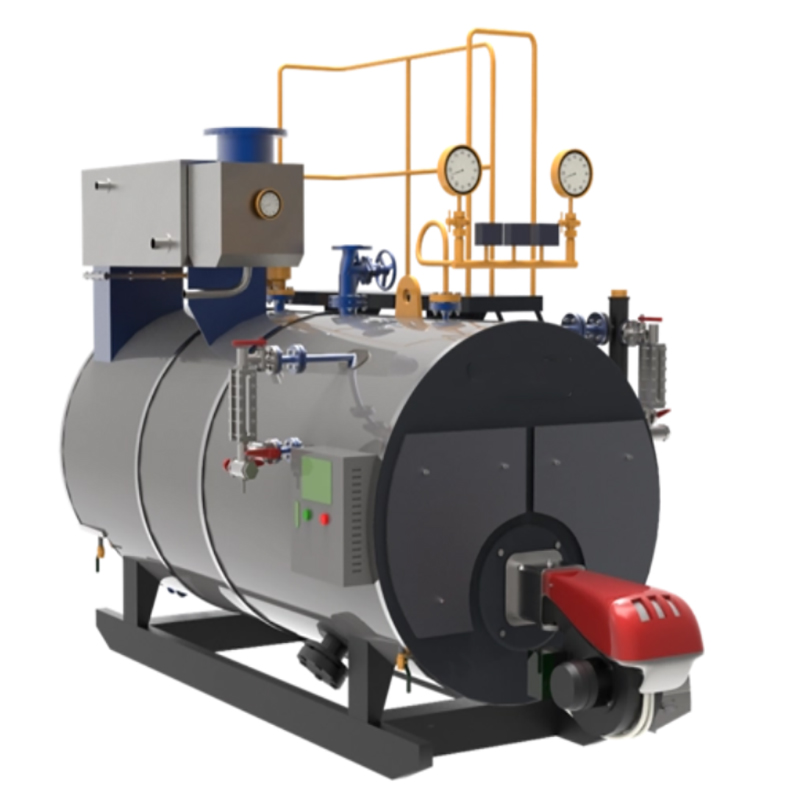
Abattoir hot water gas systems provide controlled thermal energy for cleaning, sanitation, sterilisation-related operations and other hygiene-critical activities. When properly engineered, LPG can deliver dependable hot-water production while supporting the demanding production schedules of abattoirs, dairy plants and associated food-processing facilities.
In an industrial abattoir, hot water is not simply a convenience. It can form an important part of the site’s hygiene and sanitation infrastructure. Production areas, tools, equipment, floors and other surfaces may require frequent cleaning according to the facility’s approved procedures.
Related Products
This is where abattoir hot water gas becomes an important engineering consideration.
A properly designed abattoir hot water gas system can combine bulk LPG storage, pressure regulation, burners, boilers or water heaters, hot-water storage, circulation systems and automatic controls.
For dairy processors, the equivalent thermal infrastructure may support hot-water generation, cleaning-in-place operations, steam production and other process requirements.
The engineering challenge is therefore larger than simply choosing an LPG water heater.
The designer needs to establish:
- Peak hot-water demand
- Required water temperature
- Flow rate
- Production hours
- Cleaning cycles
- Simultaneous thermal loads
- LPG consumption
- Storage requirements
- Pipework capacity
- Pressure requirements
- Boiler or heater capacity
- Safety systems
- Backup requirements
A well-designed abattoir hot water gas installation should also integrate with the facility’s fire-safety, gas-detection, ventilation and emergency-shutdown arrangements.
Megtraco Kenya Ltd provides LPG engineering solutions for commercial and industrial applications across Kenya and East Africa.
What Is Abattoir Hot Water Gas?
Abattoir hot water gas is an LPG-based thermal-energy system used to generate controlled hot water for sanitation, cleaning and other operational requirements in slaughterhouses and meat-processing facilities. The system can use LPG-fired water heaters, boilers or centralized thermal equipment depending on the required capacity and process configuration.
The term abattoir hot water gas describes the fuel-and-heating solution rather than one particular appliance.
A small abattoir may use a dedicated LPG water heater.
A larger industrial facility may require:
- Bulk LPG storage
- Vaporizers
- Gas trains
- Industrial burners
- Boilers
- Hot-water storage tanks
- Circulation pumps
- Temperature controls
- Pressure controls
- Gas detection
- Emergency shutdown
- Fire-protection equipment
The correct abattoir hot water gas architecture depends on the facility’s process requirements.
Why Is Abattoir Hot Water Gas Important?
Abattoir hot water gas is important because sanitation activities can create substantial and recurring hot-water demand. An appropriately sized LPG system can provide rapid heat generation, controlled temperatures and centralized distribution to multiple cleaning or processing points.
The primary objective is reliable thermal availability.
A system that produces insufficient hot water can create operational bottlenecks during intensive cleaning periods.
An oversized system, however, may increase capital expenditure and operate inefficiently if the actual demand is much lower than the installed capacity.
Therefore, abattoir hot water gas should be designed from a demand calculation rather than from an appliance catalogue alone.
Abattoir Hot Water Gas Applications
Abattoir hot water gas can support several hygiene and operational activities, including equipment cleaning, floor washing, tool sanitation, hot-water distribution and selected sterilisation-related processes. The system should be configured around the facility’s sanitation procedures and the temperatures specified for each application.
Typical applications include:
- Equipment washdown
- Processing-area cleaning
- Tool cleaning
- Floor sanitation
- Container cleaning
- Hot-water stations
- Staff hygiene facilities
- Laundry
- Cleaning chemical preparation
- Selected sterilisation-related applications
The precise temperature requirements depend on the facility’s food-safety procedures and equipment.
Equipment Cleaning
Abattoir hot water gas can provide the thermal energy needed for routine equipment cleaning where hot water is specified as part of the sanitation procedure. Centralized hot-water generation allows several points of use to be supplied from a common heating system.
Processing equipment can include:
- Cutting equipment
- Tables
- Conveyors
- Hooks
- Containers
- Processing vessels
- Utensils
- Pumps
- Pipework
Hot-water demand can fluctuate substantially between production periods and cleaning cycles.
The system should therefore be sized around peak demand, not only average daily consumption.
Floor and Surface Cleaning
Abattoir hot water gas systems can also support hot-water distribution for floors, walls, drains and other washable surfaces. The distribution network should provide adequate flow and pressure at the required points without creating excessive pressure losses.
A large facility may have numerous washdown points.
This creates a hydraulic-design problem.
If several outlets operate simultaneously, the main hot-water and cold-water systems must accommodate the combined flow.
The LPG heating system must also have sufficient recovery capacity.
Dairy Processing LPG Kenya
Dairy processing LPG Kenya applications commonly involve hot-water generation, steam production, process heating and cleaning systems. LPG can provide a controllable thermal source for dairy plants when the fuel system, boiler or heater and distribution infrastructure are correctly sized for production and cleaning demands.
Dairy facilities can have complex thermal requirements.
Potential LPG applications include:
- Pasteurisation support
- Hot-water generation
- Steam boilers
- Cleaning-in-place systems
- Tank cleaning
- Process-water heating
- Packaging-area hot water
- Staff facilities
- Equipment sanitation
The scale ranges from relatively small milk-processing operations to large industrial dairy plants.
For that reason, abattoir hot water gas engineering principles also provide useful guidance when evaluating dairy hot-water infrastructure, although the process requirements must be assessed independently.
Dairy Hot-Water Generation
Dairy hot-water systems should be designed around production schedules, cleaning requirements, peak flow and required temperature. An LPG-fired boiler or water heater can provide the thermal input, while storage and circulation systems help manage changes in demand.
The design may include a centralized hot-water plant.
A typical arrangement could be:
Bulk LPG storage → regulation → gas train → LPG burner → boiler/water heater → hot-water storage → circulation → points of use
For larger facilities, multiple heating units can provide staged or redundant operation.
Food Hygiene Process Heat
Food hygiene process heat is thermal energy used to support approved cleaning, sanitation, sterilisation-related and food-processing procedures. LPG can provide this energy through boilers, burners and hot-water systems, provided the equipment is correctly designed, installed and separated from food-contact operations where necessary.
The relationship between thermal energy and hygiene is significant.
If hot-water availability is unreliable, cleaning schedules may be disrupted.
However, thermal energy alone does not guarantee food safety.
A complete hygiene programme also depends on:
- Approved cleaning procedures
- Correct chemical concentration
- Contact time
- Mechanical action
- Water quality
- Temperature control
- Equipment design
- Staff training
The abattoir hot water gas system is therefore one component of the wider sanitation infrastructure.
LPG for Abattoirs: System Architecture
LPG for abattoirs should be engineered as an integrated fuel, heating and safety system rather than as a standalone appliance. The architecture may include storage, pressure regulation, vaporization, gas trains, heating equipment, controls, detection and emergency isolation.
A typical industrial arrangement may contain:
- Bulk LPG tank
- LPG isolation valves
- Pressure regulation
- Vaporizer where required
- LPG distribution pipework
- Gas train
- Burner
- Boiler or hot-water generator
- Hot-water storage
- Circulation pumps
- Temperature controls
- Gas detection
- Emergency shutdown
- Fire protection
This architecture allows the abattoir hot water gas system to be engineered around the site’s actual load.
LPG Storage for Abattoirs
LPG storage capacity should be calculated from consumption, peak demand, delivery frequency and required operational reserve. Abattoir hot water gas systems should not rely on average consumption alone because production and cleaning schedules can create substantial short-term increases in fuel demand.
A storage assessment should consider:
- Daily LPG consumption
- Maximum hourly demand
- Tank filling level
- Delivery schedule
- Supplier logistics
- Required reserve
- Future production expansion
- Site accessibility
- Applicable safety distances
For large facilities, bulk LPG storage is generally more appropriate than relying exclusively on numerous small cylinders.
Bulk LPG Versus Cylinders
Bulk LPG generally provides a more practical fuel-supply arrangement for high-demand industrial applications because it reduces manual cylinder handling and can provide greater storage capacity. Cylinders may remain suitable for smaller installations where calculated consumption is relatively low.
| Factor | Bulk LPG | Cylinder Supply |
|---|---|---|
| Storage capacity | High | Lower per unit |
| Manual handling | Low | Higher |
| High-demand operation | Well suited | Can require many cylinders |
| Delivery management | Tanker-based | Cylinder deliveries |
| Centralized distribution | Excellent | Possible but more complex |
| Expansion | Easier | More handling |
| Industrial suitability | High | Small-to-medium applications |
The final choice should be based on calculated demand and site requirements.
LPG Vaporizers for High-Demand Systems
An LPG vaporizer may be required where natural vaporization from the storage vessel cannot meet the maximum fuel demand. Vaporizer capacity should be calculated from the peak LPG flow required by the connected burners rather than selected solely according to tank volume.
This can become important when several high-capacity burners operate simultaneously.
A vaporizer can provide controlled conversion of liquid LPG into vapour for downstream consumption.
Megtraco provides high-performance LPG vaporizers for applications requiring engineered vaporization capacity.
A vaporizer assessment should consider:
- Maximum LPG flow
- Minimum operating temperature
- Inlet pressure
- Outlet pressure
- Burner demand
- Number of connected appliances
- Control requirements
- Safety shutoff
Engineering Specifications
The technical specification of an abattoir hot water gas system should be based on calculated thermal load, water flow, temperature rise, LPG consumption and pressure requirements. Boiler, burner, regulator, piping and storage equipment should be selected using verified manufacturer data and applicable engineering standards.
The basic thermal relationship can be expressed as:
Thermal Load = Water Flow × Specific Heat × Temperature Rise
The actual engineering calculation should use the appropriate units and account for system efficiency and operating conditions.
Technical Specification Matrix
| Parameter | Engineering Consideration |
|---|---|
| Water flow | Peak simultaneous demand |
| Temperature | Required process temperature |
| Heating capacity | Calculated peak thermal load |
| LPG consumption | Maximum burner fuel rate |
| LPG pressure | Appliance and gas-train requirements |
| Pipe diameter | Flow and pressure-drop calculation |
| Storage | Required fuel autonomy |
| Vaporizer | Maximum LPG withdrawal requirement |
| Boiler | Thermal duty and operating pressure |
| Controls | Temperature, pressure and safety interlocks |
| Detection | LPG leak monitoring |
| Emergency isolation | Rapid fuel shutoff |
| Ventilation | Combustion-air and safety requirements |
Exact values must be established through project-specific engineering calculations.
Industrial LPG Heating Systems
Industrial LPG heating systems provide scalable thermal energy for facilities where process heat, hot water or steam must be delivered reliably. In abattoirs and dairies, industrial LPG heating systems can be configured as centralized plants serving several process areas.
The major advantage of a centralized abattoir hot water gas installation is control.
Instead of installing numerous independent heaters, the facility can use centralized generation and distribution.
This can simplify:
- Fuel management
- Maintenance
- Temperature control
- Monitoring
- Safety management
- Expansion planning
For some facilities, modular heating equipment can also provide redundancy.
Abattoir Hot Water Gas vs Alternative Fuels
Abattoir hot water gas should be compared with diesel, biomass and electricity according to total lifecycle cost, heat-response requirements, automation, fuel logistics, maintenance and site infrastructure. No single fuel is universally optimal for every food-processing facility.
| Characteristic | LPG | Diesel | Biomass | Electricity |
|---|---|---|---|---|
| Heat response | Rapid | Rapid | Variable | Rapid |
| Automation | High | High | Moderate–High | Very high |
| Fuel handling | Relatively low | Moderate | High | None |
| Storage | Compact | Moderate | Large | None |
| Combustion control | High | High | Variable | N/A |
| Process flexibility | High | High | Moderate | High |
| Maintenance | Moderate | Moderate | Generally higher | Equipment dependent |
| Remote supply | Good with planning | Good | Site dependent | Grid dependent |
The appropriate option depends on the site’s energy profile.
Abattoir Hot Water Gas vs Direct Electric Heating
LPG and electric heating offer different engineering advantages. LPG can provide high thermal output without depending entirely on electrical capacity, while electric systems can offer very high point-of-use efficiency and simpler combustion management.
The decision should consider:
- Available electrical capacity
- LPG infrastructure
- Tariffs
- Backup requirements
- Peak load
- Production schedule
- Equipment cost
- Maintenance
- Future expansion
For facilities with constrained electrical capacity, LPG may provide an effective thermal-energy alternative.
Hot-Water Storage
Hot-water storage can reduce the impact of short-duration demand peaks by storing thermal energy before it is required. For an abattoir hot water gas system, storage sizing should account for peak flow, usable temperature range, recovery rate and the timing of production and cleaning cycles.
A storage tank can act as a thermal buffer.
For example, if the facility has a relatively stable heating system but experiences a short period of intensive cleaning, stored hot water can supplement instantaneous boiler output.
However, storage must be designed carefully.
Considerations include:
- Tank capacity
- Insulation
- Temperature control
- Circulation
- Hygiene
- Pressure rating
- Drainage
- Maintenance access
Commercial Hot Water Systems Kenya
Commercial hot water systems Kenya projects require careful assessment of demand because hotels, hospitals, food plants and abattoirs can have very different load profiles. Industrial food facilities often require higher flow rates and more intensive duty cycles than conventional commercial buildings.
The same design principles apply to:
- Hotels
- Hospitals
- Universities
- Schools
- Food factories
- Abattoirs
- Dairies
- Laundries
However, the equipment duty must reflect the actual application.
An abattoir hot water gas system may experience intense cleaning demand for several hours, while a hotel may have a broader but less concentrated demand profile.
LPG Process Heating Kenya
LPG process heating Kenya applications cover hot water, steam and direct or indirect thermal processes across manufacturing and food production. Proper LPG process heating design begins with identifying the process temperature, thermal duty, operating cycle and required control accuracy.
Process heating can include:
- Water heating
- Steam generation
- Tank heating
- Indirect heat exchangers
- Drying
- Cleaning
- Cooking
- Sterilisation-related applications
The fuel system should be matched to the process equipment.
Megtraco’s industrial equipment catalogue provides access to LPG equipment used in engineered commercial and industrial applications.
Installation of Abattoir Hot Water Gas Systems
Installation should proceed through site assessment, load calculation, engineering design, equipment selection, pipe routing, safety-system integration, pressure testing, commissioning and operator training. Abattoir hot water gas equipment should only be placed and commissioned in accordance with applicable engineering and safety requirements.
Phase 1: Site Survey
The engineering team should establish:
- Site dimensions
- Existing LPG infrastructure
- Production areas
- Boiler-room location
- Electrical supply
- Water supply
- Drainage
- Ventilation
- Access routes
- Fire-safety provisions
Phase 2: Thermal Load Assessment
Calculate:
- Peak water flow
- Temperature rise
- Heating duty
- Daily demand
- Simultaneous loads
- Recovery requirements
Phase 3: LPG Load Calculation
Determine:
- Burner capacity
- Maximum LPG consumption
- Storage requirement
- Vaporizer requirement
- Regulator capacity
- Pipework requirements
Phase 4: Equipment Installation
Install:
- LPG storage
- Regulation equipment
- Gas trains
- Boilers/heaters
- Hot-water tanks
- Pumps
- Controls
- Detection systems
- Emergency isolation
Phase 5: Testing and Commissioning
Verify:
- Pressure integrity
- Leak tightness
- Gas pressure
- Burner operation
- Flame failure
- Emergency shutdown
- Temperature control
- Gas detection
- Fire protection
Abattoir Hot Water Gas Commissioning Checklist
A documented commissioning process confirms that the abattoir hot water gas system operates safely and delivers the required thermal performance. Commissioning should cover the LPG supply, heating equipment, controls, safety devices and hot-water distribution before routine production begins.
- Approved design drawings available
- Thermal load calculation completed
- LPG consumption calculated
- Storage capacity verified
- Vaporizer capacity verified where applicable
- Pipework inspected
- Pressure test completed
- Leak test completed
- Regulators verified
- Gas train inspected
- Burner tested
- Flame-failure protection tested
- Boiler safety controls tested
- Hot-water temperature verified
- Circulation pumps tested
- Emergency shutdown tested
- Gas detectors tested
- Fire protection inspected
- Ventilation verified
- Exhaust system checked
- Operators trained
- Maintenance programme established
- Commissioning records completed
LPG Leak Detection and Emergency Shutdown
Gas detection and emergency shutdown provide additional layers of protection where LPG leakage could create a fire or explosion hazard. Detection systems should be positioned according to LPG characteristics, room geometry, ventilation and the site’s documented risk assessment.
An industrial abattoir hot water gas installation can integrate gas detection with:
- Audible alarms
- Visual alarms
- Automatic fuel isolation
- Ventilation controls
- Control panels
- Emergency stop stations
Megtraco provides industrial gas leak detection solutions for appropriate applications.
Detection equipment should be inspected, tested and maintained according to the manufacturer’s requirements.
Fire Safety for LPG Food-Processing Facilities
Fire safety for LPG installations should combine prevention, detection, isolation and emergency response. An abattoir hot water gas installation should be assessed for LPG release, ignition sources, combustion equipment, storage hazards and access for emergency response.
Potential measures include:
- Gas detection
- Emergency LPG isolation
- Fire detection
- Portable extinguishers
- Hydrant protection
- Automatic suppression where required
- Appropriate ventilation
- Emergency procedures
- Staff training
International standards such as NFPA 58 can provide relevant guidance for LPG installations where applicable.
NFPA 13 may be relevant to sprinkler-system design, while NFPA 2001 addresses clean-agent fire-extinguishing systems for applications where such systems are appropriate.
Megtraco supplies commercial fire safety systems for engineered applications.
EPRA Requirements in Kenya
LPG installations in Kenya must be assessed against applicable petroleum-sector requirements, including requirements administered by the Energy and Petroleum Regulatory Authority. The specific approvals, licences and inspections depend on the nature and scale of the LPG installation and the activities being undertaken.
For a proposed abattoir hot water gas installation, the project team should establish applicable EPRA requirements before construction or equipment commissioning.
The assessment should consider:
- LPG storage
- LPG handling
- Installation design
- Licensed engineering activities
- Inspection
- Safety controls
- Documentation
- Operating requirements
Project-specific regulatory requirements should always be confirmed with the relevant authority.
KEBS and Equipment Standards
KEBS requirements should be considered when selecting LPG equipment, pressure components, piping, valves, regulators and fire-safety equipment. Equipment should be verified against the applicable Kenyan or recognized standards before procurement and installation.
Relevant components may include:
- LPG storage vessels
- Regulators
- Valves
- Pressure equipment
- Piping
- Fittings
- Boilers
- Gas detectors
- Fire equipment
Using correctly specified components is an essential part of reliable abattoir hot water gas engineering.
DOSHS and Workplace Safety
The Directorate of Occupational Safety and Health Services, or DOSHS, is relevant to workplace safety and risk management. LPG and boiler installations should be assessed for pressure hazards, fire, gas release, combustion products, maintenance risks and emergency response.
Workplace controls may include:
- Risk assessments
- Operator training
- Emergency procedures
- Equipment inspection
- Maintenance records
- PPE requirements
- Safe access
- Warning signage
The LPG system should form part of the facility’s broader occupational-safety programme.
Maintenance of Abattoir Hot Water Gas Equipment
Preventive maintenance is essential for maintaining safe and reliable thermal performance. An abattoir hot water gas system should have scheduled inspection of LPG storage, regulators, burners, gas trains, boilers, hot-water equipment, detection systems and emergency controls.
| Equipment | Inspection Area | Recommended Action |
|---|---|---|
| LPG tank | Valves, fittings, condition | Scheduled inspection |
| Regulator | Outlet pressure | Test/service |
| Vaporizer | Capacity and controls | Inspect/service |
| Gas train | Valves and interlocks | Functional test |
| Burner | Flame and combustion | Clean/service |
| Boiler | Pressure and safety devices | Scheduled service |
| Hot-water tank | Condition and controls | Inspect/clean |
| Pipework | Leaks/corrosion | Routine inspection |
| Gas detector | Sensor response | Test/calibrate |
| Fire equipment | Accessibility/condition | Scheduled servicing |
The exact inspection frequency should follow manufacturer instructions, applicable legislation, recognized standards and the site’s risk assessment.
Common Abattoir Hot Water Gas Problems
Most abattoir hot water gas failures can be traced to incorrect capacity calculations, inadequate fuel supply, pressure losses, poor maintenance or insufficient control systems. Early engineering assessment can reduce the risk of thermal interruptions during critical sanitation periods.
Insufficient Hot-Water Capacity
The facility has adequate hot water during normal operations but experiences shortages during intensive cleaning.
Potential cause: The system was sized around average demand rather than peak simultaneous demand.
Engineering response: Recalculate peak demand and assess additional heating capacity or thermal storage.
LPG Pressure Drops
Burners lose performance when several appliances operate simultaneously.
Potential cause: Undersized regulators, vaporizers or pipework.
Engineering response: Recalculate maximum LPG flow and pressure drop across the complete distribution network.
Excessive Burner Cycling
The burner repeatedly starts and stops.
Potential cause: Poor matching between heating capacity and actual load or inadequate control configuration.
Engineering response: Review burner modulation, storage and control logic.
Fuel Supply Interruptions
The facility runs low on LPG during high-production periods.
Potential cause: Storage was based on average consumption without adequate reserve.
Engineering response: Establish minimum tank levels and a planned delivery schedule.
Poor Combustion
The burner produces unstable flames or abnormal combustion characteristics.
Potential cause: Burner adjustment, inadequate combustion air or maintenance problems.
Engineering response: Professional burner inspection and combustion verification.
Cold Chain LPG Support
LPG can support cold-chain operations through hot-water generation and other thermal services, although refrigeration systems are commonly powered electrically. LPG should therefore be viewed as complementary infrastructure for selected thermal loads rather than automatically as the primary refrigeration fuel.
Cold-chain facilities can include:
- Meat distribution centres
- Dairy warehouses
- Food-processing plants
- Cold rooms
- Refrigerated logistics facilities
- Packing centres
The refrigeration system may require:
- Reliable grid electricity
- Standby generators
- UPS systems for controls
- Automatic transfer equipment
- Refrigeration redundancy
LPG can separately supply thermal loads.
Designing for Operational Continuity
Operational continuity depends on matching equipment capacity, fuel storage, maintenance and redundancy to the consequences of downtime. Food-processing facilities with critical sanitation requirements may benefit from modular heating equipment, standby capacity or additional hot-water storage where justified by the risk assessment.
A resilience assessment should consider:
- What happens if the primary boiler fails?
- How long can production continue?
- Is there standby heating capacity?
- How quickly can replacement equipment be supplied?
- How much LPG reserve is available?
- Are critical safety components duplicated?
- Can maintenance occur without shutting down the entire plant?
These questions are particularly important for high-throughput facilities.
Choosing an LPG Engineering Partner
A suitable LPG engineering partner should understand fuel storage, pressure regulation, process heating, boilers, hot-water systems, gas detection and fire protection. Food-processing projects benefit from an integrated approach because thermal performance and safety depend on how the individual systems interact.
Megtraco Kenya Ltd supports industrial and commercial LPG applications involving:
- LPG equipment
- LPG storage
- Vaporizers
- Gas trains
- Pipework
- Hot-water systems
- Fire suppression
- Gas detection
- Control systems
For projects requiring site-specific assessment, customized engineering solutions can be developed around the facility’s requirements.
Additional information about the company and its engineering background is available through its established LPG specialist profile.
Frequently Asked Questions
How Does Abattoir Hot Water Gas Improve Operational Safety?
Abattoir hot water gas can improve operational reliability by providing a controlled thermal source for cleaning and sanitation operations. Properly engineered systems also incorporate pressure regulation, emergency isolation, gas detection and combustion controls to reduce operational risks.
What Are the Main Uses of Abattoir Hot Water Gas?
Abattoir hot water gas is primarily used to generate hot water for cleaning, sanitation and other thermal operations. Depending on the facility, the same LPG infrastructure may also support boilers, steam generation and staff hot-water services.
Is LPG Suitable for Abattoirs in Kenya?
LPG can be suitable for Kenyan abattoirs when the installation is correctly designed, approved, installed and maintained. Storage, pipework, heating equipment, fire protection and regulatory requirements should be assessed before commissioning.
What Is the Difference Between LPG for Abattoirs and LPG for Dairy Plants?
LPG for abattoirs is commonly focused on hot water, cleaning and sanitation, while dairy plants can have additional requirements such as steam, process heating and cleaning-in-place systems. Both require application-specific thermal-load calculations.
What Is Dairy Processing LPG Kenya Used For?
Dairy processing LPG Kenya applications can include hot-water generation, steam production, process heating and cleaning systems. The final configuration depends on the dairy plant’s production capacity, thermal requirements and operating schedule.
Does an Abattoir Need an LPG Vaporizer?
An abattoir may require an LPG vaporizer when the maximum fuel demand exceeds the natural vaporization capability of the storage vessel. Vaporizer sizing should be based on the calculated peak LPG consumption of the connected equipment.
How Should Abattoir Hot Water Gas Capacity Be Calculated?
Abattoir hot water gas capacity should be calculated from peak water flow, required temperature rise, operating efficiency and simultaneous demand. Average daily consumption alone is insufficient for accurately sizing the heating system.
How Often Should an Abattoir Hot Water Gas System Be Inspected?
An abattoir hot water gas system should undergo routine inspection and preventive maintenance according to manufacturer requirements, applicable regulations, recognized standards and the facility’s risk assessment. Critical safety devices should be function-tested regularly.
Can LPG Support Cold-Chain Facilities?
Yes. LPG can support selected thermal requirements within cold-chain operations, including hot water and process heating. Refrigeration itself is commonly electrically powered, so LPG should complement rather than automatically replace electrical refrigeration infrastructure.
Why Is Gas Detection Important?
Gas detection can provide early warning of LPG leakage and can be integrated with alarms and emergency fuel isolation. Detector location and specification should be based on the LPG hazard assessment and physical characteristics of the installation.
What Standards Apply to LPG Installations?
Applicable requirements can include Kenyan petroleum regulations, KEBS standards, workplace-safety requirements and fire-safety provisions. International references such as NFPA 58 may also provide relevant guidance depending on the project and applicable regulatory framework.
Engineering Conclusion
Abattoir hot water gas provides a practical and controllable thermal-energy solution for food-processing environments where reliable hot water is essential to sanitation and operational continuity. Its value depends on correct engineering: accurate load calculations, appropriate LPG storage, adequate vaporization, correctly sized pipework, reliable heating equipment and integrated safety systems.
For meat-processing facilities, abattoir hot water gas should be treated as part of the wider hygiene infrastructure rather than as an isolated heating appliance.
For dairy processors, LPG can provide thermal energy for hot water, boilers, steam and cleaning systems. The requirements for dairy processing LPG Kenya projects should be established from actual production and cleaning cycles.
For food plants, food hygiene process heat must be managed alongside cleaning procedures, water quality, chemicals and operating controls.
For cold-chain facilities, LPG can complement electrically powered refrigeration by supporting hot-water and other thermal requirements.
The strongest abattoir hot water gas installations are based on engineering calculations rather than assumptions. Peak demand, fuel consumption, storage autonomy, pipe pressure losses and equipment capacity should all be verified before procurement.
Safety must also be designed into the installation from the beginning.
EPRA requirements, KEBS standards, DOSHS workplace-safety considerations and applicable fire-safety provisions should be established during the project-planning stage.
A professional engineering approach also considers the consequences of equipment failure. Where downtime would significantly affect production or hygiene, standby heating capacity, modular systems or thermal storage may be justified.
Megtraco Kenya Ltd can support projects requiring LPG equipment, process-heating infrastructure, gas detection, fire suppression and related engineering services across Kenya and East Africa.
For a new installation, expansion or upgrade, request a professional engineering consultation based on your facility’s actual thermal and LPG requirements.
Your Trusted LPG & Fire Safety Engineering Partner in East Africa
Whether you’re designing a new LPG installation, upgrading industrial gas systems, or enhancing fire safety compliance, Megtraco Kenya Ltd delivers certified engineering solutions backed by decades of expertise. From LPG equipment supply and pipeline installations to fire suppression and detection systems, our experienced team provides reliable solutions for commercial, industrial, and institutional projects across East Africa.
Contact us today for professional consultation, engineering support, or a customized quotation.
WHY CHOOSE MEGTRACO KENYA LTD
You May Also Like


- ✔ Established Since 1969 – Decades of proven engineering excellence.
- ✔ KEBS Certified Products – Guaranteed quality and compliance with regional standards.
- ✔ EPRA Licensed LPG Engineering Company – Fully certified to design, install, and commission.
- ✔ Industrial & Commercial LPG Specialists – Scaled to handle heavy-duty thermal requirements.
- ✔ Fire Suppression & Fire Detection Experts – End-to-end asset protection.
- ✔ Regional Operational Footprint – Serving Nairobi, Mombasa, Kisumu, Nakuru, Eldoret, Thika, Machakos, East Africa, and beyond.
Contact Megtraco Kenya Ltd
- Email: sales@megtracokenya.com
- Sales: +254 725 870 114
- Technical: +254 733 721 598
- WhatsApp: +254 799 086 323
- Location: Nairobi, Kenya – Serving East Africa
- Website: https://megtracokenya.com
Request a Quote today and partner with East Africa’s trusted LPG and fire safety engineering company since 1969.
