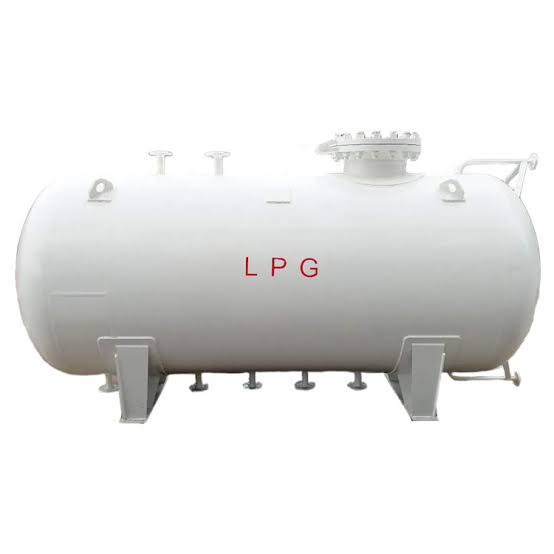
Bulk LPG tank sizing is the engineering process of determining how much LPG storage capacity a commercial or industrial facility requires to maintain reliable supply without creating unnecessary storage, safety or capital costs. Correct bulk LPG tank sizing considers consumption, delivery frequency, tank usable capacity, supply lead time, operational demand and applicable safety requirements.
A tank that is too small may force frequent deliveries, increase the risk of stockouts and leave little margin when consumption rises unexpectedly. A tank that is unnecessarily large can increase capital expenditure, occupy valuable site space and create additional requirements for storage, protection, inspection and management.
Related Products
For industrial LPG users, the correct answer is therefore not simply:
“What is the largest tank we can fit?”
The better engineering question is:
“What storage capacity provides the required operational continuity while remaining appropriate for the site, supply chain and applicable safety requirements?”
That is the purpose of bulk LPG tank sizing.
What Is Bulk LPG Tank Sizing?
Bulk LPG tank sizing determines the appropriate storage capacity for an LPG installation based on actual or forecast consumption and the site’s replenishment requirements. Bulk LPG tank sizing should balance demand, delivery lead time, usable storage, safety margin, physical space and the operating characteristics of the LPG installation.
The calculation normally starts with several fundamental inputs:
- Average LPG consumption
- Peak LPG consumption
- Operating hours
- Number of operating days
- Delivery lead time
- Desired delivery frequency
- Minimum operating inventory
- Safety stock
- Tank filling limitations
- Site constraints
- Future demand
These inputs allow the engineer to develop a storage requirement rather than selecting a tank based purely on nominal capacity.
Why Bulk LPG Tank Sizing Matters
Correct bulk LPG tank sizing protects production continuity while controlling unnecessary storage capacity. An appropriately sized tank gives the facility enough inventory to bridge normal delivery intervals and consumption fluctuations without creating excessive capital or operational requirements.
Poor sizing can create several problems.
An undersized tank may cause:
- Frequent deliveries
- Higher logistics requirements
- Greater stockout risk
- Emergency deliveries
- Production interruptions
- Increased administrative workload
- Reduced resilience during supply disruptions
An oversized tank may cause:
- Higher equipment cost
- Greater installation requirements
- More space consumption
- Increased infrastructure requirements
- Additional inspection and maintenance considerations
- Capital tied up in unused capacity
The objective of bulk LPG tank sizing is therefore optimization.
Bulk LPG Tank Sizing Based on Consumption
Consumption is the most important starting point for bulk LPG tank sizing because storage requirements are ultimately determined by how quickly the facility consumes LPG. Average consumption establishes the normal requirement, while peak consumption determines how much additional capacity may be necessary.
Consumption should ideally be established from measured operational data.
Useful information includes:
| Parameter | Example Measurement |
|---|---|
| Daily average consumption | 1,000 kg/day |
| Peak daily consumption | 1,400 kg/day |
| Operating days | 26 days/month |
| Delivery lead time | 2 days |
| Planned delivery interval | 7 days |
| Safety allowance | Site-specific |
These numbers are illustrative.
Actual tank selection requires project-specific engineering calculations.
Average Versus Peak LPG Consumption
Bulk LPG tank sizing should not rely exclusively on average consumption when the facility experiences significant variations in demand. Peak consumption periods can rapidly reduce available inventory and should be considered when determining the required storage margin.
A factory might normally consume:
800 kg/day
but during a high-production period consume:
1,200 kg/day
Using only the average could result in inadequate storage during periods of increased demand.
Consumption analysis should therefore consider:
- Normal production
- Maximum production
- Seasonal demand
- Additional shifts
- Weekend operations
- Planned expansion
- New LPG appliances
- Process changes
Bulk LPG Tank Sizing and Delivery Lead Time
Delivery lead time is a critical input in bulk LPG tank sizing because the facility must retain enough usable inventory to continue operating while waiting for replenishment. Longer or less predictable delivery times generally require greater inventory resilience.
For example, if a facility consumes:
1,000 kg/day
and delivery requires:
2 days
the facility may need approximately:
2,000 kg
to cover consumption during the expected delivery window.
This is only the starting point.
A proper calculation should also consider safety stock and operational constraints.
Bulk LPG Tank Sizing Formula
A simplified bulk LPG tank sizing calculation can begin with expected consumption during the delivery interval plus an appropriate operating reserve. The resulting LPG quantity must then be translated into a suitable tank nominal capacity while accounting for the tank’s allowable filling level.
A simplified conceptual formula is:
Required LPG Inventory = Delivery Lead-Time Consumption + Safety Stock
And:
Delivery Lead-Time Consumption = Daily Consumption × Delivery Lead Time
For example:
Daily consumption:
1,000 kg/day
Delivery lead time:
2 days
Therefore:
1,000 × 2 = 2,000 kg
If the facility requires an additional 2,000 kg operating reserve:
Required Inventory = 4,000 kg
The final tank size must then be selected using the applicable engineering and filling limitations.
Understanding Nominal Tank Capacity
Nominal tank capacity is not necessarily the same as the quantity of LPG that should be routinely stored. Bulk LPG tank sizing must account for the allowable filling level and required vapour space rather than treating the entire geometric tank volume as usable liquid storage.
This is a critical distinction.
A tank may have a nominal water capacity or rated capacity that differs from the maximum quantity of LPG that can be safely introduced during normal filling.
Therefore:
Nominal Capacity ≠ Routine LPG Inventory
The engineering design must follow the applicable standards, tank certification, manufacturer requirements and regulatory requirements.
LPG Tank Capacity Calculation
LPG tank capacity calculation requires conversion between physical tank capacity and the quantity of LPG that can be stored under the applicable operating conditions. The calculation should use the tank manufacturer’s certified data and the relevant measurement basis rather than relying on a generic conversion factor.
Factors that can influence the calculation include:
- Tank geometry
- Water capacity
- LPG density
- Temperature
- Allowable filling level
- Product characteristics
- Operating pressure
- Applicable standards
Because LPG density varies with composition and temperature, generic assumptions should be avoided when precise engineering or commercial calculations are required.
Bulk LPG Tank Sizing for Industrial Facilities
Industrial facilities require bulk LPG tank sizing that reflects both continuous consumption and the consequences of fuel interruption. Manufacturing plants, boilers and process-heating systems can consume large quantities of LPG, making storage capacity an important part of production continuity planning.
Industrial applications include:
- Boilers
- Process heating
- Thermal treatment
- Food manufacturing
- Metal processing
- Industrial drying
- Textile operations
- Packaging
- Agricultural processing
The engineer should understand the actual thermal load rather than sizing the tank solely from appliance nameplate ratings.
Bulk LPG Tank Sizing for Commercial Kitchens
Commercial kitchen demand can fluctuate substantially according to occupancy, meal periods, events and operating schedules. Bulk LPG tank sizing for hotels and institutional kitchens should therefore consider both average consumption and periods of unusually high demand.
Relevant inputs include:
- Number of meals
- Kitchen equipment
- Operating hours
- Hotel occupancy
- Event schedules
- Catering requirements
- Hot-water demand
- Future expansion
A hotel operating at 40% occupancy may have dramatically different LPG consumption from the same hotel operating at full capacity.
Bulk LPG Tank Sizing for Hospitals
Hospitals require particularly careful bulk LPG tank sizing because interruption of fuel supply can affect kitchens, hot-water services and other operational functions. Storage planning should therefore include appropriate resilience against delivery delays and unexpected consumption increases.
The design may consider:
- Critical services
- Operating schedules
- Backup arrangements
- Supplier response
- Emergency planning
- Minimum inventory
For critical institutions, the storage system should be treated as part of the wider business-continuity strategy.
Bulk LPG Tank Sizing for Agricultural Operations
Agricultural facilities can have highly variable LPG demand depending on crop processing, drying, greenhouse operations and seasonal activity. Bulk LPG tank sizing should therefore use production forecasts and seasonal consumption rather than relying exclusively on annual average consumption.
Examples include:
- Crop drying
- Greenhouse heating
- Poultry operations
- Food processing
- Dairy operations
A seasonal operation may require considerably different storage planning from a facility with stable year-round demand.
Bulk LPG Storage Capacity and Delivery Frequency
Bulk LPG storage capacity should be evaluated together with delivery frequency because tank size and logistics are interconnected. A smaller tank may work when deliveries are frequent and reliable, while a larger tank may be justified where delivery distances or lead times are greater.
The design question is therefore:
Tank capacity + delivery reliability = required operational resilience
For example, a Nairobi facility with frequent supplier access may operate differently from a remote agricultural facility with longer transport requirements.
Bulk LPG Tank Sizing for Remote Facilities
Remote facilities often require additional attention during bulk LPG tank sizing because delivery lead time and transport uncertainty can have a greater influence on required inventory. Storage planning should account for realistic logistics rather than assuming immediate replenishment.
Consider:
- Road conditions
- Distance from supplier
- Delivery schedules
- Seasonal accessibility
- Traffic
- Weather
- Site access
- Emergency delivery capability
This is especially relevant for farms, remote factories and regional processing facilities.
Safety Margin in Bulk LPG Tank Sizing
A safety margin provides additional inventory resilience when consumption or delivery conditions differ from normal assumptions. Bulk LPG tank sizing should establish this reserve from actual operational and supply-chain risks rather than applying an arbitrary percentage to every installation.
A safety margin may address:
- Consumption spikes
- Delivery delays
- Unexpected production
- Supplier scheduling
- Road disruptions
- Seasonal demand
- Maintenance-related changes
The correct reserve is therefore site-specific.
Bulk LPG Tank Sizing and Future Expansion
Tank sizing should consider credible future demand where expansion is already planned or reasonably foreseeable. Designing for future requirements can prevent premature replacement, but oversizing solely for hypothetical growth can also increase unnecessary capital and infrastructure costs.
Consider whether the facility plans to add:
- New production lines
- Additional boilers
- More kitchens
- Larger dryers
- Additional shifts
- Expanded greenhouse capacity
- New buildings
The engineering design should distinguish between:
Committed Expansion
and:
Speculative Future Growth
Bulk LPG Tank Sizing Technical Review
A technical review should combine demand calculations with physical site constraints and LPG system requirements. Bulk LPG tank sizing is not complete until the proposed tank can be safely accommodated and connected to the required equipment and distribution system.
Review:
| Design Parameter | Engineering Question |
|---|---|
| LPG consumption | How much LPG is used? |
| Peak demand | What is the highest expected demand? |
| Delivery interval | How frequently can supply arrive? |
| Lead time | How long does replenishment take? |
| Safety stock | What reserve is required? |
| Tank location | Can the tank be safely positioned? |
| Pipework | Can required flow be achieved? |
| Vapour capacity | Can the system supply peak demand? |
| Future demand | Is expansion planned? |
| Fire protection | What protection is required? |
Tank Size Versus Vaporization Capacity
Storage capacity and vaporization capacity are separate engineering considerations. A facility may have enough LPG stored in the tank but still require appropriate vaporization capacity, pressure regulation and distribution design to satisfy the connected load.
This distinction is particularly important for industrial users.
For example:
Large tank + insufficient vaporization capacity = inadequate gas supply
Conversely:
High vaporization capacity + insufficient storage = stockout risk
The complete LPG system must therefore be engineered as an integrated installation.
Megtraco’s LPG vaporizers can be relevant where industrial demand exceeds the natural vaporization capability of the storage arrangement.
Bulk LPG Tank Sizing and LPG Piping
The selected tank must work with the downstream LPG distribution system. Bulk LPG tank sizing should therefore be coordinated with pipe sizing, pressure regulation, flow requirements and connected equipment rather than treating storage as an isolated component.
Important considerations include:
- Pipe diameter
- Pressure drop
- Flow rate
- Regulator capacity
- Number of appliances
- Simultaneous demand
- Pipe material
- Routing
- Isolation valves
Megtraco’s advanced LPG piping systems provide one example of equipment that may form part of an engineered LPG distribution system, subject to application suitability and project specifications.
Bulk LPG Tank Sizing and Fire Safety
Tank capacity affects the scale and configuration of LPG storage infrastructure, so fire-safety planning must be incorporated into the project from the beginning. Bulk LPG tank sizing should be coordinated with storage location, separation distances, access, emergency controls, fire protection and applicable regulatory requirements.
The exact requirements depend on:
- Tank configuration
- Installation type
- Location
- Surrounding occupancy
- Applicable Kenyan requirements
- Applicable standards
- Fire-risk assessment
Fire protection should not be added after the tank has already been positioned.
It should form part of the initial design.
Bulk LPG Tank Sizing and Regulatory Compliance in Kenya
Bulk LPG tank sizing in Kenya must be undertaken within the applicable petroleum, occupational-safety, fire-safety and standards framework. EPRA, KEBS and other relevant authorities may have requirements affecting LPG storage, installation, equipment and operation.
The project should identify the applicable requirements before procurement and construction.
Relevant organizations can include:
- Energy and Petroleum Regulatory Authority
- Kenya Bureau of Standards
- Directorate of Occupational Safety and Health Services
- Relevant fire-safety authorities
- Other competent authorities depending on the project
International standards such as applicable NFPA requirements may also be relevant where adopted, referenced or specified by the project.
The exact standard and edition should always be verified for the specific installation.
Bulk LPG Tank Sizing Site Assessment
A site assessment determines whether the proposed tank capacity can be safely and practically accommodated. Bulk LPG tank sizing should therefore be accompanied by a review of access, separation, foundations, tanker delivery routes, pipework, fire protection and emergency response.
The assessment should examine:
- Available footprint
- Tank orientation
- Vehicle access
- Delivery tanker access
- Foundation requirements
- Drainage
- Ventilation
- Nearby buildings
- Ignition sources
- Emergency access
- Fire equipment
- Security
- Future expansion
A technically correct tank calculation can still produce an impractical project if site constraints are ignored.
Bulk LPG Tank Sizing Commissioning Checklist
Before commissioning a bulk LPG installation, the engineering team should verify that the selected storage capacity, equipment, pipework, controls and safety systems correspond with the approved design. Bulk LPG tank sizing should be traceable to the project’s design calculations and equipment documentation.
| Commissioning Check | Verification |
|---|---|
| Tank identification | Correct tank installed |
| Certified capacity | Matches design |
| LPG storage basis | Confirmed |
| Level indication | Functional |
| Pressure controls | Tested |
| Pipework | Installed to approved design |
| Valves | Correct and accessible |
| Safety devices | Installed and verified |
| Fire protection | Available |
| Emergency isolation | Functional |
| Delivery access | Confirmed |
| Documentation | Complete |
| Personnel training | Completed |
Common Bulk LPG Tank Sizing Mistakes
Many storage problems originate from incorrect assumptions made during the initial sizing exercise. Bulk LPG tank sizing should use measured consumption and realistic delivery conditions rather than relying on generic tank sizes or appliance ratings alone.
Mistake 1: Using Appliance Rating as Actual Consumption
A boiler rated at a particular input does not necessarily operate continuously at full load.
Mistake 2: Ignoring Peak Demand
Average consumption may conceal short periods of very high demand.
Mistake 3: Ignoring Delivery Lead Time
A supplier may not always be able to deliver immediately.
Mistake 4: Treating Nominal Tank Capacity as Usable LPG
The entire geometric capacity cannot simply be treated as normal LPG inventory.
Mistake 5: Ignoring Future Expansion
A facility may outgrow an otherwise adequate tank.
Mistake 6: Oversizing Without Justification
Excessive capacity can increase capital and site requirements unnecessarily.
Mistake 7: Ignoring Vaporization
Storage capacity does not automatically determine gas delivery capacity.
Bulk LPG Tank Sizing vs Frequent Delivery
The choice between larger storage and more frequent deliveries should be evaluated using both engineering and commercial factors. Bulk LPG tank sizing should reflect the site’s actual logistics, consumption profile and operational consequences of supply interruption.
| Factor | Smaller Tank / Frequent Delivery | Larger Tank / Less Frequent Delivery |
|---|---|---|
| Initial tank cost | Generally lower | Generally higher |
| Delivery frequency | Higher | Lower |
| Logistics dependence | Higher | Lower |
| Site footprint | Potentially smaller | Potentially larger |
| Stockout resilience | Lower if delivery fails | Higher if adequately stocked |
| Working inventory | Lower | Higher |
| Transport planning | More frequent | Less frequent |
| Best application | Reliable nearby supply | Higher/remote demand |
Neither strategy is universally superior.
The correct choice depends on the facility.
Improving Bulk LPG Tank Sizing With Real Consumption Data
Historical consumption data is one of the strongest inputs for improving bulk LPG tank sizing. Actual delivery records, tank telemetry and production information can reveal the difference between theoretical LPG demand and real operating consumption.
Facilities can review:
- Monthly LPG purchases
- Daily consumption
- Delivery intervals
- Peak demand
- Seasonal changes
- Production output
- Emergency deliveries
Megtraco’s broader LPG engineering services can support projects where storage, distribution and operational requirements need to be assessed together.
Bulk LPG Tank Sizing and Telemetry
Tank telemetry can improve ongoing inventory management after the storage system has been installed. While telemetry does not determine the original engineering tank capacity by itself, historical monitoring data can help validate consumption assumptions and improve future bulk LPG tank sizing decisions.
Telemetry can show:
- Current inventory
- Consumption trends
- Reorder points
- Unexpected demand
- Delivery performance
For facilities considering remote monitoring, industrial leak detection technologies can complement inventory monitoring by addressing a different safety function.
Frequently Asked Questions
What Is Bulk LPG Tank Sizing?
Bulk LPG tank sizing is the engineering process used to determine the appropriate LPG storage capacity for a facility based on consumption, delivery requirements, safety margins, tank limitations and site conditions.
How Do You Calculate LPG Tank Size?
A basic calculation starts with daily LPG consumption multiplied by delivery lead time, then adds an appropriate operating reserve. The resulting requirement must be converted into a suitable tank capacity while respecting allowable filling levels and applicable engineering requirements.
How Much LPG Should a Bulk Tank Hold?
The required inventory depends on consumption, delivery lead time, safety stock and operating conditions. A tank should not simply be filled to its nominal geometric capacity; the applicable allowable filling level and tank certification must be followed.
Should LPG Tank Size Be Based on Average Consumption?
Average consumption is an important input, but peak consumption and seasonal variations should also be considered where they materially affect supply continuity.
Does a Bigger LPG Tank Always Provide Better Reliability?
Not necessarily. A larger tank can provide greater inventory resilience, but it also increases capital, space and infrastructure requirements. The correct capacity is the one that balances operational resilience with engineering and commercial requirements.
How Does Delivery Lead Time Affect LPG Tank Sizing?
Longer delivery lead times generally require greater inventory resilience because the facility must retain enough LPG to continue operating until replenishment arrives.
Does LPG Tank Size Determine Gas Flow Capacity?
No. Storage capacity and gas delivery capacity are different parameters. Vaporizers, regulators, pipework and downstream equipment must also be sized to meet the required gas flow.
Can LPG Telemetry Help With Tank Sizing?
LPG telemetry can provide historical inventory and consumption data that improves future storage planning. It is particularly useful for validating actual consumption against the assumptions used during design.
What Authorities Are Relevant to LPG Storage in Kenya?
Depending on the installation, relevant requirements may involve EPRA, KEBS, occupational-safety authorities, fire-safety authorities and other competent bodies. The applicable requirements should be confirmed for the specific project before installation.
How Often Should LPG Tank Capacity Be Reviewed?
Tank capacity should be reviewed when there are significant changes in consumption, production, delivery arrangements, connected equipment or facility expansion. Periodic operational reviews can also identify whether the original assumptions remain valid.
Engineering Conclusion
Bulk LPG tank sizing is fundamentally a balance between fuel demand, supply reliability, safety and lifecycle cost. The right tank is not necessarily the largest available option; it is the capacity that provides sufficient operational resilience while remaining appropriate for the site’s engineering, regulatory and logistical conditions.
A professional sizing exercise should therefore consider:
- Actual LPG consumption
- Peak demand
- Delivery lead time
- Delivery frequency
- Safety stock
- Allowable filling level
- Tank certification
- Vaporization capacity
- Pipework capacity
- Site conditions
- Fire protection
- Regulatory requirements
- Future expansion
The storage tank should also be considered as one part of the wider LPG system.
A successful installation requires coordinated engineering of:
Storage → Vaporization → Pressure Regulation → Piping → Detection → Fire Protection → End-Use Equipment → Supply Logistics
Megtraco Kenya Ltd supports commercial and industrial LPG projects where storage, distribution, equipment and safety requirements need to work as one engineered system. Facilities can browse industrial LPG equipment or request a professional engineering consultation for project-specific requirements.
The fundamental principle is simple:
Size the storage around real demand, realistic delivery conditions and the required level of operational resilience—not around a generic tank size.
Your Trusted LPG & Fire Safety Engineering Partner in East Africa
Whether you’re designing a new LPG installation, upgrading industrial gas systems, or enhancing fire safety compliance, Megtraco Kenya Ltd delivers certified engineering solutions backed by decades of expertise. From LPG equipment supply and pipeline installations to fire suppression and detection systems, our experienced team provides reliable solutions for commercial, industrial, and institutional projects across East Africa.
Contact us today for professional consultation, engineering support, or a customized quotation.
WHY CHOOSE MEGTRACO KENYA LTD
You May Also Like


- ✔ Established Since 1969 – Decades of proven engineering excellence.
- ✔ KEBS Certified Products – Guaranteed quality and compliance with regional standards.
- ✔ EPRA Licensed LPG Engineering Company – Fully certified to design, install, and commission.
- ✔ Industrial & Commercial LPG Specialists – Scaled to handle heavy-duty thermal requirements.
- ✔ Fire Suppression & Fire Detection Experts – End-to-end asset protection.
- ✔ Regional Operational Footprint – Serving Nairobi, Mombasa, Kisumu, Nakuru, Eldoret, Thika, Machakos, East Africa, and beyond.
Contact Megtraco Kenya Ltd
- Email: sales@megtracokenya.com
- Sales: +254 725 870 114
- Technical: +254 733 721 598
- WhatsApp: +254 799 086 323
- Location: Nairobi, Kenya – Serving East Africa
- Website: https://megtracokenya.com
Request a Quote today and partner with East Africa’s trusted LPG and fire safety engineering company since 1969.
