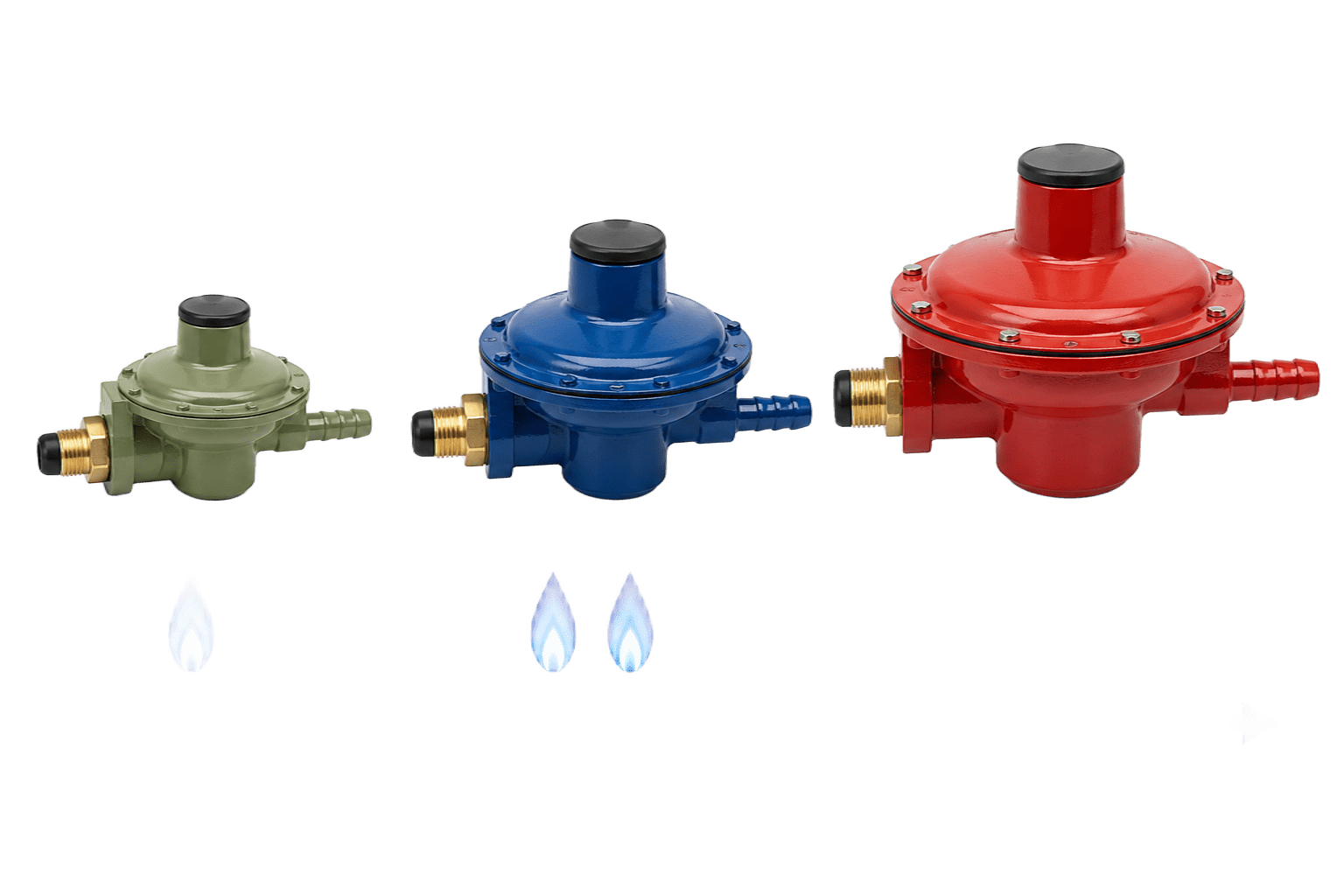
Regulator flow rate kg/hr is one of the most important specifications when selecting an LPG regulator for burners. It shows how much gas the regulator can supply per hour while maintaining the required pressure, ensuring appliances receive enough LPG for efficient operation.
Many LPG users focus only on the physical size or connection type of a regulator and overlook its flow capacity. However, a regulator must be correctly sized according to the total gas demand of the appliances it supplies.
Related Products
A regulator that is too small may restrict gas supply, causing:
- Weak burner flames
- Slow heating
- Poor appliance performance
- Pressure drops during peak usage
- Increased operating problems
On the other hand, selecting the correct capacity ensures burners receive stable gas flow and operate according to manufacturer specifications.
Understanding regulator flow rate kg/hr helps restaurants, bakeries, hotels, workshops, and commercial kitchens choose LPG equipment that matches their actual burner demand.
Before selecting a regulator, consider:
- Total burner consumption
- LPG appliance requirements
- Required operating pressure
- Future expansion plans
- Safety requirements
Megtraco Kenya Ltd provides professional LPG equipment solutions for residential, commercial, and industrial applications. Explore our LPG engineering solutions for expert system design, equipment selection, and installation support.
Regulator Flow Rate kg/hr: Understanding What the Rating Means
Regulator flow rate kg/hr indicates the maximum amount of LPG a regulator can deliver within one hour while maintaining stable pressure. A correct rating ensures burners receive enough gas without interruptions or performance issues.
The “kg/hr” measurement refers to kilograms of LPG supplied per hour.
For example:
- A 2 kg/hr regulator can supply up to 2 kilograms of LPG per hour.
- A 10 kg/hr regulator can supply up to 10 kilograms of LPG per hour.
The correct choice depends on the combined consumption of all connected appliances.
Regulator Flow Rate kg/hr and Burner Demand
Every LPG burner has a specific gas consumption rating. This information may be provided:
- On the appliance label
- In the manufacturer manual
- On technical specifications
For example:
| Appliance | LPG Consumption |
|---|---|
| Small burner | 0.8 kg/hr |
| Commercial burner | 2.5 kg/hr |
| Large cooking burner | 4 kg/hr |
If several burners operate from one LPG supply, their consumption must be added together before selecting the regulator.
Why Burner Load Comes First
The regulator does not create additional gas supply. It only controls and delivers the available LPG from the cylinder or storage system.
If the connected appliances require more gas than the regulator can supply, the system may experience:
- Reduced flame size
- Unstable combustion
- Slow cooking times
- Reduced heating efficiency
Regulator Flow Rate kg/hr: How to Calculate the Correct Capacity
Calculating regulator flow rate kg/hr starts by adding the LPG consumption of all connected burners and including additional capacity for peak demand and future expansion.
The basic calculation method is:
Total LPG Demand = Burner 1 Consumption + Burner 2 Consumption + Burner 3 Consumption + Additional Allowance
For example, a commercial kitchen may have:
- Cooker burner: 2 kg/hr
- Oven burner: 3 kg/hr
- Fryer burner: 4 kg/hr
Total consumption:
2 + 3 + 4 = 9 kg/hr
The selected regulator should have a capacity above this demand.
A suitable regulator may need additional allowance because:
- Not all appliances operate identically
- Future equipment may be added
- Peak usage may increase demand
Adding Safety Margin
A common sizing mistake is choosing a regulator that exactly matches current demand.
A better approach is allowing extra capacity.
For example:
Current demand:
- 9 kg/hr
Additional allowance:
- 20–30%
Required capacity:
- Approximately 11–12 kg/hr
This ensures the LPG system continues performing efficiently during busy operating periods.
Regulator Flow Rate kg/hr: Why Correct Sizing Matters for Burners
Correct regulator sizing prevents gas supply problems by ensuring burners receive the required LPG flow. An undersized regulator may struggle when multiple appliances operate at the same time.
A properly sized regulator improves:
Burner Performance
The burner receives enough gas to produce the expected flame size and heat output.
Energy Efficiency
Correct gas delivery reduces wasted LPG caused by poor combustion.
Equipment Reliability
Stable pressure reduces stress on appliances and improves operating consistency.
Safety
A correctly selected regulator reduces the risk of unstable gas supply conditions.
Regulator Flow Rate kg/hr: Signs Your Regulator Is Too Small
A regulator with insufficient capacity often shows warning signs when the LPG demand exceeds its ability to supply gas. Recognising these signs helps prevent ongoing performance problems.
Common symptoms include:
- Flames becoming weak when another appliance starts
- Burners taking longer to heat
- Appliances shutting down unexpectedly
- Uneven cooking temperatures
- Reduced equipment output
For example, a restaurant may experience normal performance when one burner operates but poor performance when several burners are switched on together.
This usually indicates that the LPG supply system, including the regulator capacity, needs assessment.
Megtraco Kenya Ltd supplies LPG equipment solutions designed for reliable commercial and industrial gas applications.
Regulator Flow Rate kg/hr: Choosing the Right Regulator for Your Application
Different LPG applications require different regulator capacities. Domestic cooking systems, commercial kitchens, bakeries, and workshops all have different gas demand requirements.
Domestic Applications
Homes usually require lower LPG consumption because they operate fewer appliances.
Restaurants and Hotels
Commercial kitchens require higher capacity regulators because they may operate:
- Multiple burners
- Ovens
- Grills
- Fryers
- Cooking equipment
Bakeries and Workshops
Industrial users often require carefully calculated LPG supply systems because heating equipment may operate continuously.
Professional assessment ensures the selected regulator flow rate kg/hr matches the actual operating requirements.