Dual stage vs single stage regulator selection is an important decision when designing an LPG system because each regulator type controls gas pressure differently. Choosing the correct regulator helps maintain stable gas supply, improve burner performance, and protect connected appliances.
Many LPG users focus on cylinder size, pipework, or appliance capacity but overlook the importance of the regulator. The regulator is responsible for reducing the high pressure from an LPG cylinder or storage tank to a safe working pressure that appliances can use.
Related Products
A poor regulator choice can lead to:
- Unstable flames
- Reduced heating performance
- Pressure fluctuations
- Increased maintenance issues
- Poor appliance efficiency
The choice between a single-stage and dual-stage regulator depends on factors such as:
- Number of appliances connected
- LPG consumption demand
- Pipe distance
- Required pressure stability
- Type of installation
A dual stage vs single stage regulator comparison focuses on how each system manages pressure reduction, changing cylinder pressure, operating conditions, and long-term reliability.
For simple LPG applications, a single-stage regulator may provide sufficient performance. However, larger systems such as restaurants, apartment developments, hotels, and industrial facilities may require more controlled pressure management.
Megtraco Kenya Ltd provides professional LPG equipment solutions for residential, commercial, and industrial applications. Learn more about our LPG engineering solutions for expert system design and equipment selection.
Dual Stage vs Single Stage Regulator: Understanding How Each Works
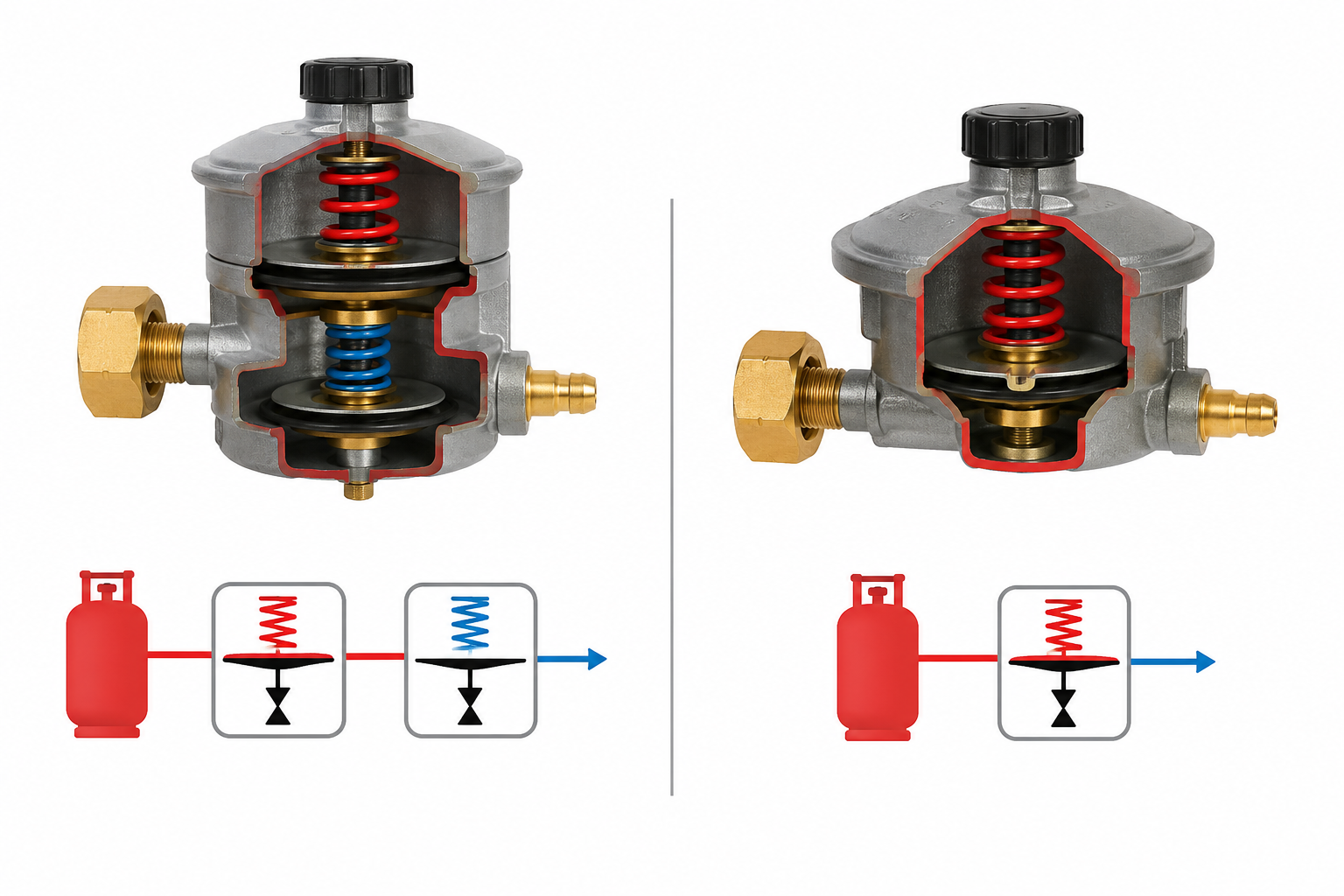
The main difference in a dual stage vs single stage regulator comparison is how pressure reduction happens. A single-stage regulator reduces pressure once, while a dual-stage regulator reduces pressure through two controlled stages.
LPG stored inside cylinders and tanks exists at a much higher pressure than appliances require. The regulator reduces this pressure before gas reaches burners and other equipment.
How Single-Stage Regulators Work
A single-stage regulator performs the entire pressure reduction process in one step.
The gas enters the regulator at cylinder pressure and passes through:
- Valve mechanism
- Diaphragm system
- Pressure control spring
The regulator then delivers gas at the required outlet pressure.
Single-stage regulators are commonly used for:
- Small domestic LPG systems
- Simple cooking applications
- Low-demand appliances
Their advantages include:
- Simple design
- Lower installation cost
- Easy replacement
- Suitable performance for small systems
However, outlet pressure can change as cylinder pressure drops, especially when gas demand increases.
How Dual-Stage Regulators Work
A dual-stage regulator uses two separate pressure reduction steps.
The first stage reduces cylinder pressure to an intermediate pressure, while the second stage reduces it further to the final appliance pressure.
This design provides:
- Better pressure stability
- More consistent gas delivery
- Improved performance during changing cylinder conditions
Dual-stage regulators are often used in:
- Commercial kitchens
- Hotels
- Institutions
- Large residential developments
- Industrial LPG systems
Dual Stage vs Single Stage Regulator: Why Pressure Stability Matters
In a dual stage vs single stage regulator comparison, pressure stability is one of the biggest advantages of two-stage systems. Dual-stage regulators maintain more consistent outlet pressure as LPG cylinder pressure changes.
LPG cylinder pressure naturally changes during use.
Factors affecting pressure include:
- Amount of LPG remaining
- Temperature conditions
- Gas consumption rate
- Number of appliances operating
A single-stage regulator must handle the full pressure reduction process at once. As cylinder pressure changes, outlet pressure may experience greater variation.
A dual-stage regulator divides the process into two steps, making pressure control more gradual.
Dual Stage vs Single Stage Regulator: Handling Falling Cylinder Pressure
When LPG levels reduce inside a cylinder, the pressure available to the regulator changes.
A single-stage system may experience:
- Reduced gas flow
- Flame changes
- Lower appliance output
A dual-stage system manages these changes more effectively because each stage handles part of the pressure reduction process.
This makes dual-stage regulators suitable where consistent performance is important.
Dual Stage vs Single Stage Regulator: Protecting Burner Performance
Burners require a specific gas pressure to create the correct air-to-gas mixture.
Incorrect pressure can result in:
- Weak flames
- Poor combustion
- Reduced heating output
- Increased fuel consumption
A properly selected regulator helps maintain:
- Stable flame characteristics
- Efficient fuel usage
- Reliable appliance operation
Dual Stage vs Single Stage Regulator: Comparing Applications
Choosing between a dual stage vs single stage regulator depends on the LPG system size, appliance demand, and required level of pressure control.
Different applications have different gas requirements.
Domestic LPG Applications
Small homes with one or two appliances may only require a single-stage regulator.
Typical uses include:
- Cooking burners
- Small water heaters
- Household LPG appliances
The simpler design often provides enough performance for low-demand systems.
Commercial Kitchen Systems
Restaurants and hotels usually have higher gas demand because several appliances may operate together.
Equipment may include:
- Multiple cooking burners
- Ovens
- Fryers
- Grills
- Water heaters
In these applications, a dual-stage regulator can provide better pressure consistency.
Megtraco Kenya Ltd supports commercial clients with LPG installation services designed for reliable and efficient gas supply systems.
Dual Stage vs Single Stage Regulator: When the Extra Stage Earns Its Keep
A dual-stage regulator earns its extra cost when an LPG system requires stable pressure, higher reliability, and consistent performance under changing demand conditions.
The additional regulation stage becomes valuable when:
- Several appliances operate together
- Gas consumption is high
- Pipe runs are long
- Pressure stability is critical
- The system supplies multiple users
For simple applications, a single-stage regulator may be sufficient. For complex LPG installations, the improved control of a dual-stage system can prevent future operating problems.