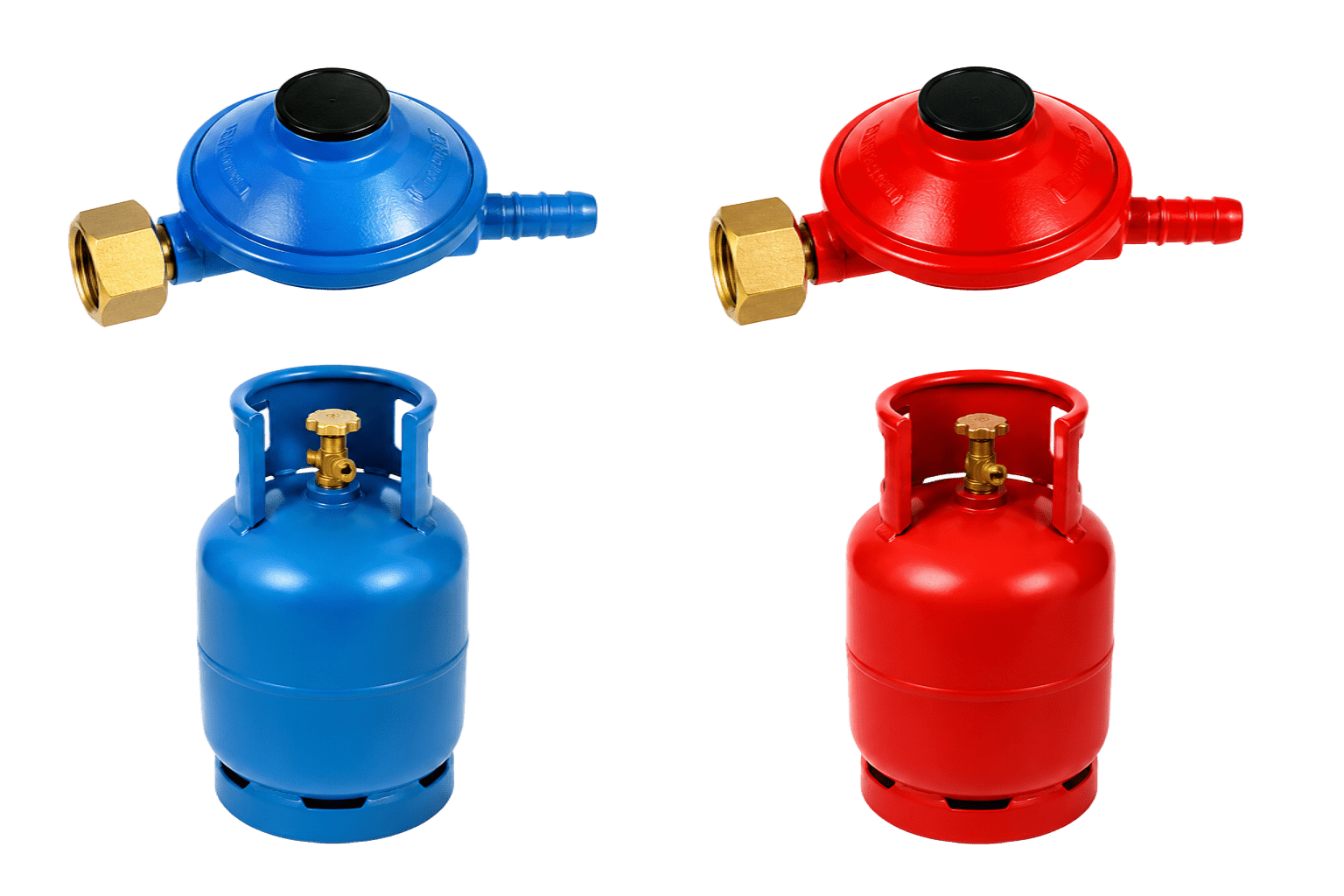
Butane vs propane regulator selection is important because different LPG gases require different pressure control settings. Choosing the wrong regulator can reduce burner performance, create inefficient combustion, and prevent appliances from operating correctly.
Many LPG users assume that all gas regulators work the same way because both butane and propane are classified as liquefied petroleum gases (LPG). However, the regulator is a critical component that controls how much gas reaches the appliance.
Related Products
A burner depends on receiving the correct gas pressure and flow rate. When the wrong regulator is installed, the appliance may experience:
- Weak or unstable flames
- Poor heating performance
- Increased gas consumption
- Incomplete combustion
- Frequent burner problems
Understanding the difference between regulators helps homeowners, businesses, and LPG technicians make safer equipment choices.
A butane vs propane regulator comparison focuses on pressure output, gas compatibility, fittings, temperature performance, and the appliance requirements specified by the manufacturer.
Before installing or replacing any LPG regulator, it is important to confirm:
- The type of LPG being used
- Required outlet pressure
- Appliance specifications
- Regulator certification
- Connection type
Megtraco Kenya Ltd supplies professional LPG equipment and supports safe LPG installations for residential, commercial, and industrial applications. Explore our LPG engineering solutions for expert system design and equipment guidance.
Butane vs Propane Regulator: Understanding the Key Difference
A butane vs propane regulator difference comes down to how each regulator controls gas pressure for a specific fuel type. Although both gases are LPG, they have different operating characteristics and require compatible pressure control equipment.
A gas regulator reduces the high pressure inside an LPG cylinder or storage system to a lower pressure suitable for appliances.
The regulator ensures that:
- Gas flows at a controlled rate
- Appliances receive consistent pressure
- Burners operate efficiently
- Safety risks are reduced
How LPG Regulators Work
An LPG regulator contains internal components such as:
- Diaphragm
- Spring mechanism
- Valve assembly
- Pressure control chamber
When the appliance requires gas, the regulator adjusts the opening of the valve to maintain the correct outlet pressure.
The regulator is not simply an adapter between the cylinder and appliance. It is a precision safety component that determines how the gas system performs.
Butane Regulators
Butane regulators are designed for appliances that operate using butane gas systems.
They are selected based on:
- Required pressure
- Appliance design
- Connection standards
- Manufacturer recommendations
Propane Regulators
Propane regulators are designed for propane systems and applications where propane characteristics match the appliance requirements.
They are commonly used for:
- Domestic cooking systems
- Commercial kitchens
- Outdoor equipment
- Larger LPG applications
Using the correct regulator ensures the appliance receives the intended gas supply.
Butane vs Propane Regulator: How Pressure Output Affects Burner Performance
The correct butane vs propane regulator maintains the pressure required by the burner. An incorrect pressure setting can restrict gas flow and cause poor flame performance.
A burner is designed to mix a specific amount of gas with air. If the regulator delivers too little or too much gas pressure, the air-to-gas mixture can become incorrect.
Common signs of incorrect regulator selection include:
- Small yellow flames
- Slow cooking times
- Burner shutdown
- Uneven heating
- Excessive gas consumption
The regulator specification normally includes:
- Outlet pressure rating
- Gas type compatibility
- Flow capacity
- Connection details
For example, a household cooker designed for one LPG pressure specification may not perform correctly if connected to a regulator designed for another system.
Why Pressure Matching Matters
Pressure affects:
Flame Size
Correct pressure creates a stable flame suitable for cooking or heating.
Heat Output
The right regulator allows the appliance to produce its designed heat output.
Efficiency
Correct gas flow reduces unnecessary fuel wastage.
A professional butane vs propane regulator assessment should always consider the appliance requirements rather than selecting a regulator based only on cylinder connection.
Megtraco Kenya Ltd provides LPG equipment solutions including regulators, valves, and safety components for reliable LPG systems.
Butane vs Propane Regulator: Why Appliance Compatibility Matters
A butane vs propane regulator must match the appliance it supplies. Installing an incompatible regulator can affect performance and create unsafe operating conditions.
Every LPG appliance is designed with specific requirements, including:
- Gas type
- Pressure rating
- Injector size
- Burner design
- Connection method
Before changing a regulator, users should check:
- Appliance manufacturer instructions
- Existing regulator markings
- Gas type indicated on the appliance
- Required operating pressure
A common mistake is assuming that because both gases come from LPG cylinders, their regulators can be exchanged freely.
This can cause:
- Poor combustion
- Reduced efficiency
- Burner damage
- Unreliable operation
Butane vs Propane Regulator: Matching the Regulator to Your Gas System
Choosing the correct butane vs propane regulator requires checking the complete LPG system, not just the cylinder connection. The regulator, appliance, and gas supply must work together as one system.
A proper LPG assessment considers:
- Cylinder or tank type
- Gas pressure requirements
- Appliance capacity
- Installation environment
- Safety requirements
For commercial and residential installations, professional assessment is especially important because multiple appliances may operate from one LPG supply.
Megtraco Kenya Ltd supports safe LPG installations through LPG installation services, helping clients select suitable equipment and maintain reliable gas systems.