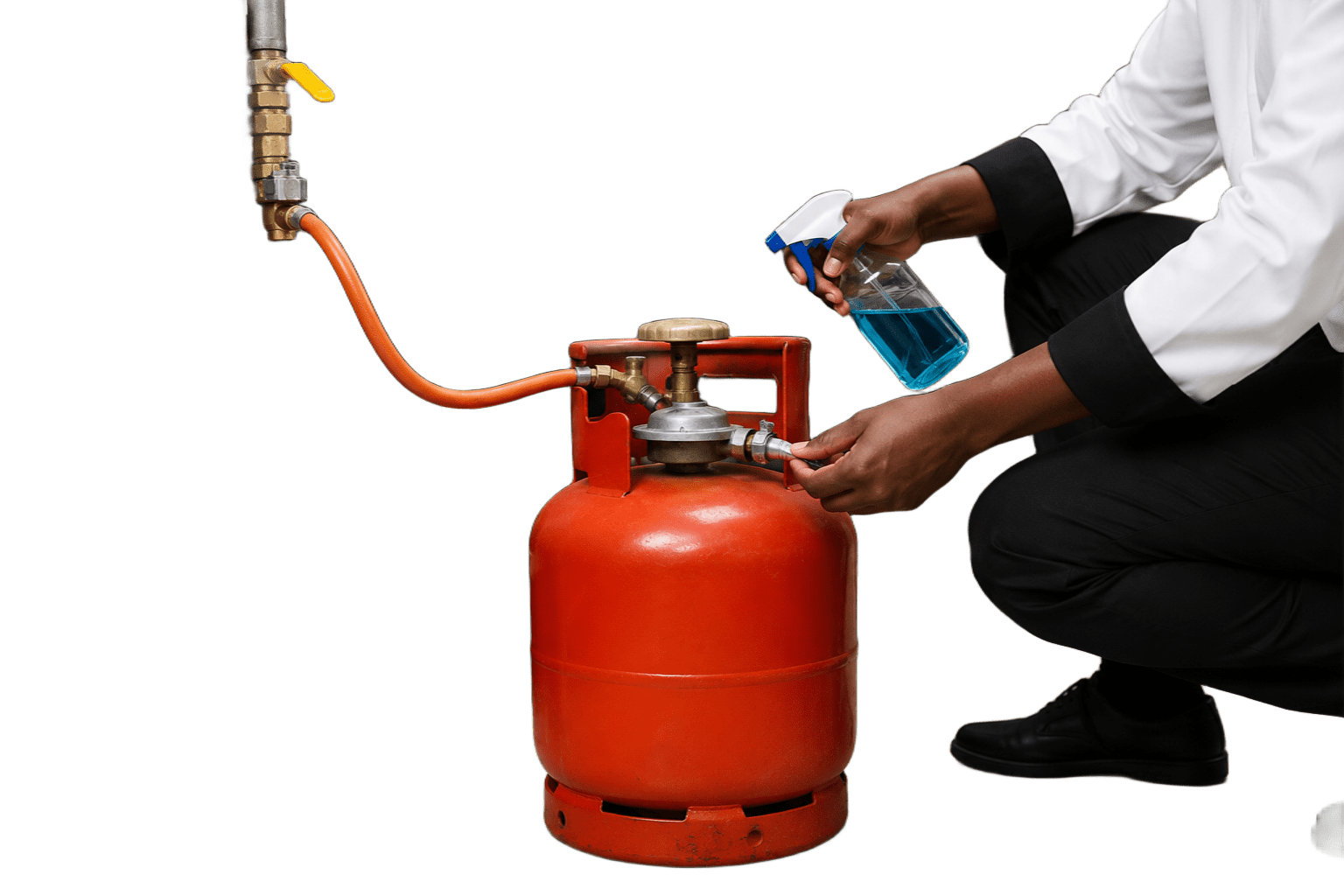
LPG safety checks for restaurants are routine inspections that identify gas leaks, worn components, poor ventilation, and unsafe operating conditions before they become serious incidents. Conducting weekly LPG safety checks for restaurants helps reduce fire risks, improve operational reliability, and support compliance with recognised LPG safety standards.
Every commercial kitchen relies on LPG to keep service running efficiently. Whether you operate a restaurant, hotel, café, catering business, school kitchen, or hospital canteen, LPG safety checks for restaurants should be part of your weekly maintenance routine. Small faults such as a loose regulator connection, a cracked hose, or poor ventilation can quickly develop into major safety hazards if they are ignored.
Related Products
Routine LPG safety checks for restaurants allow managers to identify problems before they interrupt operations or place employees and customers at risk. They also help extend the lifespan of LPG equipment, reduce emergency repair costs, and improve compliance with recommendations from the Energy and Petroleum Regulatory Authority (EPRA), the Kenya Bureau of Standards (KEBS), the Directorate of Occupational Safety and Health Services (DOSHS), and internationally recognised standards such as NFPA 58 for Liquefied Petroleum Gas.
Whether you require a complete LPG installation, preventive maintenance, or safety upgrades, explore our LPG engineering solutions. Businesses looking for system assessments can also book a professional engineering consultation with Megtraco Kenya Ltd’s experienced engineering team.
LPG Safety Checks for Restaurants: Why Weekly Inspections Matter
LPG safety checks for restaurants help identify developing faults before they become emergencies. Weekly inspections reduce the likelihood of gas leaks, equipment failure, kitchen downtime, and costly repairs while improving the overall safety of commercial food preparation areas.
Commercial kitchens place continuous demands on LPG equipment. High temperatures, grease accumulation, frequent cleaning, vibration, and constant use all contribute to wear on regulators, hoses, valves, and pipe connections.
Without scheduled LPG safety checks for restaurants, issues such as damaged hoses, loose fittings, deteriorated seals, and blocked ventilation systems may remain unnoticed until they create dangerous operating conditions.
A weekly inspection should identify:
- Damaged LPG cylinders
- Loose regulator connections
- Cracked or hardened flexible hoses
- Leaking valves
- Poor burner performance
- Obstructed ventilation
- Missing warning signs
- Inaccessible emergency shut-off valves
Restaurants that perform consistent LPG safety checks for restaurants experience fewer unexpected breakdowns and are better prepared for regulatory inspections.
LPG Safety Checks for Restaurants Before Opening Each Week
LPG safety checks for restaurants should always begin before cooking starts. A complete visual inspection allows kitchen staff to identify obvious hazards before LPG appliances are placed into operation.
Before the first burner is lit, supervisors should inspect:
- LPG cylinders
- Cylinder storage cages
- Pressure regulators
- Flexible hoses
- Pipework
- Isolation valves
- Emergency shut-off valves
- Fire extinguishers
- Safety signage
- Ventilation openings
Any damaged equipment should be isolated immediately until qualified personnel have inspected or replaced it.
For replacement regulators, pipework, valves, and accessories, browse our range of industrial LPG equipment designed for commercial and industrial LPG installations.
LPG Safety Checks for Restaurants on Hoses and Regulators
LPG safety checks for restaurants should include careful inspection of regulators and flexible hoses because these components are among the most common sources of gas leaks in commercial kitchens.
Restaurant staff should examine hoses for:
- Cracks
- Cuts
- Abrasion
- Hardening
- Heat damage
- Loose hose clips
- Incorrect routing
Pressure regulators should also be checked for:
- Corrosion
- Physical damage
- Loose connections
- Gas odours
- Damaged seals
- Evidence of leakage
If defects are found during LPG safety checks for restaurants, damaged components should never be repaired temporarily using tape, sealants, or improvised fittings. Approved replacement equipment should always be installed.
Where leak monitoring is required, consider industrial gas leak detection systems that provide continuous monitoring of commercial LPG installations.
LPG Safety Checks for Restaurants to Prevent Gas Leaks
LPG safety checks for restaurants are one of the most effective methods of preventing gas leaks. Early leak detection protects employees, customers, and property while reducing the risk of fire or explosion.
Gas leaks commonly occur at:
- Cylinder valves
- Regulator connections
- Hose fittings
- Isolation valves
- Appliance connections
- Pipe joints
Weekly LPG safety checks for restaurants should include approved leak detection procedures rather than relying solely on the smell of LPG.
If a leak is suspected:
- Close the cylinder valve immediately.
- Shut down all LPG appliances.
- Eliminate ignition sources.
- Ventilate the affected area.
- Contact qualified LPG engineers before restarting the system.
Businesses upgrading their protection systems can explore commercial fire safety systems that integrate with commercial LPG installations for enhanced fire protection.
LPG Safety Checks for Restaurants on Ventilation Systems
LPG safety checks for restaurants must include ventilation because safe combustion depends on adequate airflow. Proper ventilation also helps prevent LPG accumulation if a leak occurs.
Every weekly inspection should confirm that:
- Air vents remain unobstructed.
- Kitchen extraction systems operate correctly.
- Combustion air is sufficient.
- Cylinder storage areas remain well ventilated.
- Exhaust systems are functioning efficiently.
Blocked ventilation not only increases safety risks but can also reduce burner efficiency and lead to incomplete combustion.
Restaurants planning major LPG upgrades should consider advanced LPG piping systems that provide safe, durable gas distribution for commercial facilities.
LPG Safety Checks for Restaurants on Emergency Shut-Off Valves
LPG safety checks for restaurants should confirm that emergency shut-off valves are clearly labelled, easily accessible, and fully operational. During an emergency, staff must be able to isolate the gas supply without hesitation.
Restaurant managers should verify:
- Emergency valve accessibility
- Clear identification signage
- Proper valve operation
- Staff familiarity with emergency procedures
- Safe access routes
Emergency drills should be conducted regularly so employees know exactly how to respond during a suspected gas leak or fire incident.
For restaurants planning system upgrades or compliance inspections, request a customized quotation from Megtraco Kenya Ltd for professional engineering support.
Weekly LPG Safety Checks for Restaurants Inspection Checklist
LPG safety checks for restaurants are most effective when documented using a structured checklist. Keeping weekly inspection records helps identify recurring issues, supports preventive maintenance, and demonstrates a proactive approach to safety management.
| Inspection Item | Weekly Check |
|---|---|
| LPG cylinders | ✔ Inspect for damage and corrosion |
| Pressure regulators | ✔ Check for leaks and secure fittings |
| Flexible hoses | ✔ Inspect for cracks, wear, and heat damage |
| Pipe connections | ✔ Confirm tight and leak-free joints |
| Burner flames | ✔ Verify stable blue flames |
| Ventilation | ✔ Ensure vents remain unobstructed |
| Emergency shut-off valve | ✔ Confirm accessibility and operation |
| Fire extinguishers | ✔ Check location and service status |
| Safety signage | ✔ Ensure visibility and readability |
| Leak detection systems | ✔ Verify correct operation |
Maintaining written records of LPG safety checks for restaurants not only improves operational safety but also makes future maintenance planning more efficient and helps demonstrate compliance during inspections.