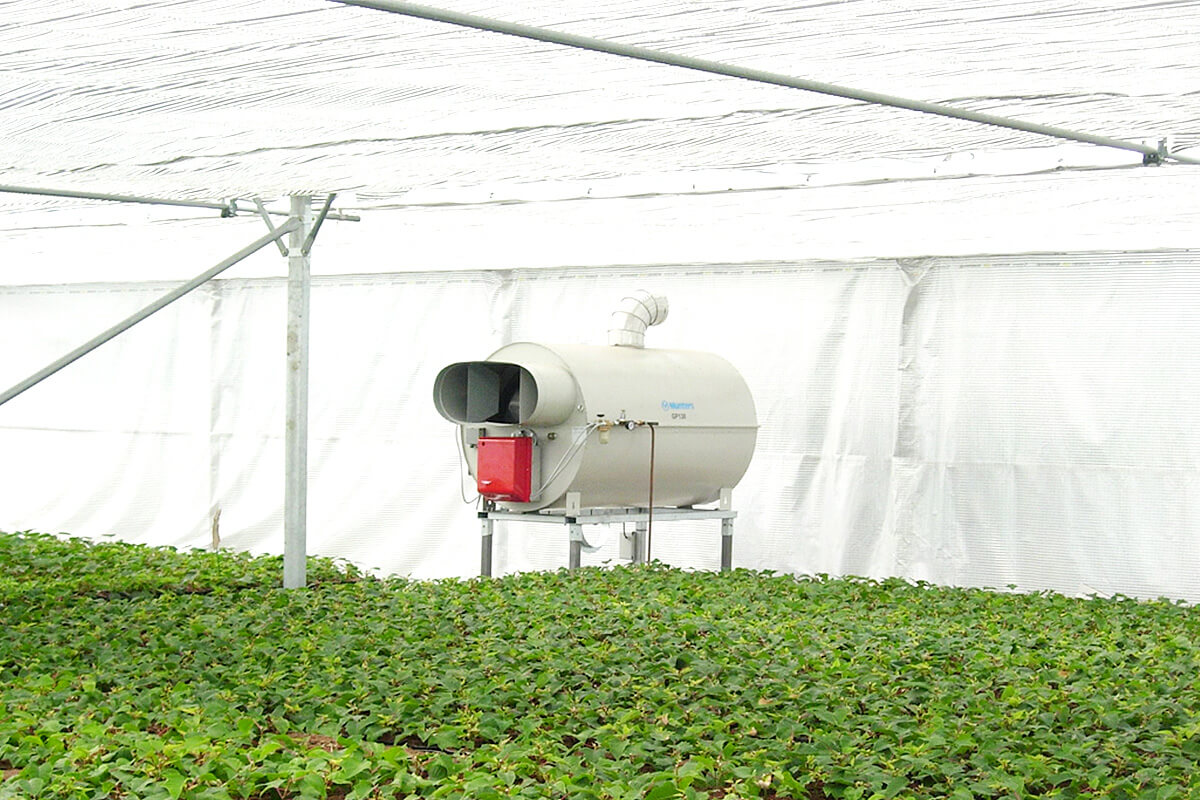
Greenhouse heating Kenya is an important consideration for commercial flower farms operating where night-time temperatures can affect crop performance, quality and production consistency. LPG provides a controllable thermal-energy source for greenhouse heating, hot-water generation and selected CO₂ enrichment applications when the fuel storage, combustion, distribution, controls and safety systems are properly engineered.
Kenya’s commercial horticulture industry operates across several high-altitude and cooler agricultural zones where protected cultivation allows growers to maintain controlled production environments. Flower farms can use greenhouses to manage exposure to wind, rain, pests and temperature variations, but the greenhouse itself does not eliminate the need for climate management.
Related Products
Temperature control becomes particularly important during night-time operation.
When external temperatures decline, the heat retained by a greenhouse can fall rapidly. The resulting temperature difference between the crop environment and the outside atmosphere creates a heat-loss load that the heating system must compensate for.
For a commercial flower farm, this is not simply a question of installing several LPG burners. The engineering challenge involves calculating the greenhouse heat load, selecting appropriate heating equipment, determining the LPG consumption profile, sizing storage, confirming vaporization capacity, designing distribution pipework and integrating safety controls.
A reliable flower farm LPG installation must also account for logistics. Many horticultural operations are located outside major urban centres, meaning LPG delivery schedules, tanker access, storage autonomy and remote monitoring can influence operational continuity just as much as equipment efficiency.
Megtraco Kenya Ltd provides our LPG engineering solutions for commercial and industrial applications requiring engineered fuel storage, distribution, heating and safety infrastructure.
What Is Greenhouse Heating Kenya?
Greenhouse heating Kenya refers to the controlled addition of thermal energy to a protected crop-growing environment to maintain a target temperature or prevent excessive temperature decline. LPG can supply this heat through direct-fired heaters, indirect heating systems, boilers, hot-water circuits or other purpose-designed thermal equipment.
The heating requirement varies considerably from one greenhouse to another.
Important variables include:
- Greenhouse dimensions
- Greenhouse volume
- Covering material
- Covering thermal performance
- External design temperature
- Internal temperature target
- Wind exposure
- Air infiltration
- Ventilation requirements
- Crop type
- Crop growth stage
- Plant density
- Heating schedule
- Thermal curtains
- Available solar gains
- Greenhouse orientation
A heating system designed without these inputs may be oversized, resulting in unnecessary capital expenditure, or undersized, resulting in inadequate crop protection during periods of high heating demand.
For commercial horticulture, greenhouse heating Kenya projects should therefore begin with an engineering assessment rather than equipment selection.
Why Is Greenhouse Heating Important for Flower Farms?
Greenhouse heating helps commercial flower growers maintain more stable environmental conditions when ambient temperatures fall below the crop’s required operating range. Properly engineered heating can protect production continuity, reduce temperature stress and support more predictable crop management during cold periods.
The objective is not necessarily to make the greenhouse warm at all times.
Instead, the control strategy should establish the required crop environment and determine when supplemental heat is necessary.
A farm may have several operating thresholds:
- Minimum temperature for crop protection
- Optimum temperature for growth
- Night-time temperature target
- Heating activation temperature
- High-temperature shutdown point
- Ventilation threshold
- CO₂ enrichment threshold
These values should be established with the farm’s agronomic and engineering teams.
Temperature and Crop Performance
Temperature affects several physiological processes in plants.
Excessively low temperatures can affect growth rates and crop development. Excessively high temperatures can also create stress and may require increased ventilation or cooling.
The heating system therefore needs to operate as part of a wider greenhouse climate-control strategy.
Heating, ventilation and CO₂ management should not be treated as independent systems.
Flower Farm LPG Applications
Flower farm LPG systems can support more than standalone greenhouse heaters. A properly engineered bulk LPG installation can supply multiple thermal consumers, including greenhouse heating equipment, central boilers, hot-water systems, crop-processing equipment, kitchens and other farm facilities.
This makes a centralized LPG system potentially useful for larger horticultural operations.
LPG Greenhouse Heating
The most direct application is LPG-fired greenhouse heating.
Depending on the project requirements, heating equipment may include:
- Direct-fired air heaters
- Indirect-fired heaters
- LPG boilers
- Hot-water heating systems
- Radiant heating systems
- Centralized thermal systems
- Zone-controlled heating equipment
The selection depends on whether combustion products can safely enter the greenhouse and on the crop’s environmental requirements.
Where combustion products could negatively affect crop quality or worker safety, an indirect heating arrangement may provide better separation between combustion and the greenhouse atmosphere.
Hot-Water Greenhouse Heating
Hot-water greenhouse heating uses an LPG-fired boiler or thermal source to heat water that circulates through a distribution network serving one or more greenhouse zones. This arrangement can provide centralized heat generation, controllable distribution and separation between combustion equipment and the crop environment.
A typical system may include:
- LPG boiler
- Primary circulation pump
- Secondary circulation pumps
- Expansion vessel
- Safety relief devices
- Heat exchanger where required
- Flow and return headers
- Greenhouse heating circuits
- Temperature sensors
- Control valves
- Central controller
For a large flower farm, zoning can allow different greenhouse blocks to receive different heating levels.
This is particularly useful where different crop varieties or growth stages have different temperature requirements.
Radiant Heating
Radiant heating transfers thermal energy directly toward designated surfaces or crop areas.
Its application should be assessed according to greenhouse geometry, crop arrangement and heating objectives.
Equipment location remains critical because LPG-fired appliances introduce combustion and ignition considerations.
Farm Hot-Water Requirements
The same LPG infrastructure may potentially serve non-greenhouse thermal loads.
These can include:
- Worker facilities
- Commercial kitchens
- Hot-water systems
- Crop-processing areas
- Cleaning systems
- Workshops
- Drying applications
The combined demand should be included in the LPG load calculation.
LPG for CO₂ Enrichment
LPG can form part of a controlled CO₂ enrichment strategy because combustion produces carbon dioxide, but uncontrolled combustion exhaust must never be treated as a safe source of greenhouse enrichment. Purpose-designed equipment, combustion monitoring, ventilation controls and CO₂ measurement are necessary to manage the process safely.
CO₂ is used by plants during photosynthesis.
Commercial greenhouse operators may deliberately increase CO₂ concentration during suitable periods to support crop productivity. LPG combustion can potentially provide a CO₂ source when the system is specifically engineered for that purpose.
However, combustion produces other gases as well.
Depending on burner performance, fuel characteristics and combustion conditions, exhaust may contain:
- Carbon monoxide
- Nitrogen oxides
- Water vapour
- Unburned hydrocarbons
- Other combustion products
Consequently, CO₂ enrichment requires substantially more engineering than simply directing burner exhaust into a greenhouse.
Controlled CO₂ Enrichment
A controlled LPG CO₂ enrichment system should measure the greenhouse environment and regulate enrichment according to crop requirements, ventilation status and safety conditions. Combustion should be continuously controlled so that carbon monoxide and other undesirable combustion products remain within appropriate limits.
A control sequence may involve:
- CO₂ demand signal
- Greenhouse temperature check
- Ventilation status
- Burner permissive
- Flame confirmation
- CO₂ measurement
- Combustion monitoring
- High-level CO₂ shutdown
- Fault alarm
- Emergency shutdown
The system should be commissioned and maintained by competent personnel.
CO₂ Sensors
Sensor location matters.
A sensor installed immediately beside an injection point may not represent the average greenhouse concentration.
Large greenhouse structures may therefore require multiple sensors or a properly designed sampling strategy.
The control system should also distinguish between:
- Normal CO₂ demand
- Excess CO₂
- Sensor fault
- Ventilation condition
- Burner failure
- Emergency condition
LPG Storage for Flower Farms
Bulk LPG storage is a core component of a flower farm LPG installation because storage capacity determines fuel autonomy, delivery frequency and resilience during supply interruptions. Storage should be calculated from peak consumption, expected operating hours, delivery logistics and the required reserve rather than selected solely from a nominal tank size.
A commercial farm should establish its expected LPG consumption before finalizing storage.
The calculation should include:
- Individual heater consumption
- Number of heaters
- Simultaneous operation
- Boiler demand
- Other LPG appliances
- Daily operating hours
- Seasonal demand
- Peak hourly consumption
- Required reserve
- Supplier delivery frequency
A farm requiring overnight heating may have a very different storage profile from one using LPG only for occasional frost protection.
Storage Autonomy
Remote farms need particular attention to storage autonomy.
If LPG deliveries are dependent on long-distance transport, road conditions, supplier schedules or seasonal access limitations, the minimum stock level becomes an important operational parameter.
A practical fuel-management strategy may establish:
- Normal operating level
- Reorder level
- Minimum reserve
- Emergency reserve
- Expected delivery lead time
Tank-level monitoring can support this process.
LPG Vaporization for Greenhouse Heating
LPG vaporization determines how quickly liquid LPG can be converted into vapour for downstream consumption. When the required withdrawal rate exceeds the natural vaporization capability of the storage vessel, an appropriately sized LPG vaporizer may be required to maintain stable supply pressure.
This is one of the most important considerations in high-demand greenhouse heating Kenya projects.
A tank can contain substantial LPG while still failing to provide sufficient vapour during periods of high simultaneous demand.
When withdrawal increases, LPG vaporizes within the vessel and absorbs heat from its surroundings. Under high demand, the available heat transfer can become insufficient.
The result can be reduced vapour pressure and unstable appliance operation.
Megtraco supplies high-performance LPG vaporizers for applications where controlled vaporization capacity is required.
Vaporizer Sizing
The vaporizer design should consider:
- Maximum LPG flow
- Minimum expected ambient conditions
- LPG composition
- Required outlet pressure
- Operating hours
- Duty cycle
- Redundancy requirements
- Control system
- Available utilities
- Maintenance requirements
For a large farm, engineers should calculate the maximum simultaneous LPG demand rather than simply adding the nameplate capacities of appliances without considering actual operating conditions.
Technical Design Parameters for Flower Farm LPG Systems
A commercial LPG heating installation should be designed around calculated fuel demand, thermal load, pressure drop, storage autonomy and safety requirements. Equipment ratings, pressure classes and material specifications must be confirmed against the applicable standards, manufacturer requirements and project-specific calculations.
| Parameter | Engineering Requirement | Design Consideration |
|---|---|---|
| Heating load | Calculated thermal requirement | Greenhouse envelope, climate and crop |
| LPG demand | Maximum simultaneous consumption | All connected consumers |
| Storage | Required operating autonomy | Consumption and delivery logistics |
| Vaporization | Peak vapour demand | Natural versus forced vaporization |
| Pipe diameter | Calculated flow requirement | Pressure drop and route length |
| Pressure regulation | Required appliance pressure | Regulator capacity and configuration |
| Burner capacity | Required thermal output | Minimum and maximum firing rates |
| Control system | Required automation | Temperature, pressure and safety interlocks |
| Gas detection | Hazard-based requirement | Location and environmental conditions |
| Fire protection | Risk-based design | Storage and equipment configuration |
| Emergency isolation | Rapid fuel shut-off | Accessible and controlled isolation |
Exact pressure ratings and material specifications should be established during detailed engineering.
LPG Pipework for Greenhouse Heating
LPG distribution pipework must deliver sufficient fuel flow to every appliance without excessive pressure loss while maintaining mechanical integrity and safe separation from incompatible services. Pipe diameter, material, pressure class, routing and supports should be determined through engineering calculations and applicable LPG requirements.
A typical distribution arrangement can comprise:
Bulk storage → primary regulation → LPG header → branch isolation → secondary regulation → appliance → burner control
Large farms may have multiple greenhouse branches.
Each branch can serve a dedicated greenhouse block or group of heating appliances.
Pipe Sizing
Pipe sizing should account for:
- LPG flow
- Pipe length
- Number of fittings
- Elevation
- Operating pressure
- Allowable pressure drop
- Simultaneous demand
- Future expansion
Undersized pipework can cause pressure instability during peak heating periods.
Oversized pipework increases capital expenditure without necessarily improving performance.
Pipe Materials
Depending on the location, pressure and applicable requirements, LPG systems can incorporate appropriately approved:
- Carbon steel
- Copper
- Multilayer systems
- Polyethylene systems for suitable applications
- Stainless steel
The selected material must be compatible with the LPG service and installation conditions.
Megtraco provides advanced LPG piping systems and multilayer fittings for suitable engineered applications.
Greenhouse Heating Kenya: Technical Performance Matrix
The performance of an LPG greenhouse heating system depends on the interaction between thermal equipment and fuel infrastructure. A heater with adequate output can still perform poorly if storage, vaporization, regulation or pipework is undersized.
| System Element | Failure Risk if Undersized | Engineering Response |
| LPG storage | Frequent fuel shortages | Increase storage autonomy |
| Vaporizer | Low supply pressure at peak load | Calculate maximum vaporization requirement |
| Regulator | Pressure instability | Select regulator for actual flow range |
| Pipework | Excessive pressure drop | Perform hydraulic calculation |
| Burner | Insufficient heating | Match output to heat-load calculation |
| Boiler | Inadequate hot-water capacity | Size against peak thermal load |
| Pump | Uneven heat distribution | Calculate hydraulic duty |
| Sensor | Poor temperature control | Correct sensor positioning |
| Controller | Unstable operation | Integrate heating and safety logic |
| Gas detector | Delayed leak detection | Hazard-based detector placement |
LPG Versus Alternative Greenhouse Heating Fuels
LPG is not automatically the lowest-cost greenhouse heating fuel in every Kenyan location. Its value lies in the combination of controllable combustion, compact fuel storage, rapid response, automation potential and established bulk-delivery infrastructure. A farm should compare LPG against available alternatives using lifecycle cost and operational requirements.
| Factor | LPG | Biomass | Diesel | Electricity |
| Heat response | Rapid | Generally slower | Rapid | Rapid |
| Automation | High | Moderate to high | High | Very high |
| Onsite fuel storage | Compact | Large | Moderate | None |
| Fuel handling | Low | High | Moderate | None |
| Combustion control | High | Variable | High | Not applicable |
| CO₂ from onsite combustion | Yes | Yes | Yes | No onsite combustion |
| Remote-site viability | Good with storage | Potentially good | Good | Grid-dependent |
| Maintenance | Burner/system dependent | Often higher | Burner dependent | Equipment dependent |
| Supply dependency | LPG delivery | Biomass supply | Liquid fuel supply | Electrical infrastructure |
A farm should also consider:
- Fuel availability
- Transport cost
- Boiler efficiency
- Equipment capital cost
- Maintenance
- Labour
- Emissions
- Storage requirements
- Expansion plans
Installation of LPG Greenhouse Heating Systems
Installation should proceed from site assessment and heat-load calculations through LPG storage design, pipe routing, equipment installation, testing and commissioning. Each stage should be documented so that the completed system can be verified against the approved engineering design.
Phase 1: Site Survey
The engineering survey should identify:
- Greenhouse locations
- Storage area
- Delivery access
- Existing utilities
- Electrical supply
- Fire access
- Drainage
- Buildings
- Occupied areas
- Ignition sources
- Existing fuel systems
- Expansion areas
The LPG delivery route should be considered at the same time as the tank location.
Phase 2: Heat-Load Calculation
The heat-load assessment should account for:
- External design temperature
- Internal temperature
- Greenhouse area
- Greenhouse height
- Covering performance
- Air infiltration
- Ventilation
- Wind exposure
- Crop requirements
- Thermal curtains
- Solar gains
A conceptual calculation is:
Heating demand = transmission losses + infiltration/ventilation losses − useful internal and solar gains
The final calculation should use project-specific engineering data.
Phase 3: LPG Load Calculation
After determining thermal requirements, the engineer can calculate fuel demand.
This should consider the operating efficiency of the selected equipment.
The project should establish:
- Maximum hourly LPG consumption
- Average daily consumption
- Seasonal consumption
- Maximum simultaneous load
- Storage requirement
- Vaporizer requirement
- Delivery frequency
Phase 4: Distribution Design
Pipework should be routed to maintain safe clearances, mechanical protection and accessibility.
The design should address:
- Pipe supports
- Expansion
- Corrosion
- Vehicle impact
- Isolation valves
- Underground routing
- Identification
- Pressure regulation
- Drainage where applicable
- Maintenance access
Phase 5: Equipment Installation
The installation team should verify that:
- Burners are correctly connected
- Regulators are correctly oriented
- Valves are accessible
- Flexible connections are appropriately installed
- Sensors are correctly positioned
- Emergency shutdowns are accessible
- Control wiring is correctly terminated
LPG System Testing and Commissioning
Commissioning verifies that the LPG system operates safely and delivers the required performance before normal production use. Testing should cover pipework integrity, leak detection, pressure regulation, combustion equipment, emergency isolation, controls and safety interlocks.
Pressure testing and leak testing should follow the applicable engineering requirements, approved test procedures and equipment manufacturer’s instructions.
The commissioning process should include:
- Review approved drawings
- Inspect installation
- Verify equipment identification
- Complete required pressure testing
- Complete leak testing
- Verify regulator settings
- Check appliance connections
- Test burner ignition
- Test flame-failure protection
- Verify combustion
- Test emergency shutdown
- Test gas detection
- Test alarms
- Test control-system interlocks
- Confirm heating performance
- Record commissioning results
Greenhouse LPG Commissioning Checklist
A commissioning checklist ensures that safety-critical components are not overlooked when the system moves from construction into operation. Every item should be verified against the approved design, equipment documentation and applicable requirements before the LPG installation is placed into normal service.
-
Approved engineering drawings available
-
Heat-load calculation completed
-
LPG consumption calculation completed
-
Storage capacity verified
-
Vaporizer capacity verified where applicable
-
LPG pipework inspected
-
Pipe supports checked
-
Pressure testing completed
-
Leak testing completed
-
Regulators inspected
-
Isolation valves accessible
-
Burners installed correctly
-
Flame-failure protection tested
-
Gas detectors tested
-
Emergency shutdown tested
-
Fire protection inspected
-
Control system tested
-
Temperature sensors verified
-
CO₂ sensors verified where applicable
-
Ventilation interlocks tested
-
Alarms tested
-
Combustion performance verified
-
Operators trained
-
Maintenance schedule issued
-
As-built drawings prepared
-
Commissioning records completed
Fire Safety for Flower Farm LPG Installations
LPG storage areas and greenhouse heating equipment require a dedicated fire-risk assessment because LPG is a flammable gas stored under pressure. Effective protection combines prevention, safe separation, leak detection, emergency isolation, fire detection, suitable suppression and trained emergency response.
Fire safety should be integrated into the LPG design from the beginning.
The project team should consider applicable Kenyan fire-safety requirements and recognized international standards where appropriate.
NFPA 58 is an important international reference for LP-Gas installations. Other NFPA standards, including NFPA 13 for sprinkler systems and NFPA 2001 for clean-agent fire-extinguishing systems, may apply to specific hazards and protected spaces depending on the facility design.
The applicable standard should be confirmed for the particular installation.
LPG Leak Detection
Gas detection may be appropriate in areas where LPG accumulation could present a significant hazard.
Potential locations include:
- Enclosed equipment rooms
- Boiler rooms
- Regulator stations
- LPG process areas
- Storage-related enclosed spaces
- Other identified hazardous locations
Megtraco supplies industrial LPG leak detection equipment for engineered gas-monitoring applications.
Detection systems should be integrated with appropriate alarms and, where required, emergency shutdown logic.
Fire Suppression
Fire suppression should be selected according to the actual hazard rather than using a generic extinguisher or suppression system for every LPG installation. Storage, boiler rooms, electrical equipment, control rooms and other areas can require different protection strategies.
Potential systems include:
- Portable extinguishers
- Hydrant systems
- Water-based systems
- Sprinkler systems
- Water spray or deluge systems
- Dry chemical systems
- Clean-agent systems
Megtraco provides commercial fire suppression equipment for engineered fire-protection applications.
EPRA and KEBS Compliance for Flower Farm LPG Systems
Commercial LPG installations in Kenya should be planned around the applicable petroleum, standards, occupational-safety and fire-safety requirements. EPRA, KEBS and DOSHS can have relevant regulatory or compliance roles depending on the nature of the installation, equipment and workplace activities.
EPRA
The Energy and Petroleum Regulatory Authority (EPRA) regulates Kenya’s petroleum sector and has responsibilities relevant to LPG activities.
Before construction, the project team should establish the specific regulatory requirements applicable to the proposed installation.
These may involve requirements relating to:
- LPG installation design
- Licensed professionals or contractors
- Equipment
- Storage
- Installation
- Inspection
- Testing
- Commissioning
- Documentation
- Operational safety
The precise approval pathway depends on the project’s scope and configuration.
KEBS
The Kenya Bureau of Standards (KEBS) provides standards and conformity-assessment requirements relevant to equipment and products used in Kenya.
LPG-related equipment may include:
- Pressure vessels
- Regulators
- Valves
- LPG piping
- Cylinders
- Fittings
- Fire equipment
- Detection equipment
Products should be verified against the standards applicable to their intended use.
DOSHS and Occupational Safety
The Directorate of Occupational Safety and Health Services (DOSHS) is relevant to workplace safety.
A flower farm LPG installation should assess hazards associated with:
- LPG leakage
- Fire
- Explosion
- Pressure release
- Burner malfunction
- Carbon monoxide
- Maintenance
- Electrical equipment
- Emergency response
Operators should receive training appropriate to their responsibilities.
Horticulture Gas Supply for Remote Flower Farms
Horticulture gas supply is a major operational consideration for remote flower farms because heating interruptions can affect valuable crops. Bulk LPG planning should therefore include delivery access, tank capacity, minimum stock levels, supplier lead times, tanker movement and contingency arrangements.
The physical location of a flower farm can affect fuel economics and supply reliability.
LPG Delivery Access
A bulk LPG installation should be positioned so that delivery vehicles can access the tank safely.
The assessment should consider:
- Road condition
- Road width
- Turning radius
- Ground conditions
- Seasonal accessibility
- Tanker positioning
- Hose reach
- Overhead restrictions
- Emergency access
An otherwise well-designed LPG system can become difficult to operate if the delivery vehicle cannot safely reach the storage point.
Fuel Inventory Management
Remote farms should monitor LPG consumption and establish a reorder threshold.
For example:
Current tank level → expected consumption → delivery lead time → minimum reserve
This provides a more reliable approach than ordering fuel only after consumption has reached a critically low level.
Remote Monitoring
Larger installations may benefit from monitoring:
- Tank level
- LPG consumption
- Supply pressure
- System alarms
- Burner status
- Vaporizer status
- Fire and gas alarms
Consumption records can also help identify unusual changes that may indicate equipment faults or leakage.
Automation for Greenhouse Heating
Automated LPG greenhouse heating can integrate temperature sensors, burner controls, pressure monitoring, greenhouse zones and safety interlocks to regulate heat according to actual demand. Automation can improve temperature stability and reduce unnecessary full-load operation while providing alarms for abnormal system conditions.
A centralized control system may receive signals from:
- Temperature sensors
- Humidity sensors
- CO₂ sensors
- Tank-level sensors
- Pressure transmitters
- LPG flow meters
- Burner controllers
- Gas detectors
- Fire alarms
The controller can coordinate:
- Burner staging
- Heating zones
- Valve operation
- Circulation pumps
- CO₂ enrichment
- Ventilation interlocks
- Alarm conditions
- Emergency shutdown
Greenhouse Zoning
Large flower farms should consider zoning the heating system instead of treating every greenhouse as one thermal space. Separate zones allow heating output to follow crop requirements, greenhouse exposure and production stage while reducing unnecessary energy use in areas that do not require the same temperature.
Possible zones include:
- Propagation greenhouse
- Nursery
- Mature crop greenhouse
- Trial greenhouse
- Packing facility
- Processing area
The final zoning strategy should reflect the farm’s actual operating requirements.
Maintenance of LPG Greenhouse Heating Systems
Preventive maintenance should cover the entire LPG installation, including storage vessels, regulators, vaporizers, pipework, burners, detectors, control systems and fire-protection equipment. Inspection intervals should follow applicable requirements, manufacturer instructions, engineering recommendations and the risk profile of the installation.
| Component | Key Inspection Area | Maintenance Focus |
| LPG storage | Vessel and fittings | Condition and required technical inspection |
| Regulators | Pressure stability | Service and replacement as specified |
| Vaporizer | Output and controls | Performance and safety-device checks |
| Pipework | Leaks and corrosion | Inspection and leak testing |
| Burners | Flame and combustion | Cleaning and combustion verification |
| Gas detectors | Sensor response | Functional testing and calibration |
| Emergency valves | Isolation | Functional testing |
| Control panel | Alarms and interlocks | Functional verification |
| Fire equipment | Condition and access | Scheduled inspection/service |
| CO₂ sensors | Accuracy | Calibration according to manufacturer |
Maintenance records should be retained as part of the site’s engineering documentation.
Common Problems With Flower Farm LPG Systems
Poor performance in commercial greenhouse heating is often caused by system design or operational weaknesses rather than by LPG itself. Undersized vaporization, insufficient storage, incorrect pressure regulation, poorly sized pipework, inadequate combustion maintenance and weak control integration are common areas requiring engineering attention.
Undersized LPG Vaporizer
The storage tank contains fuel, but the system cannot supply enough vapour at peak demand.
Consequence: Supply pressure can fall when several heaters operate simultaneously.
Engineering response: Recalculate maximum LPG demand and confirm vaporizer capacity.
Insufficient Storage
The farm repeatedly approaches its minimum tank level.
Consequence: Heating reliability becomes dependent on rapid fuel delivery.
Engineering response: Review consumption, delivery lead time and required autonomy.
Undersized Pipework
Pressure appears adequate at low demand but declines when multiple heating appliances operate.
Engineering response: Recalculate the distribution network and allowable pressure drop.
Incorrect Burner Adjustment
Poor combustion can reduce efficiency and increase undesirable combustion products.
Engineering response: Conduct professional combustion testing and burner servicing.
Incorrect Sensor Location
A temperature sensor placed too close to a heater may record a temperature that does not represent the crop environment.
Engineering response: Review sensor placement and greenhouse airflow.
Lack of Expansion Planning
A farm adds new greenhouses without upgrading its LPG infrastructure.
Engineering response: Consider realistic future demand during initial header, storage and control-system planning.
How to Choose an LPG Engineering Partner
A commercial flower farm should select an LPG engineering partner based on design capability, compliance knowledge, equipment expertise, installation quality, commissioning procedures and maintenance support. The lowest equipment quotation does not necessarily represent the lowest lifecycle cost or the most reliable heating system.
A capable engineering partner should understand:
- LPG storage
- LPG vaporization
- Pressure regulation
- Heat-load calculations
- Pipe sizing
- Burner selection
- Boiler systems
- Greenhouse climate control
- Gas detection
- Fire suppression
- Emergency shutdown
- Testing
- Commissioning
- Preventive maintenance
For projects requiring an integrated engineering assessment, customized engineering solutions can connect the horticultural requirement with the required LPG infrastructure.
Megtraco’s background can also be reviewed through its trusted engineering partner profile.
Frequently Asked Questions About LPG for Flower Farms
How Does LPG Improve Operational Safety in Greenhouse Heating?
LPG can support safe greenhouse heating when storage, pipework, regulators, burners and controls are correctly engineered. Gas detection, emergency isolation, flame-failure protection and appropriate fire protection can provide additional safeguards when incorporated into a complete risk-based system.
Safety depends on the design, installation, operation and maintenance of the entire system.
What Are the Mandatory EPRA and KEBS Requirements for Greenhouse LPG Systems in Kenya?
The exact requirements depend on the installation’s capacity, configuration and intended use. EPRA requirements can apply to regulated LPG activities and installations, while KEBS requirements can apply to relevant equipment and products; the project team should verify the current approval and certification pathway before construction.
Regulatory requirements should be confirmed against current official requirements rather than relying on generic equipment specifications.
How Often Should Commercial Greenhouse LPG Systems Be Inspected?
Inspection frequency should be established according to applicable statutory requirements, recognized standards, manufacturer recommendations and the site’s risk assessment. Safety-critical equipment such as regulators, detectors, emergency valves and burners should be included in a documented preventive-maintenance programme.
Large installations should maintain detailed inspection and maintenance records.
What Is the Difference Between an LPG Vaporizer and an LPG Regulator?
An LPG vaporizer converts liquid LPG into vapour when natural vaporization cannot satisfy the required demand. A regulator controls and reduces LPG pressure to the required downstream operating range. A regulator cannot compensate for inadequate vaporization capacity.
Both components may be required in high-demand commercial installations.
Can LPG Be Used for CO₂ Enrichment in Greenhouses?
LPG can support a controlled CO₂ enrichment application when purpose-designed combustion equipment, CO₂ measurement and safety controls are used. Uncontrolled combustion exhaust should not be introduced into a greenhouse because it can contain carbon monoxide, nitrogen oxides and other undesirable combustion products.
The enrichment system should be engineered around both crop requirements and worker safety.
Is LPG Suitable for Remote Flower Farms?
LPG can be suitable for remote flower farms when bulk storage, delivery access, fuel autonomy and vaporization capacity are properly planned. Remote operations should place particular emphasis on minimum reserve levels, tanker access, supplier lead times and contingency planning.
What Equipment Does a Large Flower Farm Need for LPG Heating?
Depending on the heating strategy, a large flower farm may require bulk LPG storage, pressure regulators, vaporizers, pipework, burners, boilers, heating circuits, gas detectors, emergency shutdowns and fire-protection equipment. The final equipment schedule should follow the engineering calculations.
Relevant components can include industrial LPG equipment and LP gas train equipment.
Can LPG Greenhouse Heating Be Automated?
Yes. LPG greenhouse heating can be automated through temperature sensors, burner controllers, zone controls, tank monitoring and safety interlocks. A properly configured system can modulate or stage heating according to demand while shutting down equipment when unsafe operating conditions are detected.
Automation becomes increasingly valuable as the number of greenhouse zones increases.
What Factors Determine LPG Consumption in a Greenhouse?
LPG consumption depends primarily on the calculated heat loss, greenhouse size, covering performance, external temperature, internal temperature target, ventilation, heating hours, equipment efficiency and the number of simultaneous heating zones. Accurate consumption estimates therefore require project-specific engineering calculations.
Why Is LPG Vaporization Important for Large Greenhouse Heating Systems?
Vaporization is important because LPG appliances consume vapour rather than liquid fuel. During high-demand operation, natural vaporization from the storage vessel may be insufficient, making an appropriately sized vaporizer necessary to maintain stable downstream supply conditions.
This is particularly relevant where multiple heaters operate simultaneously.
Engineering Conclusion
Greenhouse heating Kenya projects require integrated engineering rather than simple heater installation. LPG can provide a controllable and responsive thermal-energy source for flower farms, but dependable performance depends on correctly calculated heat loads, adequate LPG storage, sufficient vaporization, stable pressure regulation, correctly sized pipework, reliable combustion controls and effective fire and gas safety systems.
For commercial horticulture, the value of a well-engineered flower farm LPG installation extends beyond heating.
A centralized system can potentially support greenhouse heating, boilers, hot-water generation, crop-processing requirements and other thermal loads. Combining these requirements during the design stage allows the storage, vaporization and distribution infrastructure to be sized around actual operational demand.
The fuel supply chain is equally important.
A remote flower farm may have an excellent heating system but still face production risk if LPG deliveries are delayed or storage autonomy is inadequate. Horticulture gas supply should therefore be treated as an engineering and operational-planning issue.
Storage capacity, delivery access, tanker movement, minimum stock levels and remote tank monitoring can all contribute to greater supply resilience.
CO₂ enrichment requires additional care. LPG combustion can provide CO₂ under controlled conditions, but combustion quality and safety must remain central to the design. CO₂ concentration, carbon monoxide, ventilation, burner operation and emergency shutdown should be integrated into the control strategy.
Fire safety should also be addressed from the earliest design stage. LPG storage, pipework, burners and associated equipment should be assessed against applicable Kenyan requirements and recognized international standards where relevant.
For farms planning new greenhouse capacity, replacing an existing heating system or expanding their bulk LPG infrastructure, the correct starting point is a site-specific engineering assessment.
Megtraco Kenya Ltd can support projects involving LPG storage, vaporization, distribution, heating equipment, leak detection and fire protection. Request a professional engineering consultation based on your farm’s actual thermal load, LPG consumption and expansion requirements.
Your Trusted LPG & Fire Safety Engineering Partner in East Africa
Whether you’re designing a new LPG installation, upgrading industrial gas systems, or enhancing fire safety compliance, Megtraco Kenya Ltd delivers certified engineering solutions backed by decades of expertise. From LPG equipment supply and pipeline installations to fire suppression and detection systems, our experienced team provides reliable solutions for commercial, industrial, and institutional projects across East Africa.
Contact us today for professional consultation, engineering support, or a customized quotation.
WHY CHOOSE MEGTRACO KENYA LTD
You May Also Like

- ✔ Established Since 1969 – Decades of proven engineering excellence.
- ✔ KEBS Certified Products – Guaranteed quality and compliance with regional standards.
- ✔ EPRA Licensed LPG Engineering Company – Fully certified to design, install, and commission.
- ✔ Industrial & Commercial LPG Specialists – Scaled to handle heavy-duty thermal requirements.
- ✔ Fire Suppression & Fire Detection Experts – End-to-end asset protection.
- ✔ Regional Operational Footprint – Serving Nairobi, Mombasa, Kisumu, Nakuru, Eldoret, Thika, Machakos, East Africa, and beyond.
Contact Megtraco Kenya Ltd
- Email: sales@megtracokenya.com
- Sales: +254 725 870 114
- Technical: +254 733 721 598
- WhatsApp: +254 799 086 323
- Location: Nairobi, Kenya – Serving East Africa
- Website: https://megtracokenya.com
Request a Quote today and partner with East Africa’s trusted LPG and fire safety engineering company since 1969.
