Fire Safety Kit for a Gas Shop: What Every Kenyan LPG Retailer Needs on the Wall
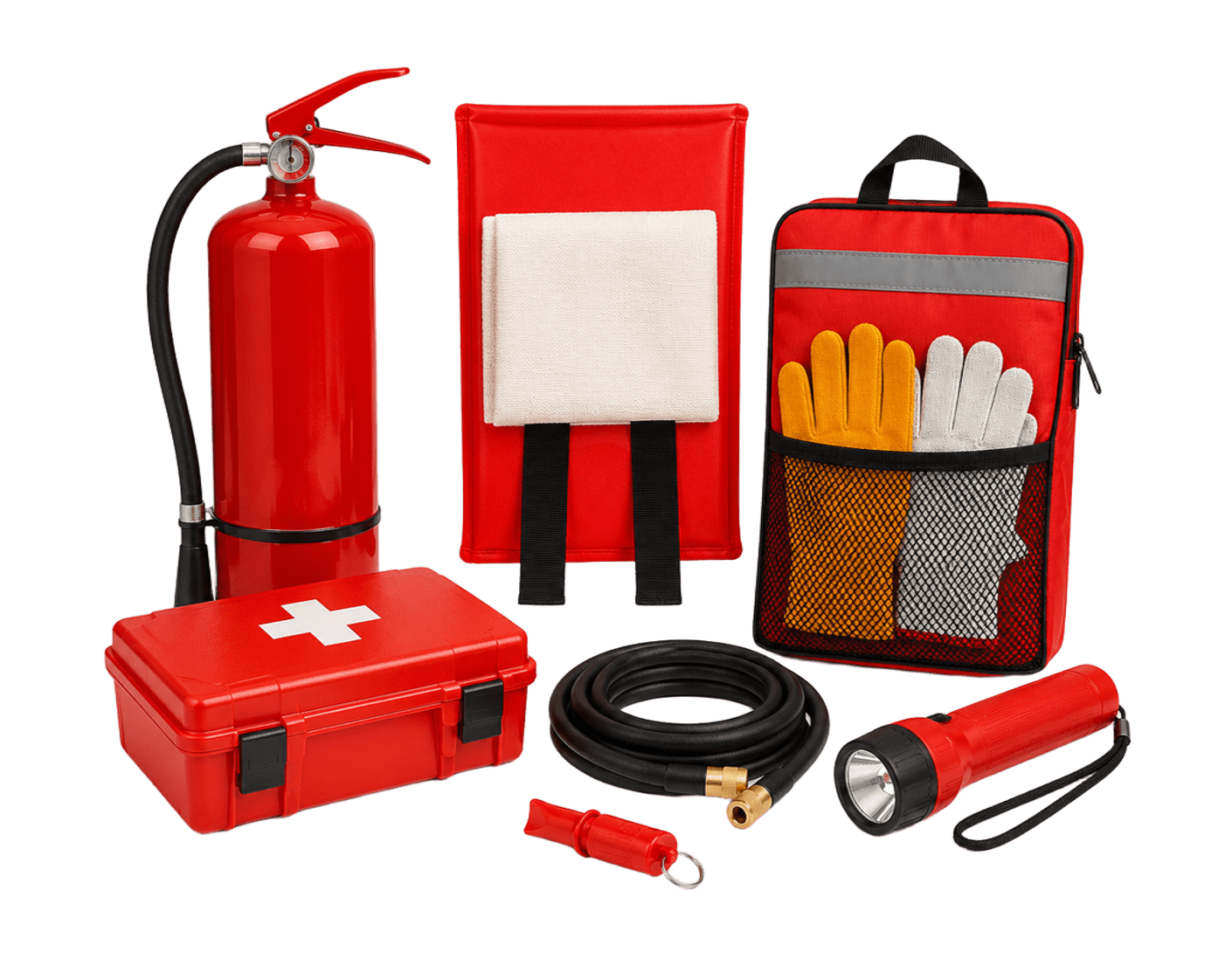
A fire safety kit for a gas shop is a collection of approved fire prevention, emergency response, and safety control equipment designed to protect LPG retailers, employees, customers, and nearby property. Every LPG retail outlet requires correctly selected extinguishers, warning signs, emergency equipment, ventilation controls, and inspection procedures to reduce fire risks.
Running an LPG retail business requires more than stocking cylinders and serving customers. A gas shop handles a flammable product that requires strict attention to storage, handling, ventilation, and emergency preparedness. A properly installed fire safety kit for a gas shop provides the first line of protection when a fire incident, gas leak, or abnormal operating condition occurs.
Related Products
In Kenya, LPG retailers operate under safety expectations established by regulatory authorities including the Energy and Petroleum Regulatory Authority (EPRA), Kenya Bureau of Standards (KEBS), and occupational safety requirements managed through the Directorate of Occupational Safety and Health Services (DOSHS).
A compliant LPG retail outlet must consider:
- Fire detection and response equipment
- Cylinder storage arrangement
- Ventilation requirements
- Emergency access
- Safety signage
- Staff awareness
- Routine inspection
A fire safety kit for a gas shop should not be viewed as a simple collection of firefighting items placed on a wall. It is part of a broader LPG risk management system that helps prevent incidents and supports quick response when emergencies occur.
Professional LPG engineering companies such as Megtraco Kenya Ltd provide LPG safety solutions, fire protection equipment, and technical guidance for commercial and industrial gas installations across Kenya and East Africa.
What Is a Fire Safety Kit for a Gas Shop?
A fire safety kit for a gas shop includes the essential emergency equipment required to control, contain, and respond to fire risks within an LPG retail environment. It normally includes suitable fire extinguishers, fire blankets where applicable, sand buckets, warning signs, emergency instructions, and supporting safety equipment.
Unlike ordinary retail shops, LPG outlets require specialised fire safety preparation because LPG has unique characteristics:
- LPG vapour is heavier than air
- Gas can collect in low areas
- LPG forms flammable mixtures with air
- Ignition sources can create rapid combustion
Because of these risks, a fire safety kit for a gas shop must be selected according to the type of fuel handled and the risks present.
The equipment installed should support three key safety objectives:
| Safety Objective | Purpose | Example Equipment |
|---|---|---|
| Prevent ignition | Reduce chances of fire starting | Warning signs, controlled access, no-smoking notices |
| Detect hazards early | Identify unsafe conditions | Gas leak detection systems |
| Control emergencies | Reduce fire impact | Fire extinguishers, sand buckets, emergency equipment |
For larger LPG facilities, additional protection may include fixed fire suppression systems, automatic detection systems, and engineered emergency shutdown solutions.
Megtraco Kenya Ltd supplies commercial fire safety systems designed for demanding LPG, industrial, and commercial environments.
Fire Safety Kit for a Gas Shop: Essential Equipment Checklist
A complete fire safety kit for a gas shop should include equipment that matches LPG fire risks, local regulatory expectations, and the size of the retail operation. The correct combination of fire extinguishers, safety accessories, and emergency controls improves response capability during an LPG-related incident.
Every LPG retailer should evaluate the following equipment categories.
1. LPG-Compatible Fire Extinguishers
The most important component of a fire safety kit for a gas shop is the correct fire extinguisher selection.
LPG fires involve flammable gases, meaning the extinguisher type must be suitable for Class B and gas-related fire situations.
Common extinguisher options include:
| Equipment Type | Application | Importance in LPG Retail |
|---|---|---|
| Dry Chemical Powder (DCP) extinguisher | Flammable liquid and gas fires | Common choice for LPG applications |
| Carbon dioxide extinguisher | Electrical equipment fires | Useful near control panels |
| Foam extinguisher | Certain liquid fuel fires | Limited suitability for LPG gas fires |
Retailers should ensure extinguishers are:
- Correctly rated
- Accessible
- Clearly marked
- Properly mounted
- Regularly inspected
A fire safety kit for a gas shop is incomplete if extinguishers are present but expired, discharged, blocked, or incorrectly positioned.
2. Fire Sand Buckets
Fire sand buckets remain a practical safety item for many LPG retail locations.
A properly maintained sand bucket can help:
- Cover small fuel-related fires
- Support emergency containment
- Provide immediate response material
The bucket should be:
- Clearly labelled
- Easily accessible
- Protected from contamination
- Filled with suitable dry sand
Although sand is useful, it does not replace approved extinguishers. A complete fire safety kit for a gas shop combines multiple safety controls rather than relying on one method.
3. Emergency Safety Signage
Clear signage is an important part of LPG retail safety.
A gas shop should display signs including:
- No smoking
- No open flames
- LPG storage identification
- Fire extinguisher location indicators
- Emergency instructions
Signs should remain visible even during busy operating periods.
Poor signage increases the chance of unsafe customer behaviour around LPG cylinders.
Why LPG Retailers Need a Proper Fire Safety Kit for a Gas Shop
A fire safety kit for a gas shop helps LPG retailers manage fire hazards before they escalate. Proper equipment placement, regular inspection, and staff awareness create a safer environment for handling and storing LPG cylinders.
Many LPG incidents are linked to preventable issues such as:
- Poor cylinder handling
- Ignition sources near gas storage
- Lack of emergency equipment
- Incorrect storage practices
- Poor ventilation
A properly prepared LPG outlet should combine equipment with safe operating procedures.
The Role of Ventilation in Gas Shop Fire Safety
Ventilation is a critical part of LPG safety because leaked LPG vapour can accumulate in enclosed areas.
A fire safety kit for a gas shop should work alongside proper ventilation measures.
Important ventilation considerations include:
- Avoiding enclosed cylinder storage areas
- Allowing gas vapour to disperse naturally
- Preventing accumulation near drains or low points
- Maintaining clear airflow pathways
Fire protection equipment cannot compensate for poor LPG storage design.
LPG Cylinder Storage and Fire Risk Control
Safe cylinder storage is a fundamental part of a fire safety kit for a gas shop because equipment alone cannot prevent incidents caused by poor handling or unsafe storage conditions. LPG cylinders must be arranged to support ventilation, inspection access, and emergency response.
Retailers should consider:
- Cylinder positioning
- Protection from physical damage
- Separation from ignition sources
- Customer access control
- Emergency escape routes
A professional LPG installation may also require specialised components such as advanced LPG piping systems and correctly engineered gas distribution arrangements.