LPG hose lifespan is an important safety consideration for every LPG user because gas hoses are exposed to pressure, heat, movement, and environmental conditions. Understanding how long an LPG hose should last helps homeowners and businesses replace hoses before they become unsafe.
An LPG hose may appear simple, but it plays a critical role in delivering gas safely from the cylinder or regulator to the appliance. The hose must handle LPG pressure while remaining flexible enough for practical installation.
Related Products
A proper understanding of LPG hose lifespan helps users choose the correct hose type, maintain safe connections, and reduce the risk of gas leaks.
Several factors influence how long an LPG hose remains reliable, including:
- Hose material quality
- Exposure to heat
- Installation method
- Frequency of use
- Physical damage
- Storage conditions
- Maintenance practices
In Kenya, LPG hoses used in kitchens and commercial environments may experience additional challenges due to heat exposure, sunlight, and frequent cooking activity. Regular checks help identify signs of deterioration before they become serious problems.
Choosing the correct LPG hose is not only about matching the connection size. Users should also consider the pressure rating, application type, and expected operating conditions.
Megtraco Kenya Ltd supplies LPG equipment solutions designed for safe and reliable gas systems. Explore our LPG equipment solutions for professional advice, supply, and installation support.
LPG Hose Lifespan: Understanding How Long a Gas Hose Should Last
LPG hose lifespan depends on the hose material, operating environment, installation quality, and maintenance routine. A quality LPG hose should be inspected regularly and replaced when it shows signs of wear or damage.
Unlike rigid gas pipes, LPG hoses are flexible components that can experience movement and environmental stress. Over time, repeated bending, heat exposure, and contact with unsuitable surfaces can reduce their service life.
A gas hose does not always fail suddenly. In many cases, deterioration happens gradually.
Common factors that affect LPG hose lifespan include:
Hose Material Quality
Different LPG hoses are manufactured using different materials and reinforcement levels.
A high-quality hose designed for LPG applications generally provides:
- Better pressure resistance
- Improved flexibility
- Greater resistance to wear
- Longer service performance
Low-quality hoses may deteriorate faster, especially when exposed to heat or regular movement.
Heat Exposure and Cooking Environment
Kitchen environments expose LPG hoses to heat from:
- Burners
- Ovens
- Grills
- Cooking equipment
Excessive heat can affect the hose material and shorten its usable life.
Proper installation should keep hoses away from direct flames and high-temperature surfaces.
LPG Hose Lifespan: Impact of Kenyan Climate Conditions
LPG hose lifespan in Kenya can be affected by strong sunlight, high temperatures, and outdoor installation conditions. Protecting hoses from unnecessary exposure helps maintain their strength and flexibility.
Outdoor LPG installations may experience:
- Direct sunlight
- Temperature changes
- Dust accumulation
- Weather exposure
Where hoses are installed outside, additional protection may be required to prevent premature ageing.
Regular inspection is especially important for LPG systems located:
- Near outdoor kitchens
- In commercial cooking areas
- Around exposed gas storage points
LPG Hose Lifespan: Why Regular Safety Checks Are Important
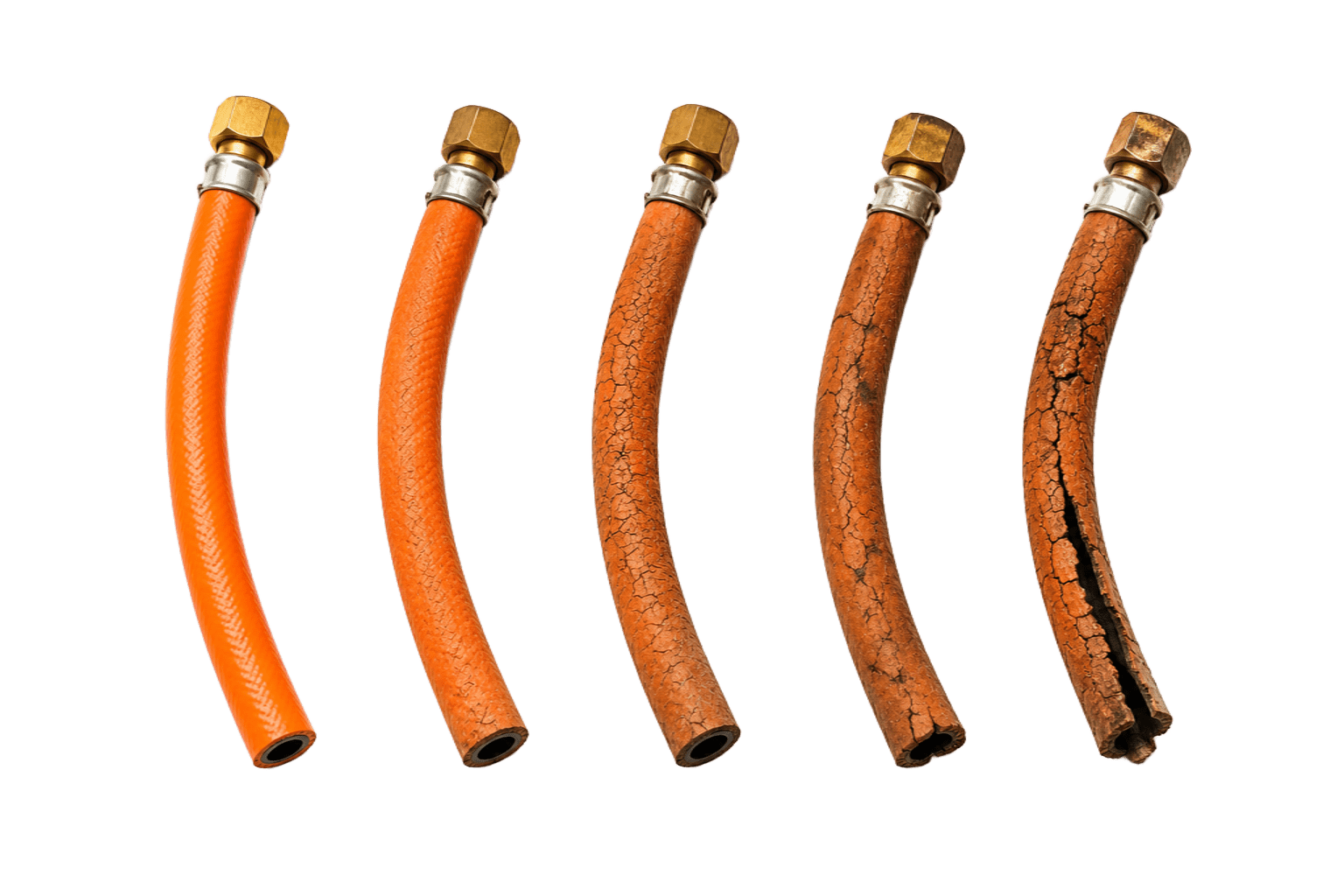
Regular inspection helps maximise LPG hose lifespan by identifying damage before it affects gas safety. Simple visual checks can reveal signs that a hose requires replacement.
Users should regularly check for:
- Cracks on the outer surface
- Hardening or stiffness
- Bulging areas
- Loose connections
- Signs of wear
- Unusual smell around connections
A damaged hose should not be ignored or temporarily repaired because LPG systems require reliable gas containment.
Regular checks should include:
Connection Inspection
The connection points between:
- Cylinder
- Regulator
- Hose
- Appliance
should remain secure and free from damage.
Hose Position Check
The hose should not be:
- Twisted
- Compressed
- Pulled tightly
- Touching hot surfaces
Correct positioning reduces stress and improves LPG hose lifespan.
LPG Hose Lifespan: Comparing Different LPG Hose Types
Different LPG hose types have different durability levels and applications. Selecting the correct hose improves safety, flexibility, and long-term performance.
The most common LPG hose categories include:
Rubber LPG Hoses
Rubber LPG hoses are commonly used for domestic cooking appliances.
Advantages include:
- Flexibility
- Easy installation
- Affordable replacement
- Suitable performance for household use
However, rubber hoses require regular inspection because heat and ageing can affect their condition.
Reinforced LPG Gas Hoses
Reinforced LPG hoses contain additional strengthening layers designed to improve durability.
They are commonly used where higher reliability is required.
Benefits include:
- Better pressure resistance
- Improved strength
- Reduced risk of physical damage
Commercial LPG Hoses
Commercial applications require hoses designed for higher usage demands.
Restaurants, hotels, and institutions often require LPG hoses that can handle:
- Longer operating hours
- Multiple appliances
- Frequent cleaning environments
Selecting the correct commercial hose helps maintain a safer LPG system.