POL vs clip on regulator selection is an important part of choosing the correct LPG cylinder connection. Different regulator fittings are designed for specific cylinder valve types, and understanding the difference helps prevent unsafe connections and gas supply problems.
LPG regulators are responsible for controlling the pressure of gas moving from the cylinder to the appliance. However, before gas can be regulated, the regulator must connect correctly to the cylinder valve.
Related Products
Many LPG users are familiar with the regulator itself but may not understand why different connection systems exist. Some cylinders use threaded connections, while others use push-fit locking systems.
A proper POL vs clip on regulator comparison helps users understand:
- How each connection type works
- Which cylinders use each fitting
- How the sealing system operates
- Why incorrect fittings can create safety risks
The wrong regulator connection may lead to:
- Poor sealing
- Gas leaks
- Difficulty installing the regulator
- Reduced appliance performance
- Unsafe LPG operation
Before selecting a regulator, it is important to confirm the cylinder valve type and choose a compatible connection.
Megtraco Kenya Ltd provides LPG equipment solutions, regulator systems, and professional installation support. Explore our LPG equipment solutions for reliable gas system advice and supply.
POL vs Clip On Regulator: Understanding LPG Connection Types
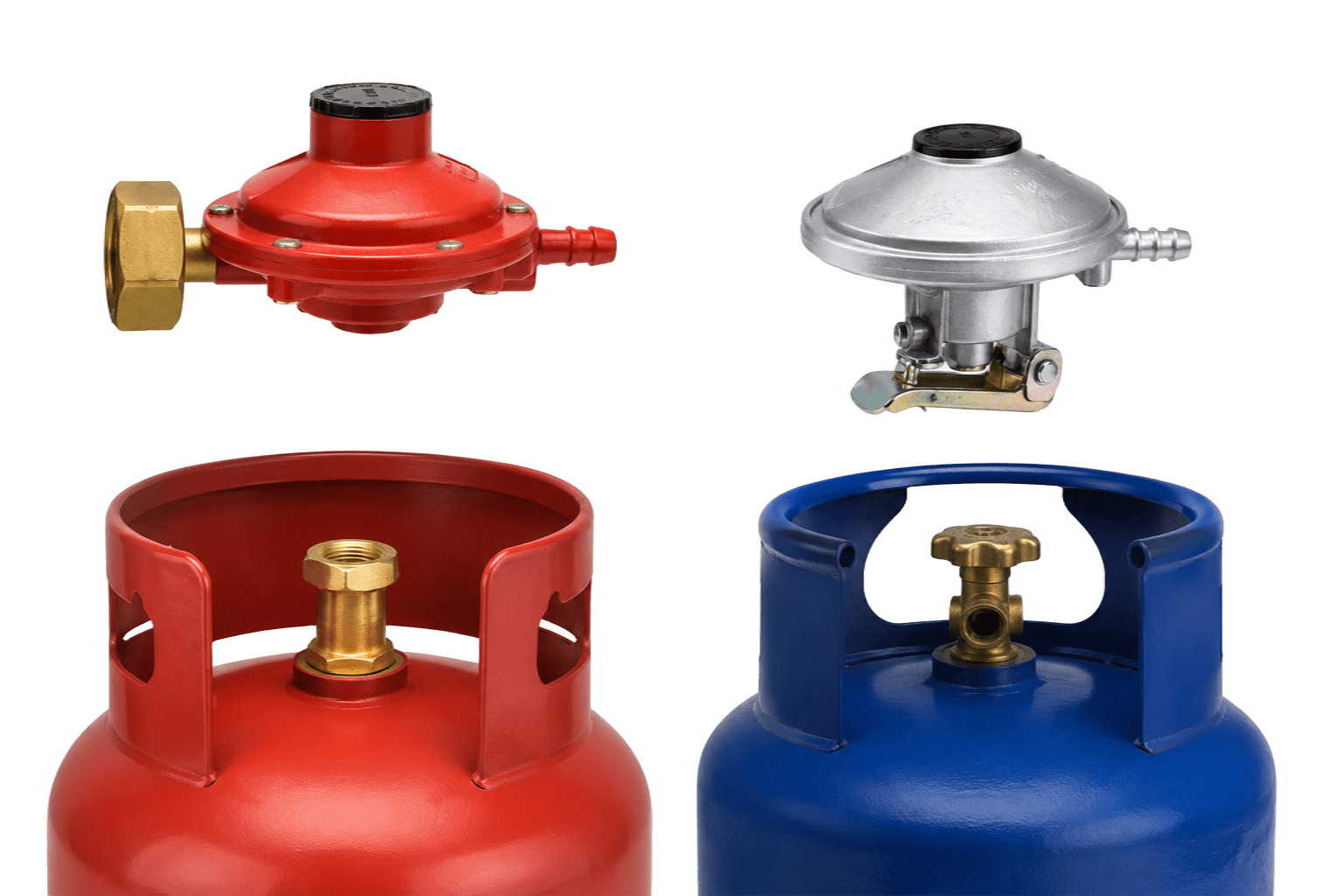
The POL vs clip on regulator difference mainly relates to how the regulator attaches to the LPG cylinder valve and creates a secure gas seal. POL fittings use a threaded connection, while clip-on regulators use a locking mechanism designed for compatible valves.
LPG cylinder connections are designed to provide:
- Secure attachment
- Gas-tight sealing
- Reliable gas delivery
- Safe regulator operation
Different connection designs have developed to meet different market requirements and cylinder standards.
POL vs Clip On Regulator: How POL Fittings Work
POL fittings are one of the traditional LPG regulator connection systems.
POL stands for Prest-O-Lite, a name historically associated with this type of gas connection.
A POL regulator typically connects by:
- Screwing into the cylinder valve
- Creating a tight threaded seal
- Securing the regulator firmly in place
Advantages of POL fittings include:
- Strong mechanical connection
- Reliable sealing
- Suitable for many LPG applications
- Good resistance to accidental movement
However, installation requires correct threading and proper tightening to ensure safe operation.
A damaged thread or incorrect installation can affect the connection quality.
POL vs Clip On Regulator: How Clip-On Regulators Work
Clip-on regulators use a push-fit connection system designed for compatible LPG cylinder valves.
Instead of threading into the cylinder, the regulator:
- Locks onto the valve
- Uses internal sealing components
- Provides quick connection and removal
Benefits of clip-on regulators include:
- Easy installation
- Faster cylinder replacement
- Reduced effort during connection
- Convenient household use
However, clip-on regulators must only be used with cylinders designed for this connection type.
A clip-on regulator cannot safely replace every POL connection system.
POL vs Clip On Regulator: Comparing Connection and Sealing Methods
In a POL vs clip on regulator comparison, the biggest difference is how each fitting creates a seal between the regulator and the LPG cylinder valve. Both systems can work safely when matched correctly.
Threaded POL Connections
POL fittings rely on:
- Screw threads
- Mechanical tightening
- Proper sealing surfaces
The connection remains secure because the regulator is physically attached to the cylinder valve.
Push-Fit Clip-On Connections
Clip-on fittings rely on:
- Locking mechanisms
- Internal seals
- Correct valve compatibility
The regulator stays connected through the locking system.
POL vs Clip On Regulator: Choosing the Correct Cylinder Fitting
Selecting the correct POL vs clip on regulator option depends on the cylinder valve design, appliance requirements, and LPG system setup. The regulator should always match the cylinder connection type.
Before purchasing or replacing a regulator, check:
- Existing cylinder valve type
- Regulator specifications
- Appliance pressure requirements
- Manufacturer recommendations
Using an incompatible fitting may prevent proper sealing and create unnecessary safety risks.
POL vs Clip On Regulator: Avoiding Incorrect Connections
Incorrect regulator matching is one of the common mistakes in LPG systems. A proper POL vs clip on regulator assessment ensures the selected fitting is compatible with the cylinder valve.
Common mistakes include:
- Forcing a regulator onto the wrong valve
- Using modified fittings
- Ignoring damaged seals
- Installing without checking compatibility
LPG connections should always be installed correctly to maintain safe gas flow.
POL vs Clip On Regulator: LPG Cylinder Compatibility Explained
Correct compatibility is essential when selecting between POL vs clip on regulator fittings. LPG cylinders use different valve designs, and the regulator must match the intended connection system.
Cylinder designs may vary depending on:
- Manufacturer specifications
- Market requirements
- Safety standards
- Intended application
Understanding the cylinder valve helps users avoid purchasing the wrong regulator.
Identifying Cylinder Valve Types
Before selecting a regulator, inspect:
- Existing connection design
- Valve shape
- Regulator attachment method
- Manufacturer information
If unsure, professional assistance should be requested before installation.
Why Forced Connections Are Unsafe
A regulator should never be forced onto an LPG cylinder valve.
Forcing connections can damage:
- Cylinder valve threads
- Regulator components
- Sealing surfaces
A damaged connection may increase the risk of gas leakage.