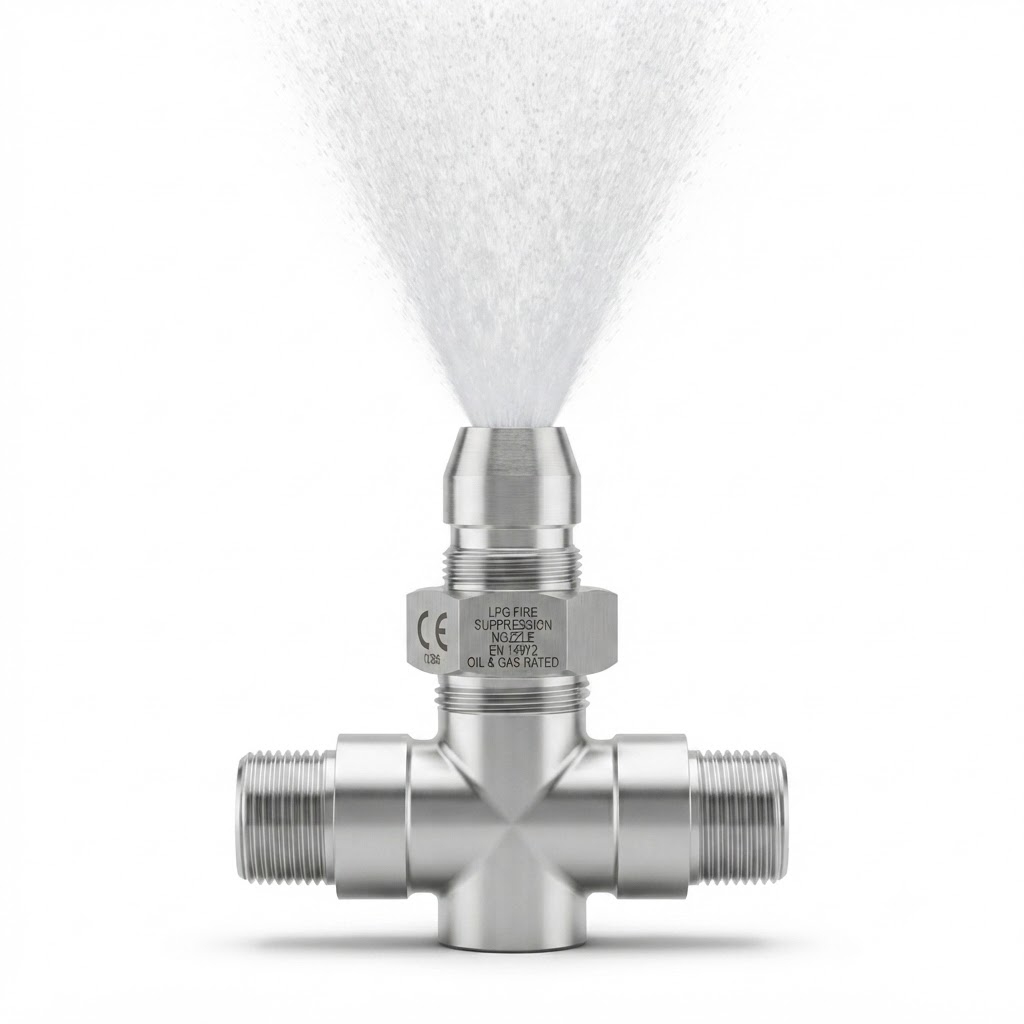
Fire hazards remain one of the greatest operational risks in the oil and gas industry. Whether managing LPG storage terminals, petroleum depots, bottling plants, refineries, or chemical processing facilities, operators require fire suppression systems capable of responding immediately and reliably under extreme conditions. At the center of these systems is the CE-certified LPG fire suppression nozzle, a precision-engineered component designed to distribute extinguishing agents with exceptional accuracy while complying with internationally recognized safety standards.
Across Kenya, Uganda, Tanzania, Rwanda, and the wider East African region, industrial facilities are increasingly adopting certified fire suppression technologies to strengthen regulatory compliance, improve personnel safety, protect critical assets, and reduce operational downtime. Selecting certified components not only enhances system reliability but also demonstrates a commitment to global engineering best practices.
Related Products
As part of our LPG engineering solutions, Megtraco Kenya Ltd supplies internationally recognized fire protection equipment that meets the demanding safety requirements of commercial, industrial, and institutional facilities throughout East Africa.
Technical Industry Overview
What is a CE-Certified LPG Fire Suppression Nozzle?
A CE-certified LPG fire suppression nozzle is a specially engineered discharge device installed within an automatic fire suppression system. Its primary function is to distribute extinguishing agents—such as water mist, foam, dry chemical powder, or clean agents—in carefully calculated spray patterns that rapidly suppress fires involving LPG, hydrocarbons, and other combustible materials.
The CE marking confirms that the nozzle complies with applicable European directives relating to safety, manufacturing quality, durability, and performance. This certification provides facility owners, engineers, insurers, and regulatory authorities with confidence that the equipment has undergone rigorous testing before deployment.
Unlike conventional nozzles, CE-certified models are manufactured to strict dimensional tolerances and tested for pressure resistance, corrosion protection, discharge efficiency, and long-term operational reliability.
Why International Certification Matters
Fire suppression equipment installed in hazardous industrial environments must perform without failure during an emergency. Even a minor variation in nozzle discharge characteristics can significantly affect the performance of an entire suppression system.
Using internationally certified components offers several engineering and operational advantages, including:
- Consistent extinguishing agent distribution
- Improved hydraulic system performance
- Enhanced resistance to corrosion and harsh environments
- Verified pressure ratings
- Reduced maintenance requirements
- Easier regulatory approval
- Greater insurance acceptance
- Improved long-term asset protection
Industrial operators seeking reliable fire protection solutions often begin with professional engineering consultation to ensure that suppression systems are correctly designed for their specific hazards and operational requirements.
Commercial & Industrial Applications
Oil & Gas Storage Terminals
Bulk LPG terminals contain large quantities of highly flammable products stored under pressure. Fire suppression systems play a critical role in protecting storage vessels, transfer pumps, compressor stations, manifold systems, and loading gantries.
CE-certified suppression nozzles provide precise discharge coverage that helps control fires before they escalate into catastrophic incidents. When integrated with industrial gas leak detection systems, operators benefit from a multi-layered safety strategy capable of identifying gas leaks before ignition occurs.
LPG Bottling Plants
Cylinder filling facilities involve continuous handling of pressurized LPG, making them high-risk environments for accidental releases and ignition.
Automatic suppression systems equipped with certified nozzles protect critical operational areas such as:
- Filling carousels
- Cylinder testing stations
- Valve inspection lines
- Compressor rooms
- Storage yards
- Loading bays
Combining certified suppression systems with commercial fire safety systems provides comprehensive protection against fire emergencies while supporting compliance with industry safety requirements.
Petroleum Depots
Petroleum storage and distribution terminals require suppression systems capable of protecting fuel pumps, loading arms, transfer pipelines, storage tanks, and tanker loading facilities.
Because fuel transfer operations often involve multiple ignition sources, properly engineered suppression nozzles ensure extinguishing agents are delivered uniformly across hazard zones, reducing fire spread and minimizing equipment damage.
Facilities planning infrastructure upgrades can browse industrial LPG equipment to identify compatible fire protection and gas handling components for integrated safety solutions.
Petrochemical Processing Facilities
Petrochemical plants operate under high temperatures and pressures while processing combustible gases and liquids. Fire suppression systems must therefore withstand demanding operating conditions and provide dependable protection around reactors, process vessels, compressors, heat exchangers, and pipeline networks.
CE-certified nozzles are widely used within:
- Foam suppression systems
- Water mist systems
- Dry chemical systems
- Clean agent systems
- Deluge systems
Each application requires carefully engineered hydraulic calculations to ensure the extinguishing agent reaches every protected hazard zone with the required density and discharge pattern.
Industrial Manufacturing
Many manufacturing facilities across Kenya use LPG as their primary energy source for boilers, furnaces, ovens, dryers, and thermal processing equipment. Fire suppression systems protect these assets against equipment failures, gas leaks, and accidental ignition events.
Industrial facilities operating high-capacity LPG systems frequently integrate high-performance LPG vaporizers with certified fire suppression equipment to maintain stable gas supply while enhancing overall operational safety.
Healthcare, Logistics, and Commercial Facilities
Although commonly associated with oil and gas operations, CE-certified fire suppression nozzles are equally valuable in hospitals, pharmaceutical plants, logistics warehouses, aviation facilities, food processing plants, and commercial kitchens where LPG is used for heating or cooking applications.
Properly engineered suppression systems help organizations:
- Protect personnel
- Minimize operational downtime
- Reduce property damage
- Support business continuity
- Improve regulatory compliance
As an established engineering company serving East Africa since 1969, Megtraco Kenya Ltd continues to support commercial and industrial clients with certified LPG infrastructure, fire protection systems, and engineered safety solutions tailored to complex operational environments.
Engineering Specifications & Technical Performance
What Determines Fire Suppression Nozzle Performance?
A fire suppression nozzle is designed to regulate the discharge angle, flow rate, droplet size, and distribution pattern of the extinguishing agent. These characteristics directly influence how effectively the suppression system controls and extinguishes fires involving LPG and hydrocarbon fuels.
Proper engineering requires careful consideration of hydraulic calculations, operating pressure, nozzle spacing, hazard classification, and system design objectives to ensure reliable protection under emergency conditions.
3. Engineering Specifications & Technical Performance
Engineering Performance Parameters
The effectiveness of a CE-certified LPG fire suppression nozzle depends on more than simply delivering an extinguishing agent. Engineers must evaluate hydraulic performance, pressure losses, nozzle discharge coefficients, hazard classification, and system response times to ensure complete fire coverage.
In industrial oil and gas installations, suppression systems are typically designed to activate automatically after receiving signals from flame detectors, heat detectors, or gas detection systems. This coordinated response minimizes fire growth while protecting personnel, equipment, and surrounding infrastructure.
Facilities integrating suppression systems with industrial gas leak detection significantly reduce the likelihood of fires escalating from undetected gas releases.
Technical Specification Matrix
| Specification | Typical Value |
|---|---|
| Nozzle Material | Stainless Steel 316, Brass, Nickel-Plated Brass |
| Operating Pressure | 7–25 bar |
| Hydrostatic Test Pressure | ≥50 bar |
| Temperature Range | -20°C to +95°C |
| Spray Pattern | Cone, Wide Cone, Flat Fan |
| Flow Rate | Engineered according to hydraulic calculations |
| Thread Connection | BSP or NPT |
| Corrosion Resistance | High |
| Certification | CE Marked |
Engineering Design Considerations
Proper nozzle selection depends on several engineering factors, including:
- Hazard classification
- Fire load analysis
- Protected surface area
- Ceiling height
- Airflow within the facility
- Suppression agent type
- Pipe diameter
- Pump capacity
- Pressure losses throughout the network
Because no two facilities are identical, engineers should seek professional engineering consultation before selecting suppression equipment.
Comparative Technical Analysis
CE-Certified Fire Suppression Nozzles vs Standard Nozzles
While standard suppression nozzles may appear similar externally, certified products undergo far more rigorous manufacturing controls and performance verification.
| Feature | CE-Certified Nozzle | Standard Nozzle |
|---|---|---|
| Manufacturing Quality | Independently verified | Manufacturer dependent |
| Pressure Testing | Certified | Limited |
| Corrosion Resistance | High | Varies |
| Flow Verification | Laboratory tested | Not always verified |
| Dimensional Accuracy | Precision manufactured | Variable |
| Regulatory Acceptance | Excellent | Limited |
| Industrial Reliability | High | Moderate |
For hazardous environments such as LPG bottling plants and petroleum terminals, certified suppression equipment provides significantly greater confidence in emergency performance.
Fire Suppression Nozzles vs Conventional Fire Hose Systems
Traditional firefighting methods remain important for emergency response, but they rely heavily on human intervention. Automatic suppression nozzles, by contrast, activate immediately when integrated with detection systems, reducing response time and limiting fire growth.
| Parameter | Automatic Suppression | Manual Fire Hose |
|---|---|---|
| Activation | Automatic | Manual |
| Response Time | Seconds | Depends on personnel |
| Continuous Protection | Yes | No |
| Human Exposure | Minimal | High |
| Fire Growth Control | Immediate | Delayed |
For critical infrastructure, automatic suppression systems offer a significant advantage in protecting both personnel and assets.
Installation, Testing & Commissioning Best Practices
Engineering Installation Workflow
Proper installation is essential for ensuring suppression systems perform as designed during an emergency. Every project should begin with a detailed fire risk assessment and hydraulic design before any equipment is installed.
The recommended installation sequence includes:
- Hazard identification and site survey
- Fire risk assessment
- Hydraulic calculations
- Pipe routing and support design
- Suppression nozzle positioning
- Installation of control valves and manifolds
- Integration with fire detection systems
- Pressure testing
- Functional testing
- Final commissioning
Organizations undertaking new LPG infrastructure projects often combine suppression system installation with our LPG engineering solutions to achieve fully integrated safety systems.
System Commissioning Checklist
Before commissioning, engineers should verify every component of the suppression system.
| Inspection Item | Status |
|---|---|
| Hydraulic calculations reviewed | ✔ |
| Pipe supports inspected | ✔ |
| Nozzle orientation verified | ✔ |
| Thread connections tightened | ✔ |
| Pressure test completed | ✔ |
| Leak inspection completed | ✔ |
| Fire detection system tested | ✔ |
| Automatic release verified | ✔ |
| Alarm interface confirmed | ✔ |
| Emergency shutdown sequence tested | ✔ |
| Documentation completed | ✔ |
Each inspection should be documented as part of the facility’s fire safety management records.
Testing Procedures
Comprehensive testing generally includes:
- Hydrostatic pressure testing
- Pneumatic leak testing where applicable
- Detection system verification
- Alarm testing
- Control panel functionality testing
- Discharge simulation
- Emergency shutdown verification
- System reset testing
Facilities requiring integrated suppression controls can explore control panels that coordinate detection, alarms, and automatic agent discharge.
Maintenance Best Practices
Even the highest-quality suppression systems require routine maintenance to maintain operational readiness.
Recommended maintenance activities include:
- Monthly visual inspections
- Quarterly valve inspections
- Semi-annual detector testing
- Annual pressure verification
- Annual hydraulic inspection
- Nozzle cleaning and obstruction checks
- Corrosion inspections
- Documentation updates
Preventive maintenance extends equipment life while ensuring the suppression system remains compliant with inspection requirements.
Common Causes of Fire Suppression System Failure
Many suppression failures result from preventable maintenance or installation issues rather than equipment defects.
Common causes include:
- Obstructed nozzles
- Incorrect nozzle spacing
- Improper hydraulic calculations
- Corroded pipework
- Low operating pressure
- Blocked discharge paths
- Damaged detection devices
- Poor maintenance practices
Using certified components together with commercial fire safety systems significantly improves long-term reliability.
Why Industrial Operators Choose CE-Certified Equipment
Industrial facilities throughout Kenya and East Africa increasingly specify CE-certified suppression equipment because it offers:
- Consistent manufacturing quality
- Internationally recognized certification
- Proven discharge performance
- Improved regulatory acceptance
- Reduced operational risk
- Enhanced personnel safety
- Better insurance compliance
- Lower lifecycle maintenance costs
Whether protecting LPG terminals, petroleum depots, manufacturing plants, or chemical processing facilities, investing in certified suppression technology supports long-term operational resilience and business continuity.
The next section covers regulatory compliance with EPRA, KEBS, DOSHS, NFPA standards, frequently asked questions, and the engineering conclusion, while also highlighting additional Megtraco solutions such as advanced LPG piping systems and options to request a customized quotation for new or upgraded fire protection projects.
6. Regulatory Compliance, Certification & Safety
Why Regulatory Compliance Matters
A CE-certified LPG fire suppression nozzle should always be installed as part of a fire protection system that complies with both Kenyan regulations and internationally recognized engineering standards. Compliance not only protects lives and assets but also minimizes legal liability, improves operational continuity, and supports insurance requirements for high-risk facilities.
For operators in the oil and gas sector, fire protection systems should be designed, installed, commissioned, and maintained by qualified engineering professionals to ensure reliable performance throughout the facility’s operational life.
Organizations planning new installations can engage professional engineering consultation to develop compliant fire suppression solutions tailored to their specific operational risks.
EPRA Requirements for LPG Installations
The Energy and Petroleum Regulatory Authority (EPRA) regulates petroleum and LPG installations in Kenya to ensure safe handling, storage, transportation, and utilization of petroleum products.
For industrial LPG facilities, EPRA requires that:
- LPG systems are designed by qualified professionals.
- Equipment complies with applicable safety standards.
- Fire protection systems are incorporated into facility design.
- Installations undergo inspection before commissioning.
- Routine maintenance and safety audits are documented.
Fire suppression nozzles form part of the overall fire protection strategy and should be compatible with the facility’s suppression network and emergency response plan.
KEBS Certification Requirements
The Kenya Bureau of Standards (KEBS) promotes quality and safety by ensuring industrial equipment meets recognized manufacturing standards.
For fire suppression systems, operators should verify that:
- Pressure-rated components are certified.
- Materials are suitable for industrial environments.
- Corrosion resistance meets application requirements.
- Threaded connections conform to approved specifications.
- Fire protection equipment is supplied by reputable manufacturers.
Choosing quality equipment from industrial LPG equipment helps ensure long-term system reliability and easier regulatory inspections.
DOSHS Workplace Safety Compliance
The Directorate of Occupational Safety and Health Services (DOSHS) requires employers to provide safe working environments through proper hazard identification, fire protection measures, emergency planning, and equipment maintenance.
Industrial facilities should establish procedures for:
- Routine fire risk assessments
- Employee fire safety training
- Emergency evacuation planning
- Inspection of suppression equipment
- Preventive maintenance schedules
- Incident reporting and corrective action
Automatic suppression systems significantly reduce response times compared to manual firefighting methods, improving workplace safety in hazardous environments.
International Standards
Many industrial projects across Africa adopt internationally recognized fire protection standards published by the National Fire Protection Association (NFPA).
Depending on the application, engineers may reference:
- NFPA 13 – Installation of Sprinkler Systems
- NFPA 15 – Water Spray Fixed Systems
- NFPA 17 – Dry Chemical Extinguishing Systems
- NFPA 58 – Liquefied Petroleum Gas Code
- NFPA 2001 – Clean Agent Fire Extinguishing Systems
Compliance with these standards promotes consistent engineering practices and improves fire protection system performance across different industrial sectors.
Frequently Asked Questions
How does a CE-certified LPG fire suppression nozzle improve operational safety?
A CE-certified nozzle improves operational safety by delivering extinguishing agents in controlled and tested discharge patterns that rapidly suppress fires while minimizing damage to surrounding equipment. Certification provides confidence that the nozzle has been manufactured and tested to internationally recognized quality and performance standards.
What are the EPRA and KEBS compliance requirements for fire suppression systems in Kenya?
Industrial fire suppression systems should be designed using certified equipment, installed by qualified professionals, and maintained according to applicable regulatory requirements. Facilities must also comply with fire safety, occupational health, and petroleum industry regulations governing LPG installations.
How often should industrial fire suppression systems be inspected?
Although inspection intervals depend on the facility’s operating conditions and applicable regulations, industrial operators should conduct routine visual inspections, scheduled preventive maintenance, periodic functional testing, and comprehensive annual system evaluations by qualified fire protection specialists.
Why choose CE-certified fire suppression nozzles instead of standard nozzles?
CE-certified nozzles undergo extensive manufacturing quality control, pressure testing, corrosion resistance verification, and discharge performance evaluation. This results in improved reliability, greater consistency, enhanced regulatory acceptance, and better protection for high-risk industrial environments.
Can CE-certified fire suppression nozzles be integrated with gas detection systems?
Yes. Modern industrial facilities frequently combine suppression systems with industrial gas leak detection to provide early warning of gas leaks before ignition occurs. This integrated approach enhances overall facility safety and supports faster emergency response.
Are CE-certified nozzles suitable for industries beyond oil and gas?
Absolutely. They are widely used in manufacturing plants, chemical processing facilities, pharmaceutical production, food processing factories, aviation hangars, logistics warehouses, power generation facilities, marine terminals, and commercial buildings where reliable fire suppression is essential.
Engineering Conclusion
Fire suppression systems are only as reliable as the components that comprise them. Selecting a CE-certified LPG fire suppression nozzle ensures that one of the most critical elements of the suppression system has been manufactured and tested to internationally recognized standards for quality, durability, and performance.
For industrial facilities handling LPG and other combustible fuels, certified suppression nozzles provide dependable extinguishing agent distribution, improve regulatory compliance, and contribute to safer working environments. When integrated with engineered fire detection systems, gas leak detection technologies, and properly designed hydraulic networks, these nozzles become an essential part of a comprehensive fire protection strategy.
Whether your project involves a new LPG bottling plant, petroleum storage terminal, manufacturing facility, or commercial development, working with an experienced engineering partner helps ensure every aspect of the fire protection system meets both operational requirements and applicable safety standards.
As a trusted engineering company serving East Africa since 1969, Megtraco Kenya Ltd provides complete LPG and fire protection solutions, including commercial fire safety systems, advanced LPG piping systems, high-performance LPG vaporizers, industrial gas leak detection, and professional engineering consultation. If you are planning a new installation or upgrading an existing facility, you can request a customized quotation to receive expert guidance and tailored engineering solutions.
Your Trusted LPG & Fire Safety Engineering Partner in East Africa
Whether you’re designing a new LPG installation, upgrading industrial gas systems, or enhancing fire safety compliance, Megtraco Kenya Ltd delivers certified engineering solutions backed by decades of expertise. From LPG equipment supply and pipeline installations to fire suppression and detection systems, our experienced team provides reliable solutions for commercial, industrial, and institutional projects across East Africa.
You May Also Like
Contact us today for professional consultation, engineering support, or a customized quotation.
WHY CHOOSE MEGTRACO KENYA LTD
- Established Since 1969 – Decades of proven engineering excellence.
- KEBS Certified Products – Guaranteed quality and compliance with regional standards.
- EPRA Licensed LPG Engineering Company – Fully certified to design, install, and commission.
- Industrial & Commercial LPG Specialists – Scaled to handle heavy-duty thermal requirements.
- Fire Suppression & Fire Detection Experts – End-to-end asset protection.
- Regional Operational Footprint – Serving Nairobi, Mombasa, Kisumu, Nakuru, Eldoret, Thika, Machakos, Uganda, Tanzania, Rwanda, and the wider East African region.
Contact Megtraco Kenya Ltd
- Email: sales@megtracokenya.com
- Sales: +254 725 870 114
- Technical: +254 733 721 598
- WhatsApp: +254 799 086 323
- Nairobi, Kenya – Serving East Africa
- Website: https://megtracokenya.com
Request a Quote today and partner with East Africa’s trusted LPG and fire safety engineering company since 1969.
