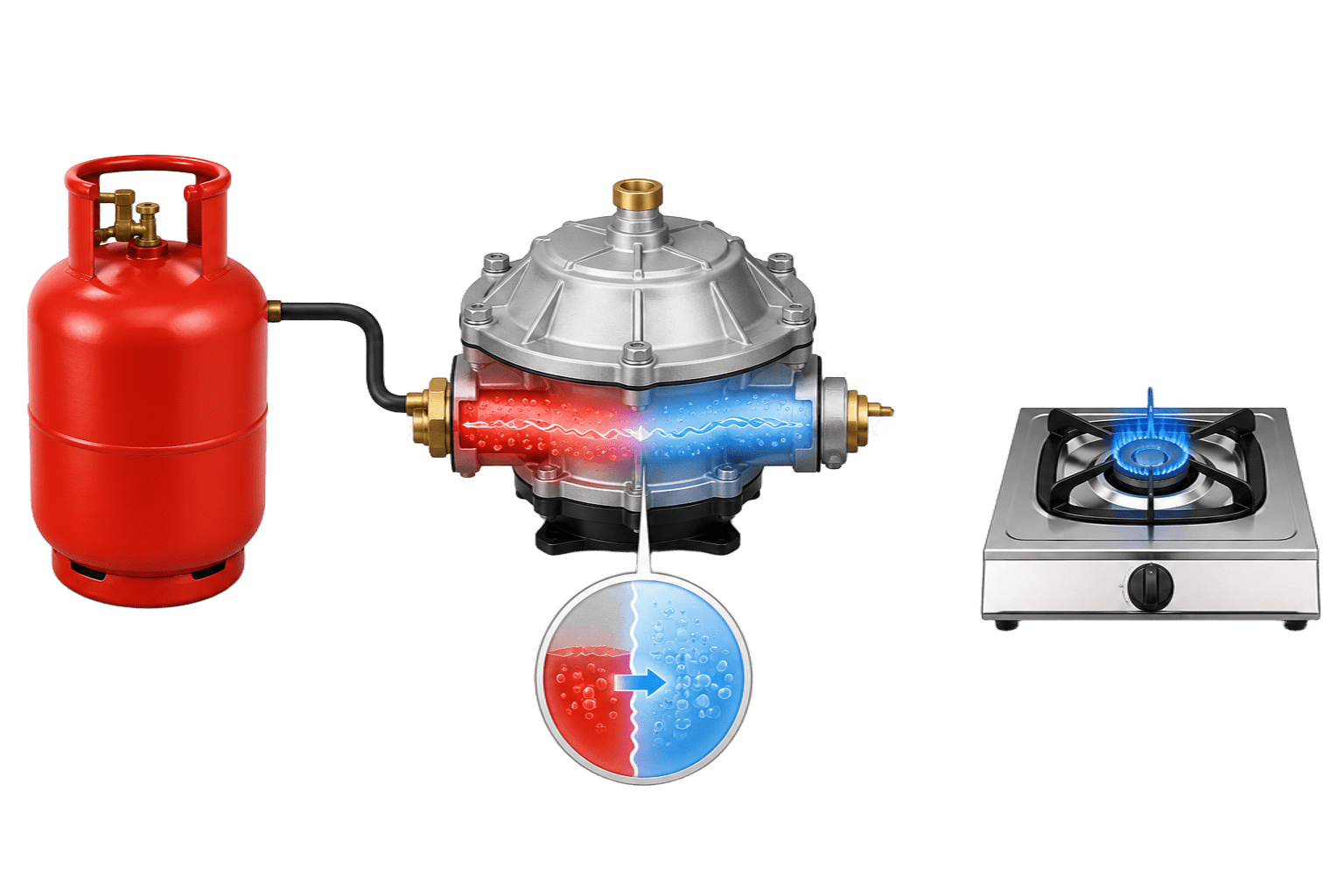
What does an LPG vaporizer do? An LPG vaporizer converts liquid LPG stored in tanks into usable vapour at a faster and more controlled rate than natural evaporation. This allows commercial and industrial LPG systems to maintain a steady gas supply even during periods of high demand.
Many LPG users understand the role of cylinders, regulators, and pipelines but are less familiar with vaporization equipment. In smaller domestic systems, LPG naturally changes from liquid to vapour inside the cylinder and flows to appliances through the regulator.
Related Products
However, large LPG users require much higher gas volumes. Hotels, restaurants, factories, hospitals, schools, and apartment developments may operate multiple appliances at the same time. During peak demand, natural vaporisation from a tank may not produce enough vapour to support the system.
This is where an LPG vaporizer becomes essential.
A properly designed LPG system uses vaporization equipment to ensure:
- Stable gas pressure
- Continuous fuel supply
- Better appliance performance
- Reduced risk of gas shortages
- Improved operational efficiency
Megtraco Kenya Ltd provides professional LPG equipment solutions for residential, commercial, and industrial applications, including LPG storage, vaporization, and distribution systems.
What Does an LPG Vaporizer Do: Understanding LPG Conversion
What does an LPG vaporizer do in an LPG system? It changes LPG from liquid form into vapour form by applying controlled heat, allowing appliances to receive gas at the required flow rate.
LPG is stored as a liquid because it occupies less space compared to storing it as gas. Inside a cylinder or bulk tank, a balance exists between liquid LPG and LPG vapour.
When an appliance operates, it consumes LPG vapour from the top section of the tank. More liquid LPG then changes into vapour to replace the consumed gas.
This natural process is called vaporisation.
For small applications such as household cooking, natural vaporisation is usually enough. However, when demand increases, the tank may not absorb enough heat from the surrounding environment to convert liquid LPG into vapour quickly enough.
A vaporizer provides additional heat energy, increasing the rate of conversion.
What Does an LPG Vaporizer Do: The Difference Between Natural and Forced Vaporisation
Understanding what does an LPG vaporizer do requires knowing the difference between natural vaporisation and forced vaporisation. Natural vaporisation relies on environmental heat, while a vaporizer actively increases LPG conversion using controlled heating.
Natural LPG Vaporisation
Natural vaporisation happens when LPG absorbs heat from:
- Surrounding air
- Ground temperature
- Tank surface area
- Weather conditions
The amount of vapour produced depends on:
- Tank size
- LPG level inside the tank
- Outdoor temperature
- Gas consumption rate
This method works well for low-demand applications.
Forced LPG Vaporisation
Forced vaporisation uses a dedicated LPG vaporizer to increase gas production.
The vaporizer receives liquid LPG and applies heat through systems such as:
- Electric heating elements
- Water bath heating
- Steam heating
This creates a consistent supply of LPG vapour regardless of changing demand.
For large installations requiring reliable gas flow, forced vaporisation is often integrated with bulk LPG storage systems and professional LPG distribution designs.
What Does an LPG Vaporizer Do: Why High-Demand Systems Need One
What does an LPG vaporizer do for commercial users? It ensures that LPG systems can supply enough vapour when multiple appliances operate simultaneously.
Large LPG consumers often experience higher fuel demand than standard cylinders or tanks can naturally support.
Examples include:
Commercial Kitchens
Hotels, restaurants, and catering facilities may operate:
- Multiple burners
- Industrial cookers
- Ovens
- Fryers
- Boilers
During busy hours, gas consumption increases significantly.
Without sufficient vaporisation capacity, users may experience:
- Weak burner flames
- Reduced cooking efficiency
- Pressure fluctuations
- Interrupted operations
Industrial Applications
Factories and processing facilities often require LPG for:
- Heating processes
- Drying systems
- Manufacturing equipment
- Boilers
These applications require continuous gas supply and accurate pressure control.
A correctly sized vaporizer supports reliable operation by ensuring LPG is available in vapour form whenever required.
What Does an LPG Vaporizer Do: Preventing Gas Supply Shortages
One major reason businesses ask what does an LPG vaporizer do is because they experience gas shortages despite having LPG available in their storage tank. The problem is often insufficient vaporisation capacity rather than lack of fuel.
A tank may still contain liquid LPG, but if it cannot convert enough of that liquid into vapour, appliances may not receive adequate gas flow.
This can happen because of:
- Low temperatures
- High appliance demand
- Small tank surface area
- Rapid LPG consumption
A vaporizer solves this problem by increasing the conversion rate.
The result is:
- More consistent LPG delivery
- Improved appliance operation
- Reduced downtime
- Better energy management
What Does an LPG Vaporizer Do: Supporting LPG Reticulation Systems
In LPG reticulation systems, what does an LPG vaporizer do? It ensures that multiple connected users receive a dependable vapour supply from a central LPG storage system.
Apartment buildings, gated communities, hotels, and commercial developments often use central LPG systems where one storage facility supplies multiple points of use.
These systems require careful design involving:
- Storage tanks
- Vaporizers
- Regulators
- Pipe networks
- Individual meters
Megtraco Kenya Ltd designs and supports LPG reticulation systems that provide controlled gas distribution for multi-user developments.