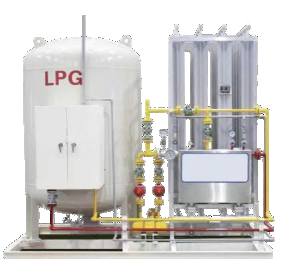
Accepting a newly installed LPG system should never be based solely on whether the burners ignite or the installation looks complete. Every commercial, industrial, or institutional project should undergo a thorough LPG installation checklist before it is handed over. This process confirms that the system has been installed according to approved engineering drawings, tested under the correct conditions, and commissioned in compliance with applicable safety standards.
Whether the project serves a hotel in Nairobi, a manufacturing plant in Thika, a hospital in Kisumu, or a warehouse in Mombasa, an LPG installation checklist helps identify defects before they become expensive repairs or serious safety hazards. Pressure testing, regulator sizing, emergency shut-off valves, leak detection, fire protection, and commissioning records all need to be verified before the installation is accepted.
Related Products
At Megtraco Kenya Ltd, every LPG installation is approached with long-term safety, operational reliability, and regulatory compliance in mind. Following a structured LPG installation checklist helps building owners protect their investment while ensuring the system is ready for safe daily operation.
What Is an LPG Installation Checklist?
An LPG installation checklist is a structured inspection used to verify that an LPG system has been designed, installed, tested, and commissioned correctly before project handover. It confirms that every safety, engineering, and compliance requirement has been met before the system is placed into service.
A professional LPG installation checklist goes beyond a simple visual inspection. It confirms that the installation complies with approved engineering specifications, manufacturer recommendations, and relevant regulatory requirements.
A complete LPG installation checklist should verify:
- Pressure test certificates
- Pipe routing and mechanical supports
- Regulator sizing and pressure settings
- Emergency isolation valves
- Gas leak testing
- Fire protection measures
- Equipment labelling
- Commissioning records
- Operator training
- Maintenance documentation
Skipping even one item on the LPG installation checklist can increase the risk of gas leaks, poor appliance performance, unnecessary maintenance, or regulatory non-compliance after the project has been commissioned.
Businesses planning new installations can browse our complete product catalogue to select certified LPG equipment suitable for commercial and industrial applications.
Why an LPG Installation Checklist Is Essential Before Project Handover
An LPG installation checklist ensures that the completed system performs safely, efficiently, and in accordance with the approved engineering design. It also provides documented evidence that critical inspections and tests have been completed before the owner accepts responsibility for the installation.
Many installation defects are not immediately visible during normal operation. A system may ignite successfully while still containing hidden problems such as undersized regulators, incorrectly supported pipework, leaking joints, or inaccessible shut-off valves.
A comprehensive LPG installation checklist helps identify these issues before they result in:
- Gas leaks
- Pressure fluctuations
- Excessive LPG consumption
- Emergency shutdowns
- Equipment damage
- Fire hazards
- Expensive corrective work
- Regulatory penalties
Completing an LPG installation checklist before acceptance protects both the contractor and the building owner by confirming that the installation satisfies engineering and safety requirements.
Working with a trusted engineering partner also ensures that commissioning records and compliance documentation are complete before handover.
LPG Installation Checklist for Commercial and Industrial Projects
Every commercial and industrial LPG installation has unique operational requirements, but the core principles of an LPG installation checklist remain the same. Each component must be inspected, tested, and documented before the system is accepted for daily use.
Manufacturing Facilities
Factories often operate LPG systems continuously for steam generation, food processing, drying, textile production, and other industrial applications.
An LPG installation checklist for manufacturing facilities should verify:
- Correct pressure regulator capacity
- Pipe sizing for design flow rates
- Secure equipment mounting
- Safety valve installation
- Automatic shut-off systems
- Control panel functionality
- Emergency isolation procedures
Facilities using high-capacity systems should also inspect LP gas train equipment and control panels to confirm that automation and safety controls operate correctly before commissioning.
Hotels and Commercial Kitchens
Hotels, restaurants, and catering facilities require uninterrupted LPG supply throughout the day. Any installation error can affect food production, customer service, and business continuity.
An LPG installation checklist for hospitality facilities should confirm:
- Stable operating pressure
- Leak-free pipe joints
- Accessible emergency shut-off valves
- Correct regulator settings
- Proper appliance connections
- Safe ventilation around LPG equipment
Installing high-performance LPG vaporizers and integrating our leak detection technologies further improves system reliability and enhances occupant safety.
Hospitals, Schools and Institutions
Hospitals and institutional buildings rely on LPG for kitchens, laundries, sterilisation units, and water heating systems. Interruptions can affect essential services, making a detailed LPG installation checklist particularly important.
Inspection should include:
- Backup gas supply arrangements
- Automatic changeover systems
- Pressure stability
- Fire protection equipment
- Equipment identification labels
- Maintenance accessibility
Facilities should also evaluate commercial fire safety systems to ensure that fire suppression measures complement the LPG installation.
Apartment Developments
Modern apartment developments increasingly use centralised LPG reticulation systems. Before accepting these projects, developers should complete an LPG installation checklist covering:
- Meter installation
- Pressure regulators
- Underground piping
- Isolation valves
- Leak testing
- Consumer connections
- Future maintenance access
Using advanced LPG piping systems and engaging professional engineering consultation during design and commissioning helps ensure the installation is safe, efficient, and ready for long-term operation.