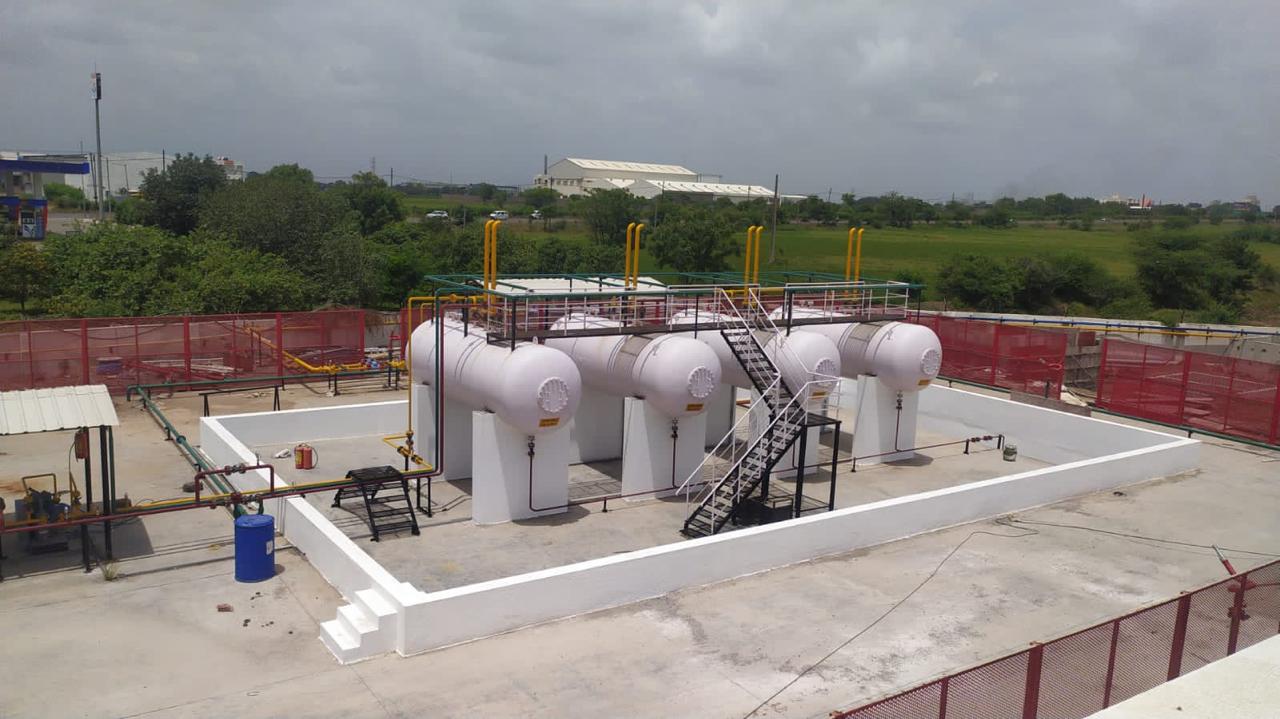
LPG commissioning Kenya is the controlled engineering process used to verify that an LPG installation has been correctly constructed, inspected, tested, purged, functionally commissioned and documented before being placed into normal operation. A complete handover pack provides the evidence required to demonstrate what was installed, how it was tested, which equipment was used and whether the system was accepted for service.
For a commercial kitchen, hotel, hospital, school, factory, food-processing plant, warehouse or other high-consumption facility, installation completion does not automatically mean the LPG system is ready for operation. Physical construction is only one part of the project lifecycle.
Related Products
The commissioning stage establishes whether the completed system corresponds with the approved engineering design and whether the critical components perform as intended.
The handover stage then transfers the technical record and operating information to the owner or facility operator.
This distinction is important for LPG commissioning Kenya projects because an LPG system can contain multiple pressure zones, regulators, isolation valves, safety devices, gas trains, vaporizers, detectors, emergency shutdown systems and appliance connections. Each component needs to be identifiable and, where applicable, tested and documented.
A professional LPG engineering solutions provider should therefore approach commissioning as an engineering verification process rather than simply the final activity on a construction schedule.
The final objective is straightforward: establish documented evidence that the LPG installation is safe, functional, maintainable and suitable for controlled operation.
What Is an LPG Commissioning and Handover Pack?
An LPG commissioning and handover pack is the organized collection of technical, testing, certification, operational and acceptance documents produced during completion of an LPG installation. It demonstrates that the system has been constructed according to its approved design, tested for integrity, commissioned for operation and transferred with sufficient information for safe future use.
A properly prepared pack should enable an engineer, inspector, maintenance technician or facility manager to answer several questions without depending on verbal explanations.
It should show:
- What was designed?
- What was installed?
- What equipment was selected?
- Which standards and specifications applied?
- Who performed the installation?
- What testing was completed?
- What were the test conditions?
- Did the system pass?
- Were safety devices function-tested?
- Which certificates are available?
- What operating pressures apply?
- What maintenance is required?
- Who was trained?
- Who accepted the completed installation?
For LPG commissioning Kenya, the documentation should be proportionate to the size and complexity of the installation. A small commercial cylinder manifold will not require the same volume of documentation as an industrial facility with bulk LPG storage, vaporization, automatic changeover, multiple pressure stages and integrated gas detection.
Nevertheless, the fundamental principle remains the same: the completed system must be traceable from design through installation, testing and handover.
Why Proper LPG Commissioning Documentation Matters
Proper commissioning documentation provides evidence that an LPG installation has been verified rather than merely completed. It supports regulatory compliance, maintenance, emergency response, insurance documentation, future modifications and safe operation by personnel who were not involved in the original installation.
The value of a handover pack becomes particularly clear several years after a project has been completed.
Consider a factory that needs to replace a regulator.
If the original documentation identifies the regulator model, pressure range, flow capacity, equipment tag, installation drawing and commissioning parameters, the replacement can be properly engineered.
Without those records, maintenance personnel may have to determine the system characteristics from the physical installation alone.
The same principle applies when:
- A new production line is added.
- A kitchen is expanded.
- A gas appliance is replaced.
- A pipe route is modified.
- A vaporizer is upgraded.
- A detector is relocated.
- An emergency shutdown system is modified.
- A regulator station is changed.
- A facility changes its operating schedule.
A complete LPG commissioning Kenya file therefore becomes a long-term engineering asset.
It provides historical information about the installation and supports future technical decisions.
Core Documents in a Gas Installation Handover Pack
A complete gas installation handover should normally contain project information, approved design documentation, as-built drawings, equipment schedules, installation records, pressure and tightness testing records, purging documentation, commissioning results, certificates, safety-system records, operating manuals, maintenance information and client acceptance records.
The exact contents should be determined from the project scope and applicable regulatory requirements.
| Handover Section | Typical Documents | Main Purpose |
|---|---|---|
| Project information | Client, site, project number, scope | Identifies the installation |
| Design | Drawings, calculations, specifications | Establishes engineering basis |
| As-built information | Final drawings and revisions | Records actual installation |
| Equipment | Equipment register and data sheets | Provides traceability |
| Testing | Pressure and tightness certificates | Demonstrates pipe integrity |
| Purging | Purging records and procedures | Records safe gas introduction preparation |
| Commissioning | Functional test reports | Demonstrates operation |
| Safety systems | ESD, gas detection and alarm tests | Demonstrates protective functions |
| Certification | Manufacturer and conformity documents | Provides technical evidence |
| O&M | Manuals and maintenance schedules | Supports future operation |
| Training | Attendance and competency records | Demonstrates operator familiarisation |
| Handover | Acceptance forms and outstanding-item records | Transfers responsibility |
A document index should be included at the front of the pack.
The index should identify the document title, reference number, revision, date and status.
This prevents obsolete drawings or incomplete certificates from being accidentally used.
Approved Design Documentation
Before commissioning begins, the completed installation should be compared with the approved design documentation. Drawings, calculations, specifications and equipment schedules establish the design basis against which construction and commissioning can be evaluated.
The design file may include:
- LPG storage layout.
- Cylinder manifold arrangement.
- LPG reticulation drawings.
- Piping and instrumentation diagrams.
- Pipe isometrics.
- Gas train drawings.
- Regulator station details.
- Vaporizer drawings.
- Appliance connection drawings.
- Emergency shutdown diagrams.
- Gas detection layouts.
- Fire protection layouts.
- Control-panel drawings.
- Electrical schematics.
- Equipment schedules.
- Pipe sizing calculations.
- Pressure-drop calculations.
- LPG demand calculations.
- Regulator sizing calculations.
- Vaporizer sizing calculations.
For LPG commissioning Kenya, the latest approved drawing revision should be identified before physical inspection begins.
This prevents the commissioning team from checking the completed installation against an obsolete design.
As-Built Drawings and Final Installation Records
As-built drawings show the installation as it was actually constructed rather than simply reproducing the original design. They should identify final LPG pipe routes, equipment locations, valves, regulators, detectors, emergency shutdown points, storage vessels, pressure zones and other safety-critical components.
As-built documentation is one of the most valuable elements of a handover pack.
Construction frequently produces minor changes.
A pipe may need to move around a structural beam. A valve may be repositioned to improve access. A detector may be relocated because of ventilation conditions. A regulator station may be adjusted to accommodate actual site dimensions.
These changes should be reflected in the final drawings.
An accurate as-built drawing should identify:
- LPG tank location.
- Filling connection.
- Liquid lines where applicable.
- Vapour lines.
- Isolation valves.
- Regulators.
- Pressure gauges.
- Relief devices.
- Vaporizer location.
- Gas detectors.
- Emergency shutdown stations.
- Appliance branches.
- Pipe sizes.
- Pipe materials.
- Buried pipe routes.
- Building entry points.
- Equipment tags.
- Valve identification numbers.
- Direction of flow.
- Pressure zones.
For underground systems, accurate records are particularly important.
Future excavation or civil works can damage buried LPG piping when its location has not been properly recorded.
For this reason, as-built documentation should be treated as a safety document rather than merely a drawing-office deliverable.
LPG Tightness Testing and Pressure Testing
Tightness testing establishes whether the LPG pipework and its connections can contain the system without unacceptable leakage under specified test conditions. A useful test certificate identifies the tested section, test medium, test pressure, test duration, instruments, readings, acceptance criteria, responsible personnel and final result.
For LPG commissioning Kenya, pressure and tightness testing should be carried out according to the applicable design, regulatory requirements, pipe material, pressure regime and recognized technical standards.
A generic pressure value should never be applied to every LPG installation.
Different systems may have different testing requirements depending on:
- Pipe material.
- Operating pressure.
- System configuration.
- Test section.
- Component limitations.
- Applicable standard.
- Manufacturer requirements.
- Regulatory requirements.
What a useful tightness test record contains
| Test Parameter | Required Information |
| Project | Project name and number |
| Site | Installation location |
| Test section | Exact pipework tested |
| Drawing reference | Relevant drawing number |
| Test medium | Medium used for testing |
| Test pressure | Specified test pressure |
| Starting reading | Initial pressure |
| Final reading | Final pressure |
| Test duration | Defined test period |
| Gauge identification | Instrument number |
| Calibration | Calibration status |
| Acceptance criteria | Required pass condition |
| Result | Pass or fail |
| Witness | Client/engineer/competent person |
| Date | Date of test |
| Corrective action | Details of repairs/retest |
A certificate stating only “pressure test passed” provides limited engineering information.
A stronger certificate allows another competent person to reconstruct what happened during the test.
What Is a Tightness Test Certificate?
A tightness test certificate is a formal record showing that a defined LPG pipework section was subjected to an approved integrity test and met the specified acceptance criteria. It should contain sufficient information to identify the installation, test conditions, instruments, results and responsible personnel.
The certificate should normally identify:
- Client.
- Project.
- Site.
- Pipework section.
- Pipe material.
- Pipe diameter.
- Test medium.
- Test pressure.
- Test duration.
- Test instrument.
- Calibration information.
- Starting pressure.
- Final pressure.
- Acceptance criteria.
- Result.
- Technician or engineer.
- Date.
- Witness.
- Comments.
- Retest information where applicable.
For LPG commissioning Kenya, test certificates should be indexed within the overall commissioning dossier.
This provides a clear connection between the physical pipework and the documentary evidence.
Tightness Testing Versus Leak Detection
A tightness test and a gas leak detection system serve different purposes. Tightness testing evaluates the integrity of pipework under defined test conditions, while leak detection equipment provides operational monitoring intended to identify gas leakage or hazardous gas concentrations during normal service or abnormal conditions.
A gas detector therefore does not replace a tightness test.
Similarly, a successful tightness test does not eliminate the need for operational leak detection where the system design requires it.
The two controls address different stages of risk.
The commissioning pack should document both independently.
Purging Before Gas Introduction
Purging is the controlled removal of air, residual gas or other unwanted contents from LPG pipework before the system is placed into service. Because LPG-air mixtures can create a combustible atmosphere, purging must be planned, controlled and carried out using an appropriate procedure by competent personnel.
For LPG commissioning Kenya, purging should be treated as a formal commissioning activity rather than an informal final connection task.
A purging record should identify:
- System or pipe section.
- Purging method.
- Date and time.
- Responsible person.
- Isolation points.
- Vent location.
- Safety controls.
- Ignition-source controls.
- Gas detection arrangements where applicable.
- Confirmation of completion.
- Relevant retesting.
The precise purging method depends on system design, pipe volume, pressure, gas characteristics and applicable technical requirements.
The commissioning team should establish suitable controls before beginning the activity.
Equipment Certificates and Traceability
Equipment certificates connect the components installed on site to their technical specifications and manufacturers. Safety-critical equipment should be identifiable through equipment tags, model numbers, serial numbers and appropriate certification or manufacturer documentation retained in the handover file.
Typical equipment may include:
- LPG storage vessels.
- Regulators.
- Vaporizers.
- Isolation valves.
- Emergency shutdown valves.
- Gas trains.
- Gas detectors.
- Pressure gauges.
- Flexible connections.
- Safety relief devices.
- Control panels.
- Changeover systems.
A useful equipment register can contain:
| Equipment | Identification | Key Data | Supporting Record |
| LPG tank | Serial/tag number | Capacity and design data | Manufacturer certificate |
| Regulator | Model/serial | Pressure and capacity | Data sheet |
| Vaporizer | Model/serial | Rated capacity | Certificate/manual |
| Gas detector | Tag/serial | Detection range | Calibration/test record |
| ESD valve | Tag/serial | Size/rating | Functional test |
| Flexible hose | Batch/serial | Pressure rating | Certificate |
| Safety valve | Identification | Set pressure | Certificate |
| Pressure gauge | Instrument ID | Range/accuracy | Calibration certificate |
The strongest LPG commissioning Kenya handover files connect these records to the as-built drawings.
This creates a traceable chain:
Drawing → Equipment Register → Physical Equipment → Certificate → Commissioning Test → Maintenance Record
Functional Commissioning of LPG Equipment
Commissioning must demonstrate more than pipe integrity. Regulators, vaporizers, changeover systems, gas trains, valves, detectors, control panels, emergency shutdown devices and connected appliances should be functionally tested where applicable to confirm that the complete system responds as designed.
A commercial or industrial LPG system can contain several interacting safety functions.
Functional commissioning may verify:
- Correct inlet pressure.
- Correct downstream pressure.
- Regulator performance.
- Automatic changeover.
- Valve operation.
- Emergency shutdown.
- Gas detection.
- Alarm generation.
- Interlocks.
- Control-panel indications.
- Burner sequence.
- Flame-failure protection.
- Appliance operation.
- Safe shutdown.
- Controlled restart.
For LPG commissioning Kenya, the functional test procedure should be based on the actual equipment installed rather than a generic checklist.
Industrial Gas Train Commissioning
An industrial gas train is a coordinated group of components controlling and protecting gas flow to combustion equipment. Its commissioning should verify pressure regulation, isolation, safety shutdown, pressure monitoring, valve operation and burner-management interfaces according to the approved design and manufacturer requirements.
A gas train may contain:
- Manual isolation valve.
- Filter.
- Pressure regulator.
- Slam-shut valve.
- Solenoid valve.
- Pressure switch.
- Test points.
- Flexible connection.
- Burner-management interface.
The commissioning engineer should verify that the components operate in the correct sequence.
Simply proving that gas reaches a burner does not establish that the gas train has been safely commissioned.
Emergency Shutdown and Gas Detection
Emergency shutdown and gas detection systems should be function-tested during commissioning because their effectiveness depends on reliable response during abnormal conditions. Test records should identify detector locations, alarm functions, ESD activation points, shutdown responses, reset procedures and final results.
A useful functional test matrix is:
| Safety Function | Test Action | Expected Response | Result |
| Gas detector | Approved test procedure | Alarm generated | Pass/Fail |
| ESD button | Manual activation | LPG supply isolated | Pass/Fail |
| Automatic ESD | Trigger designed input | Valve closes | Pass/Fail |
| Audible alarm | Initiate alarm | Audible warning operates | Pass/Fail |
| Visual alarm | Initiate alarm | Beacon operates | Pass/Fail |
| Control panel | Simulate approved fault | Correct indication | Pass/Fail |
| Reset | Follow procedure | Safe restoration | Pass/Fail |
| Interlock | Trigger safety condition | Equipment shuts down | Pass/Fail |
For LPG commissioning Kenya, these records should be included in the handover pack where the systems form part of the LPG installation.
Gas detectors should be tested according to the manufacturer’s approved method and appropriate calibration requirements.
Fire Safety Documentation
Where an LPG installation incorporates fire detection, suppression or other fire protection systems, the relevant commissioning and interface records should be included in the handover dossier or cross-referenced to the facility’s dedicated fire-safety file.
The documentation may include:
- Fire detection drawings.
- Fire alarm test records.
- Fire suppression commissioning records.
- Control-panel configuration.
- Detection-zone schedules.
- Suppression certificates.
- Fire equipment inspection records.
- Emergency response procedures.
- Training records.
- Interface tests between LPG and fire systems.
Internationally recognized standards such as NFPA 58 can provide technical guidance for LP-Gas systems, while other NFPA standards may apply to specific fire detection or suppression applications.
The applicable standard should always be determined from the actual project requirements and Kenyan regulatory framework.
Facilities requiring integrated protection can explore our fire suppression equipment as part of a broader engineering strategy.
Regulatory Compliance for LPG Commissioning in Kenya
LPG commissioning Kenya must be undertaken within the applicable Kenyan regulatory framework, including requirements administered by EPRA, relevant KEBS standards and occupational safety obligations under the Directorate of Occupational Safety and Health Services. Compliance depends on the specific installation, equipment, capacity, operating conditions and applicable statutory requirements.
EPRA requirements
EPRA’s regulatory framework covers LPG installation activities, including design, construction, commissioning, operation and maintenance of relevant LPG storage, supply pipelines and equipment.
The applicable installer or contractor licensing category should be established before work begins.
The commissioning dossier should retain evidence of the competent persons and licensed contractor responsible for the relevant work.
KEBS standards
Relevant KEBS standards should be identified during engineering design and referenced in project documentation.
Depending on the installation, applicable standards may address:
- LPG storage.
- LPG reticulation.
- LPG handling.
- LPG equipment.
- Pressure vessels.
- Piping.
- Gas fittings.
- Safety equipment.
- Product conformity.
The project engineer should establish which standards apply rather than relying on a generic standards list.
DOSHS requirements
Occupational safety considerations are particularly relevant where LPG systems form part of workplaces, industrial plant and pressure-related equipment.
The handover documentation should therefore support:
- Workplace safety inspections.
- Equipment examination.
- Risk management.
- Emergency procedures.
- Maintenance planning.
- Operator training.
- Safe work procedures.
For LPG commissioning Kenya, regulatory compliance should be demonstrated through a complete evidence trail rather than a single certificate.
Pre-Commissioning Physical Inspection
Before pressure testing and gas introduction, the commissioning team should conduct a structured physical inspection to confirm that pipework, supports, valves, equipment, safety systems, identification and access arrangements correspond with the approved design and are ready for testing.
Pipework inspection
The team should check:
- Pipe material.
- Pipe size.
- Joint quality.
- Supports.
- Mechanical protection.
- Routing.
- Building penetrations.
- Isolation valves.
- Identification.
- Pressure-zone configuration.
Equipment inspection
The team should verify:
- Correct model.
- Correct orientation.
- Correct flow direction.
- Secure installation.
- Accessibility.
- Pressure rating.
- Connection size.
- Equipment tag.
- Manufacturer documentation.
Safety inspection
The team should confirm:
- ESD stations are accessible.
- Gas detectors are correctly positioned.
- Ventilation provisions are adequate.
- Fire protection is available.
- Safety signs are visible.
- Access routes are clear.
- Ignition-source controls are addressed.
This physical inspection establishes the starting point for LPG commissioning Kenya.
Commissioning Workflow
A controlled commissioning workflow should progress from documentation review to physical inspection, integrity testing, corrective work, retesting, purging, functional testing, safety-system verification, controlled gas introduction, performance testing and final handover. Each stage should produce evidence supporting the next stage.
Document review
Review the approved:
- Drawings.
- Specifications.
- Calculations.
- Equipment schedules.
- Standards.
- Manufacturer instructions.
Physical inspection
Compare the completed installation against the latest approved information.
Integrity testing
Perform applicable pressure and tightness tests.
Corrective work
Rectify identified defects.
Retesting
Repeat relevant tests after corrective work.
Purging
Carry out controlled purging according to the approved procedure.
Equipment commissioning
Commission regulators, vaporizers, valves, gas trains and related equipment.
Safety-system testing
Test gas detection, alarms, ESD systems and interlocks.
Controlled gas introduction
Introduce LPG only after required preconditions have been satisfied.
Performance testing
Verify operation under representative conditions.
Documentation close-out
Compile all certificates, reports, drawings and manuals.
Client handover
Train operators and obtain formal acceptance.
LPG Commissioning and Handover Checklist
A structured handover checklist reduces the risk of an installation being physically complete while critical documentation remains outstanding. Each checklist item should be supported by evidence where appropriate, and unresolved items should be formally recorded rather than silently carried into operation.
-
Approved design drawings reviewed.
-
Latest drawing revision confirmed.
-
Construction changes identified.
-
As-built drawings completed.
-
Equipment register completed.
-
LPG storage identification verified.
-
Pipe materials verified.
-
Pipe sizes verified.
-
Isolation valves inspected.
-
Regulators inspected.
-
Vaporizer inspected where applicable.
-
Gas train inspected where applicable.
-
Pipe supports inspected.
-
Pipework visually inspected.
-
Pressure/tightness test completed.
-
Test instruments identified.
-
Calibration records attached.
-
Failed tests documented.
-
Corrective actions completed.
-
Retests completed.
-
Purging completed.
-
Gas detection tested.
-
Emergency shutdown tested.
-
Alarm functions tested.
-
Interlocks tested.
-
Fire-safety interfaces tested where applicable.
-
Operating pressure verified.
-
Appliances tested where applicable.
-
O&M manuals supplied.
-
Emergency procedures supplied.
-
Operator training completed.
-
Certificates indexed.
-
Outstanding defects closed or formally recorded.
-
Client acceptance obtained.
What Should Be Included in the Final Handover Certificate?
The final handover certificate should identify the project, installation, responsible parties, commissioning status and acceptance of the completed works. It should reference the supporting technical documents rather than attempting to replace individual test certificates, drawings and equipment records.
It can include:
- Project name.
- Site.
- Client.
- Contractor.
- Installation description.
- Applicable drawing references.
- Commissioning date.
- Test documentation references.
- Equipment documentation references.
- Safety-system test references.
- Outstanding-item status.
- Training status.
- Handover date.
- Responsible personnel.
- Client representative.
- Acceptance signatures.
The final certificate should be supported by the complete technical dossier.
Operation and Maintenance Manuals
A handover pack is incomplete if it provides certificates but does not give operators usable instructions for normal operation, emergency isolation, alarm response, routine inspection and maintenance. The O&M manual should reflect the equipment actually installed and should be consistent with the final as-built documentation.
A useful O&M manual covers:
Normal operation
- LPG supply start-up.
- Valve operation.
- Pressure monitoring.
- Regulator operation.
- Changeover operation.
- Alarm monitoring.
- Equipment status.
Emergency operation
- Emergency shutdown.
- LPG isolation.
- Gas-leak response.
- Fire response.
- Evacuation.
- Emergency contacts.
- Restart restrictions.
Maintenance
- Regulator inspection.
- Valve inspection.
- Detector testing.
- Flexible-connection inspection.
- Filter maintenance.
- Equipment servicing.
- Calibration.
- Functional testing.
For LPG commissioning Kenya, O&M information should be handed over at the same time as the technical certificates and as-built drawings.
Operator Training and Competency
Operator training transfers practical knowledge from the commissioning team to the people responsible for daily operation. Training should cover normal operation, emergency shutdown, alarm response, basic inspection, reporting of defects and restrictions on unauthorized modifications.
Training records should identify:
- Names of participants.
- Job roles.
- Training date.
- Topics covered.
- Trainer.
- Practical demonstrations.
- Competency assessment where applicable.
- Attendance confirmation.
Operators should understand not only how to operate the LPG system, but also when they must stop operation and escalate a problem.
For LPG commissioning Kenya, this human element is essential because even a technically correct installation can become unsafe through incorrect operation or unauthorized modification.
Photographic Documentation
Photographs provide supplementary evidence of the completed installation and can be particularly useful for equipment identification, concealed pipe routes, valve locations, detector positions and construction details that may become difficult to verify later. Photographs should be indexed rather than stored as an unstructured collection.
Useful photographs include:
- LPG tank.
- Tank identification plate.
- Regulator station.
- Gas train.
- ESD stations.
- Gas detectors.
- Pipe supports.
- Building penetrations.
- Valves.
- Vaporizer.
- Control panel.
- Fire suppression equipment.
- Appliance connections.
- Pipe identification.
- Buried pipework before backfilling.
Photographs supplement engineering records.
They do not replace test certificates, drawings or inspection reports.
Digital Document Control
A digital handover pack should use consistent document naming, revision control and indexing so the facility can locate current drawings, certificates and manuals years after commissioning. Every document should be associated with the correct project, equipment, system or installation area.
A practical folder structure can include:
01_Project_Information
02_Approved_Drawings
03_As_Built_Drawings
04_Design_Calculations
05_Equipment_Register
06_Manufacturer_Certificates
07_Pressure_and_Tightness_Tests
08_Purging_Records
09_Commissioning_Reports
10_Gas_Detection_and_ESD
11_Fire_Safety
12_O&M_Manuals
13_Training_Records
14_Inspection_Reports
15_Photos
16_Client_Handover
Documents can be named using a consistent format such as:
Project-Document-Type-Equipment-Area-Revision-Date
For example:
Factory-LPG-Tightness-Test-Zone-02-Rev01-2026.pdf
This makes future retrieval easier.
Common LPG Handover Failures
The most common handover weaknesses involve missing evidence rather than obvious physical construction defects. Incomplete test certificates, outdated drawings, missing equipment records, undocumented purging, absent calibration certificates and unrecorded safety-system tests can leave a technically functional installation without a defensible engineering record.
Generic test statements
A statement such as “system tested and passed” does not provide sufficient traceability.
Incorrect drawings
Original design drawings should not automatically be presented as final as-built drawings.
Missing certificates
Critical equipment should be traceable to its manufacturer and technical data.
Undocumented purging
Purging should have a defined record where applicable.
Untested safety systems
Gas detection, ESD and alarms should be function-tested where included in the design.
Missing calibration records
Test instruments should have appropriate calibration evidence.
Unclosed defects
Outstanding defects should either be corrected or formally documented with responsibility and closure requirements.
No operator training
Facility staff need practical knowledge of operation and emergency response.
Conflicting revisions
The final pack should clearly distinguish current documents from superseded revisions.
These weaknesses are avoidable through disciplined LPG commissioning Kenya procedures and document control.
Basic Handover Versus Professional Engineering Handover
A basic handover confirms that construction has finished, while a professional engineering handover provides evidence that the system is identifiable, tested, functional, maintainable and ready for controlled operation. The principal difference is traceability between the physical installation and its engineering records.
| Basic Handover | Professional Handover |
| Installation completed | Installation inspected and verified |
| Generic test statement | Detailed test certificates |
| Original drawings | Verified as-built drawings |
| Basic equipment list | Tagged equipment register |
| Verbal instructions | Formal O&M manual |
| Informal demonstration | Recorded operator training |
| Few certificates | Indexed certification dossier |
| No instrument details | Calibration traceability |
| Visual safety check | Functional safety testing |
| Loose documents | Controlled document archive |
| Contractor declaration | Evidence-based acceptance |
For complex industrial projects, this difference is substantial.
A professional handover makes future maintenance, inspection and modification considerably easier.
LPG Commissioning for Industrial Facilities
Industrial LPG installations require particularly detailed commissioning because they may supply multiple process appliances, operate at different pressure stages and incorporate gas trains, vaporizers, automated controls, detection systems and emergency shutdown functions.
Manufacturing facilities may use LPG for:
- Steam generation.
- Industrial ovens.
- Furnaces.
- Heat treatment.
- Drying.
- Process heating.
- Food production.
- Thermal processing.
The commissioning pack should therefore document the relationship between the LPG system and production equipment.
A pressure regulator serving several process lines, for example, must be evaluated in the context of the connected load and downstream pressure requirements.
For industrial facilities, industrial LPG equipment should be selected according to the engineering duty and documented in the final equipment schedule.
LPG Commissioning for Hotels and Commercial Kitchens
Commercial kitchens and hospitality facilities require reliable LPG supply together with effective isolation, detection and emergency controls. Their handover packs should clearly identify kitchen branches, regulators, valves, gas detection points, emergency shutdown stations and appliance connections.
Hotels may have multiple kitchens operating simultaneously.
Their LPG system can therefore involve:
- Bulk storage.
- Centralized reticulation.
- Multiple regulators.
- Gas detection.
- Emergency shutdown.
- Several appliance branches.
- Automatic controls.
For LPG commissioning Kenya, the handover should show how the different areas are isolated and controlled.
This becomes important during emergencies and planned maintenance.
LPG Commissioning for Hospitals, Schools and Institutions
Institutional LPG systems require clear operating and emergency documentation because multiple staff members may interact with the installation and uninterrupted energy supply may be important to daily operations. The handover pack should make isolation points, alarm procedures, maintenance requirements and emergency contacts easy to identify.
Hospitals, universities and schools may use LPG for:
- Catering.
- Hot-water generation.
- Laundry.
- Heating.
- Food processing.
- Laboratory or technical applications where appropriate.
Operators should know which valves control which areas.
The final as-built drawing should therefore be accessible to the responsible facilities team.
Agricultural and Logistics Applications
Agricultural and logistics facilities may use LPG for crop drying, food processing, warehouse operations and forklift applications. The handover documentation should distinguish stationary LPG systems from mobile or equipment-specific LPG applications and record the relevant equipment and maintenance requirements.
Potential applications include:
- Crop dryers.
- Food-processing systems.
- Commercial kitchens.
- Warehouses.
- Forklift fleets.
- Heating systems.
Where forklift cylinders are used, equipment identification and inspection documentation should be maintained appropriately.
LPG Vaporizers in High-Demand Installations
LPG vaporizers may be required where natural vaporization from storage vessels cannot reliably meet the required gas demand. Their commissioning documentation should record rated capacity, pressure conditions, controls, safety devices, electrical interfaces and functional performance.
A vaporizer commissioning record may contain:
- Manufacturer.
- Model.
- Serial number.
- Rated capacity.
- LPG inlet conditions.
- Vapour outlet conditions.
- Temperature controls.
- Safety cut-outs.
- Pressure controls.
- Electrical connections.
- Alarm functions.
- Shutdown functions.
- Performance results.
Facilities with high and stable LPG demand can learn more about LPG vaporizers when evaluating appropriate equipment.
LPG Piping Documentation
LPG piping documentation should identify material, diameter, pressure zone, routing, jointing method, supports, underground sections and transition points. This information provides the foundation for future inspection, maintenance, troubleshooting and modification.
The handover pack should identify:
- Pipe material.
- Nominal diameter.
- Pressure rating where applicable.
- Joining method.
- Fitting types.
- Valve locations.
- Supports.
- Underground sections.
- Building penetrations.
- Transition points.
- Pipe identification.
Where specialized polyethylene systems are used, advanced LPG piping systems should be documented with the applicable material and joining records.
Internal Engineering Review Before Final Handover
Before final client acceptance, the commissioning dossier should undergo an internal engineering review to identify missing documents, inconsistent equipment tags, obsolete drawings, incomplete test certificates and unresolved commissioning issues. This review provides a final quality-control barrier before responsibility transfers to the facility operator.
The review should ask:
- Does every major equipment item appear in the equipment register?
- Does each equipment tag appear on the drawing?
- Do serial numbers match certificates?
- Are test certificates linked to the correct pipe sections?
- Are test instruments identifiable?
- Are calibration records available?
- Are failed tests followed by corrective actions?
- Are retests documented?
- Do as-built drawings match the physical installation?
- Are O&M manuals included?
- Are emergency procedures included?
- Has operator training been documented?
- Are outstanding defects closed?
- Has the client received the final document revisions?
For projects requiring specialist customized engineering solutions, this type of structured review helps ensure that engineering deliverables are complete before handover.
When Should the Handover Pack Be Updated?
The handover pack should remain a living engineering record after commissioning. Modifications affecting LPG equipment, piping, controls, safety systems, operating pressure or connected load should trigger appropriate drawing updates, testing, certification and documentation revisions.
Examples include:
- Adding a new appliance.
- Adding a new production line.
- Changing a regulator.
- Extending pipework.
- Relocating a detector.
- Modifying ESD logic.
- Changing operating pressures.
- Replacing a vaporizer.
- Altering storage arrangements.
- Expanding LPG demand.
For LPG commissioning Kenya, this principle is important because an outdated handover pack can become misleading.
The latest documentation should always represent the current physical installation.
What Makes a Handover Pack Defensible?
A defensible handover pack is consistent, traceable, complete and supported by objective evidence. It should allow an independent competent person to understand the installation, identify critical equipment, review testing and determine the basis on which the system was accepted.
The strongest files connect:
Approved Design
to
Actual Construction
to
Testing
to
Commissioning
to
Safety Verification
to
Final As-Built Records
to
Operation and Maintenance
to
Client Acceptance
That sequence is the foundation of professional LPG commissioning Kenya documentation.
Frequently Asked Questions
How does LPG commissioning improve operational safety in industrial settings?
LPG commissioning improves safety by verifying that the installed system has been constructed correctly, tested for integrity and demonstrated to operate as designed. It also verifies safety functions such as emergency shutdown, gas detection, alarms, pressure control and equipment interlocks where applicable.
For industrial installations, commissioning is especially important because failures can affect personnel, production equipment and business continuity.
What are the key EPRA and KEBS requirements for LPG commissioning?
The requirements depend on the LPG installation, its capacity, equipment, operating pressure and scope of work. The project should use appropriately licensed personnel and comply with applicable EPRA requirements, relevant KEBS standards and other statutory obligations affecting the installation.
The design and commissioning team should identify applicable requirements before construction and retain supporting evidence in the handover pack.
What should a gas installation handover include?
A gas installation handover should include approved and as-built drawings, equipment schedules, test certificates, purging records, commissioning reports, safety-system tests, manufacturer documentation, O&M manuals, training records and final acceptance documentation.
The exact pack should be scaled to the complexity of the installation.
How often should a commercial LPG system undergo professional inspection?
Inspection and maintenance intervals should be established according to applicable regulations, standards, manufacturer recommendations, risk assessment, equipment type and operating conditions. There is no single inspection frequency suitable for every commercial LPG system.
The maintenance programme should address storage vessels, piping, regulators, valves, detectors, ESD systems, fire equipment and connected appliances as applicable.
What is the difference between commissioning and handover?
Commissioning verifies that the completed LPG installation operates correctly and safely, while handover formally transfers the system, documentation, operating information and responsibilities to the owner or operator. Commissioning generates much of the evidence contained in the handover pack.
Is purging part of LPG commissioning?
Yes. Purging is a critical part of the commissioning process where required to remove air or residual gases from LPG pipework before controlled operation. It must be undertaken using an appropriate procedure and suitable safety controls.
What happens if the LPG pipework fails a tightness test?
The affected section should not be accepted for normal operation until the cause of the failure is identified, corrected and appropriately retested. The original failure, corrective action and successful retest should be recorded in the commissioning dossier.
Can a gas detector replace a tightness test?
No. A tightness test verifies pipework integrity under defined test conditions, while a gas detector provides operational monitoring for gas leakage or hazardous concentrations. They provide different layers of protection and should not be treated as interchangeable.
Should as-built drawings be included in the handover pack?
Yes. As-built drawings provide the permanent record of the actual LPG installation and are essential for future maintenance, inspection, emergency isolation and modification. They are particularly important for buried pipework and complex industrial systems.
Should fire suppression records be included?
Where fire detection or suppression systems interact with the LPG installation, their commissioning and interface records should be included in or clearly cross-referenced from the LPG handover documentation.
Why are calibration certificates important?
Calibration certificates provide evidence that instruments used for critical testing were appropriately verified. They strengthen the traceability of pressure, gas detection and other commissioning measurements where calibrated instruments are required.
Why is operator training part of handover?
Operator training ensures that the people responsible for the LPG installation understand normal operation, emergency shutdown, alarm response, basic inspection and restrictions on unauthorized modifications. Technical documentation alone cannot replace competent operation.
Engineering Conclusion
LPG commissioning Kenya should be treated as a formal engineering verification and documentation process rather than a final administrative step. A compliant handover pack should demonstrate that the installation matches its approved design, has been appropriately inspected and tested, has been safely commissioned and is supported by accurate records for operation and maintenance.
The most important documents include:
- Approved drawings.
- As-built drawings.
- Design calculations.
- Equipment schedules.
- Manufacturer certificates.
- Pressure-test records.
- Tightness test certificates.
- Purging records.
- Commissioning reports.
- Gas detection tests.
- ESD tests.
- Fire-safety records.
- Calibration certificates.
- O&M manuals.
- Training records.
- Final handover certificates.
For LPG commissioning Kenya, the quality of the documentation matters almost as much as the physical installation because the records provide the evidence required to understand, inspect, maintain and modify the system throughout its operating life.
A professional handover should answer a simple question:
Can another competent engineer understand exactly what was installed, how it was tested, how it operates and what evidence demonstrates that it was accepted?
If the answer is yes, the handover pack is performing its intended function.
Megtraco Kenya Ltd can support commercial and industrial LPG projects involving equipment supply, piping, gas detection, fire safety and engineering services. Organizations planning a new installation, expansion, modification or compliance review can request a professional engineering consultation based on their actual storage capacity, connected load, pressure requirements and safety systems.
The goal should not simply be to complete an LPG installation.
The goal should be to deliver a safe, traceable, maintainable and properly documented engineering asset.
Your Trusted LPG & Fire Safety Engineering Partner in East Africa
Whether you’re designing a new LPG installation, upgrading industrial gas systems, or enhancing fire safety compliance, Megtraco Kenya Ltd delivers certified engineering solutions backed by decades of expertise. From LPG equipment supply and pipeline installations to fire suppression and detection systems, our experienced team provides reliable solutions for commercial, industrial, and institutional projects across East Africa.
You May Also Like


Contact us today for professional consultation, engineering support, or a customized quotation.
WHY CHOOSE MEGTRACO KENYA LTD
- ✔ Established Since 1969 – Decades of proven engineering excellence.
- ✔ KEBS Certified Products – Guaranteed quality and compliance with regional standards.
- ✔ EPRA Licensed LPG Engineering Company – Fully certified to design, install, and commission.
- ✔ Industrial & Commercial LPG Specialists – Scaled to handle heavy-duty thermal requirements.
- ✔ Fire Suppression & Fire Detection Experts – End-to-end asset protection.
- ✔ Regional Operational Footprint – Serving Nairobi, Mombasa, Kisumu, Nakuru, Eldoret, Thika, Machakos, East Africa, and beyond.
Contact Megtraco Kenya Ltd
- Email: sales@megtracokenya.com
- Sales: +254 725 870 114
- Technical: +254 733 721 598
- WhatsApp: +254 799 086 323
- Location: Nairobi, Kenya – Serving East Africa
- Website: https://megtracokenya.com
Request a Quote today and partner with East Africa’s trusted LPG and fire safety engineering company since 1969.
