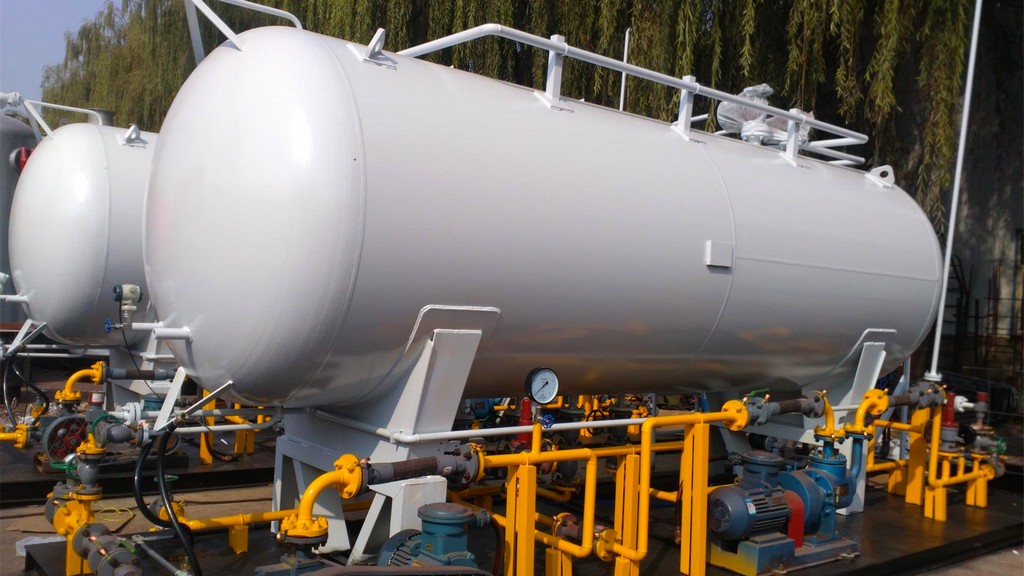
LPG tank inspection Kenya is an essential part of maintaining the mechanical integrity, legal compliance and safe operation of bulk LPG storage systems. Inspection is not simply a visual check of a tank: depending on the equipment and applicable requirements, it can involve examination of the vessel, fittings, safety devices, records, pressure integrity and operating condition.
For industrial plants, hotels, hospitals, food-processing facilities, commercial kitchens and other high-consumption LPG users, a bulk tank represents a pressure-containing asset that must remain suitable for service throughout its operating life.
Related Products
The distinction between inspection, testing and recertification is particularly important. A visual inspection does not automatically constitute a hydrostatic test, while a hydrotest does not by itself replace all other statutory or technical inspections.
The applicable inspection interval should be established from Kenyan legislation, the relevant regulatory authority, the equipment’s design and certification documentation, applicable standards, previous inspection findings and the specific service conditions.
LPG Tank Inspection Kenya: Why Statutory Inspection Matters
LPG tank inspection Kenya helps verify that a pressure vessel remains fit for its intended service and that safety-critical components continue to perform correctly. Regular examination can identify corrosion, mechanical damage, deterioration, defective fittings and other conditions before they develop into serious operational hazards.
Bulk LPG tanks operate under pressure and are exposed to environmental and mechanical stresses throughout their service life.
Potential deterioration mechanisms include:
- External corrosion
- Internal corrosion
- Coating failure
- Mechanical impact
- Foundation movement
- Support deterioration
- Valve damage
- Safety-relief-device problems
- Gauge malfunction
- Pipework stress
- Unauthorized modifications
- Fire exposure
- Excessive heat exposure
The tank itself is only one component of the pressure system.
Valves, regulators, gauges, hoses, piping, pressure-relief devices and associated equipment also require appropriate inspection and maintenance.
For this reason, a proper inspection programme should evaluate the complete LPG installation rather than concentrating only on the vessel shell.
What Is an LPG Pressure Vessel?
An LPG storage tank is a pressure vessel designed to contain liquefied petroleum gas under pressure within specified design and operating limits. Its integrity depends on the vessel shell, welds, supports, fittings, pressure-relief devices and operating conditions remaining within the manufacturer’s and design specifications.
Unlike atmospheric fuel tanks, LPG vessels are designed for pressurized service.
The LPG inside the tank exists partly as liquid and partly as vapour. As temperature changes, vapour pressure also changes.
This is why pressure-vessel integrity is fundamental to LPG safety.
A tank should never be treated as an ordinary steel storage container.
Its:
- Design pressure
- Design temperature
- Material
- Wall thickness
- Welding procedure
- Pressure-relief protection
- Supports
- Connections
all contribute to its safe operating envelope.
LPG Tank Inspection Kenya and the Difference Between Inspection, Testing and Certification
LPG tank inspection Kenya can involve several distinct activities, and inspection, hydrotesting and certification should not be used interchangeably. Inspection examines condition and compliance, testing evaluates specific performance or integrity characteristics, while certification documents that the equipment has satisfied an applicable inspection or regulatory requirement.
Inspection
Inspection can include visual and dimensional examination, checking fittings, reviewing records and identifying deterioration.
Hydrotesting
Hydrotesting involves controlled pressure testing using a suitable liquid, normally water, under an approved procedure.
Recertification
Recertification is the formal confirmation that the vessel has satisfied the applicable examination and testing requirements for continued service.
The exact process and interval should be established for the particular pressure vessel.
A tank owner should therefore ask:
What inspection is required for this vessel, by whom, under which legislation or standard, and at what interval?
That question is more useful than simply asking when the tank needs a “hydrotest.”
LPG Tank Inspection Kenya: What Should Be Examined?
A competent statutory inspection should evaluate the condition and suitability of the pressure vessel and its safety-critical components, supported by the tank’s technical and inspection history. The precise scope depends on the tank type, service history, applicable requirements and findings from previous examinations.
A typical inspection may consider:
- Tank shell
- Welded joints
- Nozzles
- Manways
- Flanges
- Valves
- Pressure-relief devices
- Pressure gauges
- Level gauges
- Temperature indicators
- Supports
- Saddles
- Foundation
- Earthing
- Corrosion protection
- Piping connections
- Identification plates
- Previous certificates
The inspector may also review the tank’s operating history.
Where deterioration has been identified previously, additional examination may be required.
External Visual Examination
External examination is one of the most important routine checks because visible corrosion, impact damage, coating deterioration and structural problems can provide early evidence of developing tank-integrity issues. The inspection should cover the vessel and associated components rather than only the painted surface.
Inspectors may look for:
- Corrosion
- Pitting
- Dents
- Gouges
- Cracks
- Distortion
- Weld deterioration
- Coating breakdown
- Rust around fittings
- Support damage
- Foundation problems
Corrosion under supports can be particularly difficult to detect if the area is inaccessible.
Where necessary, additional inspection techniques may be recommended.
Internal Examination of LPG Tanks
Internal examination can provide information that cannot be obtained from an external visual inspection, particularly where internal corrosion, contamination or deterioration is suspected. Whether internal examination is practical or required depends on vessel design, applicable regulations, service conditions and the approved inspection procedure.
An internal examination may identify:
- Corrosion
- Pitting
- Deposits
- Cracks
- Weld deterioration
- Contamination
- Internal damage
Entry into an LPG vessel is a specialist activity involving significant confined-space hazards.
The tank must be properly isolated, emptied, purged and made safe before entry.
No worker should enter an LPG vessel simply because an internal visual inspection has been requested.
LPG Tank Hydrotesting Kenya
LPG tank hydrotesting Kenya involves subjecting the pressure vessel to a controlled test pressure using a suitable liquid and an approved test procedure. Hydrotesting is a specialized pressure-integrity test and should only be performed under controlled conditions by appropriately competent personnel.
Water is commonly used because it stores substantially less energy than compressed gas during a pressure test.
The test procedure should establish:
- Test pressure
- Test medium
- Temperature
- Test duration
- Isolation requirements
- Instrumentation
- Acceptance criteria
- Safety precautions
- Pressure-release procedure
The test pressure should never be guessed from the tank’s normal operating pressure.
It must be established from the vessel’s design and applicable test requirements.
Hydrotest Interval: How Often Should an LPG Tank Be Tested?
The hydrotest interval for an LPG pressure vessel should not be selected using a universal calendar period without first identifying the applicable statutory and technical requirements for that vessel. The required interval can depend on Kenyan regulatory requirements, vessel design, inspection history, manufacturer documentation and the findings of competent examination.
This distinction matters because LPG tanks differ in:
- Design
- Construction
- Capacity
- Age
- Manufacturer
- Operating conditions
- Service environment
- Inspection history
A tank operating in a highly corrosive environment may require closer monitoring than one operating in a controlled environment.
Similarly, an inspection finding can trigger additional testing before the normal interval.
Therefore, owners should maintain a formal inspection schedule rather than relying on memory or assumptions.
LPG Tank Inspection Kenya and Statutory Examination
LPG tank inspection Kenya should be aligned with the statutory requirements applicable to pressure equipment and LPG installations in the facility. The owner or operator should establish which authority, competent person or inspection body is responsible for the relevant examination.
For industrial installations, the compliance process may involve coordination between:
- EPRA
- DOSHS
- County authorities
- KEBS
- Fire authorities
- Competent inspection professionals
- Insurance providers
Each body has a different role.
A fire-safety inspection, for example, does not automatically replace a pressure-vessel examination.
Similarly, an EPRA-related petroleum licence does not mean that every pressure-equipment examination obligation has been satisfied.
Pressure Vessel Recertification
Pressure vessel recertification confirms that a pressure vessel has undergone the examinations and tests required for continued service under the applicable regulatory or technical framework. The certificate should be supported by inspection findings and should identify the equipment clearly.
A useful certification record should allow the tank to be matched to its physical identification.
Information can include:
- Tank identification number
- Manufacturer
- Serial number
- Capacity
- Design pressure
- Test pressure
- Inspection date
- Test date
- Inspection scope
- Findings
- Defects identified
- Repairs
- Test results
- Inspector identification
- Certification status
- Next required examination
The certificate should be retained with the tank’s technical records.
What Should an LPG Tank Inspection Report Contain?
An LPG tank inspection report should provide enough technical information to identify the vessel, establish what was examined and document whether the equipment was considered suitable for continued service under the applicable requirements. A one-line statement that a tank has “passed inspection” provides little technical value.
A robust report can contain:
| Report Element | Information Expected |
|---|---|
| Equipment identification | Tank number, serial number and manufacturer |
| Location | Installation site |
| Capacity | LPG storage capacity |
| Design data | Design pressure and temperature |
| Inspection date | Date of examination |
| Inspection scope | Checks and tests performed |
| Condition | Physical condition observed |
| Thickness data | Where applicable |
| Safety devices | Condition and status |
| Pressure test | Test details where performed |
| Defects | Findings requiring attention |
| Repairs | Repairs or corrective action |
| Conclusion | Fitness or recommendation |
| Inspector | Competent person’s details |
| Certificate | Applicable certification information |
| Next inspection | Required follow-up date |
The actual reporting format should follow the applicable regulatory and professional requirements.
LPG Tank Inspection Kenya: Thickness Measurement
Wall-thickness measurement can help determine whether corrosion or metal loss has reduced the vessel’s remaining strength below acceptable limits. Where thickness deterioration is suspected or required by the inspection programme, appropriate non-destructive examination methods can be used.
Ultrasonic thickness measurement is commonly used for steel pressure vessels because it can measure remaining wall thickness without cutting the vessel.
Measurements may be taken at:
- Shell sections
- Lower portions of vessels
- Areas near supports
- Corrosion-prone locations
- Weld-adjacent areas
- Previously damaged areas
The readings should be compared with appropriate minimum allowable thickness criteria established by competent engineering assessment.
A low thickness reading should not automatically be interpreted as a failure.
The result must be assessed against the vessel’s design and applicable engineering criteria.
Corrosion and LPG Tank Service Life
Corrosion is one of the key factors that can affect pressure-vessel service life, which is why corrosion monitoring should form part of a long-term LPG tank maintenance programme. Surface rust alone does not reveal the full condition of the vessel.
Corrosion may be:
- General
- Localized
- Pitting
- Under-coating
- Under-support
- Galvanic
- Internal
The rate of deterioration is more useful than a single observation.
If historical thickness measurements are available, engineers can assess the trend and determine whether additional action is necessary.
This is one reason why inspection records should be preserved throughout the tank’s service life.
LPG Tank Safety Relief Valves
Pressure-relief devices protect LPG vessels against excessive pressure and must be maintained, inspected and serviced according to applicable requirements and manufacturer specifications. A tank should never be considered fully compliant simply because its vessel shell appears to be in good condition.
Relief-device considerations include:
- Correct rating
- Correct installation
- Condition
- Accessibility
- Discharge arrangement
- Corrosion
- Tampering
- Certification
- Maintenance history
Relief valves should not be blocked, isolated or modified without an engineered and compliant procedure.
LPG Tank Gauges and Fittings
Pressure gauges, level gauges, valves and other tank fittings are safety-critical because operators depend on them to understand and control the condition of the LPG system. Defective instrumentation can result in incorrect operating decisions.
Inspection should consider:
- Gauge readability
- Damage
- Calibration
- Valve condition
- Leakage
- Corrosion
- Correct installation
- Identification
Where an instrument is used for a safety-critical function, its calibration status should be verified according to the applicable maintenance programme.
LPG Tank Inspection Kenya: Foundation and Supports
The foundation and tank supports are structural components of the installation and should be inspected for cracking, settlement, corrosion, impact damage and other conditions that could compromise vessel stability. A pressure vessel cannot be considered fully satisfactory if its supporting structure has deteriorated.
Inspectors should look for:
- Concrete cracking
- Settlement
- Exposed reinforcement
- Corrosion
- Damaged saddles
- Loose connections
- Distortion
- Drainage problems
- Impact damage
Water accumulation around supports can contribute to corrosion and deterioration.
Good site drainage therefore forms part of long-term tank maintenance.
LPG Tank Inspection Kenya and Fire Exposure
An LPG tank that has been exposed to significant fire or excessive heat requires specialist assessment before being returned to service. Heat exposure can affect pressure-vessel materials and components even when obvious external damage appears limited.
Following a serious fire, the tank should not automatically be put back into service after cooling.
A competent assessment may be required to establish:
- Extent of heat exposure
- Metal condition
- Distortion
- Coating damage
- Valve condition
- Relief-device condition
- Structural integrity
The appropriate return-to-service procedure should be determined by qualified professionals and the applicable requirements.
LPG Tank Repairs and Alterations
Any significant repair, modification or alteration to an LPG pressure vessel should be controlled through an approved engineering process because welding or modification can affect pressure integrity. Field modifications should never be treated as ordinary maintenance when they affect the pressure boundary.
Examples include:
- Welding
- New nozzles
- Modified connections
- Structural repairs
- Replacement of major pressure-boundary components
- Changes to supports
The repair process should establish whether additional examination, testing or recertification is required before the tank returns to service.
LPG Tank Inspection Checklist
A structured inspection checklist helps operators identify physical, mechanical and documentation issues before the statutory examination. The checklist should complement, rather than replace, examination by the appropriate competent person.
| Inspection Area | What to Check |
|---|---|
| Tank shell | Corrosion, dents, damage |
| Welds | Visible deterioration |
| Supports | Corrosion and stability |
| Foundation | Cracks and settlement |
| Valves | Condition and leakage |
| Relief valves | Correct condition and certification |
| Gauges | Function and calibration |
| Level indicator | Function |
| Piping | Corrosion, damage and support |
| Coating | Deterioration |
| Earthing | Physical condition |
| Identification plate | Legibility |
| Fire protection | Availability and condition |
| Gas detection | Function where installed |
| Records | Certificates and inspection history |
Any defect should be documented and assigned an appropriate corrective action.
Insurance Implications of LPG Tank Inspection
LPG tank inspection Kenya can have important insurance implications because insurers may require evidence that pressure equipment and fire-safety systems are properly maintained and inspected. The exact requirements depend on the insurance policy, risk survey and insurer.
For an industrial facility, an insurer may request evidence such as:
- Tank inspection certificates
- Pressure-test records
- Fire-system inspection records
- Maintenance records
- Risk assessments
- Equipment certificates
- Emergency procedures
- Incident records
A business should therefore review its insurance requirements before assuming that statutory compliance alone satisfies every policy condition.
Insurance documentation and regulatory compliance overlap in some areas but are not identical.
What Happens If an Inspection Finds a Defect?
A defect identified during LPG tank inspection should be evaluated according to its severity and its effect on pressure integrity and safe operation. Not every defect requires the same response, but safety-critical defects should not be ignored.
Possible actions include:
- Immediate isolation
- Repair
- Replacement
- Additional non-destructive examination
- Thickness measurement
- Pressure testing
- Engineering assessment
- Reduced operating conditions where formally approved
- Continued monitoring
- Decommissioning
The competent inspector or engineer should determine the appropriate action.
Operators should not independently decide that a significant pressure-vessel defect is harmless.
LPG Tank Inspection Kenya: Record Keeping
Good record keeping allows owners to establish the complete history of an LPG tank and demonstrate that inspection and maintenance have been managed systematically. Records should follow the vessel throughout its service life.
A technical file can contain:
- Original manufacturer documentation
- Tank drawings
- Data plate information
- Installation records
- Previous inspection certificates
- Hydrotest records
- Thickness measurements
- Repair records
- Valve certificates
- Calibration certificates
- Maintenance records
- Incident records
- Photographs
- Recertification reports
Digital records should be backed up and linked to the physical tank identification.
Inspection Planning for Industrial Facilities
A planned inspection programme reduces the likelihood of discovering compliance problems shortly before an audit, licence renewal or insurance review. Industrial operators should maintain an asset register showing each pressure vessel and its applicable inspection requirements.
A basic register can include:
| Asset | Identification | Last Inspection | Next Action | Responsible Party |
|---|---|---|---|---|
| Bulk LPG tank | Tank ID | Recorded date | Statutory examination | Engineering team |
| Relief valve | Valve ID | Recorded date | Service/inspection | Maintenance |
| Pressure gauge | Gauge ID | Recorded date | Calibration | Maintenance |
| Gas detector | Detector ID | Recorded date | Functional test | Safety team |
| Fire equipment | Asset ID | Recorded date | Inspection/service | Fire contractor |
The actual dates and intervals must be established from the applicable requirements for each asset.
LPG Tank Inspection Kenya Before Buying a Used Tank
A used LPG tank should undergo technical due diligence before purchase or relocation because age, service history, corrosion and certification status can materially affect its suitability. A low purchase price does not necessarily mean a low lifecycle cost.
Before acquiring a used tank, investigate:
- Manufacturer
- Serial number
- Manufacturing date
- Design pressure
- Previous service
- Previous owner
- Inspection history
- Hydrotest history
- Repairs
- Corrosion history
- Thickness records
- Certification
- Pressure-relief devices
If records are missing, the cost and feasibility of establishing the tank’s condition should be evaluated before purchase.
Recertification After Long-Term Inactivity
A tank that has been out of service for an extended period should not automatically return to operation simply because it was previously certified. Its condition, storage environment, inspection status and applicable requirements should be reviewed before recommissioning.
Long periods of inactivity can introduce issues such as:
- Corrosion
- Water ingress
- Deteriorated seals
- Valve problems
- Documentation gaps
- Expired certification
- Foundation deterioration
The recommissioning process should therefore include appropriate inspection and testing.
When Should an LPG Tank Be Replaced?
An LPG tank should be considered for replacement when its condition, remaining wall thickness, repair history, design limitations or inspection findings indicate that continued operation is no longer economically or technically appropriate. Age alone should not be the only basis for replacement.
A tank may become unsuitable because of:
- Excessive corrosion
- Severe pitting
- Structural damage
- Repeated repairs
- Fire exposure
- Unacceptable thickness
- Obsolete fittings
- Lack of traceable documentation
- Inability to satisfy current applicable requirements
The decision should be based on competent engineering assessment.
Professional LPG Tank Inspection Support
Professional inspection and maintenance support helps LPG operators identify defects, organize technical records and prepare pressure equipment for applicable statutory examinations. A competent engineering team can also help coordinate corrective works where an inspection identifies problems.
Megtraco Kenya Ltd works with commercial and industrial LPG systems and supplies equipment for bulk storage, piping, detection and fire protection.
For facilities requiring customized engineering solutions, the assessment should begin with the existing installation, consumption requirements, tank documentation and compliance status.
Frequently Asked Questions
How often should an LPG tank be inspected in Kenya?
The applicable inspection interval depends on the vessel, regulatory requirements, applicable standards, manufacturer documentation, operating conditions and previous inspection findings. Owners should confirm the required interval for the specific pressure vessel rather than relying on a generic number.
What is a hydrotest?
A hydrotest is a controlled pressure test in which a vessel or piping system is filled with a suitable liquid and subjected to a specified test pressure under an approved procedure.
Is a visual inspection the same as hydrotesting?
No. Visual inspection and hydrotesting evaluate different aspects of equipment integrity. One does not automatically replace the other.
What is pressure vessel recertification?
Pressure vessel recertification is the formal documentation that a pressure vessel has satisfied the applicable examination and testing requirements for continued service.
What should an LPG tank inspection report contain?
It should identify the vessel, document the inspection scope and findings, record relevant tests and measurements, identify defects and state the appropriate conclusion or recommendation.
Does insurance require LPG tank inspection?
Insurance requirements vary by policy and insurer, but industrial insurers may require evidence of pressure-vessel inspection, fire-system maintenance and other safety controls.
Can a damaged LPG tank be repaired?
Some tanks can be repaired following an appropriate engineering assessment and approved repair procedure. Pressure-boundary repairs should never be undertaken as informal maintenance.
Why is tank wall thickness important?
Wall thickness provides evidence of how much material remains in the pressure boundary and can help engineers assess corrosion rates and remaining structural integrity.
Does an old LPG tank automatically need replacement?
Not necessarily. Age should be considered together with design, condition, inspection history, corrosion, repairs, remaining thickness and applicable requirements.
Who should inspect an LPG pressure vessel?
The inspection should be carried out by an appropriately competent person or inspection organization authorized or recognized for the applicable examination under the relevant Kenyan requirements.
Engineering Conclusion
LPG tank inspection Kenya is a continuing engineering and compliance responsibility rather than a one-time administrative exercise. Bulk LPG tanks are pressure vessels, and their safe operation depends on maintaining the vessel shell, fittings, safety devices, foundations, piping and fire-protection systems in suitable condition.
The most important principles are:
- Know the tank’s design information.
- Maintain complete inspection records.
- Establish the applicable inspection interval.
- Do not confuse visual inspection with hydrotesting.
- Use competent personnel for statutory examinations.
- Investigate corrosion and thickness loss.
- Maintain pressure-relief devices.
- Document repairs and modifications.
- Verify certification before returning inactive tanks to service.
- Consider insurance documentation requirements.
- Maintain the entire LPG installation, not only the storage vessel.
For a commercial or industrial operator, an organized inspection programme can reduce unplanned shutdowns, improve safety and provide stronger evidence of compliance.
Megtraco Kenya Ltd can support businesses with LPG equipment, engineering, detection and fire-safety requirements, including industrial LPG equipment and specialist LPG system components.
Where a facility needs to review an existing installation, replace equipment or plan a new bulk LPG system, request a professional engineering consultation so the project can be assessed according to its actual operating and compliance requirements.
Your Trusted LPG & Fire Safety Engineering Partner in East Africa
Whether you’re designing a new LPG installation, upgrading industrial gas systems, or enhancing fire safety compliance, Megtraco Kenya Ltd delivers certified engineering solutions backed by decades of expertise. From LPG equipment supply and pipeline installations to fire suppression and detection systems, our experienced team provides reliable solutions for commercial, industrial, and institutional projects across East Africa.
Contact us today for professional consultation, engineering support, or a customized quotation.
WHY CHOOSE MEGTRACO KENYA LTD
You May Also Like


- ✔ Established Since 1969 – Decades of proven engineering excellence.
- ✔ KEBS Certified Products – Guaranteed quality and compliance with regional standards.
- ✔ EPRA Licensed LPG Engineering Company – Fully certified to design, install, and commission.
- ✔ Industrial & Commercial LPG Specialists – Scaled to handle heavy-duty thermal requirements.
- ✔ Fire Suppression & Fire Detection Experts – End-to-end asset protection.
- ✔ Regional Operational Footprint – Serving Nairobi, Mombasa, Kisumu, Nakuru, Eldoret, Thika, Machakos, East Africa, and beyond.
Contact Megtraco Kenya Ltd
- Email: sales@megtracokenya.com
- Sales: +254 725 870 114
- Technical: +254 733 721 598
- WhatsApp: +254 799 086 323
- Location: Nairobi, Kenya – Serving East Africa
- Website: https://megtracokenya.com
Request a Quote today and partner with East Africa’s trusted LPG and fire safety engineering company since 1969.
