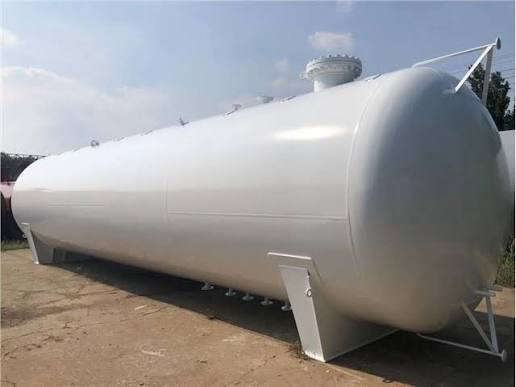
Bulk LPG tank siting determines how safely LPG can be stored, transferred and accessed during normal operation and emergencies. Separation from buildings, property boundaries, ignition sources, traffic routes and other hazards must be assessed during engineering design rather than decided after a tank has already been purchased.
For an industrial or commercial facility, the tank location affects much more than available space.
Related Products
It influences:
- Fire risk
- LPG delivery operations
- Emergency access
- Fire-fighting arrangements
- Pipeline length
- Pressure drop
- Vehicle movement
- Maintenance access
- Security
- Regulatory inspection
- Future expansion
A tank that fits physically on a property may still be unsuitable from an engineering and safety perspective.
This is why LPG tank separation distance should be treated as a design parameter.
What Is LPG Tank Siting?
LPG tank siting is the engineering process of selecting the location of an LPG storage vessel while maintaining appropriate separation from buildings, property boundaries, ignition sources, public areas and other hazards. The objective is to limit the consequences of a leak, fire or other abnormal event and maintain safe access for operation and emergency response.
The tank should not simply be placed in the largest available open area.
The design should consider the complete LPG system, including:
- Storage vessel
- Filling connection
- Pressure relief devices
- Isolation valves
- LPG piping
- Vaporizers
- Pumps
- Regulators
- Fire protection
- Gas detection
- Delivery vehicles
The surrounding environment is equally important.
LPG Tank Separation Distance: Why It Matters
Separation distance provides physical space between an LPG hazard and people, buildings, ignition sources or property that could be affected by a release or fire. The required distance is determined by applicable regulations, standards, tank configuration, capacity and site conditions.
LPG is stored as a liquefied gas under pressure.
If LPG escapes, the liquid can rapidly vaporize and form a flammable gas-air mixture.
This creates several hazards:
- Flash fire
- Jet fire
- Pool fire
- Vapour cloud ignition
- Pressure release
- BLEVE risk in severe fire exposure
The purpose of siting controls is therefore not simply to make the installation look orderly.
It is to create sufficient separation and control exposure.
LPG Tank Siting in Kenya
In Kenya, bulk LPG tank siting should be designed against the applicable petroleum, LPG, fire-safety, occupational-safety and technical requirements rather than relying on a generic distance copied from another country. The applicable requirements should be confirmed for the specific tank, installation and project.
The regulatory framework can involve:
- EPRA
- KEBS
- Fire-safety authorities
- DOSHS
- County authorities
- Applicable planning authorities
International engineering standards can also provide technical guidance where applicable.
For LPG installations, NFPA 58 is an important international reference for LP-Gas storage and handling. However, it should be applied alongside Kenyan regulatory requirements rather than treated as a replacement for them.
What Determines the Required LPG Tank Separation Distance?
There is no single separation distance that can safely be applied to every LPG tank. The required clearance depends on factors such as storage capacity, vessel type, installation configuration, surrounding exposures and the specific regulatory framework applicable to the project.
Key factors include:
Tank capacity
Larger storage vessels can represent a greater potential inventory and may have different separation requirements.
Above-ground or underground installation
The physical configuration of the tank can change the applicable requirements.
Nearby buildings
The occupancy and construction of adjacent buildings matter.
Property boundary
The tank’s relationship with neighbouring properties must be considered.
Ignition sources
Boilers, burners, electrical equipment and other ignition sources can influence the site layout.
Public access
Areas accessible to customers, visitors or members of the public require careful consideration.
Vehicle traffic
Delivery trucks, forklifts and other vehicles introduce collision and operational risks.
Fire protection
The fire-protection design can influence the overall risk assessment, although fire protection should never be used to justify ignoring mandatory separation requirements.
LPG Tank Separation Distance From Buildings
LPG tanks should be positioned so that a release or fire does not unnecessarily expose occupied buildings and critical infrastructure. The applicable separation depends on the tank’s characteristics and the governing standard, so the final distance should be established during professional design.
Buildings near LPG tanks can include:
- Factories
- Offices
- Warehouses
- Hotels
- Kitchens
- Hospitals
- Schools
- Workshops
- Plant rooms
The designer should also consider building openings.
These can include:
- Doors
- Windows
- Ventilation openings
- Air intakes
- Mechanical ventilation systems
A gas cloud can migrate toward openings and potentially enter an occupied structure.
Therefore, measuring only the distance to the nearest wall may not provide a complete risk assessment.
LPG Tank Separation Distance From Property Boundaries
Property boundary clearance helps reduce the possibility that an LPG release or fire will expose neighbouring property and helps maintain appropriate emergency access. The required boundary distance must be established using the applicable Kenyan requirements and the tank’s technical characteristics.
This becomes especially important in dense commercial and industrial areas.
A facility may have:
- A neighbouring factory
- Residential property
- A public road
- Commercial premises
- Utility infrastructure
- Pedestrian areas
A tank positioned too close to the boundary can create several problems.
It may:
- Increase third-party exposure
- Restrict emergency access
- Complicate future development
- Create approval difficulties
- Reduce maintenance space
For this reason, boundary clearance should be checked before purchasing the tank.
LPG Tank Separation Distance From Ignition Sources
Ignition sources should be controlled and separated from LPG storage and transfer areas because released LPG can ignite if it encounters a sufficient ignition source. The site assessment should identify both obvious and less obvious sources of ignition.
Potential ignition sources include:
- Boilers
- Furnaces
- Burners
- Welding areas
- Open flames
- Hot surfaces
- Electrical equipment
- Engines
- Generators
- Vehicle exhausts
- Smoking areas
The assessment should consider normal operation as well as maintenance activities.
For example, a welding workshop may not operate continuously, but hot work can introduce a significant temporary ignition source.
A good LPG site design therefore includes operational controls, not just physical distance.
LPG Tank Separation Distance and Vehicle Traffic
Vehicle impact is an important LPG tank siting consideration because a collision with the vessel, piping or valves could cause a serious release. Tank locations should therefore be protected from uncontrolled vehicle movement and designed with suitable access and impact protection where required.
Potential sources of vehicle movement include:
- LPG delivery trucks
- Forklifts
- Trucks
- Staff vehicles
- Customer vehicles
- Construction equipment
Where vehicle traffic is unavoidable, the engineering design can incorporate:
- Bollards
- Crash barriers
- Kerbs
- Controlled traffic routes
- Restricted-access zones
- Clear signage
The protection should be designed around the actual vehicle type and movement pattern.
LPG Tank Filling Connections Need Careful Siting
The tank itself is not the only component requiring separation and access consideration; filling connections, transfer points and associated valves also need to be safely located. Delivery operations should allow LPG transfer without creating unnecessary exposure to buildings, pedestrians or traffic.
A bulk LPG installation should provide a practical delivery arrangement.
The LPG delivery vehicle should be able to:
- Approach safely.
- Stop in a controlled location.
- Connect the filling hose.
- Transfer LPG safely.
- Disconnect.
- Leave without reversing through hazardous areas where avoidable.
The filling point should also be accessible to trained personnel and protected from unauthorized interference.
LPG Tank Separation Distance and Emergency Access
Emergency responders need safe and practical access to the LPG installation without being forced through unnecessary exposure zones. The tank location should therefore be considered as part of the facility’s emergency-response strategy.
Emergency planning should consider:
- Fire-engine access
- Emergency shutdown
- Isolation valves
- Fire-water access
- Escape routes
- Muster points
- Tank visibility
- Emergency signage
The facility should also have procedures for:
- LPG leaks
- Fire
- Emergency shutdown
- Tank exposure to fire
- Vehicle collision
- Evacuation
A technically compliant tank that cannot be reached safely during an emergency is not a well-designed installation.
LPG Tank Siting and Fire Protection
Fire protection should complement separation distances rather than being treated as a substitute for mandatory clearances. The design may require extinguishing equipment, fire-water systems, detection or other measures based on the facility’s risk profile.
Potential systems include:
- Portable extinguishers
- Hydrant systems
- Fire-water spray
- Automatic suppression
- Gas detection
- Fire alarms
- Emergency shutdown systems
Megtraco provides commercial fire safety systems for engineered applications.
International standards such as NFPA 58 can provide guidance for LPG storage and protection, while NFPA 13 may apply to sprinkler systems and NFPA 2001 to specific clean-agent suppression systems.
The actual fire-protection design should be developed according to the installation’s hazards.
Above-Ground vs Underground LPG Tanks
Above-ground and underground LPG tanks have different engineering, inspection, protection and installation considerations. The choice should be based on site constraints, regulatory requirements, access, corrosion protection, maintenance and lifecycle considerations.
| Consideration | Above-Ground Tank | Underground Tank |
|---|---|---|
| Visibility | Easy to inspect visually | More limited |
| Maintenance access | Generally straightforward | More involved |
| Impact exposure | Requires consideration | Reduced in many arrangements |
| Corrosion control | External protection required | Specialized protection required |
| Installation | Generally simpler | More extensive civil works |
| Leak monitoring | Direct access | Requires appropriate detection/inspection |
| Space use | Greater visible footprint | Can preserve surface space |
| Emergency access | Direct | Different response considerations |
The choice should be made during the engineering design stage rather than after site construction has begun.
LPG Tank Siting and Tank Orientation
Tank orientation should support safe access to valves, fittings, gauges and pressure-relief equipment while maintaining the required clearances and installation stability. The orientation should also account for filling, inspection and maintenance operations.
The designer should consider:
- Tank length
- Diameter
- Supports
- Foundation
- Valve locations
- Filling connection
- Pressure relief
- Instrument access
- Vehicle access
- Maintenance clearance
A tank may technically fit within a site but leave insufficient working space around important components.
LPG Tank Foundation and Structural Considerations
A bulk LPG tank requires a suitable foundation capable of supporting the vessel and its operating loads while maintaining stability over its service life. Foundation design should account for tank weight, operating conditions, support arrangement and local ground conditions.
The engineering assessment may consider:
- Empty tank weight
- LPG operating weight
- Wind loading
- Seismic considerations where applicable
- Support loads
- Foundation bearing capacity
- Drainage
- Settlement
- Corrosion exposure
The foundation should be completed before the tank is positioned.
Improvised concrete supports or unverified foundations should be avoided.
LPG Tank Siting and Drainage
Site drainage should prevent LPG-related liquids, water accumulation and other hazards from creating unsafe conditions around the storage installation. Drainage design should be coordinated with the site layout and applicable environmental and fire-safety requirements.
The tank area should not become:
- A water collection point
- An oil accumulation area
- A waste storage area
- A vehicle parking area
Good housekeeping is part of LPG safety.
Vegetation should also be controlled so that the tank and associated equipment remain accessible for inspection and emergency response.
LPG Tank Siting Checklist
A preliminary siting assessment should confirm separation, access, hazards and equipment arrangement before detailed construction begins. The following checklist provides a practical engineering screening tool, although final clearances must come from the applicable requirements for the specific installation.
| Site Factor | Engineering Check |
|---|---|
| Tank capacity | Confirm vessel size and LPG inventory |
| Property boundary | Verify applicable boundary clearance |
| Buildings | Identify occupied and critical structures |
| Openings | Check doors, windows and air intakes |
| Ignition sources | Map boilers, burners, generators and hot work |
| Roads | Assess public and internal traffic |
| Delivery vehicle | Confirm safe filling access |
| Emergency access | Confirm fire-service access |
| Electrical equipment | Identify potential ignition sources |
| Drainage | Confirm appropriate site drainage |
| Fire protection | Determine required protection |
| Security | Prevent unauthorized access |
| Maintenance | Maintain access to valves and equipment |
| Future expansion | Protect required safety zones |
LPG Tank Siting: A Worked Layout Example
Consider a manufacturing facility planning to install a bulk LPG tank to supply an industrial heating process. Before selecting the tank location, the engineering team maps the factory building, property boundary, boiler room, delivery road, electrical equipment and fire-service access.
The initial site may appear to have three possible locations.
Location A: Behind the boiler house
This may appear convenient because the LPG pipe would be short.
However, the boiler house contains significant heat and ignition sources.
The location may therefore be unsuitable or require substantial redesign.
Location B: Near the property boundary
This may free valuable production space.
However, the tank could create exposure concerns for neighbouring property and may not satisfy the applicable boundary clearance.
Location C: Dedicated external LPG area
This may require a longer pipeline but provides better separation, delivery access and emergency control.
The third option may therefore provide the better engineering solution even if the initial construction cost is higher.
This illustrates why the shortest LPG pipe is not necessarily the safest or most economical LPG layout.
LPG Tank Siting and Pipeline Length
Tank location affects pipeline length, pressure drop and installation cost, but pipeline optimization should never override mandatory safety separation. The objective is to find the safest practical location that also provides an efficient gas distribution route.
Longer piping can introduce:
- Greater pressure drop
- More fittings
- More supports
- Higher material cost
- Additional inspection points
However, moving a tank dangerously close to a building simply to save pipework is poor engineering.
A better approach is:
Safety constraints first → process requirements second → piping optimization third.
Megtraco can assess advanced LPG piping systems where appropriate to the project design.
LPG Tank Siting and Vaporizers
High-demand LPG systems may require vaporizers, and their location must be considered together with the storage tank and gas distribution system. Vaporizer placement should account for access, ventilation, ignition sources, LPG piping and the manufacturer’s installation requirements.
A vaporizer can be used when natural vaporization from the tank cannot meet the required gas demand.
Factors affecting vaporizer selection include:
- Peak LPG demand
- Operating pressure
- Ambient conditions
- LPG composition
- Required outlet pressure
- Duty cycle
- Redundancy requirements
Megtraco supplies high-performance LPG vaporizers for high-demand commercial and industrial systems.
LPG Tank Siting and Leak Detection
Gas detection can provide an additional layer of protection by identifying abnormal LPG concentrations before an incident escalates. Detector locations should be selected based on LPG behaviour, ventilation, potential release points and the geometry of the installation.
LPG vapour is generally heavier than air.
It can therefore accumulate in low areas if ventilation is inadequate.
A site assessment should identify:
- Pits
- Drains
- Trenches
- Depressions
- Enclosed spaces
- Building openings
Detection should be integrated with the broader safety system where appropriate.
Megtraco provides industrial gas leak detection for LPG and other gas-safety applications.
Regulatory Compliance for LPG Tank Siting in Kenya
LPG tank siting should be verified against the current Kenyan regulatory and standards framework before construction. EPRA requirements, KEBS standards, fire-safety requirements and occupational-safety obligations can all influence the final installation.
Relevant bodies include:
EPRA
The Energy and Petroleum Regulatory Authority regulates applicable petroleum activities and LPG-related licensing.
KEBS
The Kenya Bureau of Standards establishes and administers applicable standards and conformity requirements.
DOSHS
The Directorate of Occupational Safety and Health Services is relevant to workplace health and safety.
Fire authorities
Fire-safety inspection and requirements apply according to the relevant jurisdiction and facility.
The engineering team should identify the exact requirements applicable to the proposed installation.
Why You Should Not Copy LPG Distances From the Internet
Generic LPG separation distances found online can be misleading because requirements vary according to tank capacity, installation type, regulatory jurisdiction and the specific hazard being measured. A distance appropriate for one vessel or jurisdiction may not be appropriate for another.
Before finalizing a site layout, confirm:
- Tank type
- Tank capacity
- Installation arrangement
- Applicable Kenyan requirements
- Applicable standard
- Nearby exposures
- Fire-protection requirements
A professional site drawing should show the relevant safety zones.
Common LPG Tank Siting Mistakes
Poor LPG tank siting is often caused by treating the storage vessel as an isolated piece of equipment rather than as part of a complete hazardous installation. The most common mistakes occur during early site planning.
Putting the tank beside the boiler
This reduces pipe length but increases ignition-source exposure.
Using the property boundary as available space
The boundary is a compliance constraint, not simply unused land.
Ignoring vehicle movement
A tank may be adequately separated from buildings but still vulnerable to vehicle impact.
Forgetting maintenance access
Valves and instruments need safe access throughout the equipment’s life.
Installing the tank before finalizing the design
The tank location should be determined from the complete system layout.
Treating fire extinguishers as a substitute for separation
Portable equipment does not eliminate the need for required separation.
Ignoring future expansion
New buildings, roads or equipment should not be allowed to encroach on the LPG safety zone.
Failing to map low points
LPG vapour can accumulate in poorly ventilated low areas.
Professional LPG Tank Siting Workflow
A professional siting study should move from site data to hazard identification, regulatory clearance, equipment arrangement and final engineering drawings. This reduces the risk of purchasing a tank that cannot legally or safely be installed at the intended location.
A practical workflow is:
Site survey → LPG demand assessment → Tank selection → Hazard mapping → Separation assessment → Piping optimization → Fire-safety design → Technical drawings → Regulatory review → Installation
During the survey, the engineer should document:
- Property dimensions
- Existing buildings
- Roads
- Utilities
- Electrical equipment
- Ignition sources
- Drainage
- Public access
- Fire-service access
- Proposed LPG delivery route
The final site plan should clearly identify the LPG installation and relevant safety zones.
Frequently Asked Questions About LPG Tank Siting
How far should an LPG tank be from a building?
There is no single distance that applies to every LPG tank. The required separation depends on tank capacity, installation type, surrounding exposure and the applicable Kenyan requirements and standards.
How far should a bulk LPG tank be from a property boundary?
The required boundary clearance must be determined from the applicable regulations and standards for the specific tank and installation. It should be established during engineering design rather than estimated from generic online guidance.
Can an LPG tank be installed next to a boiler?
An LPG tank should not simply be placed next to a boiler because the boiler is a significant ignition and heat source. The tank and combustion equipment must be arranged according to applicable separation and safety requirements.
Can an LPG tank be installed near a road?
It may be possible where the installation meets applicable separation, access and impact-protection requirements. Vehicle movement should be assessed during the site design.
Does an LPG tank need a fire extinguisher?
Appropriate fire-protection equipment is normally part of an LPG installation’s safety strategy, but the required equipment depends on the facility and applicable fire-safety requirements. Larger installations may require more comprehensive fire protection.
Can an LPG tank be installed underground?
Underground LPG storage is possible in some applications but requires a different engineering approach to above-ground storage. Corrosion protection, inspection, access, construction and applicable regulatory requirements must be addressed.
Why is LPG tank siting important?
Correct siting limits exposure to buildings, people, ignition sources and neighbouring property while improving emergency access and operational safety. It also helps ensure that the installation can satisfy applicable regulatory requirements.
Does EPRA approve LPG tank locations?
Applicable petroleum regulatory requirements can affect LPG installation siting, but the complete approval pathway can involve multiple authorities and technical requirements. The project should therefore be assessed as a complete installation rather than relying on one approval alone.
Should LPG tank distance be measured from the tank or its fittings?
The relevant measurement depends on the applicable standard and the specific exposure being assessed. Tank, filling, piping, relief-device and transfer arrangements should all be considered during the engineering assessment.
Can a longer LPG pipeline be safer than moving the tank closer?
Yes. Where mandatory separation is maintained, a longer properly designed pipeline can be preferable to placing the tank too close to buildings or ignition sources simply to reduce pipe length.
Engineering Conclusion
Bulk LPG tank siting should be treated as an engineering and regulatory design exercise, not simply a matter of finding an unused section of land. Separation from buildings, property boundaries, ignition sources, roads and public areas must be considered alongside emergency access, fire protection, delivery operations and maintenance.
The correct sequence is:
Assess the site → identify hazards → determine applicable clearances → select the tank → design the system → verify compliance → install and commission.
The exact separation distances must be established from the applicable Kenyan requirements and the specific tank and installation.
For industrial and commercial projects, this can involve coordinating:
- Bulk LPG storage
- LPG tank foundations
- Filling connections
- Piping
- Vaporizers
- Gas trains
- Leak detection
- Fire suppression
- Emergency shutdown
- Vehicle access
- Regulatory compliance
Megtraco Kenya Ltd provides professional LPG engineering consultation for businesses planning new LPG storage and distribution systems across Kenya and East Africa.
For a site-specific assessment, request a customized quotation and provide the proposed tank capacity, site layout, LPG consumption and nearby buildings or hazards.
Your Trusted LPG & Fire Safety Engineering Partner in East Africa
Whether you’re designing a new LPG installation, upgrading industrial gas systems, or enhancing fire safety compliance, Megtraco Kenya Ltd delivers certified engineering solutions backed by decades of expertise. From LPG equipment supply and pipeline installations to fire suppression and detection systems, our experienced team provides reliable solutions for commercial, industrial, and institutional projects across East Africa.
Contact us today for professional consultation, engineering support, or a customized quotation.
WHY CHOOSE MEGTRACO KENYA LTD
You May Also Like

- ✔ Established Since 1969 – Decades of proven engineering excellence.
- ✔ KEBS Certified Products – Guaranteed quality and compliance with regional standards.
- ✔ EPRA Licensed LPG Engineering Company – Fully certified to design, install, and commission.
- ✔ Industrial & Commercial LPG Specialists – Scaled to handle heavy-duty thermal requirements.
- ✔ Fire Suppression & Fire Detection Experts – End-to-end asset protection.
- ✔ Regional Operational Footprint – Serving Nairobi, Mombasa, Kisumu, Nakuru, Eldoret, Thika, Machakos, East Africa, and beyond.
Contact Megtraco Kenya Ltd
- Email: sales@megtracokenya.com
- Sales: +254 725 870 114
- Technical: +254 733 721 598
- WhatsApp: +254 799 086 323
- Location: Nairobi, Kenya – Serving East Africa
- Website: https://megtracokenya.com
Request a Quote today and partner with East Africa’s trusted LPG and fire safety engineering company since 1969.
