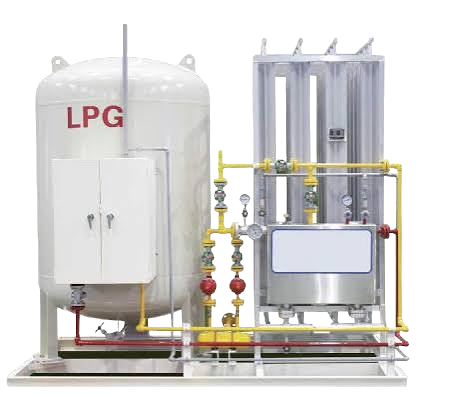
Billing tenants for gas is one of the biggest challenges for landlords managing apartment LPG systems. Choosing the right billing method affects tenant satisfaction, revenue recovery, and the overall efficiency of property management. A fair and transparent billing system ensures tenants pay for what they consume while landlords recover their LPG costs accurately.
As more apartment buildings, gated communities, and mixed-use developments adopt central LPG systems, landlords must decide how to recover gas costs from tenants. The three most common methods are:
Related Products

- Flat-rate billing
- Shared gas bills
- Prepaid gas metering
Each method has advantages and disadvantages. The best option depends on the size of the property, the number of tenants, LPG consumption patterns, and the level of management control required.
Understanding billing tenants for gas helps landlords compare these options before investing in a long-term gas management solution.
Modern LPG reticulation systems also make it easier to implement accurate metering and reduce disputes. Megtraco Kenya Ltd provides professional LPG reticulation systems, prepaid gas metering solutions, and bulk LPG installations for residential and commercial developments.
Billing Tenants for Gas: Why Choosing the Right Billing Method Matters
Billing tenants for gas fairly improves transparency, reduces disagreements, and helps landlords recover LPG costs without unnecessary administration. Selecting the right billing method benefits both property owners and tenants.
Every apartment building has different gas consumption patterns.
For example:
- A family of six may consume significantly more LPG than a single occupant.
- Some tenants cook several meals every day.
- Others spend most of their time away from home.
Charging every tenant the same amount may appear simple, but it does not always reflect actual usage.
When billing tenants for gas, landlords should consider:
- Number of apartments
- Average LPG consumption
- Tenant occupancy
- Billing administration costs
- Revenue collection efficiency
Choosing the right billing model improves trust while reducing financial losses.
Billing Tenants for Gas: Common Problems Landlords Face
Billing tenants for gas becomes difficult when landlords cannot accurately measure individual consumption or recover LPG costs on time.
Some of the most common challenges include:
- Estimated monthly bills
- Late payments
- Billing disputes
- Shared consumption disagreements
- Manual meter reading errors
Without an accurate system, landlords often spend considerable time resolving complaints instead of managing the property.
Billing Tenants for Gas: Understanding Flat Rate Billing
Billing tenants for gas using a flat-rate system is one of the simplest approaches because every tenant pays the same fixed amount each month regardless of actual LPG usage.
Flat-rate billing is common in smaller apartment developments where installing individual meters may not initially seem cost-effective.
For example:
A landlord charges every apartment:
KES 2,000 per month
Whether a tenant consumes:
- KES 1,200 worth of LPG
- KES 2,000 worth of LPG
- KES 3,000 worth of LPG
the monthly charge remains exactly the same.
This approach simplifies administration but introduces fairness concerns.
Billing Tenants for Gas: Advantages of Flat Rate Billing
Some landlords prefer flat-rate billing because it offers:
- Simple administration
- Predictable monthly income
- Minimal billing calculations
- No monthly meter reading
For very small apartment buildings with similar occupancy levels, this system may work reasonably well.
Billing Tenants for Gas: Disadvantages of Flat Rate Billing
One major limitation of billing tenants for gas using a flat-rate model is that tenants pay the same amount regardless of actual LPG consumption.
This can create problems when:
- Some tenants cook more frequently
- Apartment occupancy varies
- Vacant units remain charged
- Residents question billing fairness
Over time, these concerns can reduce tenant satisfaction.
Billing Tenants for Gas: Understanding Shared Gas Bills
Billing tenants for gas through a shared billing system divides the total LPG cost among all apartments using a fixed formula. While this approach is more flexible than flat-rate billing, it may still create disputes if tenants consume different amounts of gas.
Under a shared billing arrangement:
The building receives one LPG delivery.
At the end of the month:
- Total LPG cost is calculated.
- The cost is divided among tenants.
The allocation may be based on:
- Equal shares
- Apartment size
- Number of occupants
- Lease agreements
Although simple to implement, shared billing does not measure actual LPG consumption by each apartment.
Billing Tenants for Gas: Problems With Shared Billing
Property managers who are billing tenants for gas using shared bills often experience disagreements when tenants believe they are paying for someone else’s usage.
Common issues include:
- Heavy users paying the same as light users
- Occupancy changes during the month
- Difficulty explaining charges
- Complaints about fairness
These disputes consume management time and may delay payment collection.
Megtraco Kenya Ltd supplies prepaid gas metering solutions that help landlords replace estimated billing with accurate, consumption-based charging.
Billing Tenants for Gas: Why Prepaid Gas Meters Are Becoming Popular
Billing tenants for gas with prepaid meters allows every resident to pay only for the LPG they actually consume. This creates a transparent billing system while improving revenue collection and reducing disputes.
Instead of receiving a monthly bill after using gas, tenants purchase LPG credit before consumption.
As gas is used:
- Credit is deducted automatically.
- Consumption is recorded accurately.
- Landlords recover payment in advance.
This system benefits both landlords and tenants by creating a fair and accountable billing process.