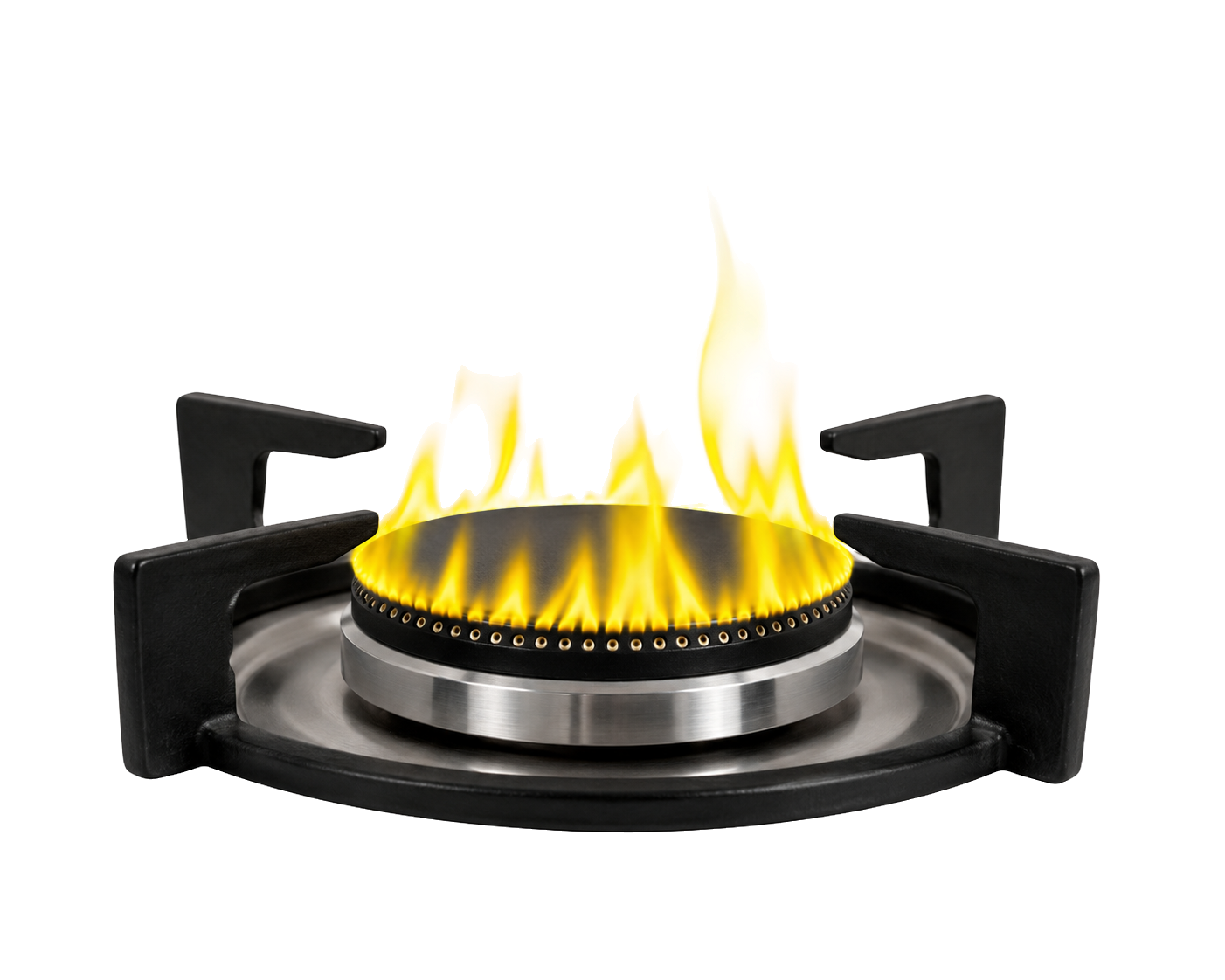
A yellow flame on gas cooker burners is an indication that the LPG combustion process is not operating correctly. A properly functioning LPG burner should produce a stable blue flame because the fuel and air mixture is balanced to achieve complete combustion.
When a gas cooker produces a yellow flame instead of a blue flame, it is usually telling you that the burner is receiving an incorrect air-to-gas ratio, insufficient oxygen, unstable LPG pressure, or has a maintenance issue affecting combustion performance.
Related Products
For homeowners, the first signs are often:
- Black soot on cooking pots
- Longer cooking times
- Weak heating performance
- Increased LPG consumption
For commercial kitchens, the consequences can be more significant because multiple LPG appliances operate continuously. Hotels, restaurants, hospitals, schools, and food processing facilities depend on efficient combustion to control energy costs and maintain reliable operations.
A persistent yellow flame on gas cooker appliances should not be ignored because incomplete combustion reduces heat output and may indicate a wider LPG appliance or installation problem.
Megtraco Kenya Ltd provides our LPG engineering solutions for residential, commercial, and industrial users requiring safe LPG installations, professional system design, and reliable gas distribution solutions across Kenya and East Africa.
What Causes Yellow Flame on Gas Cooker Burners?
A yellow flame on gas cooker burners occurs when LPG does not receive enough oxygen for complete combustion. The imbalance between fuel supply and air intake causes incomplete burning, producing a yellow or orange flame instead of the expected blue flame.
Efficient LPG combustion requires three main conditions:
- Correct LPG pressure
- Adequate air supply
- Clean and properly adjusted burner components
When these conditions are achieved, LPG burns efficiently:
LPG + Oxygen → Carbon Dioxide + Water Vapour + Heat
A blue flame indicates that most of the LPG is converted into useful heat.
A yellow flame indicates that some fuel is not fully burned, leading to:
- Carbon deposits
- Soot formation
- Reduced thermal efficiency
- Increased fuel usage
The problem can occur in both domestic appliances and large commercial LPG systems.
Why Does a Yellow Flame on Gas Cooker Produce Black Soot?
A yellow flame on gas cooker appliances produces black soot because the LPG combustion process is incomplete. Carbon particles that should have converted into carbon dioxide remain unburned and attach themselves to cookware and appliance surfaces.
The most visible sign is usually a blackened sufuria or cooking pot.
Common indicators include:
| Observation | Possible Cause |
|---|---|
| Black soot under cookware | Incomplete combustion |
| Yellow or orange flame | Poor air-to-gas mixture |
| Weak flame output | Low LPG pressure |
| Flame lifting from burner | Excess air supply |
| Uneven flame pattern | Blocked burner ports |
Soot formation means energy is being wasted. Instead of transferring maximum heat to cookware, some LPG energy is lost through inefficient burning.
Restoring a blue flame improves:
- Cooking speed
- LPG efficiency
- Appliance performance
- Kitchen cleanliness
7 Common Causes of Yellow Flame on Gas Cooker Problems
Yellow Flame on Gas Cooker Caused by Dirty Burner Ports
Dirty or blocked burner ports are among the most common causes of a yellow flame on gas cooker appliances.
Burner openings can become restricted by:
- Food particles
- Grease deposits
- Dust
- Cleaning residue
- Carbon buildup
When burner holes are blocked, LPG cannot mix properly with air before ignition.
This causes:
- Uneven flame distribution
- Poor combustion
- Reduced heating efficiency
- Yellow LPG flame formation
Commercial kitchens experience this problem more frequently because burners are exposed to:
- Heavy cooking schedules
- Oils and fats
- Continuous operation
Regular cleaning and inspection help maintain correct burner performance.
Yellow Flame on Gas Cooker Due to Incorrect Air-to-Gas Ratio
The air-to-gas ratio controls how much oxygen mixes with LPG before combustion. A yellow flame develops when the burner receives too much fuel or insufficient air.
The correct ratio depends on:
- Burner design
- Injector size
- LPG pressure
- Appliance adjustment
- Installation altitude
Kenya’s varied geography can affect combustion performance. Appliances operating in high-altitude areas may require professional adjustment because reduced air density changes combustion conditions.
A burner that is incorrectly adjusted may continue operating but consume more LPG while producing less heat.
Yellow Flame on Gas Cooker Caused by Low LPG Pressure
Low LPG pressure can create a yellow flame on gas cooker burners because the appliance cannot maintain the correct combustion conditions.
Common causes include:
- Empty or nearly empty cylinders
- Incorrect regulator selection
- Faulty pressure regulators
- Blocked gas lines
- Undersized piping
- Excessive appliance demand
Commercial kitchens often experience this when multiple appliances operate simultaneously.
For example, a hotel kitchen running:
- Multiple cooking ranges
- Bakery ovens
- Fryers
- Steam equipment
may require a professionally designed LPG supply system rather than standard cylinder connections.
Megtraco Kenya Ltd supplies industrial LPG equipment designed for commercial and industrial applications requiring stable gas pressure, reliable fuel delivery, and safe operation.
Yellow Flame on Gas Cooker from Poor Kitchen Ventilation
A yellow flame on gas cooker appliances may also result from inadequate ventilation because LPG combustion requires sufficient oxygen.
Poor ventilation conditions include:
- Blocked air openings
- Poor kitchen layout
- Insufficient fresh air supply
- Incorrect exhaust design
Commercial kitchens should have ventilation systems designed according to:
- Appliance heat output
- Kitchen size
- Operating hours
- Fuel consumption
Proper ventilation supports efficient combustion and improves workplace safety.
Yellow Flame on Gas Cooker from Incorrect Burner Components
Gas appliances are engineered with specific components that control combustion performance.
These include:
- Injectors
- Burner heads
- Air shutters
- Pressure regulators
Installing incorrect components can change the LPG combustion characteristics.
Examples include:
- Using natural gas components on LPG appliances
- Installing incorrect injector sizes
- Replacing original burner parts with incompatible alternatives
Professional inspection is recommended whenever appliance conversion or component replacement is required.
Commercial Kitchens and Yellow Flame on Gas Cooker Risks
Commercial kitchens face greater risks because LPG equipment operates under higher demand compared with domestic applications.
Affected facilities include:
- Hotels
- Restaurants
- Hospitals
- Universities
- Schools
- Catering facilities
- Food processing plants
A single inefficient burner may appear minor, but multiple appliances operating daily can significantly increase LPG consumption.
Professional LPG assessments should include:
- Gas pressure testing
- Burner inspection
- Regulator verification
- Leak detection
- Ventilation assessment
Megtraco Kenya Ltd offers professional engineering consultation for LPG system assessment, installation planning, maintenance support, and compliance requirements.