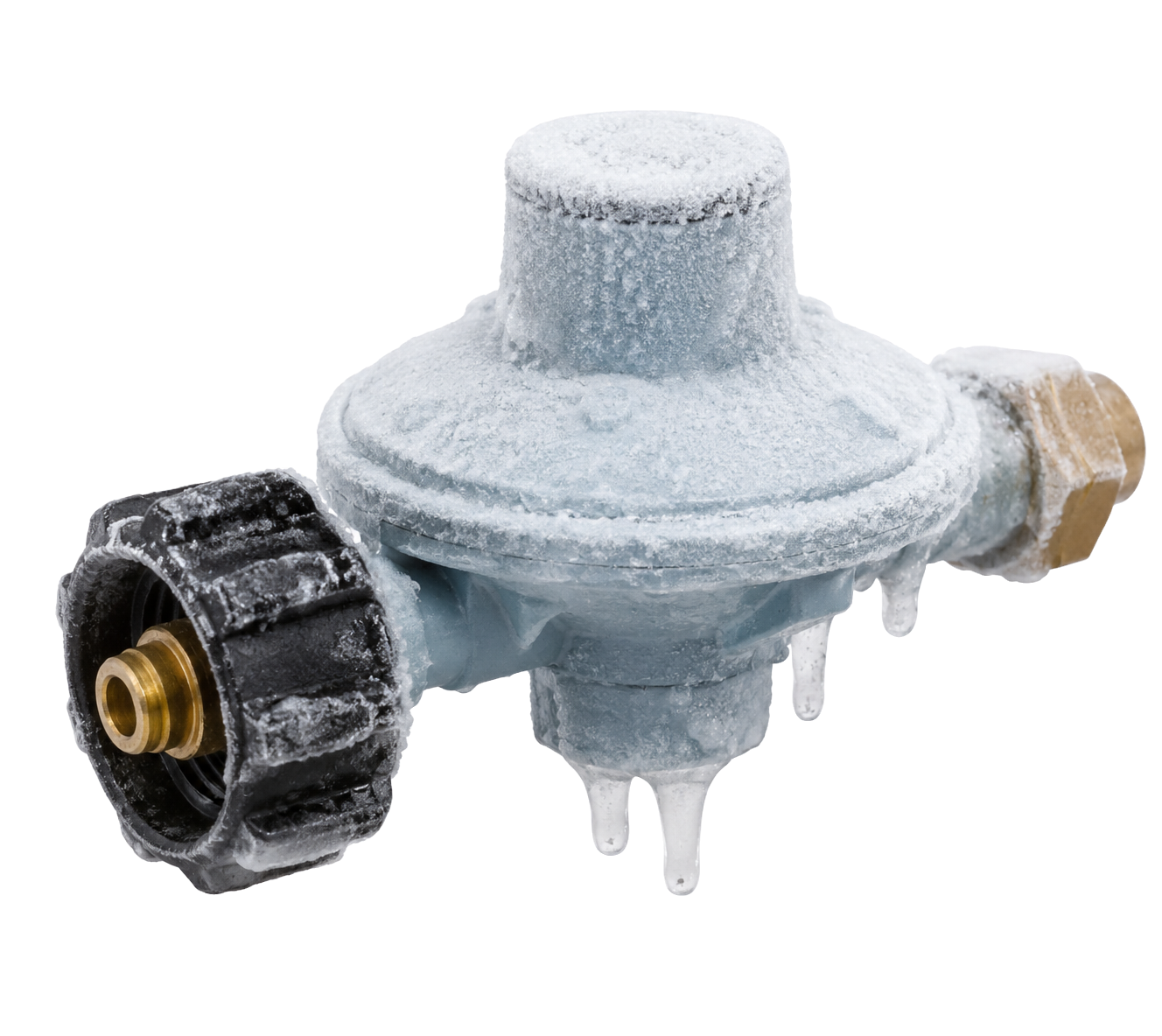
Gas regulator freezing is a common LPG system problem where ice or frost forms around a pressure regulator due to rapid gas expansion, excessive fuel withdrawal, moisture contamination, or inadequate vaporization capacity. In Kenya, this issue is most common in high-altitude areas where colder temperatures reduce the ability of LPG cylinders and tanks to naturally produce sufficient vapour.
Commercial kitchens in Nyandarua, Nyeri, Nakuru Highlands, Laikipia, and other elevated regions often experience LPG pressure instability during cold mornings and peak cooking periods. Although many operators assume that a frozen regulator is caused by a damaged component, the actual cause is frequently related to incorrect system sizing or insufficient LPG vaporization capacity.
Related Products
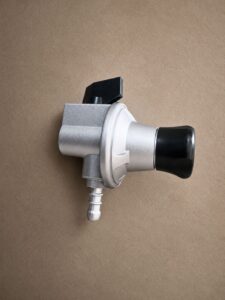
An LPG regulator performs one critical function: reducing storage pressure to a controlled appliance operating pressure. It does not create gas supply. The regulator depends on a continuous flow of LPG vapour generated from the liquid fuel stored inside cylinders or tanks.
When the demand for LPG exceeds the natural evaporation capability of the storage vessel, the system begins extracting excessive heat from the surrounding environment. This creates a refrigeration effect that lowers the temperature of the regulator body and surrounding components.
The result may include:
- LPG pressure drop at appliances
- Weak or unstable flames
- Burner shutdown
- Reduced cooking efficiency
- Frost accumulation on regulators
- Increased operational interruptions
For industrial and commercial users, gas regulator freezing should be treated as a system design issue rather than a simple equipment failure.
Megtraco Kenya Ltd provides our LPG engineering solutions for commercial kitchens, factories, institutions, and industrial facilities across Kenya and East Africa, including LPG storage design, pipeline systems, pressure control equipment, and vaporization solutions.
What Is Gas Regulator Freezing?
Gas regulator freezing occurs when rapid LPG expansion reduces the regulator temperature below freezing point, allowing moisture from the surrounding air to form ice on the regulator body. It indicates that the LPG supply system is experiencing excessive cooling, high demand, moisture problems, or insufficient vapor production.
LPG is stored as a liquid under pressure. Before reaching burners, boilers, ovens, or industrial appliances, the liquid LPG must convert into vapour.
The process is:
Liquid LPG → Vapour LPG + Heat Absorption
During this transformation, LPG absorbs heat from:
- The cylinder or tank surface
- Surrounding air
- Installation environment
- Ground contact area for buried systems
This heat transfer allows continuous vapor production.
However, when LPG consumption rises faster than the system can absorb heat, the temperature of the fuel container drops. In extreme cases, the regulator becomes cold enough for atmospheric moisture to freeze.
Common operating situations that trigger gas regulator freezing include:
- A hotel kitchen starting morning meal preparation
- A restaurant running multiple burners simultaneously
- A bakery operating several ovens
- A factory increasing thermal production demand
- A school kitchen preparing hundreds of meals
The solution is rarely replacing the regulator alone. A complete LPG system evaluation is required.
Engineers typically review:
- Appliance consumption rates
- LPG demand profile
- Storage capacity
- Regulator flow rating
- Pipe diameter
- Operating pressure
- Ambient temperature conditions
Businesses requiring technical assessment can work with a trusted engineering partner experienced in LPG installations, commissioning, and safety compliance.
Why Gas Regulator Freezing Affects Kenyan Highland Kitchens More
Gas regulator freezing is more common in Kenya’s highland regions because low ambient temperatures reduce LPG vaporization rates and increase the possibility of moisture turning into ice around exposed components.
Kenya has significant climatic variation. LPG systems designed for warmer regions may perform differently when installed in colder areas.
For example:
A commercial kitchen in Mombasa benefits from:
- Higher ambient temperatures
- Faster heat transfer into cylinders
- Better natural LPG evaporation
A kitchen in Nyeri or Nyandarua experiences:
- Lower morning temperatures
- Reduced cylinder heat absorption
- Higher probability of LPG regulator icing
- Greater pressure fluctuations during peak demand
High-risk areas include:
| Region | Operating Challenge | Effect on LPG System |
|---|---|---|
| Nyandarua | Cold highland climate | Lower LPG vaporization rate |
| Nyeri | Low temperatures during morning operations | Increased regulator icing |
| Nakuru Highlands | Temperature variations | Pressure instability |
| Laikipia | Cool nights | Reduced cylinder efficiency |
| Elevated Nairobi areas | Seasonal cold periods | Temporary frost formation |
Commercial kitchens in these areas should not be designed using average conditions alone. LPG systems must consider the lowest expected operating temperature and maximum simultaneous appliance demand.
LPG Vaporization Capacity: The Main Engineering Factor Behind Regulator Icing
LPG vaporization capacity determines how much liquid LPG can convert into usable vapour within a specific period. It depends on cylinder size, tank surface area, LPG level, ambient temperature, fuel composition, and withdrawal rate.
Many LPG users focus only on cylinder weight. However, a 50 kg cylinder does not automatically provide unlimited gas regulator freezing output.
The actual gas supply depends on how quickly the cylinder can absorb heat and convert liquid LPG into vapour.
Factors Affecting LPG Vaporization
1. Ambient Temperature
Temperature has a direct effect on LPG evaporation.
Cold environments reduce:
- Heat transfer efficiency
- Vapour generation rate
- Available operating pressure
This is why a cylinder that performs correctly during warm afternoons may struggle during cold early mornings.
2. LPG Liquid Level
The amount of liquid LPG inside the cylinder affects the available heat transfer surface.
A nearly empty cylinder may vaporize fuel less efficiently compared with a fuller vessel.
3. Fuel Withdrawal Rate
High-demand appliances can consume LPG faster than natural evaporation can support.
Examples include:
- Industrial burners
- Steam generators
- Commercial ovens
- Large cooking ranges
4. Storage Configuration
Multiple cylinders connected through a properly designed manifold can increase available vaporization capacity.
Large facilities often require engineered systems rather than relying on natural cylinder evaporation.
Megtraco Kenya Ltd supplies high-performance LPG vaporizers designed for applications where continuous LPG vapour supply is required.
Commercial and Industrial Applications Where Gas Regulator Freezing Occurs
Industrial Manufacturing Facilities for gas regulator freezing
Industrial LPG users experience gas regulator freezing when fuel demand exceeds the natural vaporization capability of cylinders or tanks. Manufacturing processes require stable thermal energy because even short interruptions can affect production efficiency and product consistency.
Industrial LPG applications include:
- Metal processing
- Manufacturing plants
- Heat treatment operations
- Industrial ovens
- Drying systems
- Thermal processing equipment
A production facility may operate burners continuously for several hours. During this period, LPG withdrawal can exceed the ability of storage vessels to naturally maintain vapour production.
Possible consequences include:
- Burner flame instability
- Automatic equipment shutdown
- Reduced production output
- Increased maintenance requirements
A properly engineered industrial LPG system may include:
- Correctly sized storage tanks
- Automatic changeover systems
- Pressure monitoring
- Safety shutoff valves
- Vaporization equipment
Megtraco Kenya Ltd provides industrial LPG equipment designed for manufacturing facilities requiring reliable fuel delivery and safe operation.
Hospitality and Food Processing Applications for gas regulator freezing
Commercial kitchens are among the most affected environments because LPG demand changes rapidly throughout the day. Hotels, restaurants, catering facilities, and food processors require systems capable of handling peak consumption without pressure loss.
Typical high-demand kitchen equipment includes:
- Commercial cooking ranges
- Bakery ovens
- Fryers
- Grills
- Steam kettles
- Large boiling systems
Morning operations create one of the highest risks because:
- Temperatures are lowest
- Meal preparation demand is highest
- Multiple appliances start simultaneously
A kitchen experiencing gas regulator freezing may notice:
- Reduced burner output
- Longer cooking times
- Staff manually adjusting equipment
- Unplanned interruptions
The correct engineering approach involves calculating:
- Total connected load
- Maximum hourly LPG consumption
- Required vapor supply
- Storage configuration
- Distribution pipe capacity
Facilities upgrading LPG systems can access professional engineering consultation for system design, installation planning, and compliance support.
Healthcare and Institutional LPG Systems for gas regulator freezing
Hospitals, schools, universities, and institutional kitchens require reliable LPG supply because operational interruptions affect essential services.
Institutional users commonly operate:
- Large cooking facilities
- Multiple kitchen zones
- Continuous meal production
- High daily LPG demand
A frozen regulator can interrupt meal preparation schedules and create unnecessary operational pressure.
Professional LPG system design considers:
- Peak consumption periods
- Backup supply arrangements
- Emergency isolation
- Ventilation requirements
- Fire protection measures
Modern installations may also incorporate industrial gas leak detection systems to identify leaks early and improve overall safety management.