
Gas regulators are among the most important control components in an LPG installation because they reduce pressure from storage vessels or cylinders to a level suitable for appliances and equipment. Understanding KEBS standards for gas regulators helps buyers, contractors, and facility managers identify equipment that meets recognised quality requirements instead of relying only on appearance or price.
A regulator may look professionally manufactured externally while containing poor-quality internal components, incorrect pressure settings, or insufficient testing. This is why checking compliance markings, manufacturer information, technical specifications, and supporting documentation is essential before installation.
Related Products
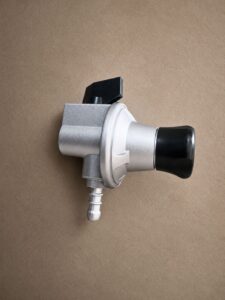
KEBS standards for gas regulators exist to provide a framework for verifying product quality, safety requirements, and manufacturing consistency. However, a certification mark alone does not replace proper equipment selection, installation, and inspection.
For homes, commercial kitchens, hotels, factories, hospitals, and industrial facilities, selecting the correct LPG regulator affects:
- Gas pressure stability
- Appliance performance
- Fuel efficiency
- System reliability
- Overall LPG safety
Megtraco Kenya Ltd supports clients with engineered LPG solutions, equipment selection, and safety-focused installations across Kenya and East Africa. Businesses requiring professionally designed systems can explore our LPG engineering solutions for technical support.
KEBS Standards for Gas Regulators and Why Certification Matters
KEBS standards for gas regulators are important because they help confirm that LPG equipment has undergone recognised quality checks and meets required specifications. Certification provides confidence that a product has been evaluated, but users must still confirm suitability for their specific application.
The Kenya Bureau of Standards (KEBS) plays an important role in establishing and monitoring standards for products used in Kenya. For LPG equipment, standards help address issues such as:
- Product safety
- Material quality
- Manufacturing consistency
- Performance requirements
- Consumer protection
A gas regulator operates under pressure and must function reliably throughout its service life. A poor-quality regulator can create problems such as:
- Incorrect outlet pressure
- Gas leakage risks
- Appliance malfunction
- Increased maintenance requirements
- Reduced system efficiency
When evaluating LPG equipment, KEBS standards for gas regulators should be considered alongside:
- Manufacturer specifications
- Pressure ratings
- Flow capacity
- Installation requirements
- Maintenance recommendations
A compliant regulator must also be correctly matched to the LPG system design.
What Are KEBS Standards for Gas Regulators?
KEBS standards for gas regulators define the quality and safety expectations that LPG regulator products must meet before being supplied for use in Kenya. These requirements help ensure that regulators are suitable for their intended operating conditions.
A gas regulator standard generally addresses areas such as:
- Construction quality
- Pressure control performance
- Material suitability
- Marking requirements
- Testing procedures
- Product identification
The purpose is not only to verify that a regulator exists as a product but to confirm that it performs its intended function safely.
A typical LPG regulator must control gas pressure accurately despite changing operating conditions.
Important performance factors include:
| Factor | Why It Matters |
|---|---|
| Pressure rating | Confirms safe operating limits |
| Flow capacity | Determines gas delivery capability |
| Material quality | Affects durability and service life |
| Internal sealing | Reduces leakage risks |
| Calibration accuracy | Maintains correct appliance pressure |
| Product markings | Allows traceability |
Understanding KEBS standards for gas regulators helps buyers ask the right questions before purchasing equipment.
KEBS Standards for Gas Regulators: Understanding the Certification Mark
The certification mark on a gas regulator provides important information about compliance and identification. However, users must understand what the mark confirms and what additional checks are still required.
Many buyers assume a mark automatically guarantees that a product is suitable for every application. In reality, the mark should be viewed as one part of a complete evaluation process.
When inspecting a regulator, check for:
- Manufacturer name
- Model number
- Pressure rating
- Flow information
- Gas type suitability
- Batch or traceability details
- Certification information where applicable
A missing or unclear marking may indicate:
- Poor product traceability
- Unverified manufacturing origin
- Incorrect product documentation
- Potential counterfeit equipment
A professional LPG supplier should provide supporting information rather than relying only on visible markings.
KEBS Standards for Gas Regulators: What the Mark on the Body Shows
KEBS standards for gas regulators require clear product identification because traceability is essential for safety inspections, maintenance, and replacement decisions. The markings on the regulator body help engineers confirm whether the equipment matches the system requirements.
The regulator body markings may provide details such as:
| Marking | Purpose |
|---|---|
| Manufacturer name | Identifies product source |
| Model number | Confirms equipment specification |
| Pressure rating | Shows operating capability |
| Direction arrows | Shows correct installation flow |
| Gas identification | Confirms LPG compatibility |
| Serial or batch details | Supports traceability |
Before installation, technicians should compare these details against the quotation, technical datasheets, and system design.
For commercial and industrial projects, correct equipment identification is especially important because LPG systems often contain multiple pressure-control stages and safety devices.
Megtraco Kenya Ltd supplies professionally selected industrial LPG equipment designed for demanding applications where reliability and compliance are essential.
KEBS Standards for Gas Regulators: Checking Manufacturer and Model Details
One of the most important steps in applying KEBS standards for gas regulators is verifying manufacturer and model information. A genuine regulator should have identifiable technical details that match official product documentation.
Before accepting a regulator, confirm:
- Is the manufacturer identifiable?
- Does the model number exist?
- Are technical specifications available?
- Does the pressure rating match the application?
- Is the equipment suitable for LPG use?
A quotation that only states “LPG regulator” without technical details does not provide enough information for proper evaluation.
A professional LPG quotation should specify:
| Required Information | Example Details |
|---|---|
| Product type | LPG pressure regulator |
| Manufacturer | Approved manufacturer details |
| Model | Exact model reference |
| Capacity | Gas flow rating |
| Pressure | Inlet and outlet pressure |
| Application | Domestic, commercial, industrial |
Understanding KEBS standards for gas regulators allows buyers to distinguish between properly documented equipment and products that cannot be verified.
KEBS Standards for Gas Regulators During LPG Equipment Selection
Selecting an LPG regulator requires more than checking certification markings. KEBS standards for gas regulators should be combined with correct sizing, engineering assessment, and installation requirements to achieve a safe LPG system.
A suitable regulator must match:
- LPG consumption rate
- Appliance requirements
- Operating pressure
- Installation environment
- Future expansion needs
For example, a small domestic regulator may not be suitable for:
- Commercial kitchens
- Industrial heating systems
- Large boilers
- Manufacturing processes
Incorrect selection can lead to:
- Pressure fluctuations
- Poor combustion
- Increased LPG consumption
- Equipment downtime
For advanced LPG systems requiring additional monitoring, solutions such as industrial gas leak detection provide additional protection by identifying possible gas leaks before they become serious safety concerns.