Technical Industry Overview
What is an IGT Butane Regulator?
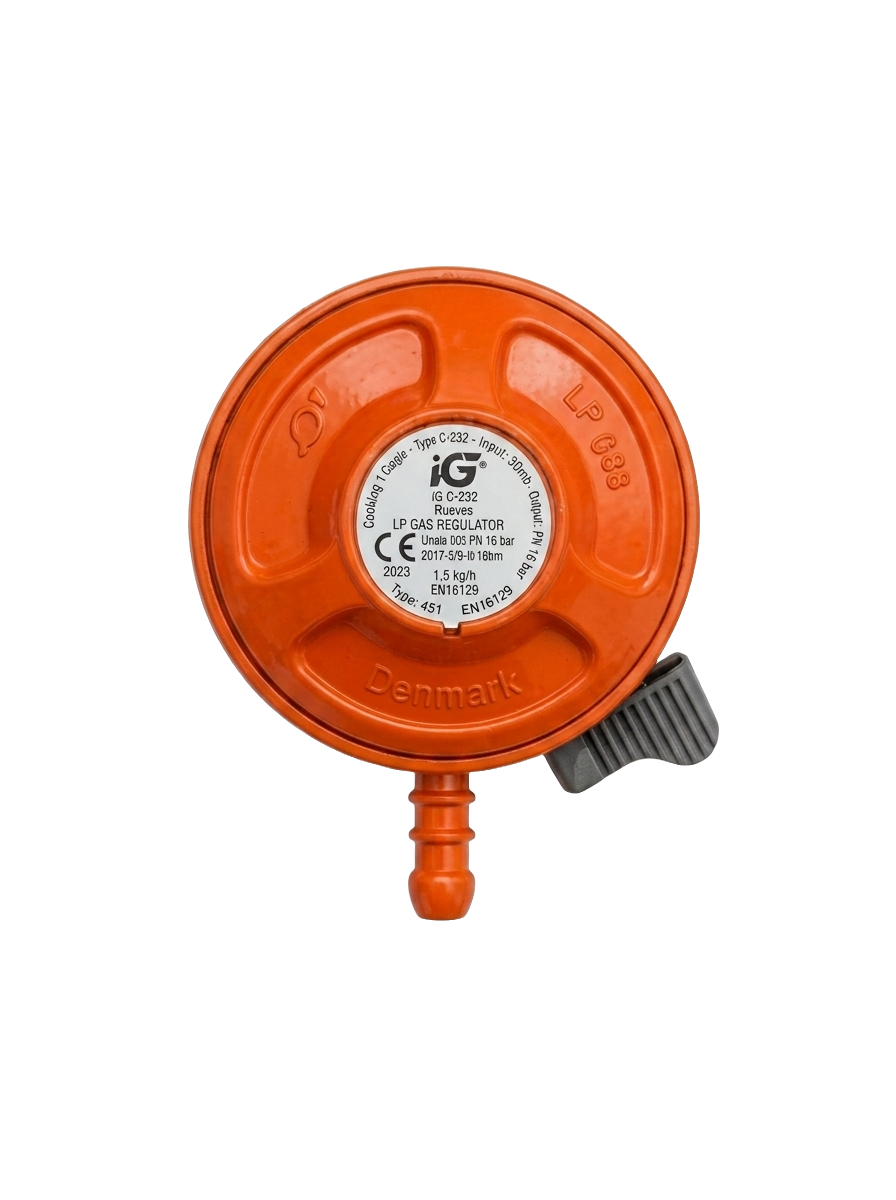
An IGT butane regulator is a precision LPG pressure control device designed to reduce high-pressure gas from a cylinder into a stable 30mbar output pressure, which is the standard requirement for most domestic and light commercial cooking appliances in East Africa.
It functions as a critical safety interface between high-pressure LPG storage (up to 16 bar internal cylinder pressure) and low-pressure combustion systems used in kitchens. Without proper regulation, gas flow becomes unstable, creating risks of fire, incomplete combustion, and appliance damage.
Related Products
In Kenya, Uganda, Tanzania, and Rwanda, the 30mbar standard is widely adopted under KEBS (Kenya Bureau of Standards) and enforced through EPRA (Energy and Petroleum Regulatory Authority) safety frameworks.
Why IGT Butane Regulator Safety is Critical
The LPG sector in East Africa has expanded rapidly due to urbanization, hospitality growth, and clean energy transition policies. However, this growth has also increased safety incidents linked to poor pressure regulation.
The IGT butane regulator is essential in preventing:
- Gas leaks from overpressure conditions
- Flame instability and burner backfire
- Excess fuel consumption and inefficiency
- Hose rupture due to uncontrolled flow
According to OSHA/DOSHS Kenya, improper gas regulation remains one of the leading causes of preventable kitchen fire incidents in commercial environments.
Commercial & Industrial Applications
How an IGT Butane Regulator Works in Real Systems
The regulator maintains constant downstream pressure by using a diaphragm-spring mechanism that automatically adjusts gas flow based on appliance demand. This ensures stable combustion regardless of cylinder fill level or temperature variation.
Applications in Domestic and Commercial Kitchens
Restaurants, hotels, and catering facilities across Nairobi, Mombasa, Kisumu, Nakuru, and Eldoret depend on stable LPG regulation for uninterrupted operations.
The IGT regulator ensures:
- Continuous flame stability during peak cooking
- Reduced downtime from pressure fluctuations
- Predictable gas consumption patterns
- Safer multi-burner stove operation
explore industrial LPG equipment
High-Demand Cooking Environments
In commercial kitchens, gas demand fluctuates rapidly. The regulator compensates for this by dynamically adjusting diaphragm tension, ensuring:
- No flame dropout during simultaneous burner use
- Stable heat output for food consistency
- Reduced operational inefficiency
Institutional Applications
The regulator is widely deployed in:
- Hospitals (central kitchens)
- Universities and boarding schools
- Government institutions
These environments require uninterrupted, safe gas flow under strict regulatory oversight.
Agricultural and Logistics Use
In agricultural systems, LPG is used for:
- Grain drying units
- Greenhouse heating
- Mobile food processing
Engineering Specifications & Technical Performance
Core Engineering Principle
The IGT butane regulator operates on a pressure equilibrium system, where a diaphragm balances spring force against downstream gas pressure, ensuring constant output at 30mbar.
Technical Performance Table
| Parameter | Specification | Engineering Role |
|---|---|---|
| Outlet Pressure | 30 mbar | Appliance compatibility |
| Inlet Pressure | 0.3 – 16 bar | Cylinder input tolerance |
| Flow Rate | 1.0 – 2.5 kg/hr | Cooking load capacity |
| Body Material | Brass/Zinc alloy | Corrosion resistance |
| Diaphragm | NBR rubber | Pressure sensitivity |
| Connection Type | Clip-on/Screw | Cylinder compatibility |
Material Engineering Considerations
The regulator body is typically constructed from corrosion-resistant brass or zinc alloys to withstand:
- High humidity environments in coastal regions
- Temperature fluctuations in inland regions
- Long-term exposure to LPG vapors
The diaphragm system is the most critical component, responsible for real-time pressure modulation.
Comparative Technical Analysis
IGT Butane Regulator vs Generic LPG Regulators
| Feature | IGT 30mbar Regulator | Generic Regulator |
|---|---|---|
| Pressure Accuracy | High precision | Inconsistent output |
| Flame Stability | Excellent | Variable performance |
| Safety Compliance | KEBS aligned | Often uncertified |
| Fuel Efficiency | Optimized | Lower efficiency |
| Longevity | High durability | Moderate lifespan |
Engineering Insight
Poor-quality regulators often fail under fluctuating demand conditions, leading to yellow flames and carbon monoxide risk. IGT-certified systems maintain stoichiometric combustion balance.
view control panels
Installation, Testing & Commissioning Best Practices
Proper Installation Methodology
Correct installation is critical for safety compliance under EPRA regulations. The regulator must always be mounted directly on a compatible LPG cylinder in a vertical orientation.
Installation Procedure
- Ensure cylinder is on stable, ventilated ground
- Inspect regulator for physical damage
- Attach regulator securely to valve outlet
- Connect approved LPG hose with clamps
- Conduct leak test using soap solution
- Ignite burner under controlled conditions
Commissioning Checklist
| Step | Requirement | Pass Criteria |
|---|---|---|
| Leak Test | Joint inspection | No bubble formation |
| Pressure Stability | Flame observation | No fluctuation |
| Ignition Test | Burner startup | Instant ignition |
| Flow Balance | Multi-burner use | Stable flame |
| Emergency Cutoff | Safety response | Immediate shutdown |
Regulatory Compliance Framework
EPRA Requirements
- Licensed LPG installation procedures
- Certified pressure regulation devices
- Approved technician commissioning
KEBS Standards
- Material strength verification
- Pressure accuracy testing
- Product certification compliance
OSHA / DOSHS Safety Requirements
- Ventilation compliance
- Fire safety readiness
- Routine inspection enforcement
engineering consultation services
Maintenance & Operational Safety of IGT butane regulator
Recommended Inspection Schedule
- Domestic use: every 12–24 months
- Commercial kitchens: every 6–12 months
- Industrial systems: quarterly inspection
Warning Signs of Failure
- Weak or yellow flame
- Gas smell near cylinder
- Difficulty igniting burners
- Irregular pressure output
Any of these signs require immediate replacement.
Frequently Asked Questions about IGT butane regulator
What does an IGT butane regulator do?
It reduces LPG cylinder pressure to a safe 30mbar for controlled stove operation.
Is 30mbar standard in East Africa?
Yes, it is the dominant standard for domestic LPG appliances.
How long does a regulator last?
Typically 2–3 years depending on usage and environmental exposure.
What happens if pressure is incorrect?
It causes unsafe combustion, gas wastage, and fire risk.
Engineering Conclusion of IGT butane regulator
The IGT butane regulator (30mbar system) is a fundamental safety and performance component in LPG systems across East Africa. It ensures controlled combustion, protects appliances, and maintains regulatory compliance under EPRA and KEBS frameworks.
Its role is not limited to pressure reduction—it directly influences energy efficiency, fire safety outcomes, and operational reliability in both domestic and commercial kitchens.
Proper installation, routine inspection, and certified equipment selection are essential for safe LPG system operation.
You May Also Like

Call To Action
Your Trusted LPG & Fire Safety Engineering Partner in East Africa
Whether you’re designing a new LPG installation, upgrading industrial gas systems, or enhancing fire safety compliance, Megtraco Kenya Ltd delivers certified engineering solutions backed by decades of expertise. From LPG equipment supply and pipeline installations to fire suppression and detection systems, our experienced team provides reliable solutions for commercial, industrial, and institutional projects across East Africa.
Contact us today for professional consultation, engineering support, or a customized quotation.
WHY CHOOSE MEGTRACO KENYA LTD
• Established Since 1969 – Decades of proven engineering excellence.
• KEBS Certified Products – Guaranteed quality and compliance with regional standards.
• EPRA Licensed LPG Engineering Company – Fully certified to design, install, and commission.
• Industrial & Commercial LPG Specialists – Scaled to handle heavy-duty thermal requirements.
• Fire Suppression & Fire Detection Experts – End-to-end asset protection.
• Regional Operational Footprint – Serving East Africa and beyond.
Contact Megtraco Kenya Ltd
• Email: sales@megtracokenya.com
• Phone: +254 725 870 114
• WhatsApp: +254 799 086 323
• Website: https://megtracokenya.com
