Description
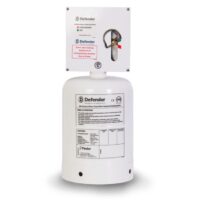
Megtraco Kenya supplies LPG gas leak detectors and leak detection equipment for homes, restaurants, hotels, plant rooms and industrial gas installations. From handheld sniffers used by installation engineers to fixed multi-point systems wired to automatic shut-off valves, we supply and commission detection equipment across Kenya.
LPG is heavier than air. A leak does not disperse upward — it pools at floor level, in basements, in service ducts and under equipment, where it can reach an ignition source. This is precisely why gas detection is mandatory in commercial kitchens and plant rooms, and strongly advised in any domestic installation with an indoor cylinder.
Types of Gas Leak Detection Equipment
Handheld Leak Detectors
Portable electronic sniffers with a flexible probe, used by engineers to pinpoint the exact joint that is leaking during commissioning or fault-finding. Audible and visual alarm that intensifies as the probe nears the source. Essential tooling for any gas contractor.
Fixed Domestic Gas Alarms
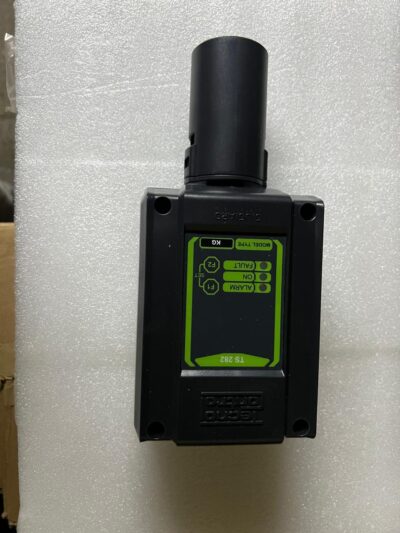
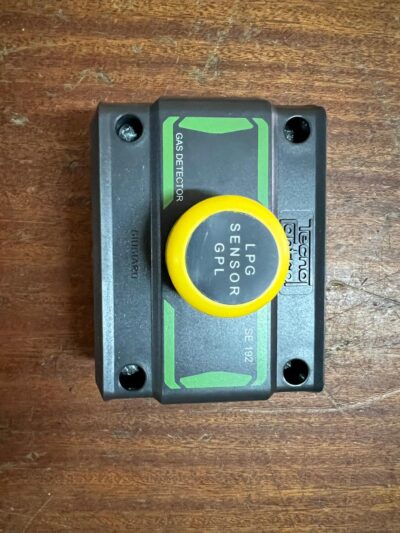
Wall-mounted detectors installed low on the wall — LPG sinks, so a detector at ceiling height will not see the leak. Mains-powered with battery backup, sounding a local alarm when gas concentration reaches a set percentage of the lower explosive limit.
Commercial Multi-Point Detection Systems
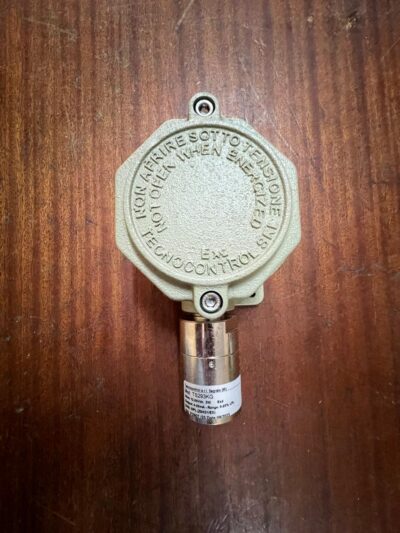
A central control panel monitoring several remote sensor heads placed at each risk point in a kitchen or plant room. On alarm the panel can trigger sounders and beacons, close a solenoid shut-off valve on the gas main, and start extraction fans. This is the configuration required for most commercial kitchens in Kenya.
Automatic Shut-Off Valve Integration
A normally-closed solenoid valve installed on the incoming gas line, held open by the detection panel. If any sensor alarms — or if power fails — the valve closes and isolates the supply. This turns detection into prevention rather than just warning.
Specifications
- Detected gases: LPG (propane / butane), natural gas / methane, carbon monoxide models available
- Sensor type: catalytic bead and semiconductor
- Alarm threshold: typically 10–20% of Lower Explosive Limit
- Power: 240 V mains with battery backup; 12/24 V DC options for panels
- Outputs: audible sounder, beacon, volt-free relay contacts for valve and fan control
- Sensor placement: 150–300 mm above floor level for LPG
Where Detection Is Required
Commercial kitchens, hotel and restaurant gas rooms, bakeries, food processing plants, laboratories, LPG storage and decanting areas, boiler and plant rooms, apartment gas meter rooms, and forklift charging and refuelling bays. Kenyan fire and safety inspections routinely check for working gas detection in these environments.
Installation and Commissioning
Megtraco does not simply sell detectors — we position sensors correctly for the room geometry and gas type, wire them to shut-off valves and extraction where required, and commission the system with calibrated test gas so you know it actually triggers. We also provide periodic recalibration, because a catalytic sensor drifts over time and an uncalibrated detector offers false confidence.
Frequently Asked Questions
Where should an LPG leak detector be installed?
Low on the wall, roughly 150–300 mm above floor level, and within a few metres of the likely leak source such as the cylinder, manifold or appliance connection. LPG is heavier than air and collects at floor level — a detector mounted at ceiling height, as you would for natural gas or smoke, will not detect an LPG leak in time.
How does a gas leakage detector machine work?
The sensor element changes electrical resistance in the presence of combustible gas. The detector converts that change to a gas concentration reading and raises an alarm once concentration crosses a preset fraction of the lower explosive limit — typically 10–20% LEL, well below the level at which the mixture could ignite.
Do I need gas detection in a commercial kitchen in Kenya?
Yes. Commercial kitchens using LPG are expected to have gas detection interlocked to an automatic shut-off valve, and this is checked during fire and safety inspection. Megtraco supplies, installs and certifies compliant systems.
How often should a gas detector be calibrated?
Annually as a minimum, and more frequently in dusty, greasy or high-humidity environments such as busy kitchens. Sensor sensitivity drifts with age and contamination. Megtraco offers scheduled recalibration with certified test gas.
What is the difference between a gas detector and a gas alarm?
In common use the terms overlap, but properly a detector is the sensing head and an alarm is the audible or visual output. A complete system combines sensing heads, a control panel, alarm devices, and ideally an automatic shut-off valve that isolates the gas supply on alarm.