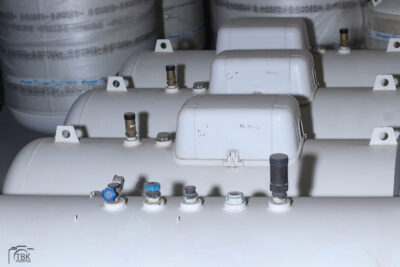
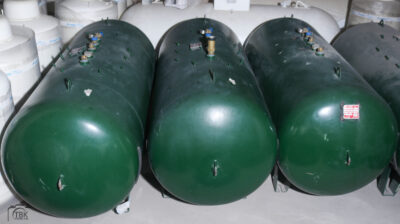
Description
Megtraco Kenya supplies, installs and commissions bulk LPG storage tanks for hotels, restaurants, hospitals, schools, apartment blocks, factories and homes across Kenya. We handle the complete scope — tank supply, foundation and siting, pipework, safety fittings, EPRA compliance documentation and commissioning.
Moving from cylinders to a bulk tank is the single biggest cost saving available to any high-volume gas user. Bulk LPG is billed per kilogram at a materially lower rate than cylinder gas, there is no deposit tied up in cylinder stock, and the supply never interrupts service mid-shift because a cylinder ran empty.
LPG Tank Sizes Available
- 500 litre — large homes, small restaurants, guest houses
- 1,000 litre — restaurants, bakeries, small hotels
- 2,000 litre — hotels, hospitals, schools, apartment reticulation
- 5,000 litre — large hotels, food processing, light industry
- 10,000 litre — industrial plant, institutional campuses
- 20,000 litre and above — bulk depots, heavy industry, LPG distributors
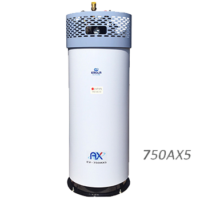
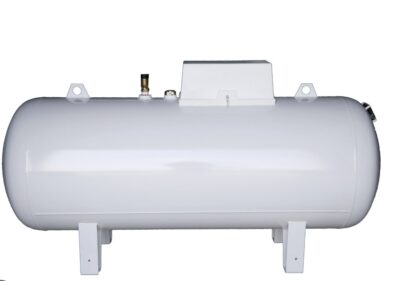
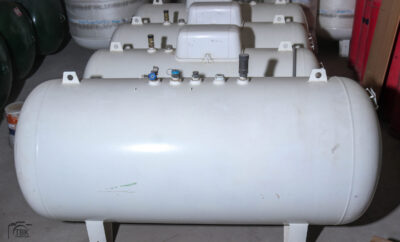
Tanks are supplied in both above-ground and underground (mounded) configurations. Sizing is driven by peak hourly demand and desired refill interval, not simply by floor area — our engineers calculate this from your appliance schedule.
Above-Ground vs Underground Tanks
Above-ground tanks are lower in capital cost, faster to install, and simpler to inspect and maintain. They require a clear safety distance from buildings and boundaries, which is the main constraint on tight urban sites.
Underground tanks free up surface space, are visually discreet, and can sit closer to buildings under reduced separation rules. They cost more to install because of excavation, cathodic protection and mounding, but on constrained commercial sites they are often the only workable option.
What a Complete Installation Includes
- Pressure vessel manufactured and certified to recognised code
- Reinforced concrete foundation or plinth, engineered to load
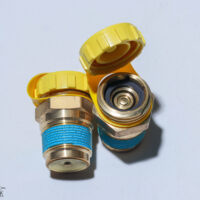
- Multi-valve assembly — filling, liquid and vapour service, pressure relief
- Contents gauge and remote reading option
- First and second stage pressure regulation
- Bulk meter for consumption monitoring
- Buried PE service line to the building with transition fittings
- Emergency shut-off valve and fire-safe isolation
- Bollard protection, security fencing and warning signage
- Earthing and lightning protection
- Gas detection and interlock where required
- Pressure testing, purging and commissioning certificate
Regulatory Compliance in Kenya
Bulk LPG storage in Kenya is regulated by EPRA (Energy and Petroleum Regulatory Authority). Installations must observe minimum separation distances from buildings, boundaries and ignition sources; must be fitted with correct relief and emergency isolation; and must be inspected and approved before gas is introduced. Megtraco is EPRA licensed and KEBS certified, and we prepare and submit the compliance documentation as part of the project rather than leaving it to the client.
Why Megtraco
We have engineered gas installations in Kenya since 1969 — over 55 years and more than 1,000 completed installations. We are not a reseller shipping a tank to your gate. We size the system, build the foundation, run the pipework, obtain the approvals, commission the plant, and maintain it afterwards. That single-contractor accountability is why hotels, hospitals and manufacturers use us for projects they cannot afford to get wrong.
Frequently Asked Questions
What does an LPG storage tank cost in Kenya?
Total cost depends on tank capacity, above-ground versus underground siting, distance from tank to building, and the extent of pipework and safety equipment required. The tank itself is typically less than half of a complete installed project cost. Contact Megtraco with your location and expected gas consumption and we will prepare an itemised quotation covering supply, civil works, pipework, approvals and commissioning.
What size LPG tank do I need?
Size is determined by peak hourly gas demand and how often you are willing to accept a refill. As a rough guide: a busy restaurant is usually well served by 1,000–2,000 litres, a mid-size hotel by 2,000–5,000 litres, and an industrial process plant by 5,000 litres and above. Send us your appliance list with burner ratings and we will size the tank precisely.
Can an LPG tank be installed underground?
Yes. Underground and mounded tanks are used widely where surface space is limited or where the tank must not be visible. They require corrosion protection and cathodic protection, and installation cost is higher due to excavation, but separation distance requirements are less restrictive than for above-ground vessels.
How far must an LPG tank be from a building?
Separation distance is set by tank capacity and configuration under EPRA rules — larger vessels require greater clearance to buildings, boundaries and ignition sources. This is one of the first things we assess during a site survey, because it determines where a tank can legally sit and sometimes drives the decision to go underground.
Is bulk LPG cheaper than cylinders?
Yes, substantially, for any user consuming meaningful volume. Bulk gas is priced per kilogram well below cylinder rates, there is no cylinder deposit, and you avoid the labour and downtime of cylinder changeovers. Most commercial installations recover the capital cost of a bulk tank within one to two years.
Do you supply LPG tanks outside Nairobi?
Yes. We install countrywide and have completed projects in Mombasa, Kisumu, Nakuru, Eldoret, Naivasha, Nyeri, Thika and across the wider region.