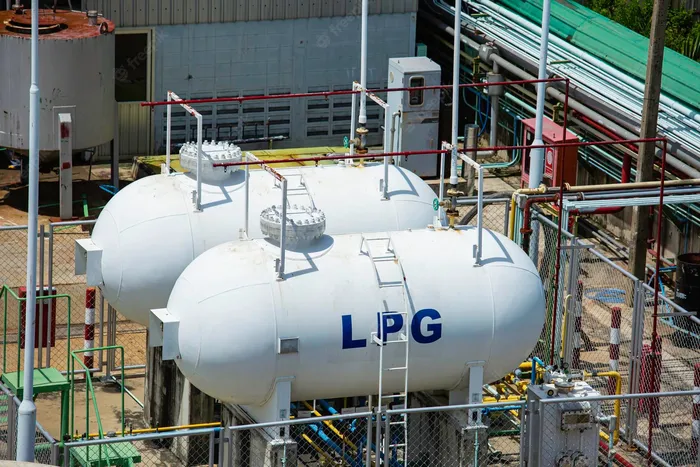
The EPRA LPG licence application process in Kenya starts by identifying the exact petroleum activity, preparing the required business and technical documentation, completing the installation requirements and submitting the application through the applicable regulatory process. The timeline depends on the licence category, completeness of the application, site readiness, inspections and whether additional documentation or corrective work is required.
For businesses planning LPG operations, applying for the licence should not be treated as a paperwork exercise at the end of a project.
Related Products
The licensing process can affect:
- Site selection
- LPG tank selection
- Equipment procurement
- Piping design
- Fire protection
- Installation
- Inspection
- Commissioning
- Project scheduling
This is particularly important for businesses establishing:
- Bulk LPG storage
- LPG retail outlets
- Cylinder distribution facilities
- Autogas stations
- LPG filling facilities
- Commercial LPG installations
- Industrial LPG systems
The first step is therefore not filling out an application.
The first step is determining which regulated activity the business is actually undertaking.
What Is an EPRA LPG Licence?
An EPRA LPG licence is an authorization for a regulated petroleum activity under Kenya’s petroleum regulatory framework. The applicable licence depends on the nature of the business, such as retailing, storage, transportation, distribution, filling or dispensing LPG.
The Energy and Petroleum Regulatory Authority (EPRA) oversees applicable petroleum licensing activities in Kenya.
This means that there is not one universal licence called an “LPG licence” that applies identically to every business.
For example:
| Business Activity | Licensing Question |
|---|---|
| Industrial LPG consumer | What installation and regulatory approvals apply? |
| LPG retailer | What petroleum retail licence is required? |
| LPG distributor | What distribution/storage authorization applies? |
| LPG transporter | What transportation requirements apply? |
| Autogas station | What LPG vehicle-dispensing licence applies? |
| LPG filling plant | What filling and storage approvals apply? |
| Bulk LPG storage operator | What storage-related authorization applies? |
The exact category should be confirmed against the current EPRA requirements for the proposed activity.
Do You Need an EPRA LPG Licence Before Starting?
A business should establish its licensing obligations before commencing any regulated petroleum activity. Starting construction, commercial LPG sales, transportation or dispensing before confirming the required approvals can create costly compliance and scheduling problems.
The safest approach is to establish:
- What the business will do with LPG.
- Where the activity will take place.
- What LPG equipment will be installed.
- What storage capacity is proposed.
- Whether LPG will be sold, distributed or consumed internally.
- Which technical standards apply.
- Which inspections and approvals are required.
For industrial consumers, the situation can be different from an LPG retailer.
A factory buying LPG to operate a boiler is not automatically an LPG retailer simply because it owns a bulk tank.
However, the physical LPG installation must still be properly designed, installed, tested and operated.
Step 1: Identify the Correct LPG Licence Category
The first stage of an EPRA LPG licence application is classifying the actual petroleum activity because the wrong licence category can lead to incorrect documentation and delays. Businesses should distinguish between LPG consumption and regulated activities such as retail, distribution, transportation, filling and vehicle dispensing.
Ask:
Are you selling LPG?
If yes, the business may fall within a retail or wholesale/distribution licensing category depending on the operation.
Are you distributing LPG?
A business commercially supplying LPG to third parties should assess the applicable distribution requirements.
Are you transporting LPG?
Commercial transportation can have separate regulatory requirements.
Are you filling LPG cylinders?
Cylinder filling is a specialized LPG activity requiring appropriate infrastructure and approvals.
Are you dispensing LPG into vehicles?
This points toward an autogas operation with specialized equipment and licensing requirements.
Are you only consuming LPG?
An industrial or commercial end user should establish what installation approvals and technical compliance requirements apply rather than assuming a retail licence is necessary.
This classification should happen before equipment procurement.
Step 2: Confirm the Site Before Applying
The proposed premises should be assessed for suitability before an LPG licence application is finalized because site limitations can affect storage, equipment arrangement, safety distances, access and fire protection. A licence application cannot compensate for a fundamentally unsuitable LPG installation site.
A site assessment should consider:
- Property boundaries
- Adjacent buildings
- Roads
- Vehicle movement
- LPG delivery access
- Storage location
- Ignition sources
- Electrical installations
- Drainage
- Ventilation
- Fire access
- Emergency evacuation
- Security
- Occupancy
- Surrounding land use
For bulk LPG facilities, delivery vehicles need safe and practical access.
A tank may physically fit on a property but still be unsuitable because of separation, access or emergency-response limitations.
Step 3: Establish the LPG Storage Requirement
Storage capacity should be calculated from actual consumption, delivery frequency, safety stock and operational requirements rather than selecting a tank simply because it fits the available space. The selected vessel must also comply with applicable technical and safety requirements.
For an industrial facility, the calculation should consider:
- Monthly consumption
- Daily consumption
- Peak consumption
- Delivery lead time
- Safety stock
- Future expansion
- Tank filling limitations
For example, a plant consuming 400 kg/day with a 10-day delivery lead time requires approximately:
400 × 10 = 4,000 kg
before additional safety stock is considered.
The final tank selection should then be based on usable LPG capacity, water capacity, filling limits and certified manufacturer data.
Megtraco can support projects requiring bulk LPG engineering solutions from storage assessment through installation and commissioning.
Step 4: Prepare the Technical Design
A professional LPG licence application should be supported by a technical installation designed around the intended storage, pressure, flow and safety requirements. Technical drawings and equipment schedules should accurately represent what will be constructed.
Depending on the installation, the engineering package may include:
- Site layout
- LPG tank location
- Storage capacity
- Piping layout
- Gas train arrangement
- Pressure regulation
- Vaporizer arrangement
- Burner connections
- Emergency isolation
- Leak detection
- Fire protection
- Electrical controls
- Safety signage
For large industrial systems, the design may also need:
- Process load calculations
- Pipeline pressure-drop calculations
- Vaporizer sizing
- Burner demand analysis
- Instrumentation
- Control logic
- Emergency shutdown arrangements
Megtraco’s industrial LPG equipment can be incorporated into engineered systems based on project requirements.
Step 5: Prepare the Required Documents
Documentation is one of the most important parts of the licensing process because regulators need evidence that the applicant, premises, equipment and proposed activity meet applicable requirements. The exact documents depend on the licence category and current EPRA application requirements.
Potential documentation can include:
Business documentation
- Certificate of incorporation or registration
- Company details
- Tax information
- Identification documents
- Contact information
- Business ownership information
Premises documentation
- Title deed or lease
- Site information
- Location details
- Land-use information where applicable
- Premises ownership/occupancy evidence
Technical documentation
- Site layout
- LPG installation drawings
- Storage tank specifications
- Piping drawings
- Equipment schedules
- Gas train information
- Pressure-control information
Safety documentation
- Fire-safety arrangements
- Emergency shutdown arrangements
- Leak detection
- Fire protection
- Safety signage
- Emergency procedures
Inspection and certification documentation
Depending on the project:
- Equipment certificates
- Test records
- Installation certificates
- Inspection reports
- Commissioning documentation
- Applicable conformity documentation
Applicants should verify the current EPRA checklist for their exact licence category before compiling the final submission.
Step 6: Ensure Equipment Meets Applicable Standards
LPG equipment should be selected and documented according to the standards and technical requirements applicable to the specific installation. Purchasing equipment first and attempting to establish compliance later can create avoidable project delays.
Equipment may include:
- LPG storage tanks
- Valves
- Regulators
- Vaporizers
- Gas trains
- Pressure gauges
- Piping
- Fittings
- Leak detectors
- Emergency shut-off devices
- Fire-suppression equipment
KEBS standards are relevant to applicable LPG products and installations. KEBS currently lists standards including KS EAS 1105:2025 for LPG and the KS EAS 924 series covering LPG handling, storage, distribution and installations.
The applicable standard should be verified for each project component.
Megtraco provides LPG vaporizer equipment for high-demand industrial applications.
Step 7: Complete the LPG Installation
The physical installation should follow the approved engineering design and applicable technical requirements rather than being modified informally during construction. Changes to tank location, pipe routing, equipment or safety systems can affect compliance.
Installation work may involve:
Storage vessel
The tank should be installed on an appropriate foundation and supported according to the manufacturer’s requirements and engineering design.
LPG piping
Piping should be correctly sized, supported, routed and protected.
Gas train
Pressure regulation and safety shut-off components should be correctly configured.
Vaporizer
Where required, vaporizer capacity should match the LPG demand.
Leak detection
Sensors should be positioned according to the risk and equipment layout.
Megtraco’s LPG leak detection technology can be incorporated into appropriate industrial gas-safety designs.
Fire protection
The facility should have appropriate fire-protection measures based on the installation’s hazards and applicable requirements.
Step 8: Test the LPG System
Testing is required to demonstrate that the completed installation is mechanically sound and does not present unacceptable leakage or operational hazards. Testing should be conducted using approved procedures and suitable instruments by competent personnel.
Depending on the system, testing may address:
- Pipeline integrity
- Pressure containment
- Leak tightness
- Valve operation
- Regulator performance
- Emergency shutdown
- Leak detection
- Alarm functions
- Fire-safety systems
- Control panels
Testing procedures should be determined from the applicable design, standards, manufacturer instructions and regulatory requirements.
Test records should be retained as part of the project’s technical documentation.
Step 9: Prepare for Inspection
An LPG inspection should be treated as a verification of the completed installation rather than an opportunity to discover basic design or construction problems. The installation should be substantially complete, clean, accessible and supported by the relevant documentation before inspection.
Before inspection, verify:
| Inspection Area | Pre-Inspection Check |
|---|---|
| Tank | Correct installation and documentation |
| Tank supports | Stable and structurally suitable |
| Piping | Correct routing, supports and identification |
| Valves | Accessible and correctly installed |
| Gas train | Correct components and arrangement |
| Vaporizer | Correct capacity and installation |
| Leak detection | Sensors and alarms functional |
| Emergency shutdown | Tested and accessible |
| Fire protection | Installed and accessible |
| Signage | Appropriate warnings displayed |
| Site access | Safe emergency and delivery access |
| Documents | Certificates and test records available |
A competent LPG engineering team can conduct a pre-inspection review to identify deficiencies before formal inspection.
Step 10: Submit the Application
Once the business classification, site, technical installation and supporting documents are ready, the application can proceed through the applicable EPRA licensing process. Applicants should use the current official EPRA application channel and requirements rather than relying on old forms or third-party checklists.
EPRA provides petroleum licensing information and application processes through its official channels.
The application should accurately reflect:
- Applicant identity
- Business activity
- Premises
- Equipment
- Storage
- Technical arrangements
- Supporting documentation
Inconsistencies between the application and physical installation can create unnecessary questions during assessment.
How Long Does an EPRA LPG Licence Take?
There is no single realistic timeline that applies to every EPRA LPG licence because processing time depends on licence category, application completeness, inspections, technical compliance and whether additional information is requested. Businesses should therefore plan around the full project cycle rather than assuming that submitting an application automatically produces immediate approval.
A useful project-planning model is:
Business classification → site assessment → design → construction → testing → inspection → application/approval → commissioning
The actual sequence can vary depending on the licence and project.
Delays commonly arise from:
- Missing documents
- Incorrect licence category
- Incomplete drawings
- Site deficiencies
- Equipment non-conformity
- Failed inspection
- Incomplete testing
- Changes to the proposed installation
- Additional information requests
For a new industrial LPG facility, licensing should therefore be included in the project programme from the design stage.
What Can Delay an EPRA LPG Licence Application?
Most avoidable delays come from incomplete documentation, incorrect classification or an installation that is not ready for inspection. Good preparation can significantly reduce unnecessary back-and-forth during the compliance process.
Incomplete application
Missing documents can prevent an application from progressing efficiently.
Wrong licence category
An application based on the wrong petroleum activity can require correction.
Poor site layout
Inadequate space or unsuitable arrangements may require redesign.
Non-compliant equipment
Equipment without the required technical documentation can complicate approval.
Incomplete installation
An inspection cannot properly verify an installation that is still under construction.
Missing test records
Pressure and leak-testing evidence may be required for technical verification.
Poor fire-safety planning
Fire protection should be incorporated into the design rather than added at the end.
Unclear ownership or premises documentation
Applicants should have clear evidence supporting the use of the proposed premises.
EPRA Licence Application for Bulk LPG Storage
Bulk LPG storage projects require particularly careful coordination between the tank, site layout, safety distances, piping, fire protection and regulatory documentation. Storage capacity alone does not determine compliance.
A bulk storage project may require assessment of:
- Tank capacity
- Tank design
- Foundation
- Separation distances
- Delivery access
- LPG transfer arrangements
- Pressure relief
- Isolation valves
- Piping
- Leak detection
- Fire protection
- Emergency response
Megtraco’s complete product catalogue includes equipment for commercial and industrial LPG systems.
The company also provides professional engineering consultation for projects requiring integrated LPG infrastructure.
EPRA Licensing for LPG Retailers
LPG retailers must establish the applicable retail petroleum licensing requirements before selling LPG to customers. The premises, storage arrangements, documentation and safety measures should be prepared according to the requirements applicable to the specific retail operation.
Retailers should consider:
- Cylinder storage
- Customer access
- Ventilation
- Ignition-source control
- Fire protection
- Signage
- Emergency access
- Stock management
- Cylinder handling
- Premises documentation
A retail business should not assume that a normal county business permit alone authorizes the commercial sale of LPG.
EPRA Licensing for Autogas Stations
An autogas station requires specialized engineering because LPG is being transferred directly into vehicle fuel systems through dedicated dispensing equipment. The station must account for storage, pumping, dispensing, emergency shutdown, vehicle movement and fire safety.
A typical autogas installation may contain:
- Bulk LPG tank
- LPG pump
- Autogas dispenser
- Transfer piping
- Emergency stop
- Gas detection
- Fire extinguishers
- Electrical controls
- Safety signage
Megtraco supplies autogas dispensers for vehicle-fuelling applications.
The station should be designed and licensed according to the applicable EPRA and technical requirements.
EPRA Licensing and Fire Safety
Petroleum licensing and fire safety should be coordinated because LPG installations introduce both flammable-gas and fire hazards. A technically complete licensing package should account for detection, isolation, emergency response and appropriate fire-protection measures.
Depending on the facility, the fire-safety design may include:
- Portable extinguishers
- Fire hydrants
- Fire-water systems
- Automatic suppression
- Gas detection
- Alarm systems
- Emergency shutdown
- Emergency access
- Safety signage
Megtraco’s fire suppression equipment can support engineered fire-protection applications.
International standards such as NFPA 58 may provide useful LPG technical guidance, while NFPA 13 and NFPA 2001 may apply to particular fire-suppression arrangements. These references should be used alongside Kenyan regulatory requirements.
EPRA, KEBS and DOSHS: Who Does What?
EPRA, KEBS and DOSHS address different aspects of an LPG project’s compliance environment, so they should not be treated as interchangeable authorities. Understanding their roles helps businesses identify the correct approval pathway.
| Body | Primary Relevance |
|---|---|
| EPRA | Petroleum-sector regulation and applicable licensing |
| KEBS | Standards, conformity and product/technical requirements |
| DOSHS | Occupational safety and workplace health |
| Fire authorities | Fire-safety inspection and requirements |
| County authorities | Applicable premises, planning and local requirements |
A project may interact with more than one authority.
The precise approvals depend on:
- Facility type
- LPG activity
- Location
- Storage capacity
- Building use
- Equipment
- Project scope
EPRA LPG Licence Application Checklist
Before submitting an LPG licensing application, the applicant should confirm that the business classification, premises, technical design, equipment and supporting documentation are aligned. This reduces the risk of an application being delayed because the paperwork does not match the physical installation.
Business
- Correct applicant details
- Correct LPG activity
- Current company documentation
- Required tax/business information
Site
- Suitable premises
- Ownership or lease documentation
- Site layout
- Appropriate access
- Safe LPG storage location
Engineering
- LPG demand calculation
- Tank sizing
- Piping design
- Pressure regulation
- Vaporizer sizing where applicable
- Equipment specifications
Safety
- Emergency shutdown
- Leak detection
- Fire protection
- Warning signs
- Emergency procedures
Testing
- Pressure testing
- Leak testing
- Equipment testing
- Alarm testing
- Shutdown testing
Documentation
- Certificates
- Technical drawings
- Test records
- Inspection documentation
- Applicable conformity evidence
Why Professional Engineering Support Matters
EPRA licensing becomes substantially easier to manage when the regulatory process is coordinated with competent LPG engineering from the beginning. An experienced engineering team can identify technical deficiencies before they become inspection failures or project delays.
Professional support can include:
- Site assessment
- LPG load calculations
- Tank sizing
- Pipeline sizing
- Vaporizer selection
- Gas train design
- Equipment specification
- Technical drawings
- Installation
- Pressure testing
- Leak testing
- Safety-system commissioning
- Inspection preparation
Megtraco Kenya Ltd provides integrated LPG engineering services for industrial, commercial and institutional projects.
Businesses can explore Megtraco’s LPG engineering services before beginning a new installation.
Frequently Asked Questions About EPRA LPG Licence Applications
How do I apply for an EPRA LPG licence in Kenya?
First identify the exact LPG activity and applicable licence category, then prepare the required business, premises, technical and safety documentation before submitting through the applicable EPRA process. The exact application requirements vary by licence category.
What documents are required for an EPRA LPG licence?
Requirements depend on the licence type but can include company documents, premises information, technical drawings, equipment documentation, safety information and inspection or testing records. Applicants should verify the current EPRA checklist for their specific licence.
How long does an EPRA LPG licence take?
There is no single timeline for every LPG licence. Processing depends on the licence category, application completeness, inspection requirements and whether technical corrections or additional information are required.
Can I apply before installing the LPG equipment?
The answer depends on the specific licence and project stage. However, technical approvals and inspections may require evidence of a properly designed and completed installation, so the application strategy should be planned with the project design and construction programme.
Does an industrial LPG user need the same licence as an LPG retailer?
No. An industrial consumer using LPG for its own production is different from a company commercially selling LPG. The applicable regulatory obligations depend on the actual activity.
Does an LPG retailer need an EPRA licence?
A business commercially selling LPG should establish and obtain the applicable petroleum licence before commencing regulated retail activity. The exact requirements depend on the retail operation and current EPRA rules.
What happens if an EPRA inspection identifies a problem?
The identified deficiency normally needs to be addressed before the installation can proceed through the relevant approval process. This is why pre-inspection engineering checks are valuable.
Can Megtraco help prepare an LPG installation for inspection?
Yes. Megtraco can support technical design, equipment selection, installation, testing, commissioning and preparation of LPG systems for applicable inspection and compliance requirements.
Are KEBS standards required for LPG equipment?
Applicable KEBS standards should be identified for the specific LPG product, component or installation. Current standards include requirements covering LPG products and aspects of LPG handling, storage, distribution and installation.
Can an EPRA LPG licence expire?
Licence validity and renewal requirements depend on the specific licence category and applicable regulatory rules. Operators should monitor their licence status and comply with renewal requirements rather than waiting until the authorization lapses.
Engineering Conclusion
A successful EPRA LPG licence application starts long before the application form is submitted. The business must first identify the correct petroleum activity, confirm the suitability of the premises, develop the appropriate LPG engineering design, select compliant equipment, complete installation and testing, and assemble the required documentation.
The strongest approach is:
Classify → Design → Document → Install → Test → Inspect → Apply/Approve → Operate
The exact sequence can vary by licence category, but the principle remains the same: regulatory compliance and engineering design should be developed together.
For industrial and commercial LPG projects, this can include:
- Bulk LPG storage
- LPG reticulation
- Vaporizers
- Gas trains
- Autogas dispensers
- Leak detection
- Fire suppression
- Emergency isolation
- Technical testing
- Commissioning
Megtraco Kenya Ltd can provide customized LPG engineering solutions for businesses planning new LPG installations or upgrading existing systems.
If you are preparing an LPG project and need help determining the technical requirements, request a professional engineering consultation before equipment procurement or construction begins.
Your Trusted LPG & Fire Safety Engineering Partner in East Africa
Whether you’re designing a new LPG installation, upgrading industrial gas systems, or enhancing fire safety compliance, Megtraco Kenya Ltd delivers certified engineering solutions backed by decades of expertise. From LPG equipment supply and pipeline installations to fire suppression and detection systems, our experienced team provides reliable solutions for commercial, industrial, and institutional projects across East Africa.
Contact us today for professional consultation, engineering support, or a customized quotation.
WHY CHOOSE MEGTRACO KENYA LTD
You May Also Like

- ✔ Established Since 1969 – Decades of proven engineering excellence.
- ✔ KEBS Certified Products – Guaranteed quality and compliance with regional standards.
- ✔ EPRA Licensed LPG Engineering Company – Fully certified to design, install, and commission.
- ✔ Industrial & Commercial LPG Specialists – Scaled to handle heavy-duty thermal requirements.
- ✔ Fire Suppression & Fire Detection Experts – End-to-end asset protection.
- ✔ Regional Operational Footprint – Serving Nairobi, Mombasa, Kisumu, Nakuru, Eldoret, Thika, Machakos, East Africa, and beyond.
Contact Megtraco Kenya Ltd
- Email: sales@megtracokenya.com
- Sales: +254 725 870 114
- Technical: +254 733 721 598
- WhatsApp: +254 799 086 323
- Location: Nairobi, Kenya – Serving East Africa
- Website: https://megtracokenya.com
Request a Quote today and partner with East Africa’s trusted LPG and fire safety engineering company since 1969.
